Lost a friend to Cancer this week. Long battle. Great great person. Too young, too kind. We are gonna get old, and our bodies will fail us, and we will watch people depart. These things don’t care about all the things we seemingly cling to. I remember him as trusting and funny. Don’t know what car he drove, his politics, his net worth. I know his family were always laughing, I remember he liked a beer. This life is short, this we all know. It’s smaller than we think too. A lot smaller. Nothing big that we think defines us actually does.
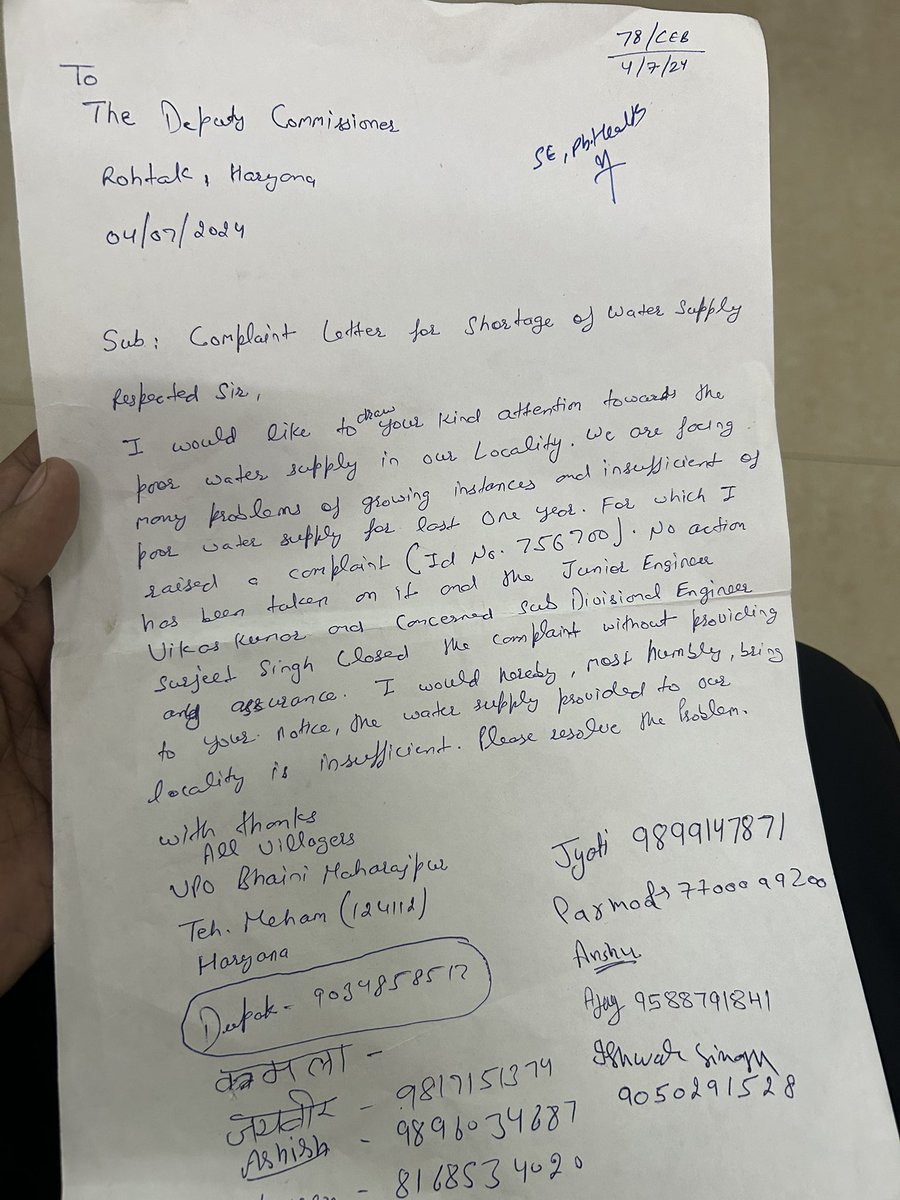
4th largest economy sir … लेकिन पानी तो नहीं दे सकते … अमृत काल में अमृत योजना ही फेल है @phedhry … 2 साल पहले की डीसी ऑफिस ,
रोहतक, सीएम विंडो पर लगाई एप्लीकेशन किसी पर कोई सुनवाई नहीं… सब अपने आप में मस्त हैं @NayabSainiBJP@narendramodi
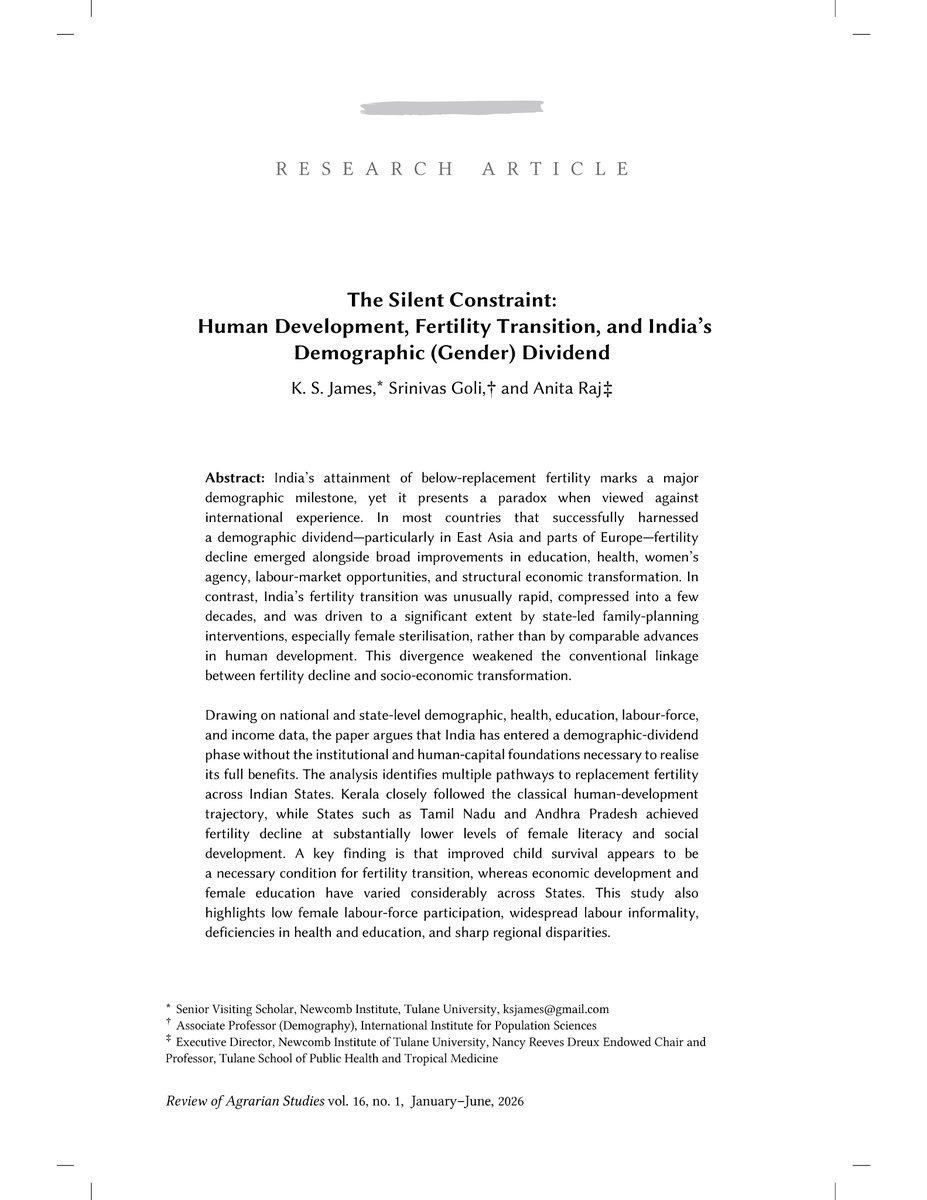
Delighted to share our latest article in the Review of Agrarian Studies:
"The Silent Constraint: Human Development, Fertility Transition, and India's Demographic (Gender) Dividend"
The paper argues that although India has reached below-replacement fertility, the country has not yet built the human capital, gender equality, and labour market foundations needed to fully realize its demographic dividend. We examine why fertility decline alone does not guarantee economic transformation and highlight the critical roles of women's education, child survival, employment, and regional disparities.
Read the article here: https://t.co/w5KbHLrldf
#Demography #Population #India #Fertility #DemographicDividend #GenderDividend #HumanDevelopment #PublicPolicy #PopulationStudies #DevelopmentEconomics
Sandipan Baksi ( @SandipanBaksi ), Director, Foundation for Agrarian Studies (FAS), Sai Chandan Kotu ( @sai_kotu ), Senior Research Assistant, FAS, and Tapas Modak ( @tmodak89 ), Joint Director, FAS, recently published an article in The Hindu Business Line titled “Digital agriculture in India: Problems of inclusion.”
Read the article here: https://t.co/QkDkl35NjN
The article highlights the need to improve digital infrastructure and digital literacy among farmers to improve access to farm schemes and advance digital agriculture in rural India.
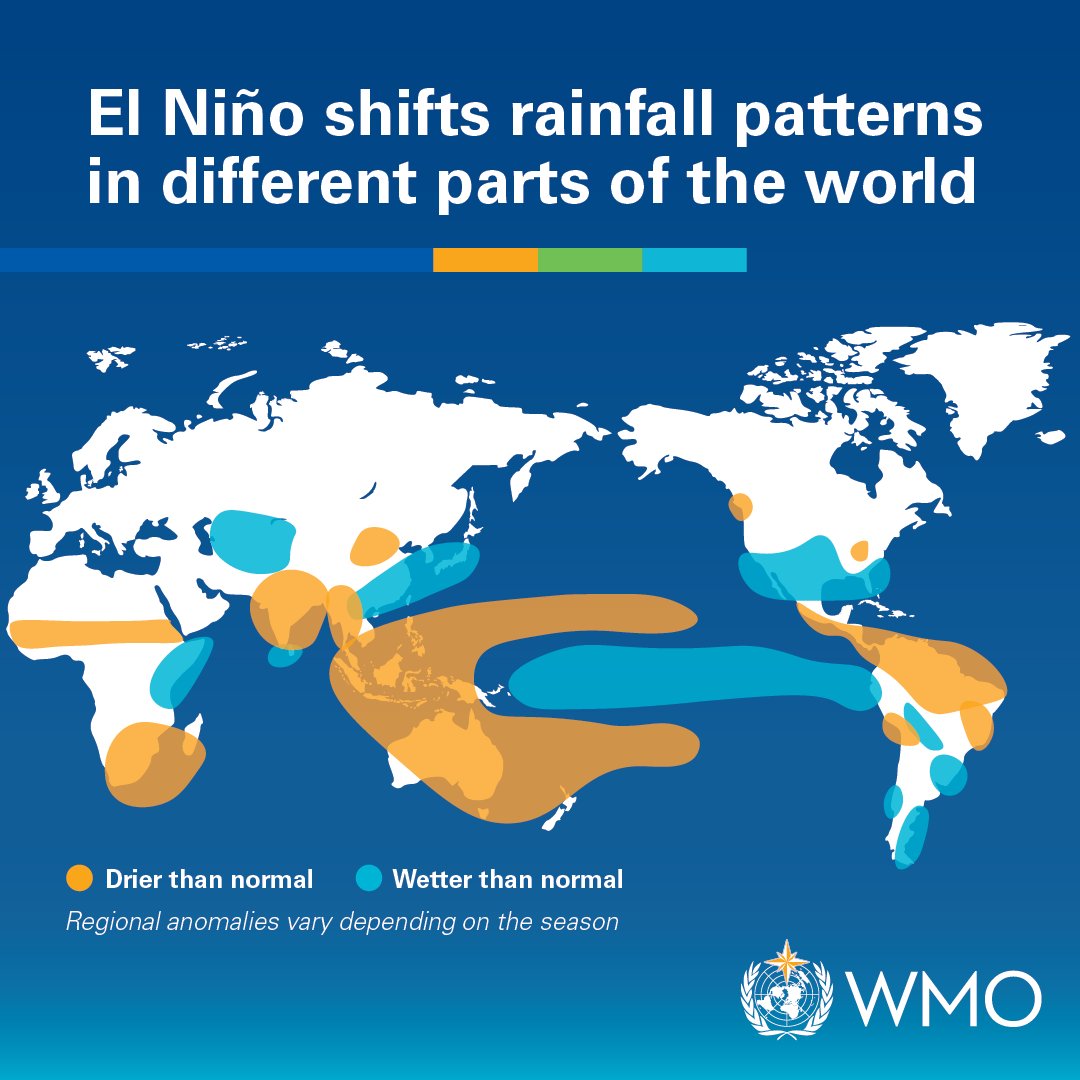
The Little Boy is here. El Nino has set in, officially.
63% chance of a very-strong El Nino, as per the latest forecast from NOAA (https://t.co/v8v1xIMpx8)
So, what does a 'super' El Nino mean for India?
Laying out the risks in this @livemint Long Story
Key takeaways:
1. A strong El Nino persisting through March next year means the summer of 2027 could get very very hot and dry (see latest NOAA chart). Drinking water shortages in pockets is a strong possibility.
2. There is no perfect correlation between the strength of El Nino and the quantum of monsoon rainfall deficit- only in 3 out of 6 strong El Nino years since 1951, did the Indian monsoon record a deficit of 10% or more (see chart1)- so all is not bleak yet
4. Distribution of monsoon rainfall will be critical for Kharif crops- but resilience of Indian agriculture to deficit rains has improved greatly over the past few decades (see chart2)- but be ready to pay more for vegetables, cooking oils etc
5. Keep a close watch on Indian Ocean Dipole, currently in a neutral state, which can offset some of the negative impacts of a very strong El Nino
6. As a senior scientist said: El Nino is like a terrific fast bowler. But much will depend on the pitch it bowls on.
So, fingers crossed!
Read more: https://t.co/cEP61n4PfC
I wouldn't have counted Gurgaon as a place with great mutton - until a friend introduced me to Parat, a Mughlai cloud kitchen with a tiny dine-in. The meat fell off the lamb chops, the khameeri naans fluffy, the spice mix is balanced all through. Giving fine-dines a run!
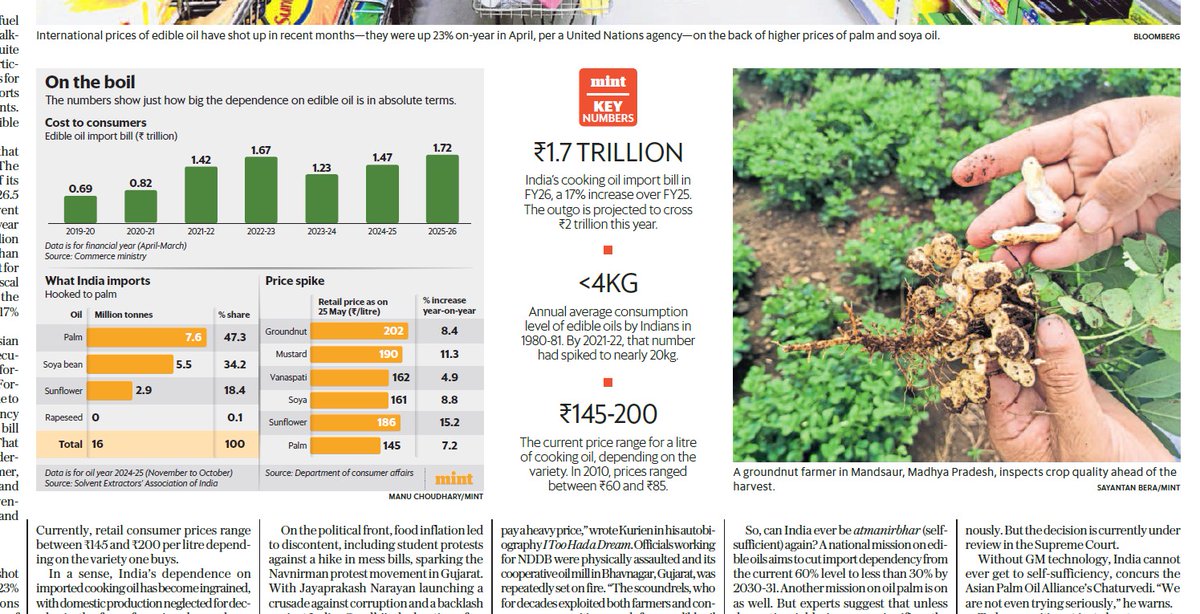
The great Indian oil spill: a cold-pressed-to-refined thriller
Indian consumers footed a staggering Rs 1.72 lakh crore bill in FY26 to import cooking oils. This year, the bill may surpass Rs 2 lakh cr.
This is way more than the entire annual budget of the agriculture ministry.
And unlike imported fertilizers and crude oil, no one shields consumers when global cooking oil prices spike.
India imports 60% of its cooking oil needs now.
But in the early 1990s, India had achieved a brief period of atmanirbharta.
Then it lost the plot to cheap palm. Then to high-yielding GM or transgenic soy- that it imports in large quantities and consumes, but won't allow its farmers to plant.
With its atmanirbharta, India is also losing a part of its culinary heritage. Kachhi-ghani desi oils making way for solvent extracted foreign oils.
Misery for local mustard, groundnut, sesame, soy growers who switched to other profitable crops like rice, maize, horticulture etc.
Yet, there's more to the story which involves the legendary Verghese Kurien of Amul fame. With some arson, deaths and conspiracy theories thrown in.
Borrowing Kurien's words, a final question: Who are the "scoundrels" who got us here?
@livemint Long Story.
Read here: https://t.co/hj0iib8AYt
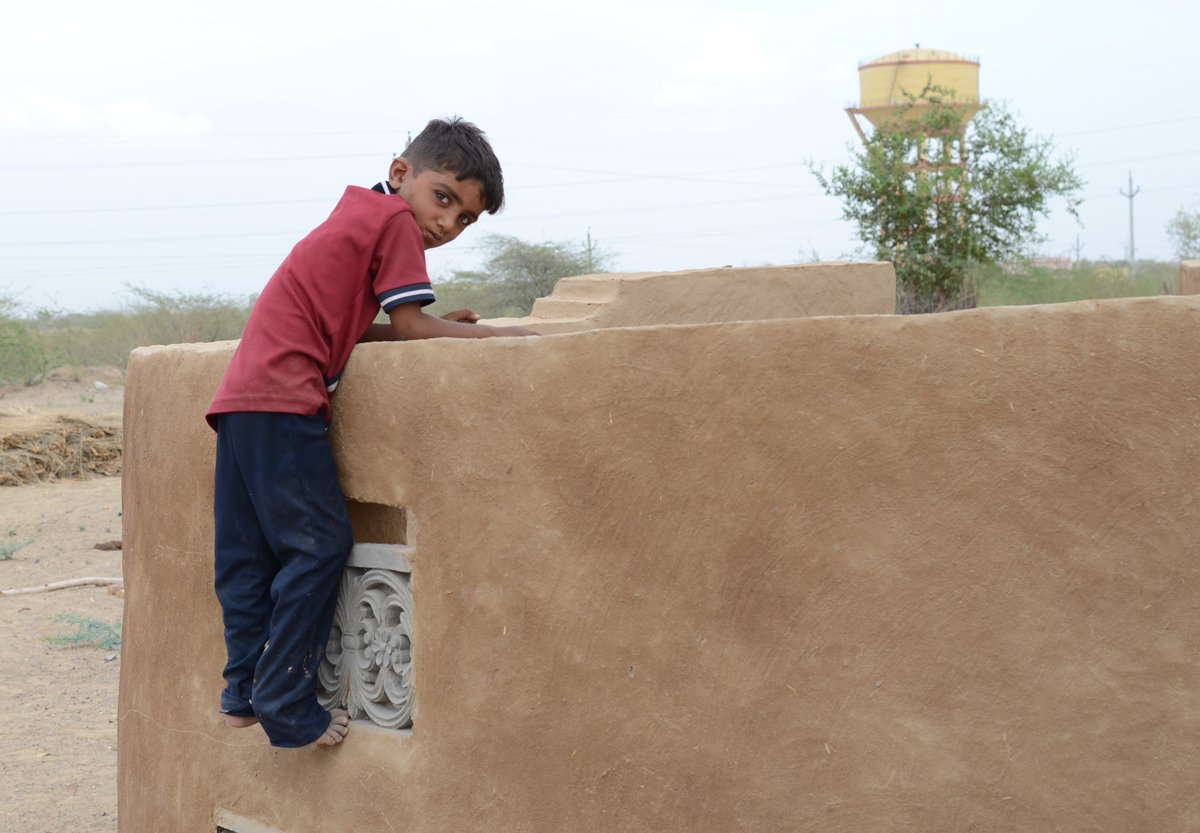
85% of India's children in the 6-23 month age group do not receive an 'adequate' diet
32% children under-5 yrs age underweight: NFHS-6
Whither Viksit Bharat? Pipe dream for a country which is unable to provide for its youngest?
Photo: Barmer, Rajasthan, 2024.
I have reviewed "The Economics of Gender in China: Women, Work and the Glass Ceiling," by Sisi Sung, and has been published in Feminist Economics, Volume 32, Issue 1. It is now available to access via Taylor & Francis Online
https://t.co/ttd6Td8b6B
Public Good Alert 🚨
If you’ve ever spent hours merging messy admin datasets reconciling districts/subdistricts splits,merges, or renaming, well, no more!
we(I,@harikv73,@asad__tariq) have built adminlineage, a Py package that uses AI to solve this #AI https://t.co/NtyEvu1OAF
@indiaemerges Had created a product containing granular data on organised and unorganised industrial data in India with plenty of features. Available at https://t.co/juYgfqoQVL
We are pleased to share the release of a major open data resource on Harvard Dataverse:
Indian Census Data Collection, 1901–2026: Digitised Subnational Population and Administrative Datasets
DOI: https://t.co/zsSOTCGyuD
#OpenData#India#Census#SocialScience
What’s included?
• Population time series (1901–2011)- Census A02 (cleaned and strcutured)
• first time digitization of Primary Census Abstract tables (state & district level)-1961, 1971, and 1981
• 2026 subdistrict-level administrative directory linked to census data (2011)
#DataInfrastructure #ResearchData
ASI covers organised manufacturing, while ASUSE spans manufacturing, trade, and services in the unorganised sector. The Enterprise Tracker harmonises both for comparable analysis of manufacturing industries across formal and informal enterprises, a unique feature of the tracker.
The CEDA Enterprise Tracker unlocks insights like these by letting you compare regional industry profiles (combination of state + sector + industry) across 14 common ASI and ASUSE variables.
How does GVA per worker (constant prices) in Leather and Textile industries compare between organised vs unorganised enterprises in urban Uttar Pradesh?
And how does total output of Wood & Cork enterprises differ across sectors in rural Himachal Pradesh?
Our choropleth maps visualise interstate variation, benchmark states against the national average, and highlight highest & lowest values at a glance.
Use bar charts to see how states perform across years for any combination of data facets, or track selected states over time. View top 10 / bottom 10 states for any year.
Shall discuss a few aspects of the interplay of agricultural technology and the socio-economic structure in the Indian countryside, in a talk scheduled today, 1500 Hrs.
Please join if interested.