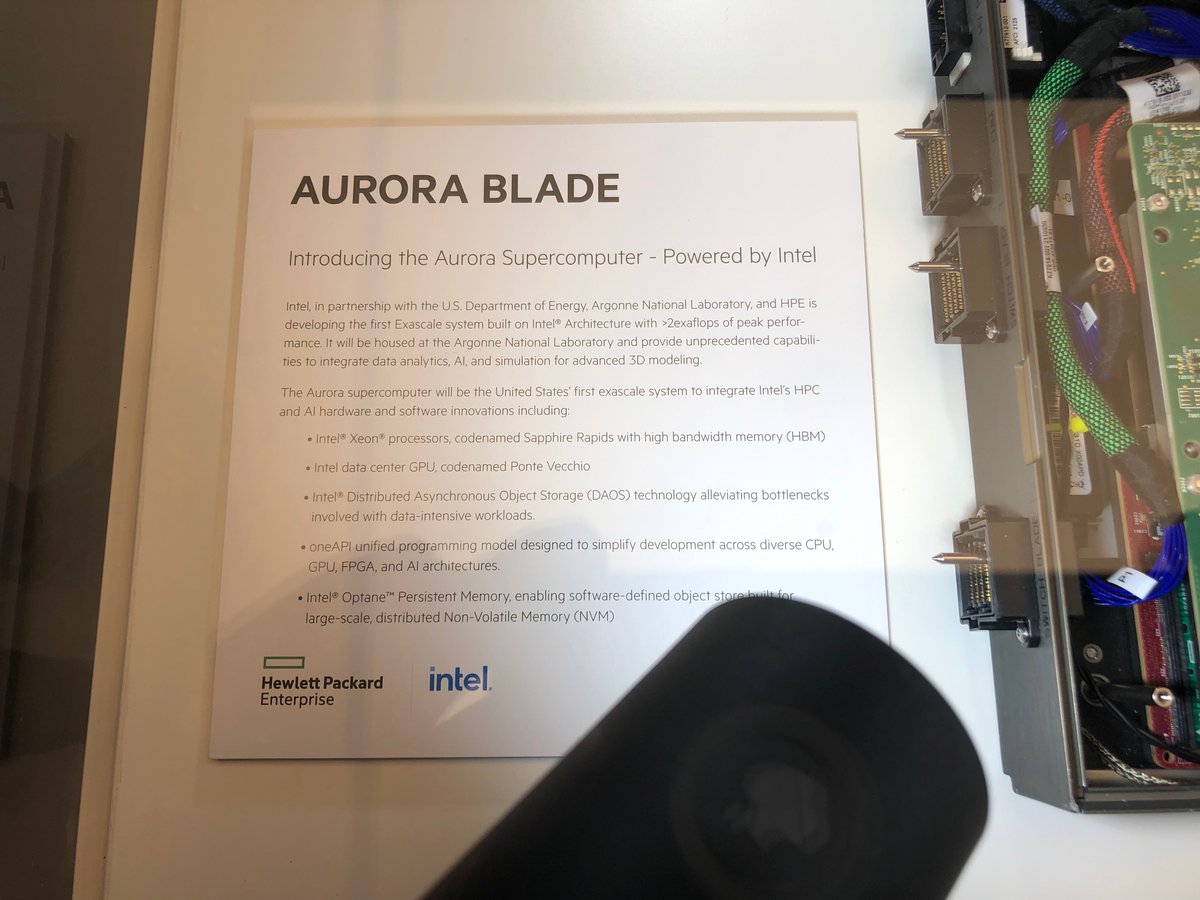
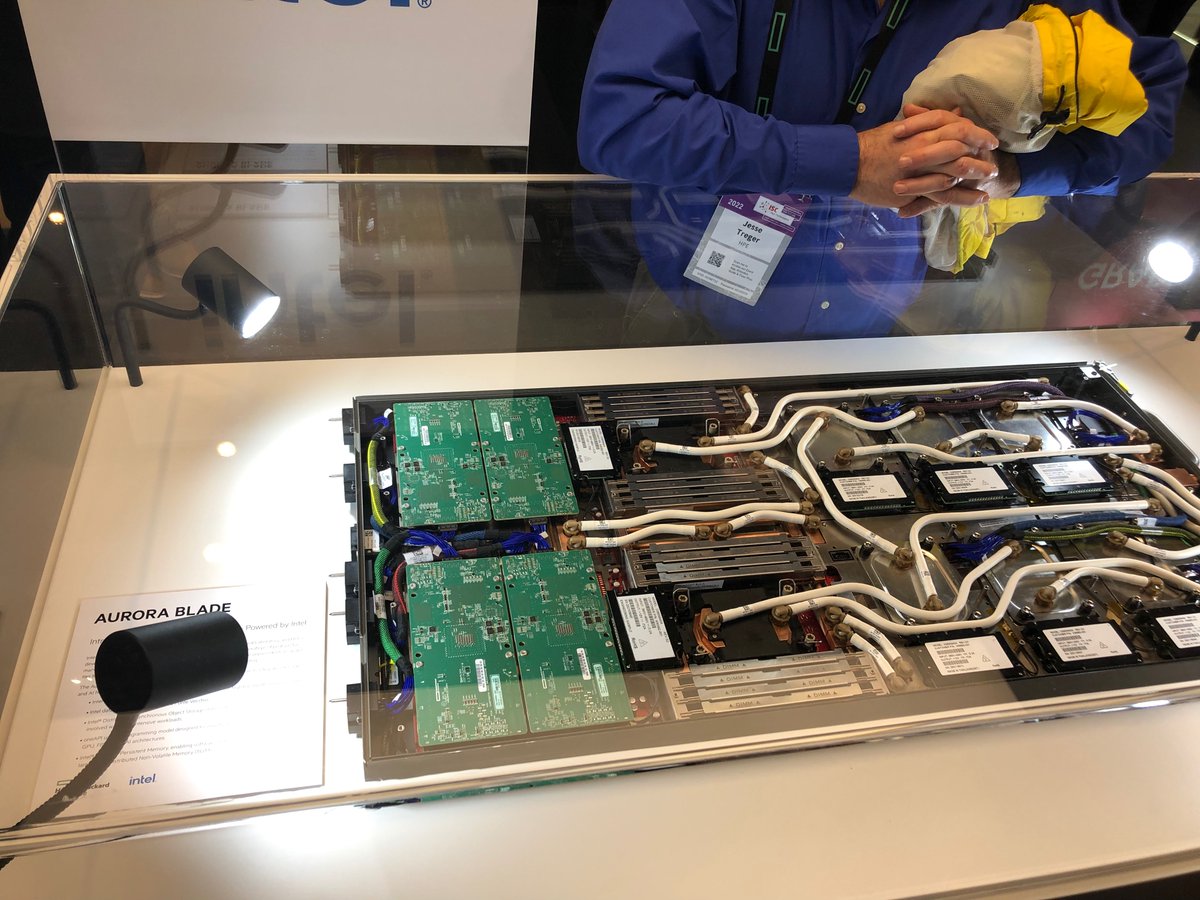
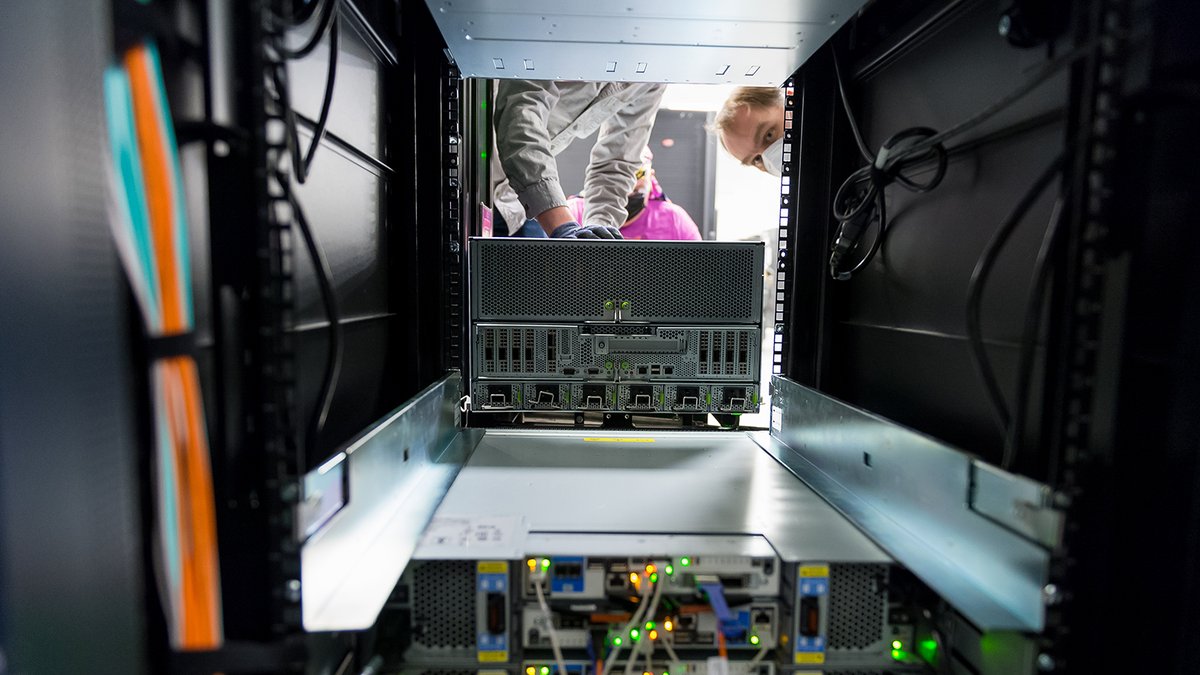
.@argonne is collaborating with @intelhpc & @HPE_HPC to build the Aurora #exascale system. Learn about the technologies that will power Aurora and how its advanced capabilities will accelerate fusion energy science, cancer research and more ⤵️ #ExascaleDay
https://t.co/Jlw6YX8olX
To help researchers prepare scientific applications for #exascale, we have deployed the Florentia test and development system. Florentia is equipped with early versions of the Sapphire Rapids CPUs and Ponte Vecchio GPUs that will power @argonne's Aurora supercomputer. @intelhpc
Proposals are now being accepted for the ALCF AI Testbed’s @cerebras and @SambaNovaAI systems. Come work with us to explore how novel machine learning applications and workflows can advance data-driven discoveries! #AL#ML#HPC
▶️ https://t.co/HkZ9pNxp2H
Check out the latest episode of @exascaleproject's Let's Talk #Exascale Code Development podcast to learn how the @argonne CANDLE team is preparing their deep learning framework for cancer research to run on ALCF's upcoming #AuroraExascale supercomputer.
https://t.co/Tq0jqFKGZW
📣 We’re hiring!
- HPC Systems Administration Specialist
- Postdoc: High Performance Workloads for Simulation/AI
- ALCF Catalyst
- Data Services Architect
- Postdoc: Portable, Highly Performant Python
Check out these opportunities and more: https://t.co/XVz2sCph9d
Calling all #SYCL users and #HPC developers! Join us on 12/7 for a special webinar hosted by @thekhronosgroup. Learn from experts at @codeplaysoft, Intel, and more about the latest SYCL standard and it's supporting eco-system. https://t.co/zWhBjwOVGM
#oneAPI#DPCpp
We’re proud to have delivered 333x faster throughput than legacy GPU solutions for COVID drug discovery at @argonne. Our partnership enabled speed to innovation that transformed compute timelines from days to minutes. https://t.co/QBzHTKMKzU
#WhyGroq
@IntelDevTools A1(6/6) Using deep learning, train a network with experimental data from tokamaks to recognize impending disruption events. The trained model will infer this fast enough to allow experimental control systems to head off the disruption #IntelExascaleChat
@IntelDevTools A1(5/6) In a search for better solar energy generation materials, use AI to autom. determine for given material whether expensive high-level-theory-based computational chem methods are needed, or if cheaper simpler-level-theory-based computations are sufficient #IntelExascaleChat
@IntelDevTools A1(4/6) Train deep learning networks to process electron microscopy data of brain tissue to derive its 3D neural connectomics---how it’s all wired together--- and use the networks to process a massive brain tissue dataset #IntelExascaleChat
@IntelDevTools A1(3/6) Use data from state-of-the-art lattice QCD calculations to train neural networks to accelerate calculations, & apply those trained models to run larger and more physically realistic lattice QCD calculations than exascale would allow without acceleration #IntelExascaleChat
@IntelDevTools A1(2/6) Include the physical effects of many species of heavy tungsten ion impurities in simulations of the ITER tokamak---addressing questions of high importance to the experiment, whose divertor component is tungsten #IntelExascaleChat
@IntelDevTools A1(1/6) Simulate realistic-geometry aerodynamics at full flight scale and Reynolds number, and use data from these high-resolution simulations to train models that capture turbulence behavior in less expensive engineering studies #IntelExascaleChat