Nikola Tesla gave up love on purpose. He was sure romance would drain the genius out of him, so he stayed single and shut himself off for fifty years. Then, late in life, broke and half forgotten in a New York hotel, he fell hard for the one creature he let himself need: a pigeon that kept landing on his windowsill. He fed her, nursed her when she was hurt, and said he loved her the way a man loves a woman. The love he spent five decades trying to kill never died. It just found a smaller door.
That is what the guy in the screenshot is missing. He wants to "eliminate the desire to be loved" like it is a bad habit he can quit with enough willpower. The pull toward love runs deeper than any habit. It works like hunger, built into the body long before you had a single opinion about whether it was worth your time.
You can watch this on a screen. In 2003, scientists at UCLA slid people into a brain scanner and had them play an online game of catch with two strangers, who then stopped passing them the ball. The moment the brain realized it was being shut out, the same areas that fire for physical pain lit up. To your brain, getting left out and getting burned look almost identical. There is a grim reason for that. For almost all of human history, being cut off from your group was a death sentence, so the body files loneliness under emergency. It still does damage. One study of more than three million people found that being isolated raises the odds of an early death by roughly a third, about as much as smoking.
So you cannot delete the pull. You can muffle it, and psychologists have a name for the people who get good at that: an avoidant attachment style, the habit of walling people out before they can get close. The catch is that muffling only works while you hold it down. In one study, these people could shove thoughts of being abandoned out of their heads, until researchers handed them a hard mental task, and the buried feelings came roaring back. The desire was never gone. It was being sat on, and sitting on it burns energy every second. The guy wants to cut the desire because it "interferes with my ability to focus." But the wall is the thing eating his focus.
In 1851, the gloomy philosopher Arthur Schopenhauer drew the whole problem. Picture porcupines on a freezing night. They huddle for warmth, their spines stab, they pull apart, the cold drives them back, they stab again, until they find the one gap that works: close enough to share heat, far enough that nobody bleeds. They could not stop needing warmth. They found the right distance.
That is the move the question skips. Tesla found his at the very end, and it was a bird on a windowsill.
A baby this age usually switches toys every 2-3 minutes. This duck stair toy holds their attention 10-15 minutes straight. Watch the baby's face. It's the focus a scientist gets when an experiment is finally working.
The experiment goes like this: "is the duck going to fall down again?" After the first cycle, the baby's brain has learned the rule, and every duck after that becomes a fresh test of it. The duck climbs, reaches the top, falls down the slide, and the prediction gets confirmed. Every confirmed prediction triggers a tiny pulse of dopamine, the same brain chemical you get when you finally remember where you put your keys. To a baby, watching the duck do the expected thing feels the way solving a small puzzle feels to you.
Researchers at the University of Rochester gave this its name back in 2012. They call it the Goldilocks Effect. Celeste Kidd's lab tracked 72 seven-month-old babies as they watched videos that ranged from very predictable to completely random. The babies looked away when the videos got too boring. They also gave up when things turned too random. They stayed glued only when the pattern landed somewhere in the middle, predictable enough to follow, surprising enough to feel interesting.
The duck staircase lives in exactly that zone. The rule is simple. But each loop has just enough variation, the order the ducks come in, the bounce of the slide, the timing of each fall, to keep the brain busy checking its own predictions.
Bright yellow on a pale frame. At four months old, a baby's vision is about a third as sharp as yours, so soft pastel colors blur into mush, but high-contrast colors pop out clearly. The whole toy is also constantly moving, and babies prefer moving things to still things from their first month of life. A baby's brain forms about a million new connections every second during their first year, so anything moving is a free chance to learn.
Compare the duck toy to a fast-cut video on a phone screen. The brain can't pull a pattern from thousands of unpredictable pixels per second, so attention drops. Now compare it to a plain wooden block. Nothing is changing, so there's nothing to predict, and attention drops the other way. The duck on the stairs is the rare toy that lands right between too-much and too-little. It's why this baby can stare at it for fifteen minutes while a $300 educational toy gets two. The duck toy costs about fifteen bucks.
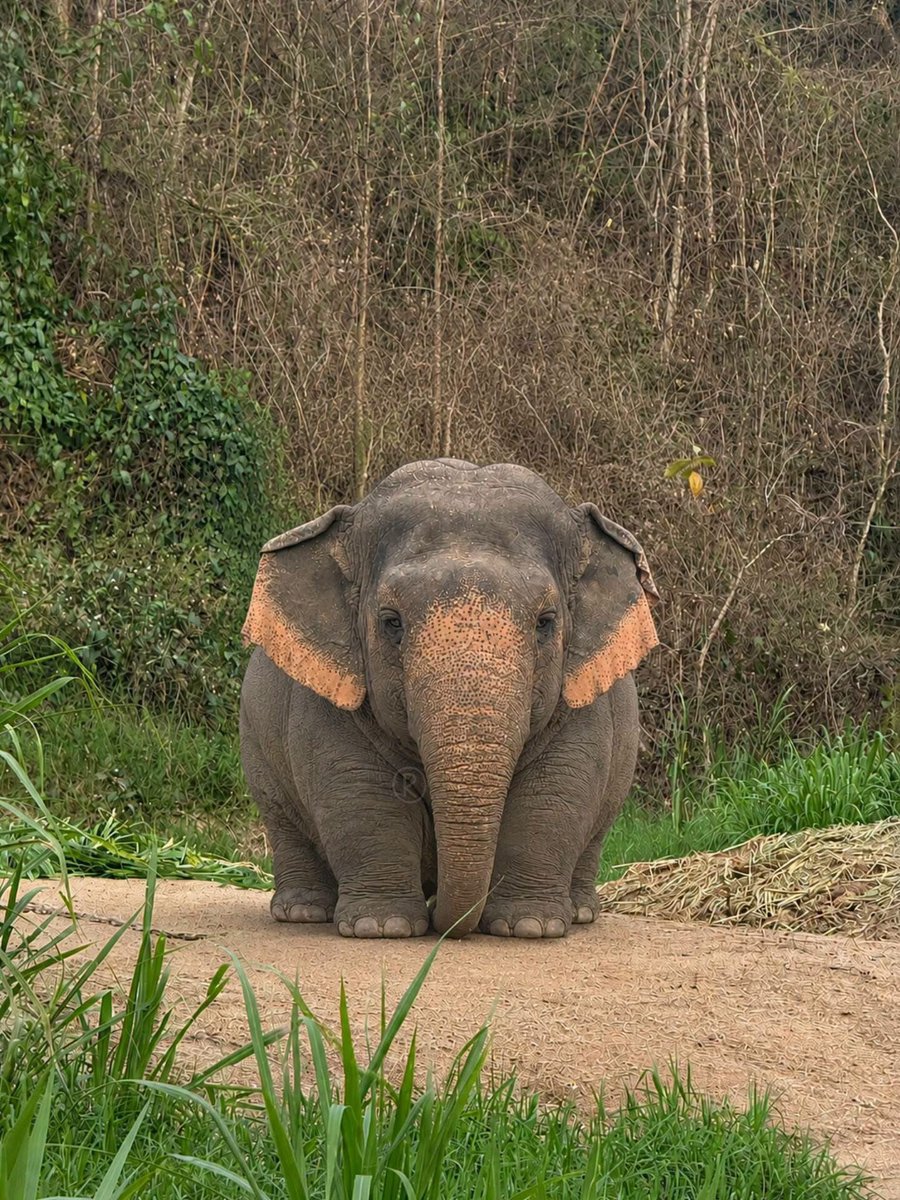
A baby elephant named Ellie was so depressed his rescuers thought he had days to live. They put a German Shepherd named Duma in his pen. Right away, Ellie started coming back to life.
Elephants have a special kind of brain cell called von Economo neurons. They sit in the same parts of the brain humans use to feel empathy and pick up on other people’s emotions. Until 2009, scientists thought only humans, our closest ape relatives, and a few whale and dolphin species had them. Then researchers at Mount Sinai in New York and Caltech found elephants have them too. When humans lose these cells to a degenerative brain disease, they stop being able to care about other people and lose control of their emotions.
Karen McComb at the University of Sussex compared a healthy elephant population in Kenya to one in South Africa where the older elephants had been killed. The orphan herd couldn’t tell when an unfamiliar elephant’s call was a threat. They had never learned, because the older elephants who normally teach them were dead. Research in Zambia found that orphan elephants carry the same long-term stress hormone changes seen in humans with PTSD. A group of male elephants in South Africa who were orphaned as calves grew up to kill 107 rhinos in unprovoked attacks. Scientists compared the pattern to human trauma survivors.
Duma’s side of the bond runs on different chemistry. Oxytocin is the hormone your brain releases when you hug someone you love or hold a baby. A 2014 study showed it also drives close attachments between dogs and animals of other species. In Tokyo, scientists found that when a dog and a human look into each other’s eyes, both their brains release oxytocin in a back-and-forth loop normally only seen between a human mother and her baby. Whatever Duma was doing for Ellie ran on the same chemistry humans use to bond with their own children.
The original tweet leaves out the ending. Ellie died a few months after the footage was filmed. An infected pocket in his liver, left over from his first illness, burst open. He didn’t make it to six months old. In the days before, Duma was getting restless and distressed, like he sensed something was wrong. After Ellie was gone, Duma wouldn’t let anyone enter or leave Ellie’s room. He spent the next few weeks searching the orphanage for him.