A new Review highlights the mechanisms of molecules that disrupt translation in an amino acid or mRNA sequence-dependent manner
https://t.co/2fcySo7LoI
Mark Chen, chief research officer at OpenAI, sat down with Nature to discuss how AI will affect science, along with the firm’s pivot towards safety
https://t.co/vHwYyEgod4
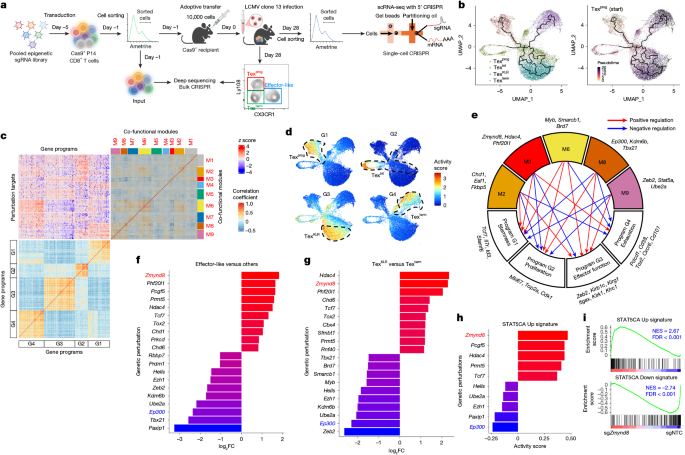
St. Jude scientists identified ZMYND8 as a major regulator of CD8+ T-cell exhaustion. Targeting the gene improved immune function and enhanced immunotherapy, offering a potential new strategy to strengthen anti-tumor responses in solid tumors. https://t.co/IcGyfQADmN
Excited to share our new paper! We used CRISPR-edited, T1D patient-derived stem cell islets to uncover how a protective IFIH1/MDA5 variant alters the human islet response to inflammatory and viral stress, reducing stress & death while preserving function https://t.co/2MLpWBo8d6
Biologists use specialized open-source models for tasks like modeling the structure of molecular systems, designing drug-like molecules, and predicting the effects of genetic mutations. But these models are often expensive to run, potentially limiting their impact.
In our latest Science Blog, we share how Claude was able to optimize inference for more than 30 open-source models, making them 4x faster on average, partly by writing custom software for GPUs. We’re open sourcing all of the optimization code.
Read more: https://t.co/qiuN1jpgpA
Exciting moment in our long running quest to drug chordoma’s defining feature and key vulnerability brachyury, and great outcome of our drug discovery competition, the TBXT challenge. For the first time the main barrier to developing drugs that eliminate brachyury from cells has been overcome with the discovery of a compound that binds potently to the brachyury protein. Lots of possibilities now unlocked, and lots of work ahead to bring them to fruition. Very grateful to everyone who helped us over many years to reach this critical milestone.
Very careful and interesting dissection of the roles of insulin/glucose vs amino acids in the activation of mTORC1 in the liver in response to feeding.
https://t.co/vop1XbBRbe