Thank you to everyone who gathered at Sükhbaatar Square in Ulaanbaatar, and to those who organized Watch Parties across different provinces.
We deeply appreciate your support.
The match started at 3:30 AM, it’s now 6:46 AM in Mongolia.
https://t.co/Lc2ifE3utI
This article by Richard Lloyd Parry in The Times is not journalism—it’s propaganda. The headline, “Mongolian PM ‘ousted by Putin ally in smear campaign’,” is a gross distortion of reality. It insults the intelligence of anyone familiar with Mongolian politics and disrespects the Mongolian people who took to the streets to demand accountability. Parry, reporting from Tokyo, clearly hasn’t spent meaningful time in Mongolia or consulted credible, independent voices on the ground. Instead, he constructs a false narrative that conveniently fits a simplistic East-vs-West template while ignoring the actual rot within Oyun-Erdene’s government.
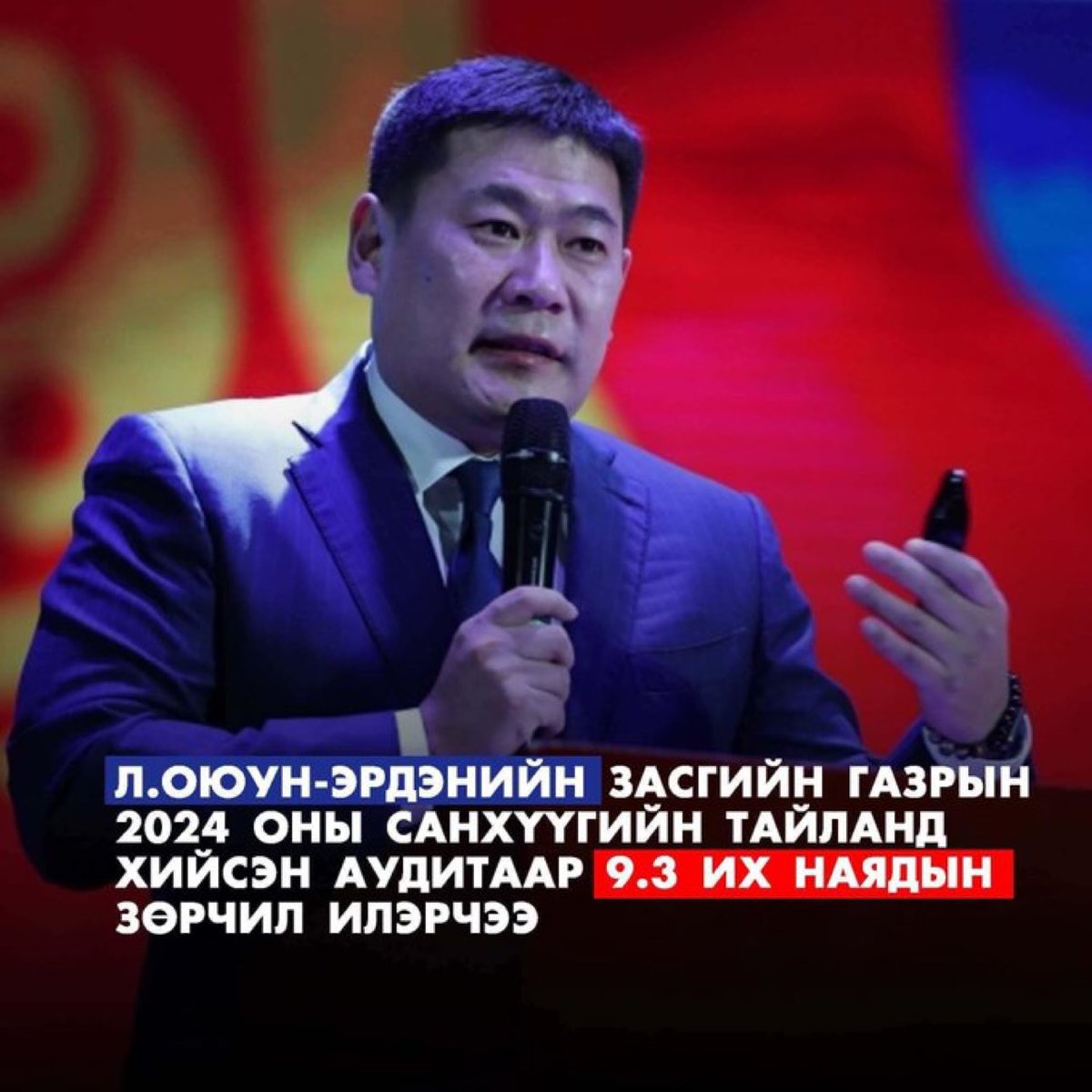
The portrayal of Luvsannamsrain Oyun-Erdene as a reformist hero “ousted” by a pro-Putin adversary is not just wrong—it’s the exact opposite of what happened. Oyun-Erdene was never a victim of Russian influence. He was the political protégé of ex-president Khaltmaagiin Battulga, Mongolia’s most openly pro-Russian figure. The so-called “Putin ally” in Parry’s article is actually the man Oyun-Erdene owed his rise to. Under his government, Mongolia didn’t distance itself from Russia—it tightened its ties. The pipeline deal signed with Moscow under Oyun-Erdene’s leadership speaks louder than any headline.
By all reasonable accounts, Oyun-Erdene’s administration was plagued with staggering levels of corruption. Billions of dollars have vanished through inflated infrastructure contracts, stolen coal profits, fake city bus procurements, and lavish, overpriced cultural projects abroad. The evidence is overwhelming and available to anyone who reads Mongolian. Multiple investigative reports, leaked documents, and public statements from whistleblowers point to systemic abuse of power. But Richard Lloyd Parry, either due to ignorance or deliberate omission, chose not to engage with any of that.
Parry claims Oyun-Erdene was taken down by a “smear campaign.” In truth, he was brought down by public disgust. Mongolians spent weeks protesting outside Parliament, enraged by images of his son’s fiancée flaunting luxury handbags, expensive jewelry, and a Mercedes-Benz—symbols of a political elite living far above the people they pretend to serve. To suggest that this outrage was fabricated is a slap in the face to the citizens who took risks and made their voices heard. Denying the legitimacy of their protests is not only disrespectful—it’s anti-democratic.
Even the article contradicts its own premise. It acknowledges that the Democratic Party withdrew from Oyun-Erdene’s coalition, triggering his downfall. That’s not a coup. That’s parliamentary democracy functioning exactly as it should. If a prime minister loses political support due to scandal and incompetence, he steps down. That’s not Kremlin interference—it’s political consequence.
And let’s be clear about something Richard Lloyd Parry completely ignored: under Oyun-Erdene’s leadership, Mongolian authorities actively suppressed pro-Ukraine sentiment. His police forces didn’t just harass or intimidate activists—they arrested them, raided their homes, and confiscated or erased information they had compiled to inform the public about Russia’s war crimes. These weren’t isolated incidents—they were part of a broader pattern of silencing voices that contradicted the Kremlin narrative. This is not the record of a man resisting Russian influence. It is the record of one aligned with it.
Parry floats the idea that Oyun-Erdene was targeted because of his sovereign wealth fund initiative. If that’s true, it only shows how weak his leadership was—unable to build enough political or public support to defend one of his flagship policies. But it’s more likely that those reforms, like so many other promises, were window dressing—meant to distract from the theft and mismanagement going on behind the scenes.
This article is a disgrace. It ignores evidence, disrespects the Mongolian public, and erases the complexity of a country navigating its own democratic crisis. What happened in Mongolia was not a Russian-engineered takedown of a Western-leaning reformer. It was a domestic reckoning with a failed leader, driven by real grievances and undeniable corruption. That The Times would choose to twist this into a piece of geopolitical fiction says more about the state of Western media than it does about Mongolia.
Richard Lloyd Parry (@dicklp) and The Times (@thetimes) owe the Mongolian people an apology—not for being wrong, but for deliberately misrepresenting the truth.
@guardian@BBCWorld@ikon_news@hrw@amnesty@RSF_inter@freedomhouse@Kasparov63@Billbrowder@RFERL@AFP@AlJazeera@dwnews
#Mongolia #OyunErdene #MediaManipulation #Putin #MongoliaProtests #FreedomOfSpeech