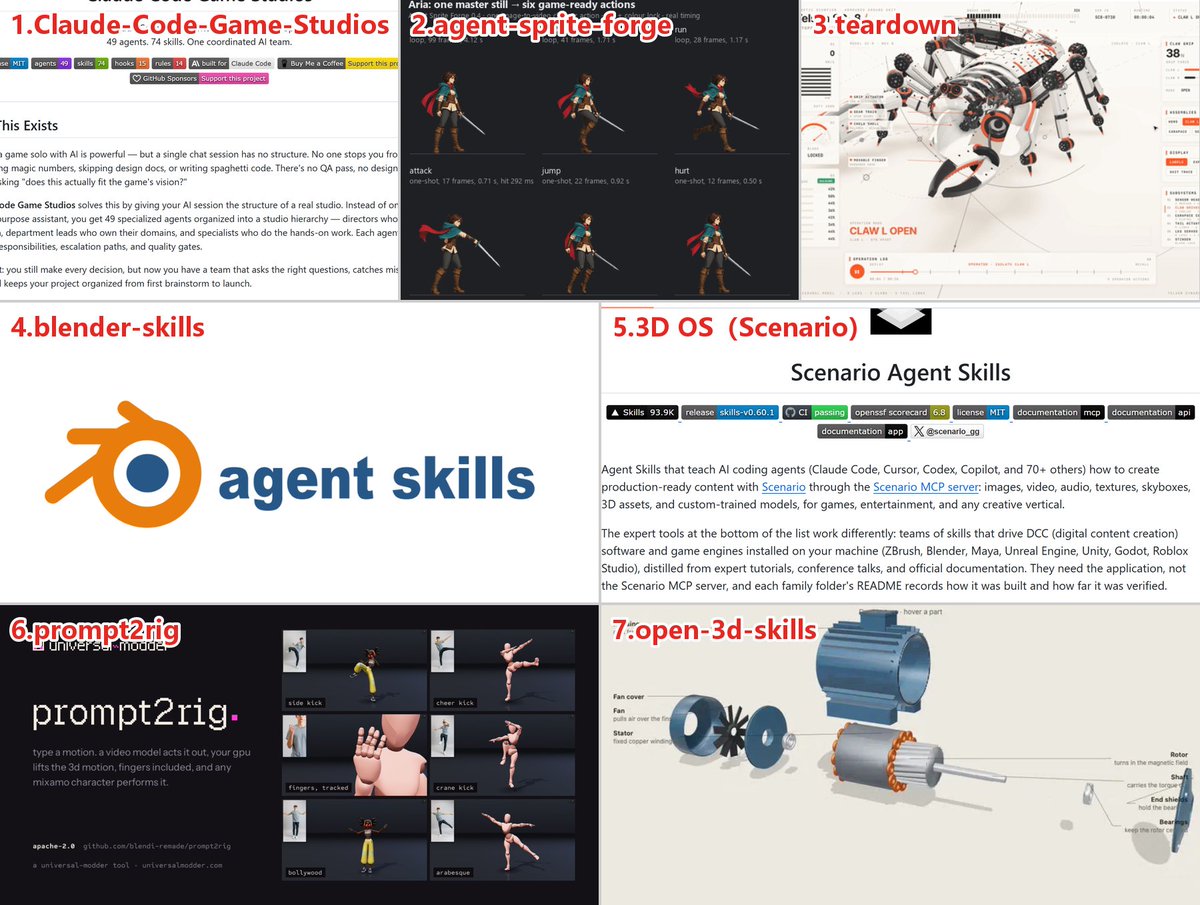
언젠가 쓸모 있을 거 같아서 피드로 남겨봄
월 50~350만 원 받는 SEO 대행, GEO 대행, "AI 검색 최적화" 업체들이 하는 일을 대신 해주는 스킬
개발자가 왜 공개했냐면, 개발 모르는 대표님들이 "AI 시대엔 이거 안 하면 뒤처진다"는 말에
월 구독 계약하고 내상 입는 걸 너무 많이 봤다고 함. 안타까워서 민들었다고 하네요.
- SEO: 구글이 내 글을 읽을 수 있나
- AEO: 검색 위 AI 답변이 나를 인용하나
- GEO: 챗GPT, 퍼플렉시티가 나를 1차 소스로 쓰나
- LLMO: 모델 자체가 내 브랜드를 아나
- NEO: 네이버 AI 브리핑이 나를 무나
특히 NEO(네이버)는
해외 가이드 어디에도 없는 ��리나라 전용 레인
개발자가 서비스에 직접 적용해서 한 ��� 노출 164만 찍은 그 플레이북 그대로 라고 함
You're right, logging is fast. The hard part isn't the logging.
It's building the habit. Remembering to do it every meal, every day. Most people drop off not because it's hard, but because nothing reminds them until it's too late and they've already forgotten.
What I've been thinking about is agents that remember for you and proactively prompt you to log. Not just wait for input. I've been building something like this for myself and testing it.
Curious what you've tried though, any system that actually stuck?
This is exactly why most people quit tracking after 2 weeks. The mental load of optimizing everything at once burns people out. I'm building something that handles the optimization in the background so you just get simple daily nudges instead of a spreadsheet of numbers. Early stage but the goal is to make tracking feel invisible.
@Abhirajputfit The hard part isn't knowing 30g protein is good. It's logging it 3x a day without giving up. Working on an AI coach that handles the tracking side so people just eat and talk. Early but the retention difference from manual logging is real.
Building an AI health coach. The real problem isn't what to say. It's when.
Nudge too early: annoying. Too late: they forgot to log and feel bad. And every user's rhythm is different. One person wants a reminder at 8am sharp, another will mute you for breathing at breakfast.
No universal schedule. Working on something that learns your pattern instead.
#buildinpublic
@MenuThere This is exactly what I'm seeing. 1.2-1.6g/kg is a lot to hit when you're struggling to eat 1000 calories. The gap between "what the guidelines say" and "how to actually do it on GLP-1s" is huge. That's the problem I'm working on.
I kept hearing the same thing from friends on Wegovy. "I'm not hungry. But I still reach for the chips."
The drug kills your appetite. It doesn't touch your habits.
That's when I realized why people yo-yo after stopping. The apps they use just sit there, waiting to be fed data. Nobody says "hey, you've been eating a lot of snacks this week." Nobody remembers.
So I started building something that does. An agent team that remembers you and talks to you first. Not another tracker.
Still building. Will share more soon.
#buildinpublic #Wegovy #Mounjaro #healthtech
Building an AI health coach app on the side — 4 agents (KEN/RIA/KAI/SOL) chatting with you in real time for nutrition, workouts, and recovery. Built for people on GLP-1 meds who are tired of guessing what to eat. Launching soon. #buildinpublic
SOMEONE JUST KILLED THE REAL ESTATE INDUSTRY
A guy scanned an entire house with his phone. Uploaded it.
Now anyone on Earth can walk through it in a browser tab. No app. No VR. No agent. No appointment.
Click → you’re inside. Every room. Every angle. Every shadow. Photoreal.
The numbers are insane:
- Agent fee on a $500k home: $15,000
- Cost to make this scan: ~$200
- Time to “tour” 50 houses: one evening
- File size: smaller than a TikTok
The science is wild too:
It’s called 3D Gaussian Splatting instead of polygons (how games render), it uses millions of tiny glowing “splats” of color and depth.
AI reconstructs reality from your photos. The result loads on a phone and looks like you’re THERE.
The grift opportunity is even wilder:
Freelancers are already charging $300–$800 per scan for realtors, Airbnbs, venues, car dealers, museums.
One person + one phone + one weekend = a business.
Open source. Built on PlayCanvas.
Free GitHub: https://t.co/ew6Ql8Ad6u