I give you 100k points independently & uniformly distributed on a surface of R^3. How to estimate the total area without doing any triangulation etc..
Crude: compute the average distance to the 100th (say) nearest neighbour + do some algebra.
Anything much better?
The weather space stands to benefit in a transformative way from deep learning! I am thrilled to share our latest results with MetNet-2:
Blog: https://t.co/IY5yGjbdes
Paper: https://t.co/TsqyXns7CK
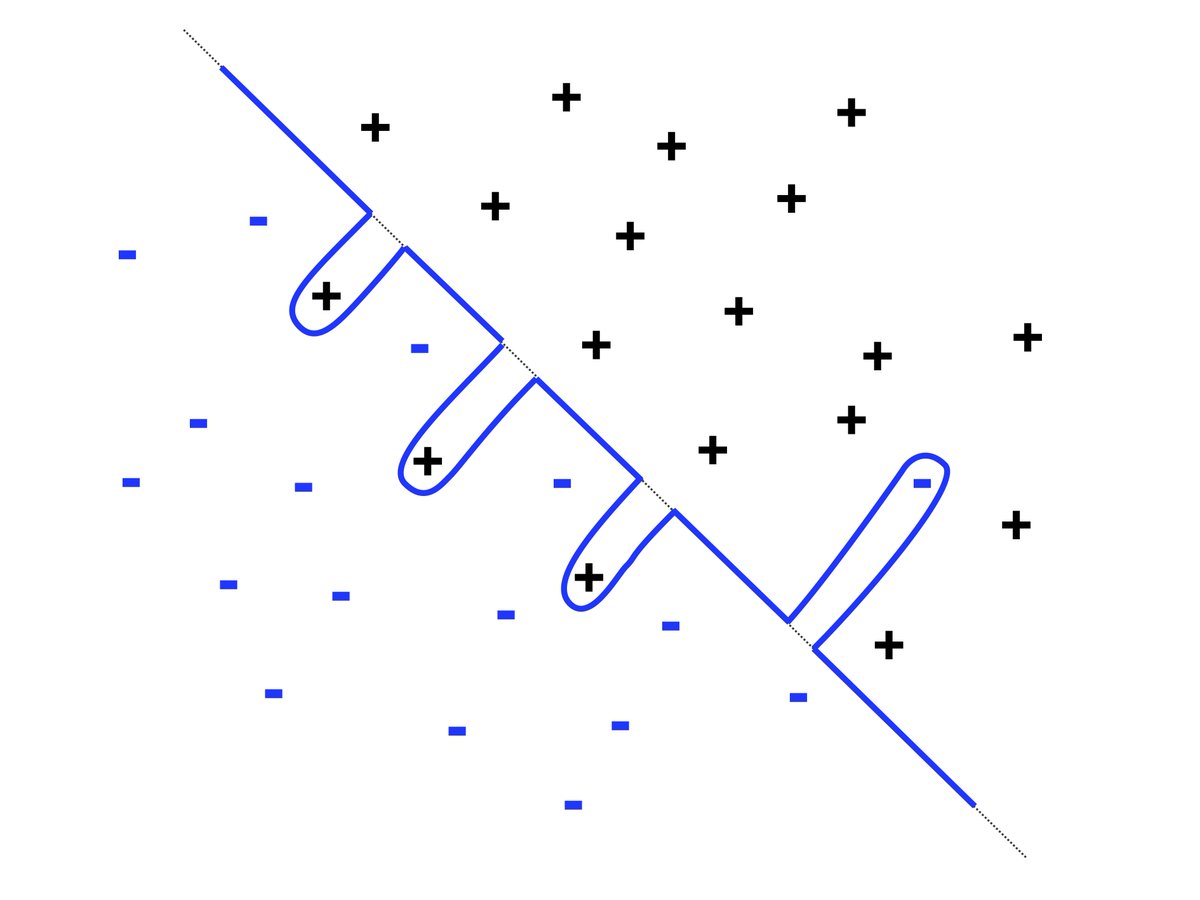
I devoted good part of the last 2 years trying to understand interpolators: models with vanishing training error. These behave well when the interpolator is selected via a `min norm' principle. Do I understand this phenomenon better now? A bit, summarized here in a cartoon. 1/n
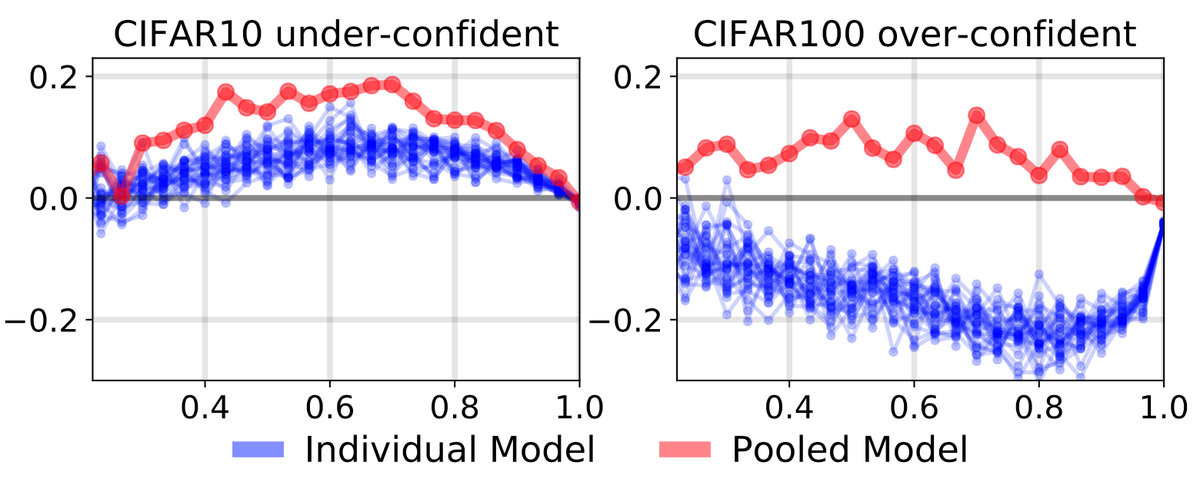
In https://t.co/mgUfUrNHRT led by Rahul Rahaman @Rahul46113961 we empirically show that Deep Ensembles do not necessarily lead to better Uncertainty Quantification #UQ -- the focus is on the data-scare setting when this really matters.
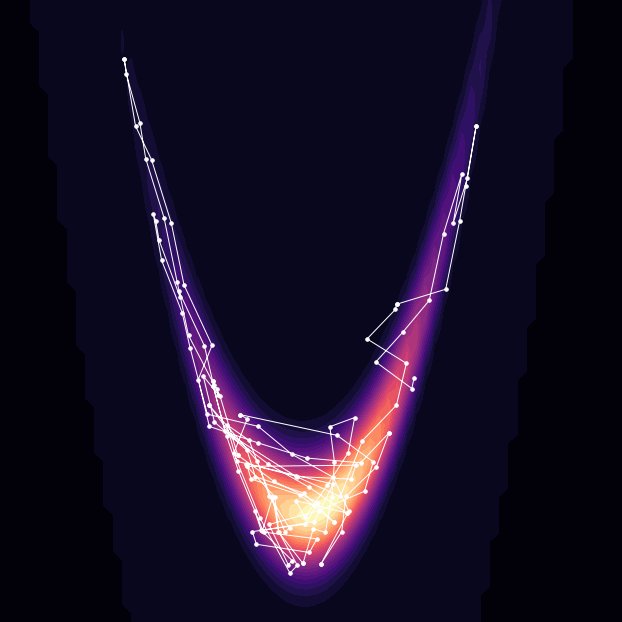
A (belated!) tweet thread summary of 'Manifold lifting: scaling MCMC to the vanishing noise regime' recent work with @kxau_ and @alek_thiery. We propose an efficient MCMC method for posteriors concentrated on low-dimensional structures due to highly informative observations.
1/7
Talk on Bayesian deep learning, including a philosophy for model construction, understanding loss surfaces, and a function space view of machine learning.
https://t.co/i8uOXqwIFc