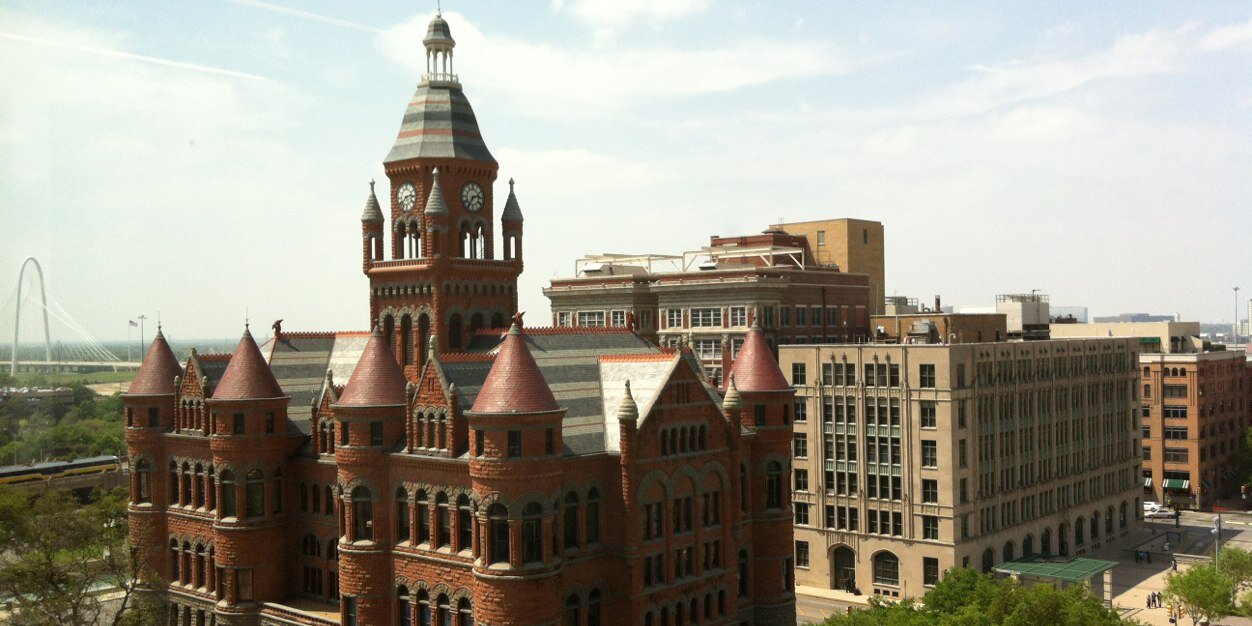
is glad to read that North Texas has commissioned nearly 3 gigawatts’ worth of data centers, and more than 10 gigawatts are planned. According to JLL data, Texas will overtake Virginia as the world’s largest hub for data centers by 2030.
Understand this: The movies and shows about the crucifixion have been tame when compared to what He actually went through.
Even The Passion Of The Christ was forced to hold back a little in order to avoid an X rating.
Crucifixion was, and still is, arguably the most excruciating death someone can experience.
The night before in Gethsemane, He was sweating blood. This is known as hematidrosis. This would have caused His skin to become extremely sensitive, thus making the beatings to come even worse.
The fear He felt was the beginning of His feeling the weight of our iniquities being laid on Him.
Yet - in this moment, He didn’t demand that the Father take it from Him. He only asked for the cup to pass Him over if it was within the Father’s will.
Up next came the Cat of Nine Tails, or a Roman Flagrum. This was a weapon with long leather “tails”, each embedded with sharp bones and metal.
He was flogged 39 times as Jewish law mandated “40 minus one”, because 40 was said to kill a man.
This flogging wasn’t like being punished by your father’s leather belt.
Every strike tore flesh, every strike exposed muscle. Every strike exposed nerve endings. Every strike tore flesh to the bone.
This would be like getting struck with razor blades over and over again, leading to hypovolemic shock from blood loss.
Oh, and the crown of thorns? These weren’t rose thorns. These were thorns which were 2-3 inches long. Beaten into his skull.
These thorns would have pierced his skull, tripping the trigeminal nerve, thus causing unimaginable pain and even more blood loss from the dozens of head wounds.
At this point, extreme nausea and dizziness would begin to set in.
What came next? Carrying the cross. Which weighed around 300lbs. This would be like carrying two full kegs on your back.
Splinters and wood grating against the open flesh on His back. And He had to carry it 650 yards, or close to a half mile.
Imagine carrying a log on your back after being skinned alive.
Up next? He was nailed to the cross with spikes 5-7in in length. Piercing His wrists - this no doubt pierced the median nerve, causing extreme burning sensations up and down His arms.
A spike was driven through his ankles - severing nerves and tendons. This would have felt like standing on broken glass every time He pushed Himself up in order to breathe.
He suffered for 6 hours.
His chest muscles collapsing, making every single breath a fight for life.
His shoulders were dislocated, His arms stretching unnaturally long.
His heart was struggling to pump blood.
He was extremely dehydrated, His lips cracking.
His heart more than likely literally ruptured from the stress.
And on top of all of that, He had to feel a separation with the Father for a period of time in order to REALLY bear the weight of our sin.
He took up this burden for ALL sin before Him, and ALL sin which came after Him.
HE DID IT ALL FOR US.
To free us. To defeat sin. To give us a pathway to the Kingdom.
Every sin we commit is exactly why He had to do it.
And the real kicker? He knew what was coming when He rode into Jerusalem … and He didn’t turn around. He kept going.
For us.
Food for thought.
Trump, Hormuz and the End of the Free Ride
For half a century, Western strategists have known that the Strait of Hormuz is the acute point where energy, sea power and political will intersect. That knowledge is not in dispute. What is new in this war with Iran is that the United States, under Donald Trump, has chosen not to rush to “solve” the problem. In Hegelian terms, he is refusing an easy synthesis in order to force the underlying contradiction to the surface.
The old thesis was simple: the US guarantees open sea lanes in the Gulf, and everyone else structures their economies and politics around that free insurance. Europe and the UK embraced ambitious green policies, ran down hard‑power capabilities and lectured Washington on multilateral virtue, secure in the assumption that American carriers would always appear off Hormuz. The political class behaved as if the American security guarantee were a law of nature, not a contingent choice. Their conduct today is closer to Chamberlain than Churchill: temporising, issuing statements, hoping the storm will pass without a fundamental reordering of their responsibilities.
Trump’s antithesis is to withhold the automatic guarantee at the moment of maximum stress. Militarily, the US can break Iran’s residual ability to contest the Strait; that is not the binding constraint. The point is to delay that act. By allowing a closure or semi‑closure to bite, Trump ensures that the immediate pain is concentrated in exactly the jurisdictions that have most conspicuously free‑ridden on US power: the EU and the UK. Their industries, consumers and energy‑transition assumptions are exposed.
In that context, his reported blunt message to European and British leaders, you need the oil out of the Strait more than we do; why don’t you go and take it? Is not a throwaway line. It is the verbalisation of the antithesis. It openly reverses the traditional presumption that America will carry the burden while its allies emote from the sidelines.
In this dialectic, the prize is not simply the reopening of a chokepoint. The prize is a reordered system in which the United States effectively arbitrages and controls the global flow of oil. A world in which US‑aligned production in the Americas plus a discretionary capability to secure,or not secure, Hormuz places Washington at the centre of the hydrocarbon chessboard. For that strategic end, a rapid restoration of the old status quo would be counterproductive.
A quick, surgical “fix” of Hormuz would short‑circuit the dialectic. If Trump rapidly crushed Iran’s remaining coastal capabilities, swept the mines and escorted tankers back through the Strait, Europe and the UK would heave a sigh of relief and return to business as usual: underfunded militaries, maximalist green posturing and performative disdain for US power, all underwritten by that same power. The contradiction between their dependence and their posture would remain latent.
By declining to supply the synthesis on demand, and by explicitly telling London and Brussels to “go and take it” themselves, Trump forces a reckoning. European and British leaders must confront the fact that their energy systems, their industrial bases and their geopolitical sermons all rest on an American hard‑power foundation they neither finance nor politically respect. The longer the contradiction is allowed to unfold, the stronger the eventual synthesis can be: a new order in which access to secure flows, Hormuz, Venezuela and beyond, is explicitly conditional on real contributions, not assumed as a right.
In that sense, the delay in “taking” the Strait, and the challenge issued to US allies to do it themselves, is not indecision. It is the negative moment Hegel insisted was necessary for history to move. Only by withholding the old guarantee, and by saying so out loud to those who depended on it, can Trump hope to end the free ride.
says these Iranian Shahed drones, which cost less than $50,000 each, are killing US service members. Obama gave Iran 1.7 billion. Enough to produce at least 34,000 drones.
As a former Special Forces Warrant Officer with multiple rotations running counterinsurgency ops—both hunting insurgents and trying to separate them from sympathetic populations—I’ve seen organized resistance up close. From Anbar to Helmand, the pattern is familiar: spotters, cutouts, dead drops (or modern equivalents), disciplined comms, role specialization, and a willingness to absorb casualties while bleeding the stronger force slowly.
What’s unfolding in Minneapolis right now isn’t “protest.” It’s low-level insurgency infrastructure, built by people who’ve clearly studied the playbook.
Signal groups at 1,000-member cap per zone. Dedicated roles: mobile chasers, plate checkers logging vehicle data into shared databases, 24/7 dispatch nodes vectoring assets, SALUTE-style reporting (Size, Activity, Location, Unit, Time, Equipment) on suspected federal vehicles. Daily chat rotations and timed deletions to frustrate forensic recovery. Vetting processes for new joiners. Mutual aid from sympathetic locals (teachers providing cover, possible PD tip-offs on license plate lookups). Home-base coordination points. Rapid escalation from observation to physical obstruction—or worse.
This isn’t spontaneous outrage. This is C2 (command and control) with redundancy, OPSEC hygiene, and task organization that would make a SF team sergeant nod in recognition. Replace “ICE agents” with “occupying coalition forces” and the structure maps almost 1:1 to early-stage urban cells we hunted in the mid-2000s.
The most sobering part? It’s domestic. Funded, trained (somewhere), and directed by people who live in the same country they’re trying to paralyze law enforcement in. When your own citizens build and operate this level of parallel intelligence and rapid-response network against federal officers—complete with doxxing, vehicle pursuits, and harassment that’s already turned lethal—you’re no longer dealing with civil disobedience. You’re facing a distributed resistance that’s learned the lessons of successful insurgencies: stay below the kinetic threshold most of the time, force over-reaction when possible, maintain popular support through narrative, and never present a single center of gravity.
I spent years training partner forces to dismantle exactly this kind of apparatus. Now pieces of it are standing up in American cities, enabled by elements of local government and civil society. That should keep every thinking American awake at night.
Not because I want escalation. But because history shows these things don’t de-escalate on their own once the infrastructure exists and the cadre believe they’re winning the information war.
We either recognize what we’re actually looking at—or we pretend it’s still just “activism” until the structures harden and spread.
Your call, America. But from where I sit, this isn’t January 2026 politics anymore.
It’s phase one of something we’ve spent decades trying to keep off our own soil.
hopes retired Navy Captain Kelly learn that when you wear multiple hats and it’s windy, you have to be careful and hang on to every one of them hats. Tending only to your US Senator hat may result in your Captain hat gets blown away.
Having pull-up bars in airports means you can stay fit while traveling.
You can challenge yourself, or better yet, challenge your friends & family during a layover. The downside is your daughter might beat you!
That happened today as me, my daughter, Paloma, @SecKennedy & @paulsaladinomd celebrated DOT grants to Make Travel Family Friendly Great Again!
Tell me how many pull-ups you can do.👇🏼
I’ve been campaigning for six weeks. Predictably, weak & desperate attacks from my opponents are starting to take shape.
I’m laying them out here—so voters get transparency, skeptics get answers, supporters get ammo, & my challengers get the message.
Feel free to add more!🧵👇
would vote for Greg Abbot even if he had only gotten one thing done: school vouchers. But the governor has gotten countless good things done for Texas.
sees that Nancy and Paul Pelosi turned a portfolio of $785K in 1987 into $133 million today, a net worth of $3 million in 1987 into $280 million today. And Paul traded not off technicals but with strong convictions and extremely high leverage.