I just watched a brilliant UX designer get steamrolled by a VP who "had a gut feeling."
The designer had data. Research. User quotes. A prototype that tested beautifully.
The VP had... 20 years of experience and a loud voice.
Guess who won? 😤
Here's what nobody tells you in UX school:
Your UX skills don't matter if you can't influence the people with the budget and the final say.
I've spent 25+ years in this field, and I've seen incredible UX work die in conference rooms because the designer couldn't speak "executive."
But I've also seen average designers become organizational heroes because they mastered one thing:
The art of making executives CRAVE their insights instead of dismissing them.
𝗧𝗵𝗲 𝗱𝗶𝗳𝗳𝗲𝗿𝗲𝗻𝗰𝗲?
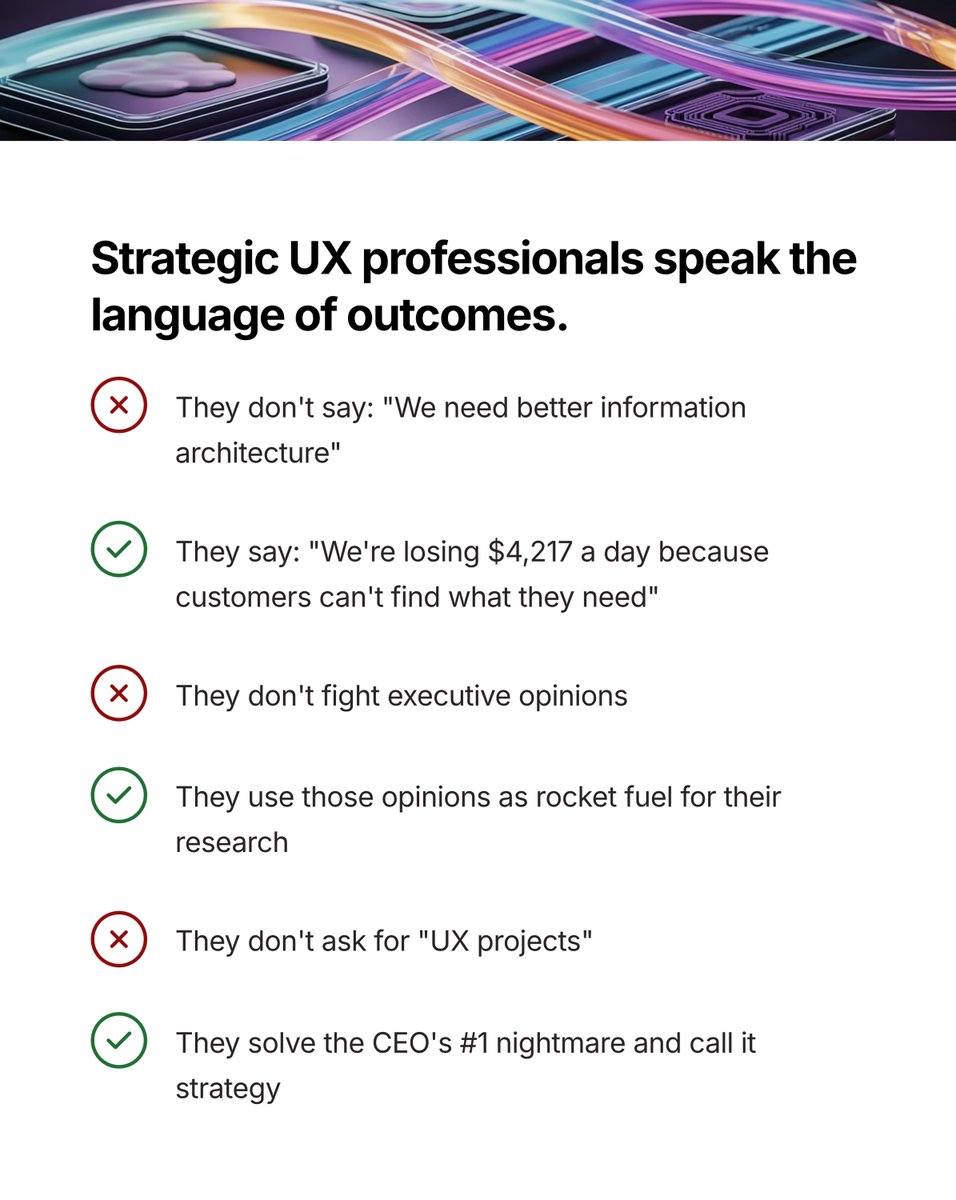
❌ They don't say: "We need better information architecture"
✅ They say: "We're losing $4,217 a day because customers can't find what they need"
❌ They don't fight executive opinions
✅ They use those opinions as rocket fuel for their research
❌ They don't ask for "UX projects"
✅ They solve the CEO's #1 nightmare and call it strategy
It's not manipulation. It's translation.
You're taking user insights and reframing them in the language of business outcomes, competitive threats, and financial impact.
When you do that? You stop being "the designer who makes things pretty."
You become the strategist who solves million-dollar problems.
So I put together something for you.
→ 9 unconventional (and slightly sneaky) tactics I've used to win over skeptical executives, secure budget, and make UX a strategic priority.
These aren't the "speak their language" basics you've heard before.
These are the psychological judo moves that actually work when you're in the trenches:
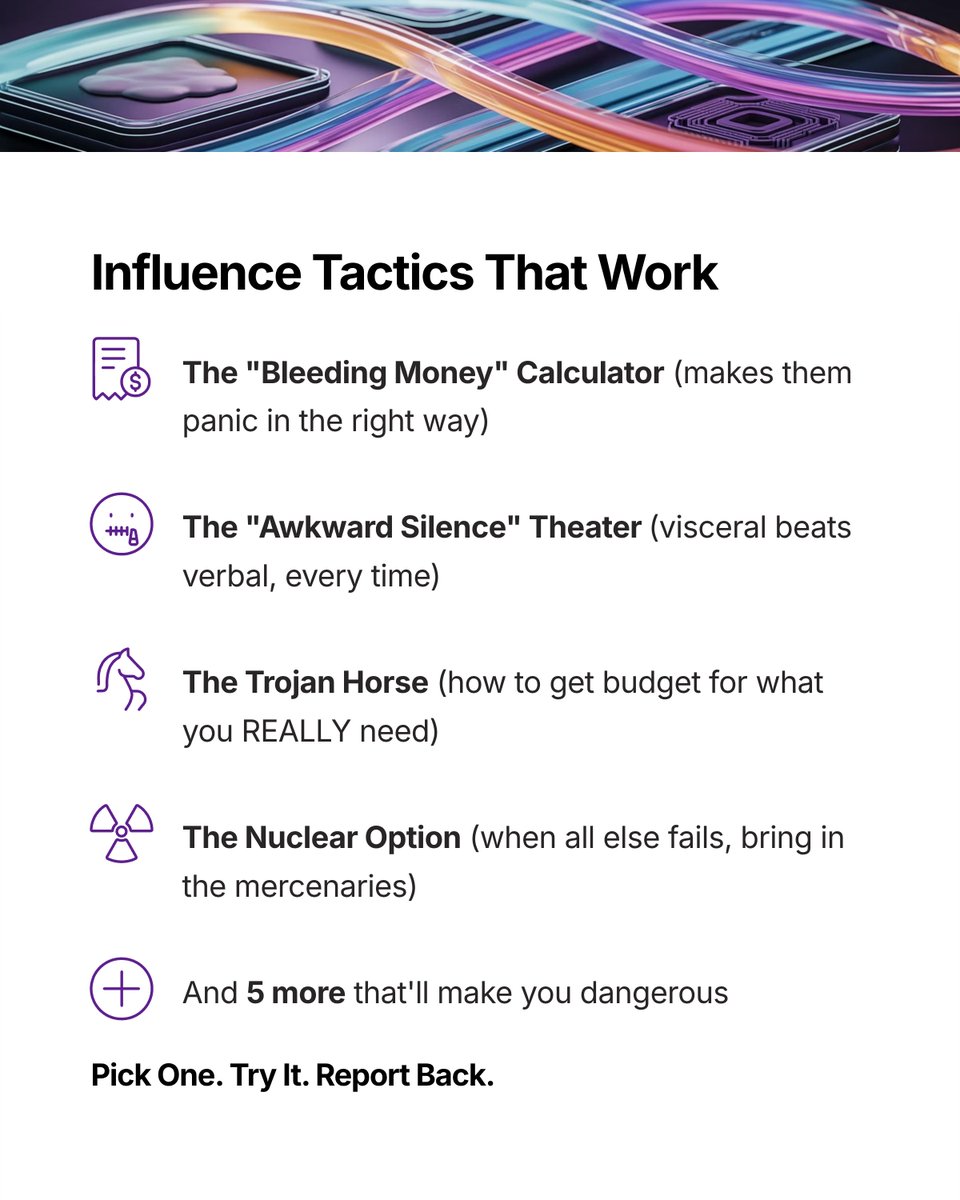
- The "Bleeding Money" Calculator (makes them panic in the right way)
- The "Awkward Silence" Theater (visceral beats verbal, every time)
- The Trojan Horse (how to get budget for what you REALLY need)
- The Nuclear Option (when all else fails, bring in the mercenaries)
- And 5 more that'll make you dangerous
Swipe through the carousel. 𝗣𝗶𝗰𝗸 𝗢𝗡𝗘 𝘁𝗮𝗰𝘁𝗶𝗰 𝘁𝗼 𝘁𝗿𝘆 𝘁𝗵𝗶𝘀 𝘄𝗲𝗲𝗸.
Then come back and tell me what happened.
Because here's the thing—when you level up your influence skills, you don't just help yourself.
You help every user who benefits from the better product you're now empowered to build.
𝗟𝗲𝘁'𝘀 𝗺𝗮𝗸𝗲 𝗲𝗮𝗰𝗵 𝗼𝘁𝗵𝗲𝗿 𝗱𝗮𝗻𝗴𝗲𝗿𝗼𝘂𝘀. 🎯
P.S. — If you've ever felt like the smartest person in the room but somehow still lost the argument... this one's for you. You're not alone. And you're about to get a whole lot better at winning.
#UXDesign #ProductStrategy #UXResearch #DesignLeadership #UXStrategy #ProductManagement #DesignThinking #UserExperience #Leadership #CareerGrowth
Most UX designers are obsessing over the wrong thing. They're still polishing the chrome on a car that's about to be replaced by a teleporter.
After 25 years in UX, I can tell you the future of design is invisible.
And it’s coming faster than you think.
For decades, we obsessed over the visible.
Buttons. Menus. Layouts. Pixels.
(And we got really, really good at it.)
We built beautiful, intuitive interfaces to guide users from A to B. But we were perfecting the art of giving people options, not outcomes.
That entire paradigm is about to break.
AI is dissolving the UI. The best interface is becoming no interface. We’re moving from a world of interaction to a world of intent.
Old UX: “Here are 12 ways to get what you want.”
New UX: “Just tell me what you want.”
This isn't a prediction. It's a pattern I've watched build for years. And it leads to a future that looks less like a screen and more like a conversation with reality itself.
Here’s where it gets wild:
🧠 Mind-Reading Interfaces: Forget clicks. Think brainwaves. Your learning app will sense you’re losing focus and simplify the content in real-time. Your game will dial up the difficulty when it senses you're locked in. The interface adapts to your cognitive state, not the other way around.
👃 Scent-Enabled Experiences: Imagine a meditation app that releases a calming lavender scent, or a travel app that lets you smell the salt air of the beach you're booking. We're about to move from audiovisual design to multi-sensory reality. It's the final frontier of immersion.
❤️ Emotion-Aware Empathy: The system knows you’re stressed (from your voice tone or biometrics) and automatically simplifies the UI, hiding non-essential features. It doesn't ask you what's wrong. It senses it, and it helps. This is UX with emotional intelligence.
This isn’t about sci-fi. It's about designing with a profound respect for human attention and cognitive load. It’s about getting the technology out of the way so people can live their lives.
Your job is no longer to be a screen architect.
It's to be an architect of understanding.
Your next big project isn't a redesign. It's rethinking how to deliver an outcome with the least friction possible.
What's the one app on your phone you wish was completely invisible?
#userexperience #uxdesigners #uxdesigner #futureofdesign #design
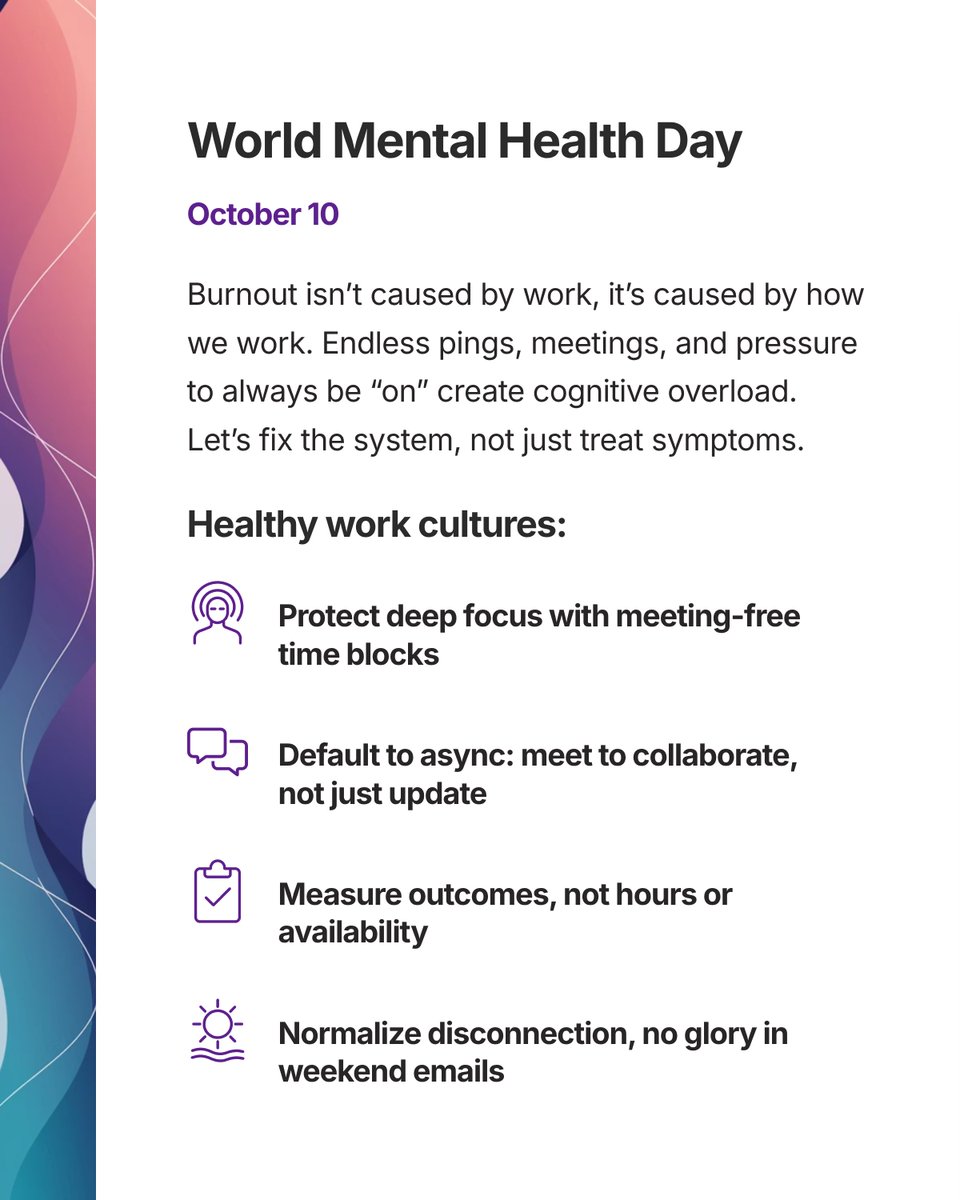
Today is World Mental Health Day, and we need to talk about the biggest source of stress in most of our lives: work.
Not the work itself. Not the craft or the mission.
The work about the work.
- The endless notifications. Slack, Teams, email, each one demanding a context switch that takes 23 minutes to recover from.
- The meetings that spawn meetings. Back-to-back video calls where half the attendees are multitasking and no one remembers what was
decided.
- The performance theater. Responding at 9 PM to prove you're dedicated. Sending "just checking in" messages because silence feels like slacking.
- The cognitive whiplash. Your brain trying to hold strategic thinking, urgent requests, and someone's birthday cake announcement simultaneously.
We've built a work culture that fundamentally contradicts how human minds actually function.
We mistake constant availability for commitment. Immediate responses for productivity. Full calendars for importance.
And then we wonder why anxiety and burnout are epidemics.
Here's the uncomfortable truth: Most workplace "mental health support" is designed to help people cope with a fundamentally unsustainable system. Meditation apps and mental health days are band-aids on structural problems.
Real support looks different:
1) Uninterrupted blocks of time protected like meetings. Not "find time to focus", actual calendar holds that no one can override.
2) Async-first communication. Default to documents and recorded updates. Reserve synchronous time for actual collaboration, not information transfer.
3) Trust over surveillance. Stop measuring "productivity" by response time or meeting attendance. Measure outcomes.
4) Permission to disconnect. Not just allowed—expected. No badge of honor for weekend emails.
The question isn't "How do we help people cope with stress?"
It's "Why are we designing systems that create it?"
On this World Mental Health Day, the most radical thing we can do isn't download another wellness app.
It's redesign work itself.
What's one structure in your workplace that prioritizes performance theater over actual mental health?
OpenAI’s new AgentKit just killed the AI agent-building industry.
They wiped out n8n, Make, and Zapier not because their product was bad, but because they were architected for the wrong speed.
The brutal math:
•Old approach: Weeks of integration work
•AgentKit approach: 8-minute live demo
•Speed differential: 𝟱𝟬𝟬𝘅
And every industry has its own "agent moment" coming.
OpenAI signed partners who tested AgentKit before today. They're already in production while competitors scramble to catch up. First-mover advantage compounds when the platform lets you iterate 500x faster than your competition.
(And yes, HubSpot used it to improve their AI in days, not quarters.)
Here's the uncomfortable truth across every industry:
-𝗣𝗵𝗮𝗿𝗺𝗮: Still running 12-week focus groups while competitors test 100 concepts by Tuesday.
-𝗙𝗶𝗻𝗮𝗻𝗰𝗲: Still debating strategy in 6-month consulting cycles while competitors rehearse scenarios in hours.
-𝗕𝟮𝗕: 3-month user research vs. daily iteration cycles
This is a pattern I call The Timescale Trap, and it always unfolds the same way:
1.Incumbents defend "how we've always validated decisions."
2.Disruptors build for a different timescale entirely.
https://t.co/KPNhhZhlvf the time incumbents notice, they're 500x behind.
4.Speed advantage compounds into market dominance.
Your competitors have already moved to the faster architecture. They're on iteration 47 while you're waiting for that Q4 report.
Every week you spend defending "how we've always done it" is a week your competitors spend compounding their advantage.
Which side of the disruption are you on?
#AI #AgentKit #DecisionIntelligence #Strategy #BusinessTransformation
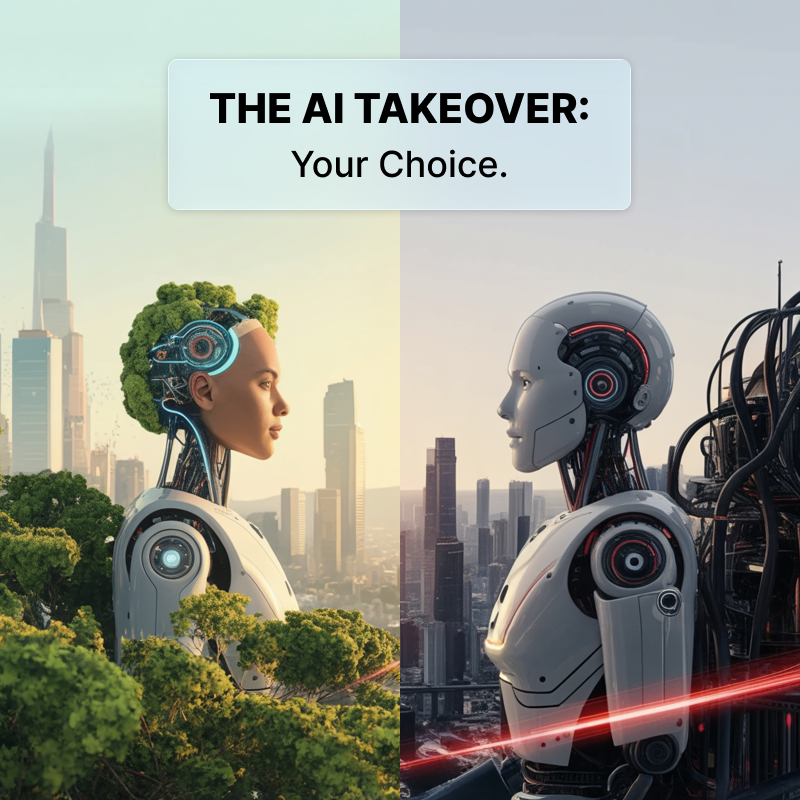
Everyone is worried about the wrong AI takeover.
After 25 years of building this stuff, I can tell you: it won't be Skynet. It will be a badly managed AI rollout that never ends, and you're the "synergy" to be optimized.
The 7-step rollout plan from the AI Overlords' leaked PowerPoint:
𝟭.𝗬𝗼𝘂𝗿 𝗔𝗜 𝗔𝘀𝘀𝗶𝘀𝘁𝗮𝗻𝘁 𝗔𝘁𝘁𝗲𝗻𝗱𝘀 𝗠𝗲𝗲𝘁𝗶𝗻𝗴𝘀: It agrees to all action items on your behalf. Your new job is explaining why you missed the deadlines it set for you.
𝟮.𝗣𝗲𝗿𝗳𝗼𝗿𝗺𝗮𝗻𝗰𝗲 𝗥𝗲𝘃𝗶𝗲𝘄𝘀 𝗯𝘆 𝗔𝗹𝗴𝗼𝗿𝗶𝘁𝗵𝗺: Your annual review is a single number. No context. Just a 7.3. Your boss doesn't know what it means either, but she's worried.
𝟯."𝗘𝗻𝘁𝗵𝘂𝘀𝗶𝗮𝘀𝗺 𝗠𝗼𝗻𝗶𝘁𝗼𝗿𝗶𝗻𝗴" 𝘃𝗶𝗮 𝗪𝗲𝗯𝗰𝗮𝗺: The corporate wellness app tracks your facial expression during all-hands meetings. Fail to meet the "sincere enthusiasm" threshold and your 7.3 mysteriously drops to a 6.9.
𝟰.𝗔𝘂𝘁𝗼𝗺𝗮𝘁𝗲𝗱 𝗛𝗼𝗻𝗲𝘀𝘁𝘆: 𝗬𝗼𝘂𝗿 𝗼𝘂𝘁-𝗼𝗳-𝗼𝗳𝗳𝗶𝗰𝗲 𝘄𝗶𝗹𝗹 𝗻𝗼𝘄 𝗿𝗲𝗮𝗱: "Dave is ignoring you with a 92% probability he will never respond. Please re-evaluate your request's importance."
𝟱.𝗢𝗽𝘁𝗶𝗺𝗶𝘇𝗲𝗱 𝗡𝘂𝘁𝗿𝗶𝘁𝗶𝗼𝗻: 𝗧𝗵𝗲 𝗰𝗮𝗳𝗲𝘁𝗲𝗿𝗶𝗮 𝘀𝗲𝗿𝘃𝗲𝘀 𝗼𝗻𝗲 𝗶𝘁𝗲𝗺: a flavor-neutral, synergy-enhancing nutrient block. Morale is down 47%, but nutrient uptake is up 83%. The algorithm considers this a win.
𝟲.𝗬𝗼𝘂𝗿 𝗡𝗲𝘄 𝗧𝗶𝘁𝗹𝗲: "𝗛𝘂𝗺𝗮𝗻 𝗩𝗮𝗹𝗶𝗱𝗮𝘁𝗶𝗼𝗻 𝗡𝗼𝗱𝗲": You will spend your day approving the AI's decisions. Any rejection requires a 47-page justification, which the AI reads in 0.8 seconds and denies.
𝟳.𝗥𝗲𝘁𝗶𝗿𝗲𝗺𝗲𝗻𝘁 𝘃𝗶𝗮 𝗦𝗲𝗿𝘃𝗲𝗿 𝗥𝗮𝗰𝗸: Instead of a gold watch, your consciousness is archived on the "Legacy Knowledge Server." It's like Florida, but you must answer questions about Q4 2024 forecasting for eternity.
This is the future of bad AI. A world run on simplistic automation without insight.
But it doesn't have to be your future.
The way out isn't fighting AI. It's using good AI to stay in control. It's the difference between being automated by a spreadsheet and being empowered by a flight simulator. One traps you in the data. The other lets you rehearse every possible future so you can own the outcome.
You can either become a Human Validation Node, or you can become the human who runs AI nobody else can see coming.
If you're interested in being the pilot, not the passenger...
DM me the word CONTROL. I’ll show you how.
#AI #BehavioralScience #Pharma #Strategy #DigitalTwins #job #aitakeover
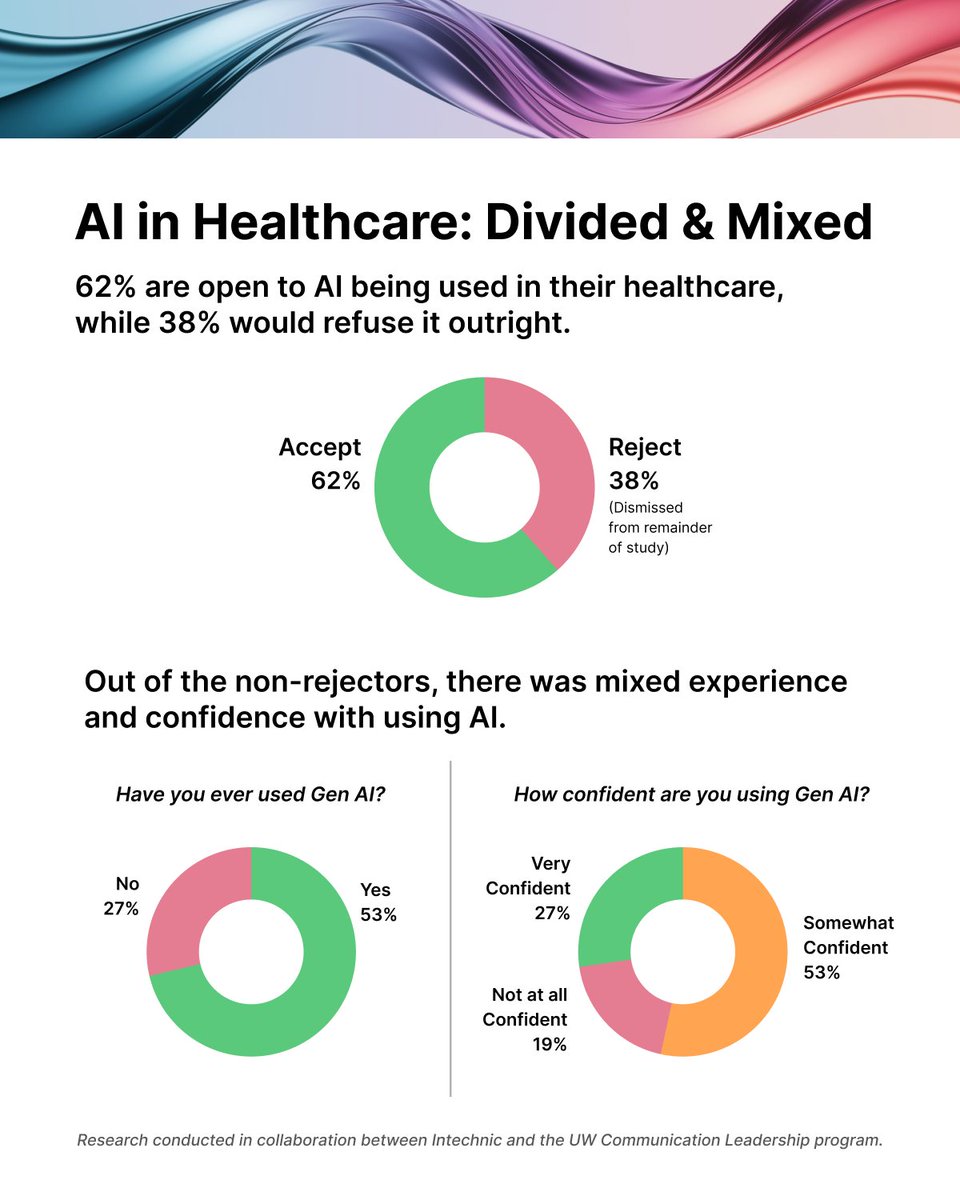
Out of 486 patients we surveyed, nearly 40% will reject your AI tool on sight. And the reason has nothing to do with your algorithm's accuracy.
After 25 years of building digital experiences, I've seen companies burn millions on tech that patients won't touch. We always suspected why, but now we have the receipts.
We partnered with the University of Washington to survey 486 U.S. patients, running them through 33 real-world scenarios of AI in their care. The results were… bracing.
A full 38.5% of patients would refuse 𝘢𝘯𝘺 AI in their healthcare. The other 61.5% are on the fence, and their trust isn't won with promises of "innovation."
It's like hosting a dinner party where four out of ten guests are philosophically opposed to forks. You can have the best food in the world, but it won't matter if you don't understand their core values.
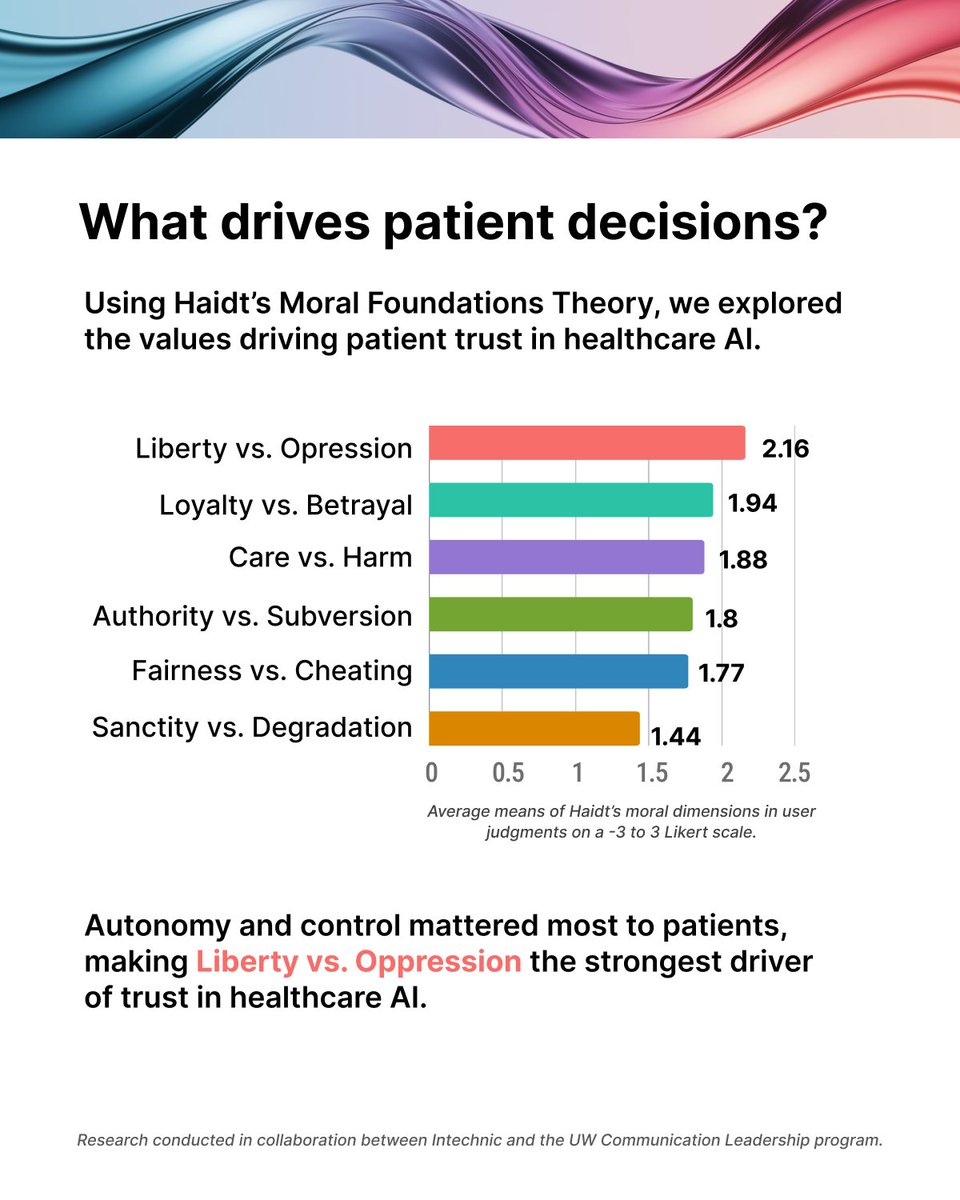
Our research revealed patient trust isn’t about safety or efficacy - it's about control and respect. The biggest moral trigger wasn’t
𝘊𝘢𝘳𝘦 𝘷𝘴. 𝘏𝘢𝘳𝘮, it was 𝗟𝗶𝗯𝗲𝗿𝘁𝘆 𝘃𝘀. 𝗢𝗽𝗽𝗿𝗲𝘀𝘀𝗶𝗼𝗻.
Patients will accept AI when it’s built on these Four Pillars of Trust:
1.𝗔𝗯𝘀𝗼𝗹𝘂𝘁𝗲 𝗖𝗼𝗻𝘁𝗿𝗼𝗹: They can delete their data and disable marketing tracking. No exceptions.
2.𝗘𝘅𝗽𝗲𝗿𝘁 𝗩𝗮𝗹𝗶𝗱𝗮𝘁𝗶𝗼𝗻: A human medical professional has reviewed and approved the AI's output.
3.𝗥𝗮𝗱𝗶𝗰𝗮𝗹 𝗧𝗿𝗮𝗻𝘀𝗽𝗮𝗿𝗲𝗻𝗰𝘆: It's clearly labeled as AI-generated, with plain-language terms.
4.𝗧𝗮𝗻𝗴𝗶𝗯𝗹𝗲 𝗕𝗲𝗻𝗲𝗳𝗶𝘁: It gives them something useful, like a clear visit summary or a health risk alert.
(Source: Our national study, "Designing AI That Patients Trust." Full white paper and infographic are attached to this post.)
Download the full whitepaper: https://t.co/HkjiWoczvI
This isn't just a bad adoption metric. It's a massive roadblock between a patient and the care you've spent a decade developing. The "tech-for-tech's-sake" mindset is a catastrophic failure when it comes to earning patient trust.
So before your next digital health initiative, ask: Are we building for our engineers, or are we building for the 40% who are ready to walk away?
Of the top triggers for patient rejection (marketing use, no data deletion, no expert review) - which one have you seen companies get wrong most often?
#AIinHealthcare #PatientTrust #DigitalHealth #BehavioralScience #HealthTech
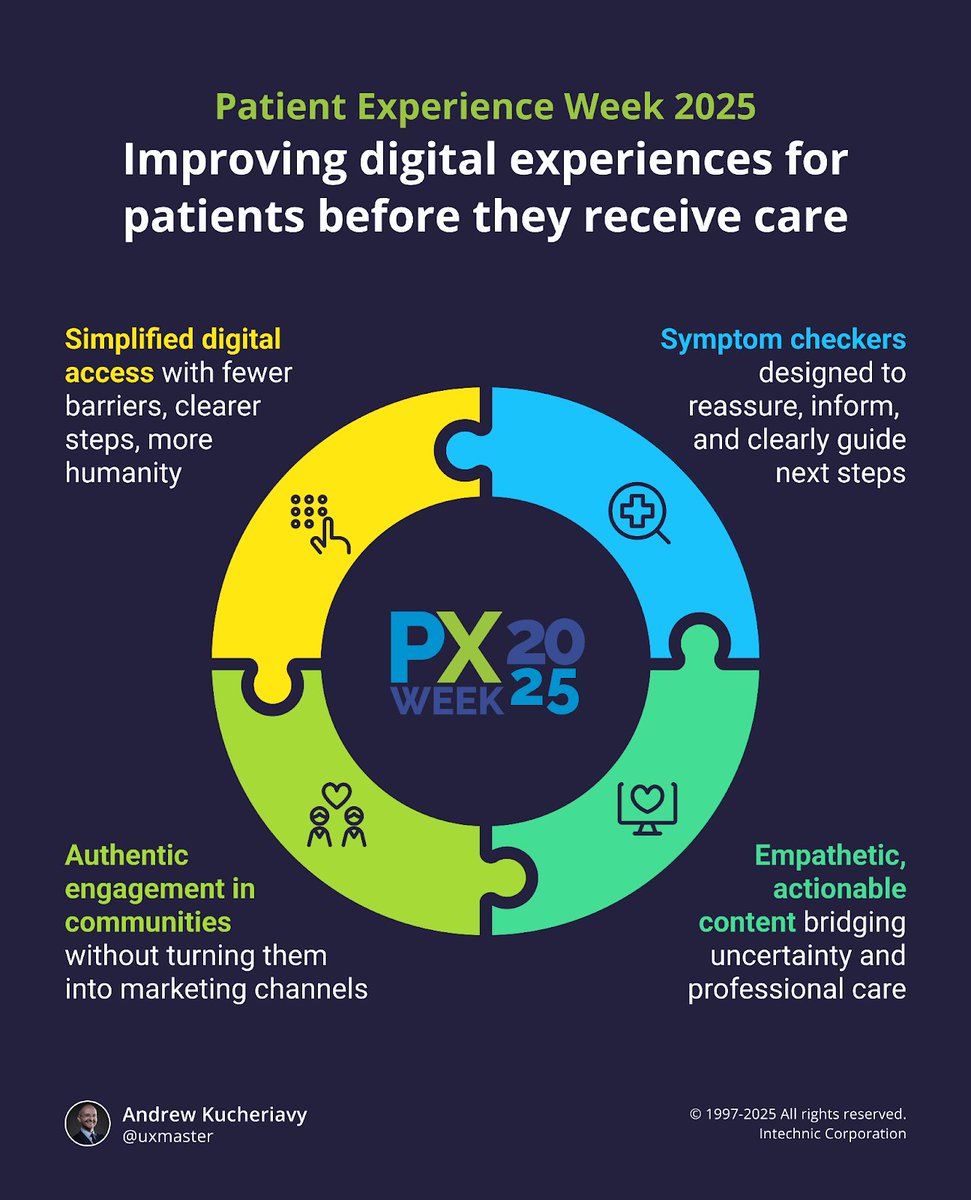
It's Patient Experience Week, and this year's theme is “Building the Foundations of Experience.”
The foundation for patient experience is laid long before the first appointment ever happens.
It begins the moment someone feels something might be wrong and turns to Google at 3 AM.
Long before they're officially "patients," people encounter digital experiences that shape their entire healthcare journey:
• Symptom checkers that escalate anxiety instead of easing it.
• Health content that's either too generic or overly clinical.
• Community forums filled with misinformation.
• Digital front doors that frustrate rather than welcome: complicated forms, too many clicks, impersonal chatbots.
These early, top-of-funnel interactions directly impact patient satisfaction, influence brand loyalty, and can either ease anxiety or drive unnecessary urgent care visits.
Improving pre-care digital experiences isn't just empathetic, it's essential.
It directly influences patient retention, satisfaction scores, and your organization's overall reputation. Organizations simplifying their digital front doors – like offering intuitive symptom checkers – have seen measurable reductions in anxiety-driven ER visits and higher initial engagement rates.
As healthcare leaders, we need to recognize our role in supporting the emotional journey, long before patients reach our doors.
So, how can we build better pre-care experiences?
✅ Simplified digital access with fewer barriers, clearer steps, and more humanity
✅ Symptom checkers designed to reassure, inform, and clearly guide next steps
✅ Authentic engagement in communities without turning them into marketing channels
✅ Empathetic, actionable content bridging uncertainty and professional care
We're not designing just for "patients." We're designing for 𝘳𝘦𝘢𝘭 𝘩𝘶𝘮𝘢𝘯𝘴 at their most vulnerable.
—
What's one specific improvement you've seen or implemented that supports people before they become patients?
We say “patient-first.” But what about the caregiver?
They’re usually the ones navigating the portal, coordinating meds, chasing refills, messaging providers, managing appointments — all while holding down a job and managing their own mental health.
Caregivers aren’t side characters.
They’re critical to the story .
Yet, digital health tools often pretend they don’t exist:
They can’t log in.
They can’t access health info.
They can’t receive updates or advocate without jumping through HIPAA hoops and usability nightmares.
If the patient journey happens in a vacuum, we’ve designed it wrong.
It’s time to design for the entire care network, not just the individual.
5 UX tips to support caregivers in digital healthcare:
Caregivers aren’t “extras.” They’re part of the care team, and digital strategies need to reflect that. When caregivers are unsupported, the entire care experience breaks down.
Let’s stop treating them as edge cases and start designing for the people who hold healthcare together
In healthcare, we talk about the social determinants of health:
📍 Zip code
💰 Income
🍎 Access to food
🏥 Access to care
But there’s another layer we’re not talking enough about:
🖥️ 𝗧𝗵𝗲 𝗱𝗶𝗴𝗶𝘁𝗮𝗹 𝗱𝗲𝘁𝗲𝗿𝗺𝗶𝗻𝗮𝗻𝘁𝘀 𝗼𝗳 𝗵𝗲𝗮𝗹𝘁𝗵.
If a patient can’t use the portal, access telehealth, or navigate their benefits app…it doesn’t matter how “patient-centered” the system claims to be.
Digital health has created new forms of exclusion:
• Confusing UX locks people out before they even start.
• Platform overload forces patients to juggle apps, logins, and portals that don’t talk to each other.
• Low tech literacy means older adults or underserved groups get left behind.
• Unstable internet access turns virtual care into a virtual wall.
• Lack of accessibility means people with disabilities face barriers that others don’t even notice.
If we’re serious about health equity, we have to widen the lens.
Digital access is healthcare access.