In 1967, Otis Redding finished recording the song "Sittin On The Dock Of The Bay" in Memphis, TN. Tragically, 72 hours later he died in a plane crash at the age of 26.
When the phone rang at the Stax/Volt studios in Memphis in late November of 1967, guitarist Steve Cropper was surprised to hear Otis Redding on the other end, calling from the airport. "Usually Otis would check into the Holiday Inn or whatever hotel he was staying at and then he'd call for me to come over and do some writing," Cropper recalls.
But this time Redding was too excited to wait. "I've got a hit," he told Cropper, so he wanted to come straight to the studio to flesh his idea out into a full-fledged song.
Redding started writing the lyrics to the song in August 1967, while sitting on a rented houseboat in Sausalito, California. He completed the song in Memphis with the help of Cropper, who was a Stax producer and the guitarist for Booker T. & the M.G's.
Redding was right. When "(Sittin' on) the Dock of the Bay" was released less than two months later, it became the singer's first million-seller and first 'Billboard' Number One single. But the legendary soul singer never got to hear the finished version of his breakthrough single: He had died in a plane crash on December 10th at the age of 26.
We're so used to seeing and hearing about the pyramids that it's easy to forget how strange and extraordinary they really are.
So, just to remind you:
When woolly mammoths went extinct the Pyramids of Giza were already more than 500 years old.
Cleopatra and Julius Caesar are closer in time to the present day — to the Burj Khalifa — than to the construction of the Pyramids of Giza.
Where are they and who built them?
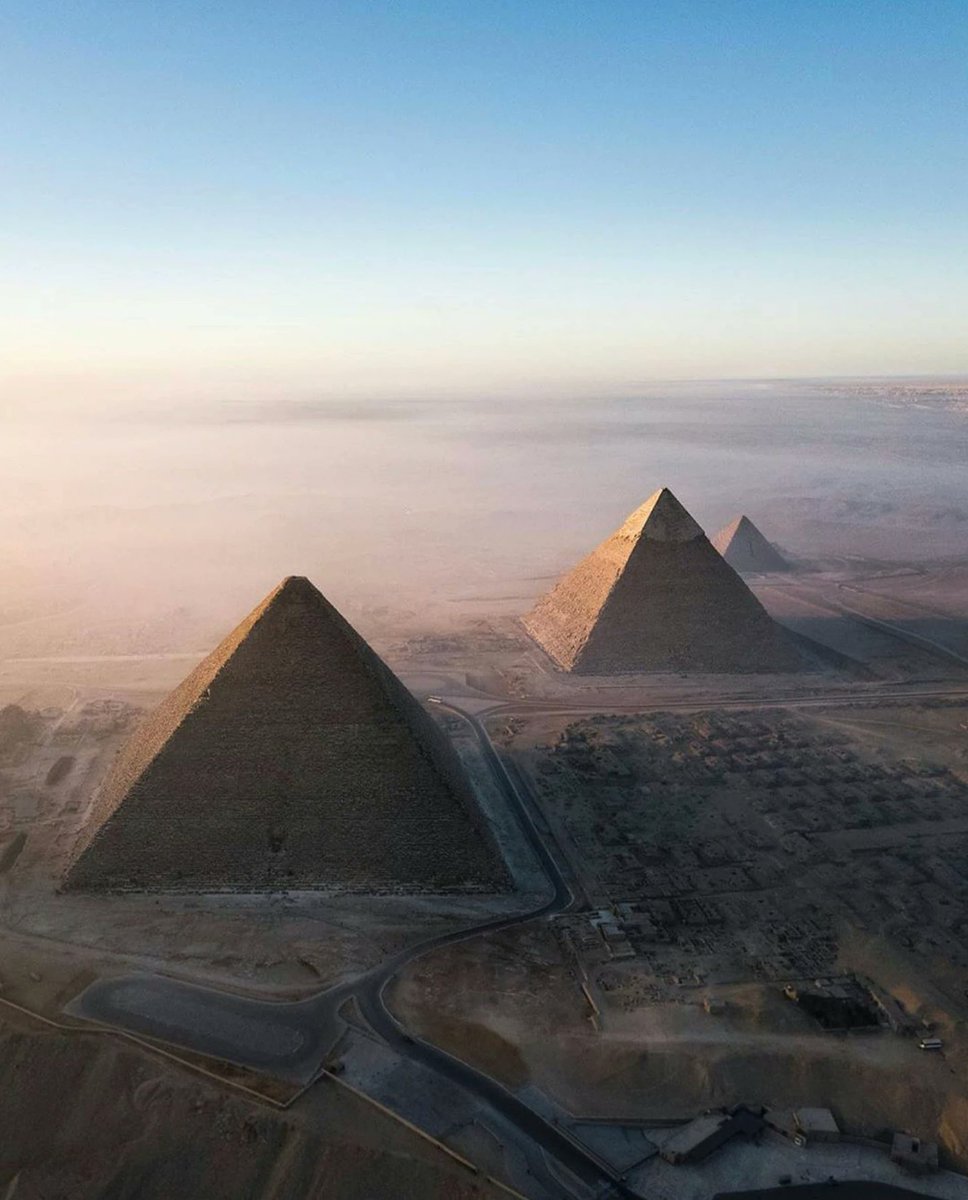
There are three pyramids on the Giza Plateau, which is on the west bank of the River Nile, in northern Egypt. They aren't far from Memphis, which was the capital of Ancient Egypt when they were constructed.
The largest and oldest was built in less than thirty years around 2570 BC for the Pharaoh Khufu. The second was built for Khufu's son, Khafre, and is only a few metres shorter. The third and smallest was then built for Menkaure, Khafre's son. Three monumental tombs for three generations of the same family.
Nearby are many more tombs for various members of the royal court, the Sphinx, several more temples, and the remains of a sort of workers' town including houses, workshops, bakeries, kitchens, breweries, a hospital, and a necropolis.
Khufu's Pyramid, known as the Great Pyramid, was the tallest building in the world for over 3,800 years — that is, until the spire of Lincoln Cathedral in England was constructed in 1311.
And at more than 6 million tonnes it was the heaviest manmade structure ever built, and is still third behind only the Great Wall of China and the Three Gorges Dam.
The mortar used in constructing the Great Pyramid alone weighs over half a million tons, which is more than the total weight of the Burj Khalifa.
See, the Great Pyramid is almost entirely solid — there are only a few narrow shafts and three small chambers inside. It was largely built from huge blocks of local Giza limestone, although its exterior was once covered in polished white limestone transported there from nearby Tura, and its interior includes blocks of granite weighing up to 80 tonnes transported from Aswan, over 500 miles away.
The *precision* of the pyramids is also remarkable. On a technical level their masonry is astonishingly accurate, but even more amazing is that the four sides of the Great Pyramid are all almost exactly the same length — they have a variation of no more than 60 millimetres.
Not to forget that all three pyramids are aligned according to the points of the compass — within one tenth of a degree of perfect geographical accuracy.
And if these facts weren't impressive enough, the actual construction of the pyramids — the specifics of how the blocks were quarried, transported, and lifted into place — remains a marvel we have yet to fully understand.
But those are merely the facts of the Pyramids of Giza; perhaps more interesting is what they really mean.
After all, you can learn a lot about any society from its architecture. What we say about ourselves can rarely be trusted — but what we do and what we leave behind is always truthful. In other words, that which we build expresses our priorities, how our society works, and who has the most power.
Think of it this way: what are the biggest buildings in the modern world?
By volume it is factories (the Boeing Everett Factory is number one right now) and distribution centres.
By total floor space it is airports and malls.
By height it is mixed-used skyscrapers, though they are usually dominated by offices, especially relating to finance. The Pentagon was the world's largest office building until this year; it has been overtaken by the Surat Diamond Bourse in India.
By capacity? Well, there are sports stadiums, the biggest of which is the Narendra Modi Stadium in India, with an official capacity of 132,000. That being said, no single complex can hold a greater number of people than the Masjid al-Haram in Mecca, which has a capacity of 4 million.
So the largest buildings in the 21st century are almost all related to industry, finance, retail, transport, and leisure — with religious worship something of an outlier. This is a technologically advanced, industrial, highly consumerist society in which businesses hold a great deal of power, and in which the wants and demands of the public are very important.
For comparison, during the Middle Ages nothing came remotely close to cathedrals in size or complexity, though castles and fortresses were also far bigger than everything else. We can draw the basic conclusion that religion was of immense and central importance, that the church as an institution was very wealthy, and that power was actually spread out among the hereditary nobility rather than being entirely concentrated in the monarch alone, not to mention the political and spiritual power also held by the church.
So, what about the Pyramids?
The Ancient Greek historian Herodotus remarked that the Pyramids of Giza were proof of how tyrannical a ruler Khufu — or Cheops, as the Greeks called him — must have been. In his native Greece the largest buildings were temples for public worship; the Great Pyramid was a monument to but one man alone, and this shocked Herodotus.
The biggest buildings of the 21st century are all useful. They have a clear and immediate purpose, and usually one which benefits — in some sense — lots of people. A factory produces things we all use, a distribution centre organises our online shopping, an office is a place of work, and a stadium is where we go for entertainment. Our largest buildings are intimately and inseparably related to employment and consumption.
What about the Pyramids? They were tombs for the Pharaohs and they were supposed to last forever. In other words, they had no immediate use or purpose, at least for the living. They served only one person: the Pharaoh — plus his family and closest supporters, though they were buried nearby rather than inside — in his journey through the Afterlife.
So this is not the same as a large and lavish royal or presidential palace; such buildings are designed to be used as a seat of power and administration — by several succeeding generations or leaders.
Meanwhile, all the resources and labour that went into building the Pyramids, which were literally manmade mountains, were for the benefit of one Pharaoh alone, after his life had ended — and, to a lesser extent, those lucky enough to have been buried nearby at the time.
Does that mean Khufu and his descendants were tyrants? In some sense, yes. But there is evidence that those who built the Pyramids were not, as Herodotus thought, slaves, and were instead closer to conscripted workers and freely employed craftsmen who were fairly remunerated for their labour.
See, it wasn't just that Khufu held total political power; he was also the spiritual leader of his subjects, such that their work was fundamentally religious in nature — it might have even helped them achieve a better afterlife.
There was nobody who could refuse Khufu's desire to build the largest tomb in human history, because he was a divinely appointed intermediary between gods and humans; no regulation to stop him, because his will was the law; no limits to his expenditure, because he collected the taxes and owned all the land in the kingdom.
However powerful the world's richest and most influential people might now seem, none of it compares to the power wielded by Pharaohs like Khufu; a power that was political, financial, legal, military, and spiritual — absolute.
And so the Pyramids are a glimpse into a society fundamentally and almost irreconcilably different from that in which we now live, to the earliest epochs of human civilisation, long before democracy and the rule of law, when one man could rule as a god and have mountains built to serve as his personal, eternal monument on earth.
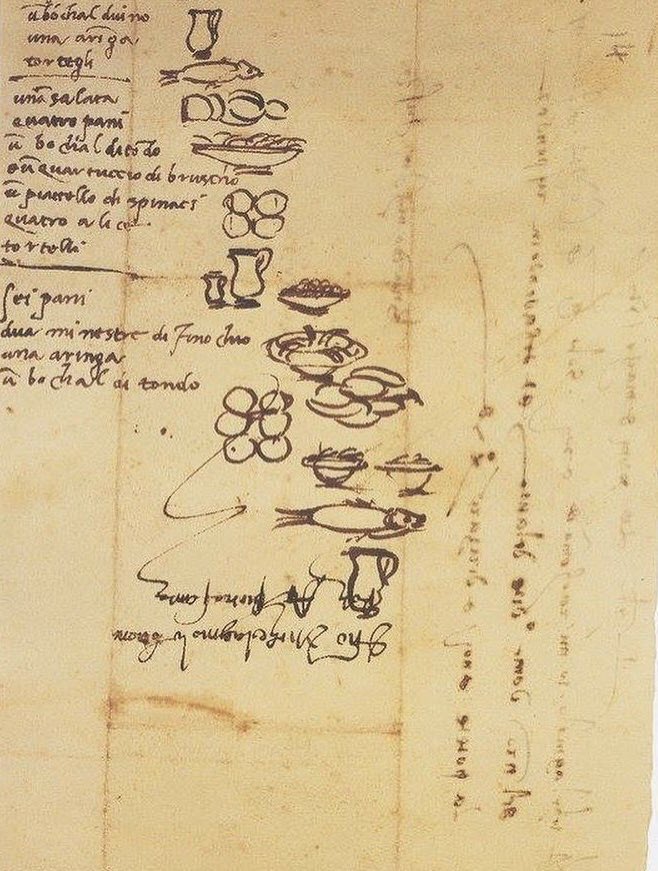
Michelangelo's 16th-century grocery list is a fascinating glimpse into the renowned artist's daily life. In an era when illiteracy was common among servants, Michelangelo illustrated his shopping list to ensure that his needs were accurately conveyed. Preserved at Casa Buonarroti, the list showcases Michelangelo's artistic talent even in mundane tasks. It's a unique and historical artifact that provides insight into the daily necessities and preferences of one of history's greatest artists.
This painting has no brush strokes — it is made from over 2,000,000 individual dots of colour.
And though this may look like nothing more than a sunny afternoon in Paris, it has a much darker hidden meaning...
To avoid his tomb becoming a sort of tourist attraction, and contravening the principles of Judaism, which prohibits cremation, Einstein had requested that his body be cremated and his ashes be strewn into a nearby river.
That is exactly what happened less than 24 hours after his death—in a secret ceremony, family and close friends scattered Einstein's ashes along the Delaware River. But those ashes did not include his brain or his eyes which the pathologist stole.
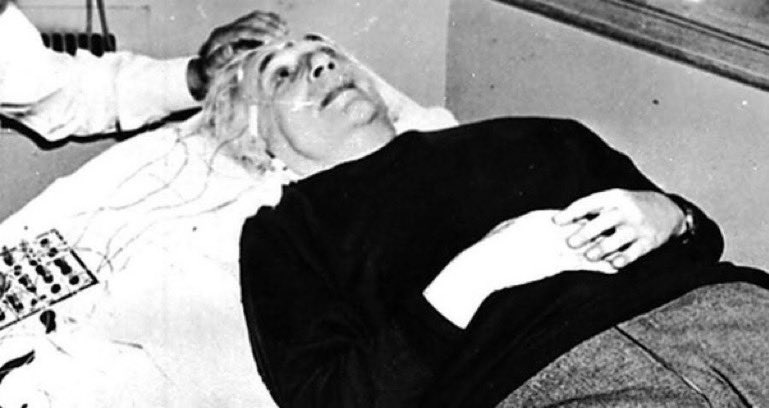
In 1948, at the age of 69, Albert Einstein underwent surgery for an abdominal aortic aneurysm. However, his condition had already worsened, so the doctor decided to wrap the vessel with cellophane to prevent further dilation.
Scientific studies of abdominal aortic aneurysm, which involved the analysis of over 3 million cases, have shown that smoking is the major risk factor. According to the study, more than 80% of sufferers were heavy smokers.
Albert's doctor advised him to quit smoking because of his condition, but it was recorded that he left the hospital after the surgery with a pipe in his hand, as if he didn't care. To make matters worse, he even became a member of the Montreal Pipe Smokers Club in 1950, completely defying the doctor's instructions.
When he returned seven years later with the ruptured vessel, he refused any surgical intervention, stating, "I want to go when I want to go. It is tasteless to prolong life artificially. I have done my share; it is time to go."
He passed away at 1:15 A.M on April 18, 1955. Unfortunately, his last words were lost because the nurse by his bedside could not understand German.
Michelangelo's Moses was sculpted between between 1513-1515
That blue circle shows a muscle called extensor digiti minimi, which contracts only when the little finger is lifted
Such precision and attention to anatomical accuracy demonstrate Michelangelo's remarkable artistic skill.
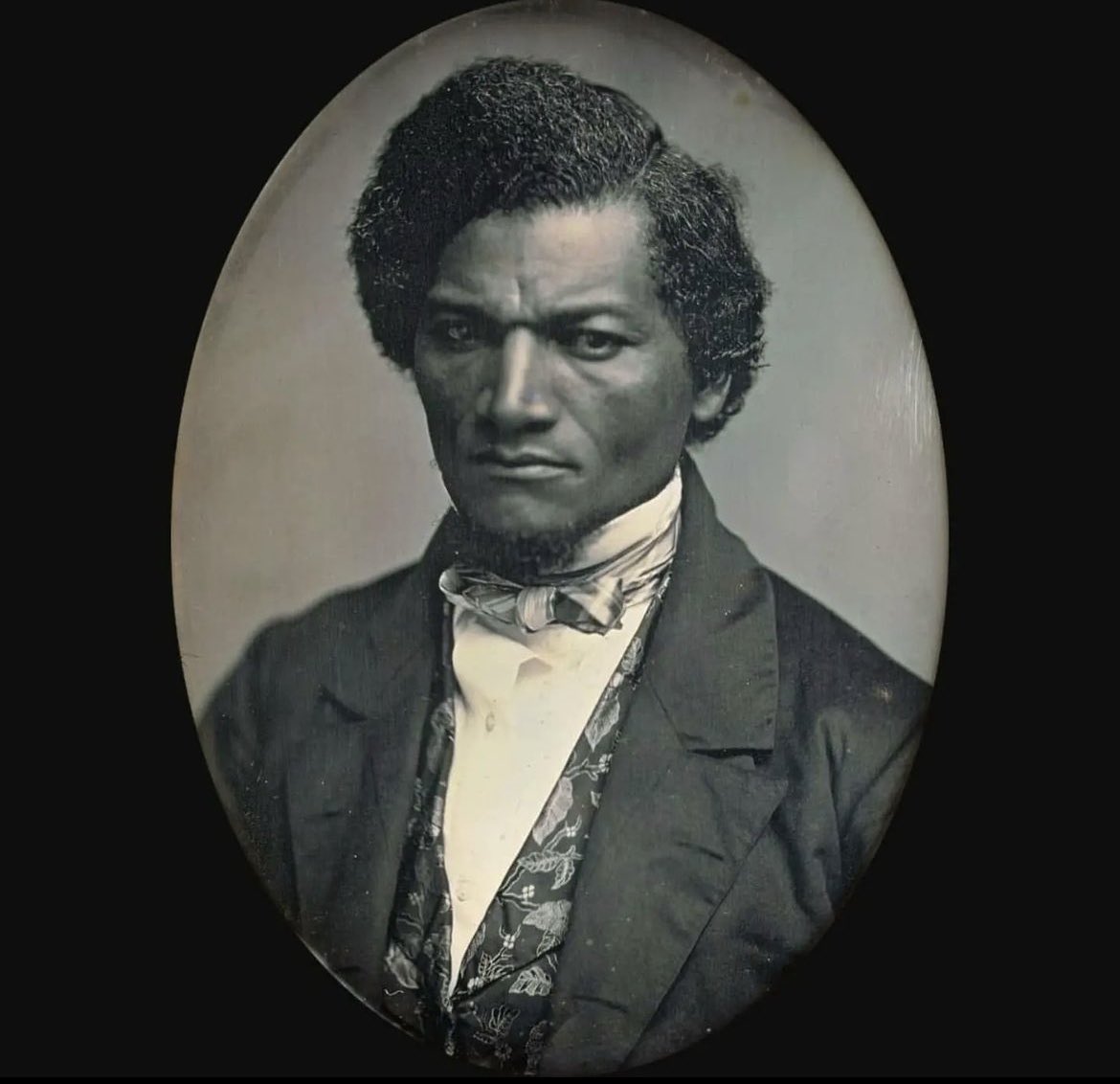
Abolitionist Frederick Douglass was the most photographed American of the 19th century. He never smiled in a single photo to counter the notion of a happy slave.
Born in 1817 in Maryland, Douglass was enslaved from birth. At age 12, he learned the alphabet from the slaveholder's wife; however, his lessons were soon discontinued under the belief that it would foster a desire for freedom. But it was already too late. Douglass continued to learn from white children and others in his neighborhood. He began to read newspapers and devoured any books he could get his hands on. Soon, he began teaching others how to read and write. More than 40 people would attend his secret lessons until it was broken up by an angry white mob.
At age 16, Douglass was made to work for a brutal slave master by the name of Edward Covey, who was known as a "slave-breaker." He whipped Douglass so regularly that his wounds didn't have time to heal. The beatings were so severe that they broke his body, soul, and spirit. One day, Douglass could not take it anymore and fought back and won. Covey could have had Douglass killed, but he didn't want to risk his reputation. He never tried to beat him again.
In 1838, after several failed attempts, Douglass managed to escape slavery by boarding a north-bound train and taking it all the way to New York City. A year prior to his escape, he had met a woman named Anna Murray, who was a free black woman living in Baltimore. He fell in love with her, and she, in turn, helped him escape by providing him with a sailor's uniform, part of her savings to pay for travel expenses, identification papers, and protection papers.
Douglass later wrote about seeing New York City for the first time: "A new world had opened upon me. If life is more than breath, and the 'quick round of blood,' I lived more in one day than in a year of my slave life. I felt as one might feel upon escape from a den of hungry lions."
Murray soon followed, and 11 days later, the two were married by a black Presbyterian minister. They remained married for 44 years until her death in 1882.
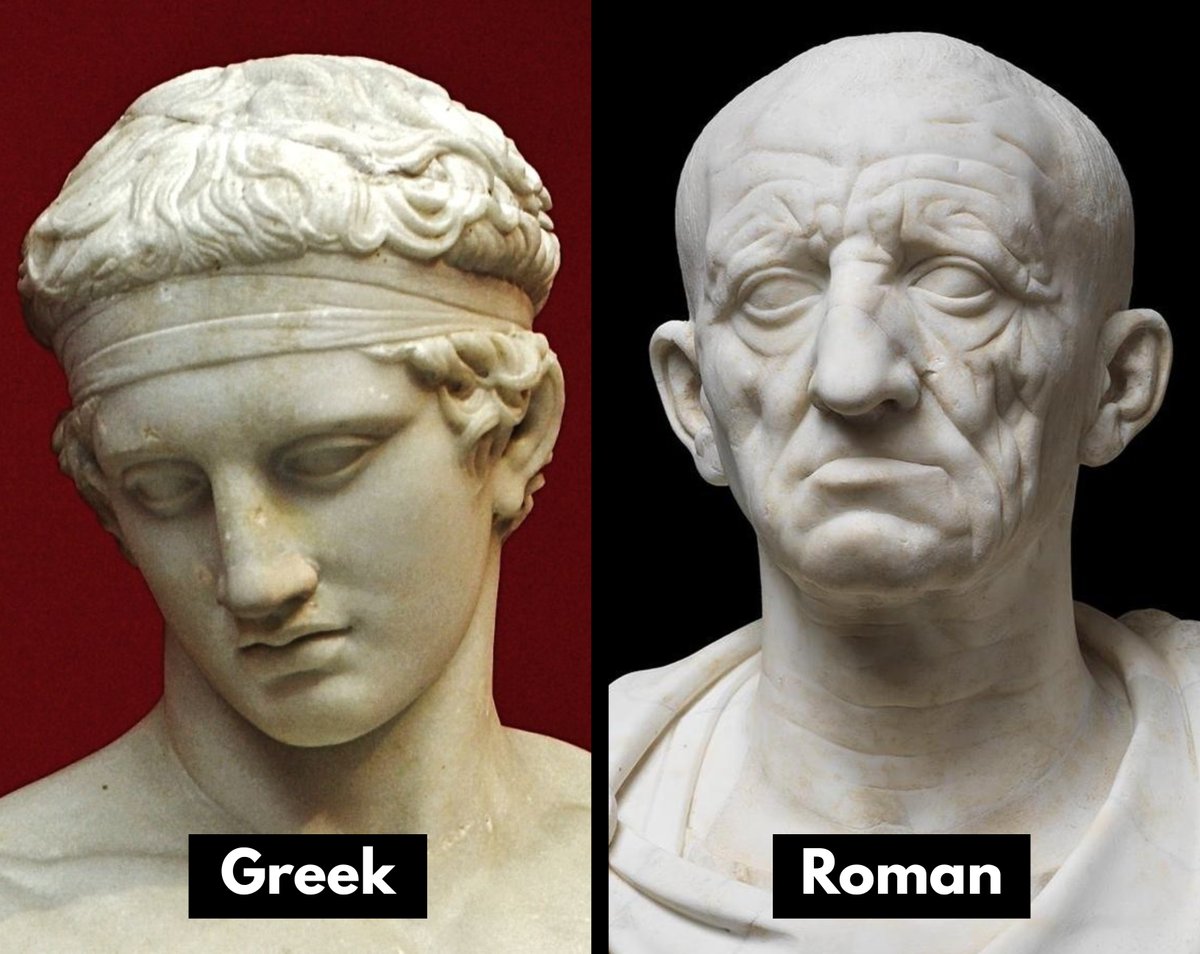
Want to know the difference between the Ancient Greeks and the Ancient Romans? Just look at their statues.
Art always tells you what a society wants to believe about itself.
So, from the Soviet Union to the Marvel Cinematic Universe, here's what art says about who we are...
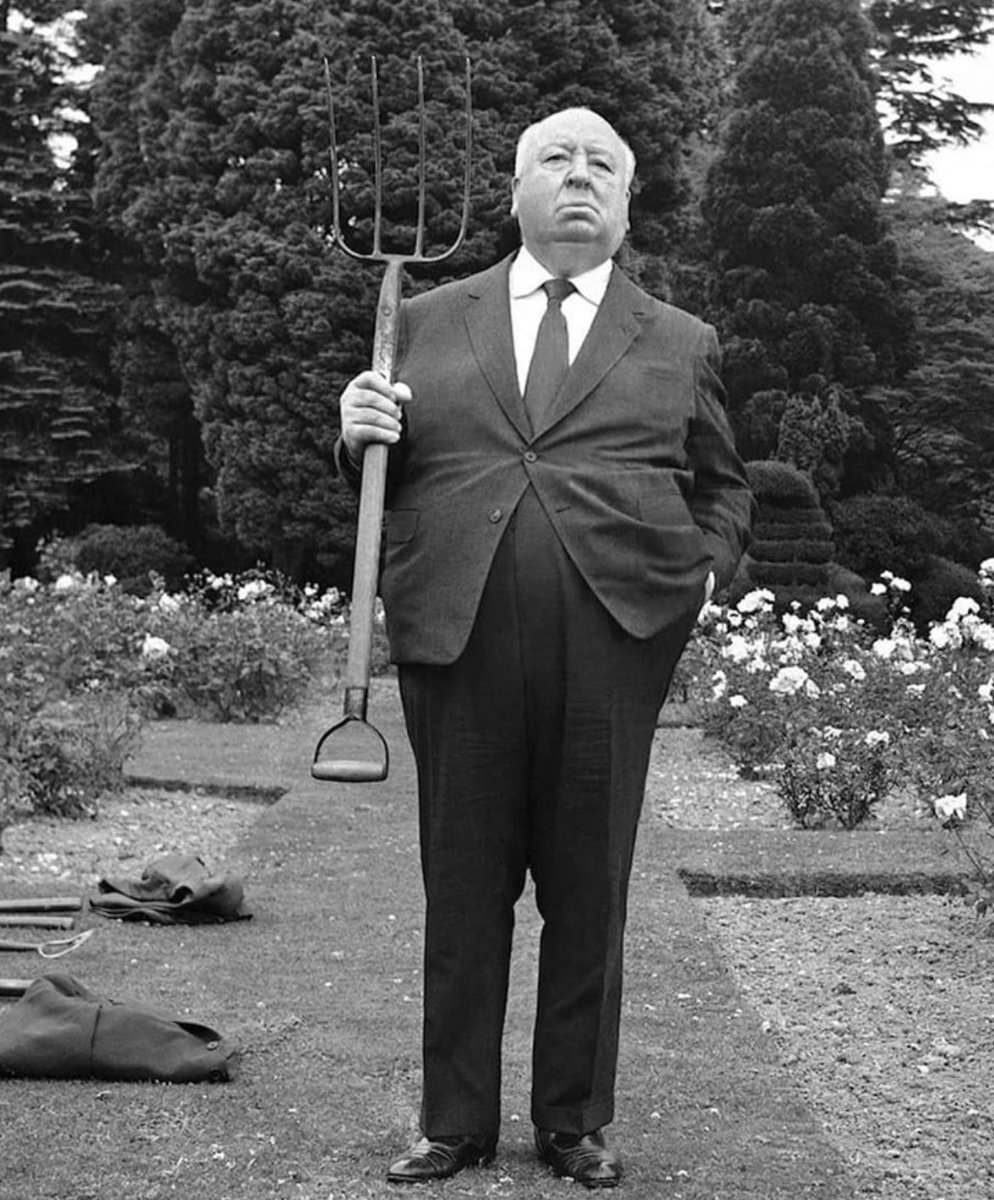
The photograph capturing Alfred Hitchcock holding a pitchfork on the lawns of Pinewood Studios in Buckinghamshire, United Kingdom, on July 22, 1971, provides a glimpse into the life and career of the legendary film director, producer, and screenwriter.
Alfred Hitchcock, born on August 13, 1899, in Leytonstone, Essex, England, is widely regarded as one of the greatest filmmakers in the history of cinema. Known for his distinctive style and innovative storytelling techniques, Hitchcock's contributions to the suspense and thriller genres have left an indelible mark on film.
By 1971, Hitchcock was already a highly celebrated director, having directed numerous iconic films throughout his career. Some of his most renowned works include "Psycho" (1960), "Vertigo" (1958), "North by Northwest" (1959), and "Rear Window" (1954), among many others. His films often featured themes of suspense, psychological tension, and dark humor, showcasing his mastery of building suspense and creating unforgettable cinematic experiences.
Pinewood Studios, where the photograph was taken, is a major film and television production studio located in Buckinghamshire, England. Established in 1935, Pinewood Studios has been the backdrop for countless films, including many of Hitchcock's productions. The studio has a rich history and continues to be a prominent hub for the British and international film industry.
The image of Alfred Hitchcock holding a pitchfork offers a glimpse into his unique personality and the way he blended his public image with his cinematic work. Hitchcock was known for making cameo appearances in his films, and he often made playful and unexpected appearances in public events, which became part of his personal brand. The photograph captured during the filming of "Frenzy" (1972), Hitchcock's penultimate film, showcases his penchant for merging his persona with his art, adding an element of intrigue and playfulness to his public image.
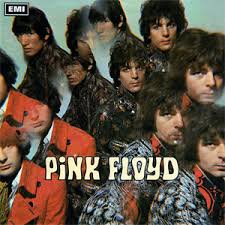
In 1967, Pink Floyd appeared three times on BBC TV's flagship music programme, Top Of The Pops. Here's the band in action during one of those appearances: