It’s extremely good that Anthropic has not backed down, and it’s siginficant that OpenAI has taken a similar stance.
In the future, there will be much more challenging situations of this nature, and it will be critical for the relevant leaders to rise up to the occasion, for fierce competitors to put their differences aside. Good to see that happen today.
Are you a small business owner in Victoria or Esquimalt? VicPD is taking applications to a free assessment program designed to help you reduce the risk of becoming a victim to cybercrime. Find the details here: https://t.co/3KrrWGPFW6 #wearevicpd@ChiefVicPD
@stephsmithio No.
You should know what they need to do, but they should have different skills. The manager should be able to do a portion of the job or have limited proficiency in the role.
🇨🇳 We’re screwed … it becomes indistinguishable from reality
Ali’s Wan 2.2 lets you stream without showing your face. It maps your voice and motion onto another face.
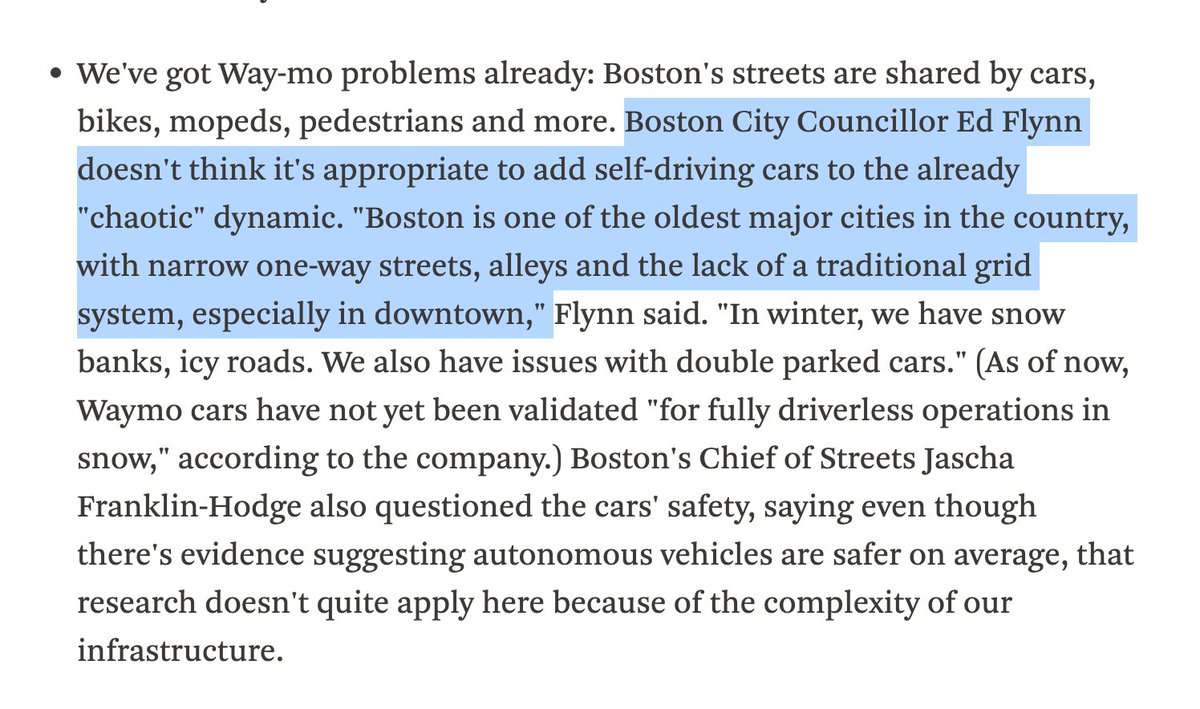
Boston City Council looking to ban self-driving cars, even though they're safer.
As a bike commuter, I'd much rather be next to a Waymo than the average Boston driver.
VicPD recovered $80,000 in cryptocurrency funds stolen from an 84-year-old Victoria resident. This case marks the first time newly enacted digital asset seizure legislation has been utilized in British Columbia showcasing our commitment to innovation.
Read more: https://t.co/IQvnXwY4Oq
Is your software business a sandcastle on the beach?
In 2025, the tide is coming in, and it wont' be pretty.
Software that once required millions in R&D can now be vibe-coded by teenagers over a weekend using @Replit, @lovable, and @cursor_ai.
It's a commodity.
Kind of like salt: Once rare, valuable, and controlled by the privileged few, now it's ubiquitous, dirt-cheap, and available to all.
If you want to succeed in software, your only hope is to have one (or ideally multiple) of the following moats:
Network Effect: The more users that use your software, the better the experience becomes for everyone, eventually establishing it as the standard (Stripe, Shopify, Figma, Notion).
Proprietary Dataset: Your unique data and insights can't be easily recreated by others (Bloomberg, Zillow, Palantir).
Complex Technology: Something not easily AI-coded (this won't hold up long-term, but works for a few years).
Hardware Moat: Physical devices that lock in your software (Dexcom medical devices, Apple/Google phone ecosystems, Square POS hardware).
High Switching Cost: It's too annoying or difficult to replace incumbent software because organizations are deeply integrated with it or people are trained on it (Microsoft Office/Teams).
Brand and Reputation: Established trust that matters most in security-sensitive areas (Coinbase, 1password, Crowdstrike).
What are the implications of this?
RIP Pricing Power: Margins directly correlate to competition levels. Charge $10/mo for a calorie tracking app? If a college kid launches a competitor for $1, your price will have to drop and your acquisition cost will increase.
This is Bad for Legacy Software Investors: Those who paid 8x ARR for SaaS companies without the qualities listed above are in trouble. If your product is merely an interface on top of a database, beware.
This is Amazing for Consumers: Software is about to get 100x better. An incredible long-tail of specialized apps will emerge, unleashing unprecedented human creativity.
Value Will Accrue To The Search Box: Just as Google disintermediated TripAdvisor and other travel sites, ChatGPT will disintermediate many software companies. It will eventually connect to all of your APIs and data, then use them to complete tasks you'd otherwise need software for. For most queries requiring software, it will simply code custom software on the fly. (I might be wrong about on-the-fly coding, but I'm extremely confident about API disintermediation).
How we are approaching this at Tiny
If you'd sat me down and told me that Google Search dominance was under threat 3 years ago, I'd tell you to stop huffing gas.
AI is profoundly disruptive to all digital businesses (and has major implications for many real-world businesses as well). Anyone who tells you otherwise is a fool.
As a result, we have passed on dozens of deals that we otherwise would have jumped at a few years ago because they lack one of these now critical moats.
We've learned this lesson the hard way.
A few years ago, we bought a software company that was hugely dominant in a niche. It was a gem of a business: juicy profit margins, fast organic growth, and a passionate user base.
But all that slowed the moment competitors flooded in.
It's capitalism 101: if you're the only place in town selling apples, you can charge $5/apple and probably get away with it.
But the moment other farms start charging $2/apple, your prices have to drop almost immediately.
That is, unless you have some sort of special, insanely tasty or healthier apple. But for most people, apples are apples, and price matters.
The same thing is true in software:
Unless people can't live without your specific software and it's hard to replicate the functionality it provides, your pricing ultimately has to be competitive with the market.
In that particular software business, we found that users would simply jump to cheaper options once they got good enough (it happened quickly).
Before we knew it, the company we acquired (an early pioneer and innovator) came under pricing pressure and growth slowed once competitors flooded in.
A lot of people are about to learn this same difficult lesson.
Godspeed. Stay frosty out there, folks 🫡
What did I miss? Curious if you think I'm off base.
What companies are the walking dead? Who's untouchable?