Back after a few years and excited to break the silence with our latest research! We (@ckuejio) dive into the extent to which, and for whom, differential privacy skews life expectancy estimates for census tracts in Florida. Check it out: https://t.co/xdET7uP1Tk
3/ However, as is often the case, study areas have irregular, large-sized polygons with a sparsely distributed population. In such cases, the geographic centroids and population-based centroids will produce different outcomes regarding accessibility values and spatial disparities
Do you have a reason for using population-weighted centroids when measuring spatial accessibility? Find the reason in this article: https://t.co/dlqiSkbbVa
The new article provides evidence as to why population-weighted centroids should be used over geographic centroids.
2/ If your study area consists of regular, small-sized polygons that are densely populated, accessibility values using geographic centroids will be similar to those using population-based centroids.
Happy to share my recent article published in the Annals of @theAAG. This paper introduces GeoShapley as a method for measuring spatial/location effects in machine learning models. Open access: https://t.co/70JFZLBzJY. @FSU_Geography
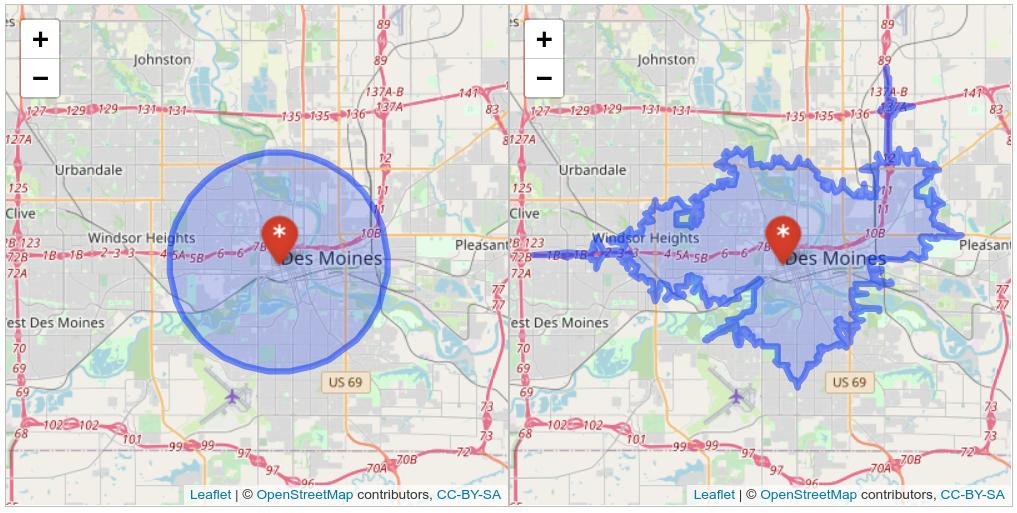
Analyzing the "catchment areas" around facilities is a critical topic in spatial data science.
How you define a catchment area can matter a lot. Should you use distance, or should you use travel-times?
Read Ch7 of my book for a workflow in #rstats: https://t.co/FI8g4EGyFN
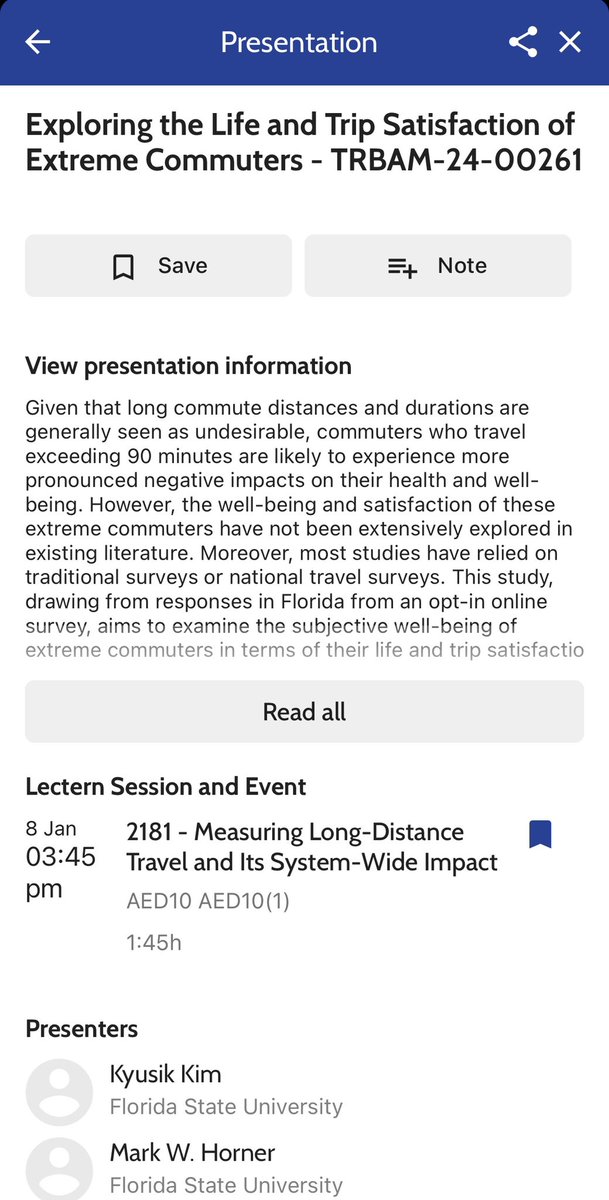
I arrived at #TRBAM! I will be presenting Exploring the Life and Trip Satisfaction of Extreme Commuters in 150B Convention Center tomorrow (Jan 8) from 3:45 PM to 5:30 PM. If you are interested, please join us!
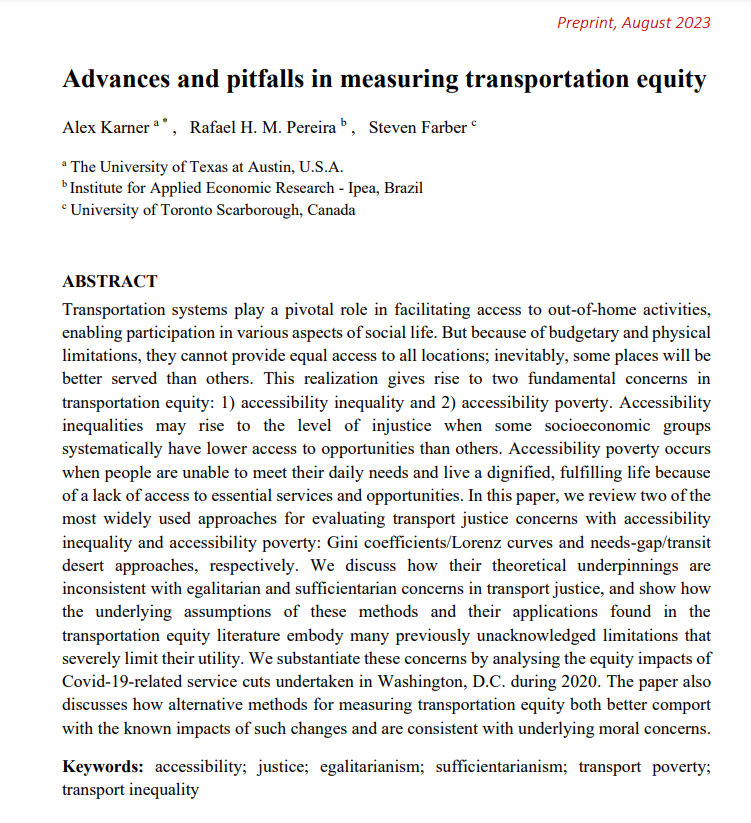
What methods are commonly used to measure transport inequality & poverty? What are their limitations, and which alternative methods can help us advance transportation equity research & policy? @AlexKarner@FarberSteven & I have a new preprint on this. https://t.co/uAyUGaXADX🧵
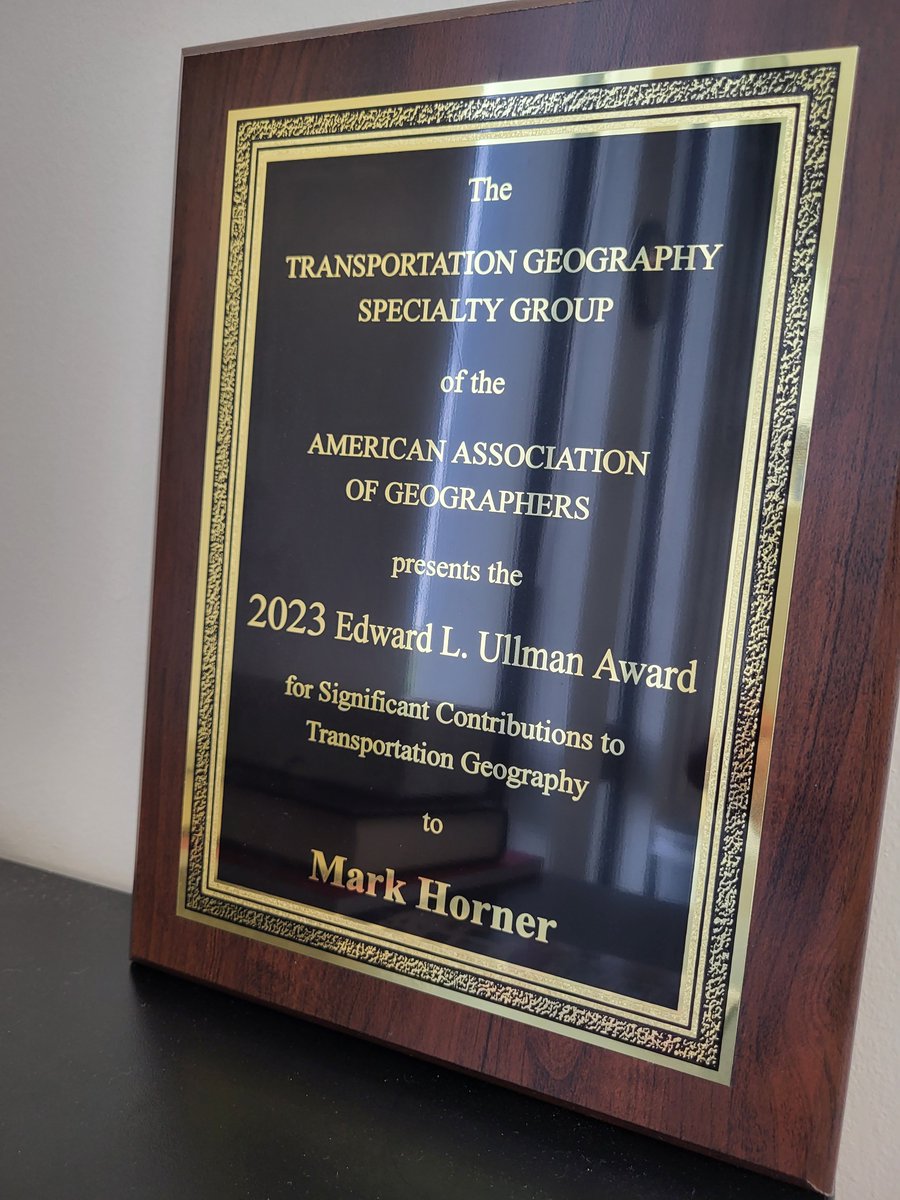
Dr. Mark Horner was honored at #AAG2023 with the Edward L. Ullman Award for his contributions in the field of Transportation Geography. As an honoree, Dr. Horner will give the Fleming Lecture at #AAG2024.
Congrats!
Super glad to share the English version of our on-line book to teach urban accessibility and data analysis with a hands-on approach in R #rstats.
🔖https://t.co/OJYTLBIZF7
The book is Another great co-authorship with @dhersz.
Short thread 🧵:
4. Edward L. Ullman Award
Dr. Mark Horner, Professor of Geography at Florida State University (@FSU_Geography) where he has served on the faculty since 2004.
Congrats Mark!
I am very happy to share the schedule for the eleven incredible #TransportJustice sessions we put together for @theAAG and @AAG_TGSG. Thanks to the incredible group of students and colleagues who put this "mini-conference" together! I can't wait! Please RT.