Interesting how Chinese blockbusters are always propaganda, while Hollywood films featuring military hardware, military advisors, and military-approved scripts are somehow just ‘entertainment’.
China's first catapult-equipped aircraft carrier, the #Fujian, was commissioned into the PLA Navy on Nov 5, 2025, marking China's entry into the three-carrier era. #GTGraphic
I read China's policy docs
and see the same tics and tocks,
Repeating like a clock,
When every doc they talk,
about
Xi Jinping Thought,
The Three Represents,
Mao Zedong Thought,
The Productive Forces,
and on, and hence.
China's policy documents,
Repeat the same slogans,
The five-year tactics might change,
But the 100-year strategy is unbroken.
China's policy is so stable,
It's honestly boring. https://t.co/iA0wLhIHIq
"I'm really asking for China to open a huge campus of the #UN. It can be Beijing or Shanghai, but a huge campus because China is the only country in the world that can guide the path to zero-carbon #energy, to sustainable solutions for energy and for climate," said Jeffrey Sachs, Columbia University professor, at the "Vision China" event themed "Standing United: Inheriting the UN Legacy, Advancing Global Governance" at the UN headquarters in New York on Sept 15. Sachs added that no other country has the capacity for this. #VisionChina
I was about to go to bed when I saw the post of President Trump, who just came back from the UK, saying he had spoken with President Xi, alongside the official statement release on the Chinese government website concerning the call. I checked the White House and its statement has not yet appeared. As a scholar of China-US relations, I feel it is necessary to promptly analyze and highlight the key points of the Chinese statement.
--"Both sides had a candid and in-depth exchange of views on current China-US relations and issues of common concern, and provided strategic guidance for the stable development of bilateral ties in the next stage. The call was pragmatic, positive, and constructive."
The Chinese statement notably opens by describing the call as "candid," which signals that this was not a perfunctory diplomatic exchange, but rather a straightforward discussion that touched on real strategic concerns and red lines for both sides.
--"President Xi noted that China and the US fought side by side as allies during WWII. Recently, at the commemoration of the 80th anniversary of the victory of the Chinese People's War of Resistance Against Japanese Aggression and the World Anti-Fascist War, China invited family members of the American Flying Tigers to stand atop Tiananmen to witness the military parade. The Chinese people will never forget the valuable support provided by the US and other anti-fascist allies. On this basis of honoring the fallen and remembering history, we should cherish peace and build the future."
This reflects what can be described as a "stabilizing expression" in the context of current tensions. It underscores that the two countries are not natural adversaries, and once fought together for peace and justice. The Flying Tigers are household names in China, universally regarded as heroes, and the phrase "will never forget" is both an emotional gesture of gratitude and a moral statement emphasizing that China values loyalty and history.
Moreover, President Xi's invocation of the wartime alliance can also be seen as responding to contemporary distortions of historical memory. In today's global discourse, there are voices that deliberately downplay China's crucial contribution in WWII. Even among intellectual elites in the United States and Europe, China's role in the war is often marginalized. In fact, when meeting with representatives who organized the V-Day parade on the 17th, President Xi stated:
--"We must uphold the correct view of the history of the War of Resistance and of WWII, strengthen confidence in history, and draw wisdom and strength from the great victory in which the whole nation, under the leadership of the CPC, united in courageous resistance... We should tell well the story of China's resistance against aggression and of its peaceful development, make clear to the world that China is a steadfast defender of the post-war international order, and demonstrate our image as a responsible major country committed to building a community with a shared future for mankind."
--"China-US relations are of paramount importance…The recent consultations between the two teams embodied a spirit of equality, respect, and reciprocity, and can continue to properly address outstanding issues in the bilateral relationship to strive for win-win results. The US side should avoid taking unilateral trade-restrictive measures, so as not to undermine the outcomes achieved through multiple rounds of consultations."
This passage shows that China holds an overall positive view of the recent consultations, considering them the correct path to managing differences.
At the same time, President Xi made something clear at the end, both as a reminder to Washington not to repeat the pattern of talk without trust, promise without action, and as an emphasis on the fragility and reversibility of the current progress. For China and the US, talks are not the goal, tangible results are what truly matter.
--"China hopes that the US will provide an open, fair, and non-discriminatory business environment for Chinese enterprises investing in America."
These three keywords represent the most fundamental expectations China has for the US business climate. On the one hand, this is an implicit criticism of Washington's current regulatory practices-marked by a lack of transparency, selective enforcement, and political interference. On the other hand, it also underscores China's consistent position on the global stage: reaffirming its support for an open world economy and opposition to protectionism.
This statement is not directed at the US alone; it also sends a broader signal to the international community that China upholds the principles of mutual benefit, win-win cooperation, and market openness. As for the United States, already entrenched in the logic of deglobalization and economic securitization, whether it is truly willing to listen and respond remains an open question.
--"Trump remarked that Chin's V-Day parade was truly spectacular. US-China relations are the most important bilateral relationship in the world. Through cooperation, the two countries can accomplish many great things for global peace and stability. The US hopes to maintain a long-term, positive, and great relationship with China."
Although President Trump's response was brief in China's statement, it carried significant weight.
By highly praising China's parade, he signaled an understanding of China's commemoration of the anti-fascist war and, indirectly, acknowledged the historical alliance between China and the US during WWII. In today's international context, such a positive evaluation holds symbolic value for Beijing.
His statement that US-China relations are the most important bilateral relationship in the world demonstrates that the Trump administration regarded the relationship as a core foreign policy priority and echoes President Xi's emphasis that "China-US relations are of paramount importance."
By noting that what the two countries can accomplish, Trump elevated the moral and strategic weight of the relationship, framing it as a responsibility shared by both powers. Against the backdrop of mounting global risks and weakening multilateral mechanisms, this positioning implicitly reflects collaboration on issues such as climate change, regional security, and global economic recovery.
The world is undergoing profound changes. How to avoid the "Thucydides Trap," and how to find room for necessary cooperation amid fair competition, will test the strategic wisdom of both China and the United States.
President Trump mentioned his potential time to visit China. Before that, we can expect more rounds of negotiations to unfold. Let's continue to watch closely how China-US relations evolve in the next stage, and hope that such candid and in-depth communication becomes the norm rather than the exception.
🌎 Foreign reactions to China’s recent military parade and the cultural misunderstanding behind them 🇨🇳💡
China’s latest military parade sparked very different reactions inside and outside the country. For many Chinese, the focus was on the display of tanks, aircraft, drones and the nation’s defensive strength. But for foreigners living in China, the questions they get from people back home are very different.
💡Chinese perspective:
Locals often wonder what outsiders think about China’s military parades. They ask things like: “Do foreigners find our tanks and aircraft impressive? Are they afraid of China’s growing strength?”
💡Foreign perspective:
Interestingly, people outside China rarely focus on the weapons at all. Instead, their questions tend to be about discipline and order:
▶️Why are military parades so important to Chinese people?
▶️Isn’t the marching just for show?
▶️Isn’t it a little strange, even excessive, that soldiers march with such perfect precision, down to the millimetre?
This highlights a cultural gap. For many Chinese, it’s obvious that troops should march in step, after all, even children in kindergarten can march neatly together. But outsiders often see this order as unusual or even unsettling.
💡The difference comes down to cultural foundations:
In the U.S. and much of the West, the core value is freedom. Even if things look chaotic, with violence, disorder, even looting, freedom is believed to create competition and competition eventually produces solutions.
This stems from America’s beginnings: people who didn’t want a king telling them what to do, who placed freedom above all else and built a society where those who thrive in freedom rise.
In China, the core value is order and correct relationships. This comes from the Yellow River, the birthplace of Chinese civilisation. The river flooded every couple of years, survival depended not on “every person for themselves,” but on everyone being organised together. Chaos meant death, order meant life.
That foundation shaped the Chinese view of the universe itself: like a great river, where if relationships aren’t clear and flows aren’t smooth, disaster follows, floods, storms, earthquakes, or even family conflict.
💡That’s why in China, order is woven into almost everything:
▶️At a banquet, where you sit signals your exact role in the group, the boss would never sit casually at the door.
▶️In calligraphy, creativity exists but always within square boundaries.
▶️In architecture, from traditional courtyard houses to the Forbidden City, layout is symmetrical, positions are precise.
A military parade, then, isn’t just a show of weapons. It’s the highest form of organisation: if 10,000 people can move in perfect unison, not even a millimetre out, it reassures society that relationships are aligned, order is maintained and chaos is kept at bay.
Order can slip into chaos very easily, but restoring chaos back into order is far more difficult.
That is why Chinese parades pursue millimetre-level precision. The roots go back thousands of years to life along the Yellow River, where floods taught people that disorder meant disaster.
Over centuries this shaped a deep conviction: when society’s relationships are aligned and order is maintained, the nation remains stable. A parade, then, is not simply a performance, it reflects a cultural commitment to order itself.
And when this is explained to foreigners, most nod and say: “That makes sense.” It’s not necessarily agreement, but it is understanding, a moment of true seeking common ground while respecting differences.
Amid a turbulent global business environment, we look forward to welcoming ambitious academics and enterprise leaders to this #RCEP event for candid discussion and interaction. Please check out the agenda below and register!
#China#ASEAN#SME
📢 [EVENT] This Saturday, GIG will host the #China–#ASEAN#RCEP Rules Promotion Event for #SMEs in Guangzhou, as part of the 2025 China International SME Fair. A group of well-known experts from industry and academia will join us. RSVP now by scanning the QR code on the agenda!
Productive meeting with President Xi this morning. We agreed to further deepen cooperation in line with our unique “All-Round High-Quality Future-Oriented” Partnership.
Had a productive and wide-ranging discussion with Premier Li Qiang in Beijing today.
This year marks the 35th anniversary of diplomatic relations between Singapore and China — a good moment to take stock of how far we’ve come.
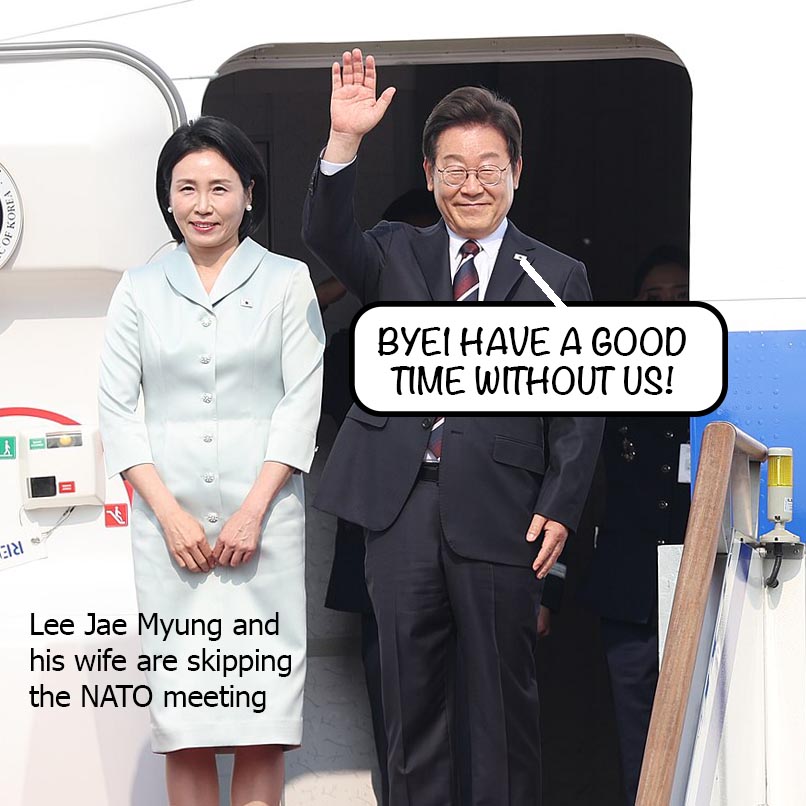
THE WEST'S GRIP on Asia is slipping. New South Korean leader Lee Jae Myung and Japanese Prime Minister Shigeru Ishiba said they will not be attending the NATO summit which begins tomorrow (Tuesday) in the Hague, in the Netherlands.
Those two nations have until now been the most obedient bridgeheads of United States hegemony in Asia, the region that contains the majority of humanity.
A planned side meeting of America's four main Asia-Pacific military outposts—Japan, South Korea, Australia and New Zealand—will no longer take place.
.
WARFARE, NOT WELFARE
Washington has instructed all NATO members to triple military spending to 5 per cent of their countries' GDP, and said that South Korea, even though it is not part of the North Atlantic is expected to follow suit.
NATO leader Mark Rutte said there must be a "400-percent increase" in spending on air defense and missiles.
But there are still independent voices in the region, who are criticizing the leaders of Europe for outsourcing their sovereignty and international policies to the United States.
Earlier today, Prof Jeffrey Sachs told a European audience that Europe cannot be listed among the superpowers of the world, as it "has no foreign policy of its own".
Okay, people are genuinely confused why members of the US army can't actually march in unison like the Russians or the North Koreans.
The reason why is because all these soldiers have real jobs in the military and nobody (beyond ceremonial units) ever does any marching once out of basic training and their tech school.
These soldiers spend their days doing important work to defend our nation. They don't ever practice marching. Trump demanded they all stop being productive at their jobs to waste time and taxpayer money to march in a parade for his amusement.
I’m sorry, but I just can’t stand it anymore.
This massive, outrageous, pork-filled Congressional spending bill is a disgusting abomination.
Shame on those who voted for it: you know you did wrong. You know it.
As my scheduled time as a Special Government Employee comes to an end, I would like to thank President @realDonaldTrump for the opportunity to reduce wasteful spending.
The @DOGE mission will only strengthen over time as it becomes a way of life throughout the government.
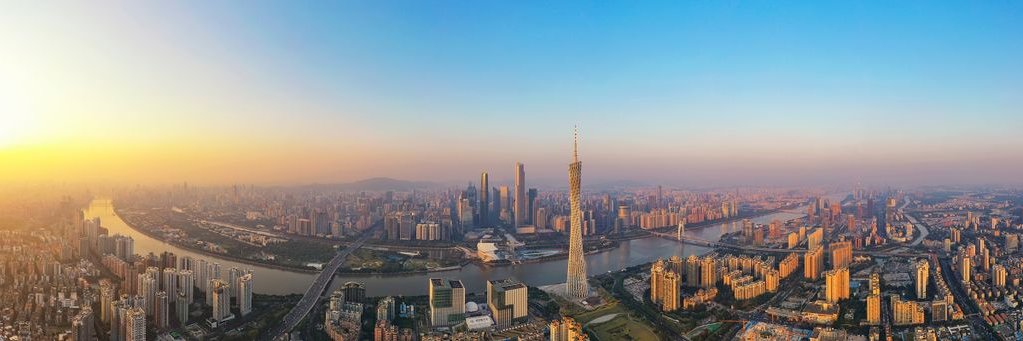
At just $3, you can now rent a DJI #drone in China and get 15 minutes of epic aerial shots. Map your travels, capture iconic landmarks, film your path from the sky. All for less than a coffee.@DJIGlobal#SharingEconomy


![GZInstituteGBA's tweet photo. 📢 [EVENT] This Saturday, GIG will host the #China–#ASEAN #RCEP Rules Promotion Event for #SMEs in Guangzhou, as part of the 2025 China International SME Fair. A group of well-known experts from industry and academia will join us. RSVP now by scanning the QR code on the agenda! https://t.co/lG3HnBjOUV](https://pbs.twimg.com/media/GuQc2FRagAU4x3y.jpg)
![GZInstituteGBA's tweet photo. 📢 [EVENT] This Saturday, GIG will host the #China–#ASEAN #RCEP Rules Promotion Event for #SMEs in Guangzhou, as part of the 2025 China International SME Fair. A group of well-known experts from industry and academia will join us. RSVP now by scanning the QR code on the agenda! https://t.co/lG3HnBjOUV](https://pbs.twimg.com/media/GuQc1VabEAAbUmF.jpg)