Very cool new preprint by Christian Bengs, Chongwei Zhang, and @lab_ajoy:
Fundamental bounds on many-body spin cluster intensities
https://t.co/6Ns0Ahyuud #nmrchat#quantum
I want to draw attention to an exciting postdoc fellowship opportunity on quantum sensing + microfluidic technology: https://t.co/cuZ4T6SQot
We have active projects in this area (as featured recently in Sci. Adv. https://t.co/57jnik2Wsh). Please reach out if interested.
The sensor excels in the low-frequency regime, useful for numerous applications, and operates in a blind spot for current magnetometer technologies.
Thanks to DOE NNSA, ONR, CIFAR and @UCB_Chemistry#NMRchat (5/5)
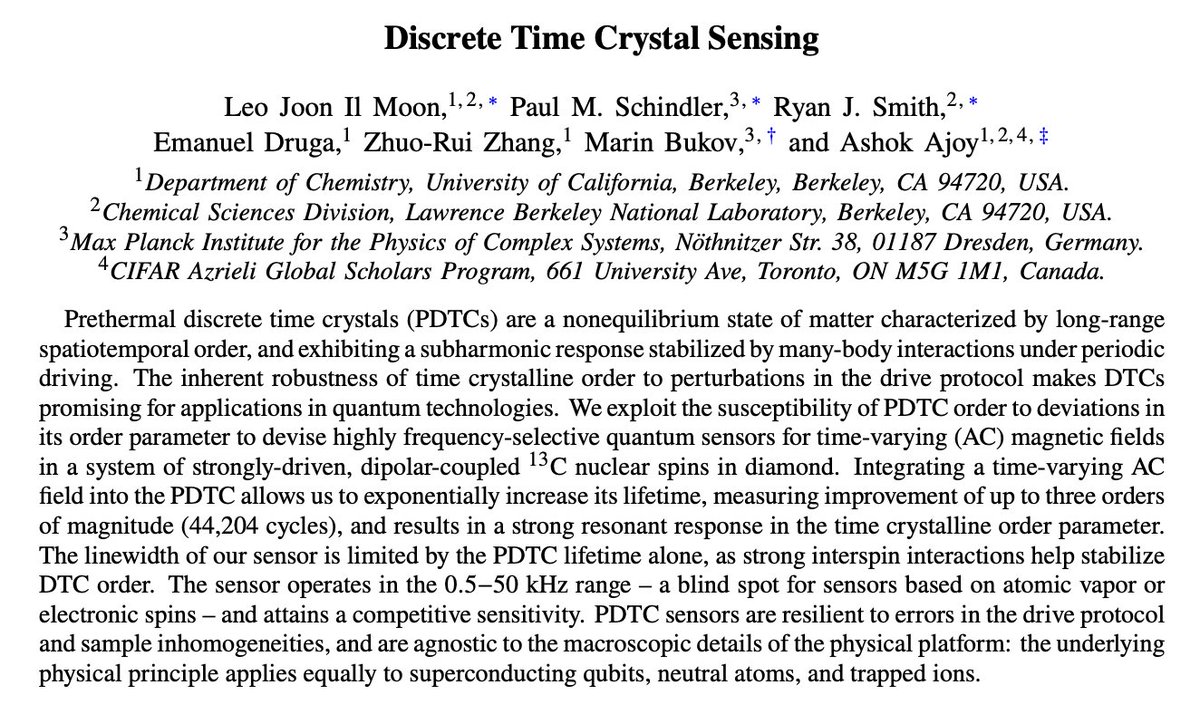
Driven non-equilibrium (Floquet) systems show fascinating properties like “time crystals” — exhibiting robust period doubling even in the face of errors and disorder.
But - can time crystal phenomena be harnessed for practical use? (1/5)
https://t.co/p10pP0XlW7
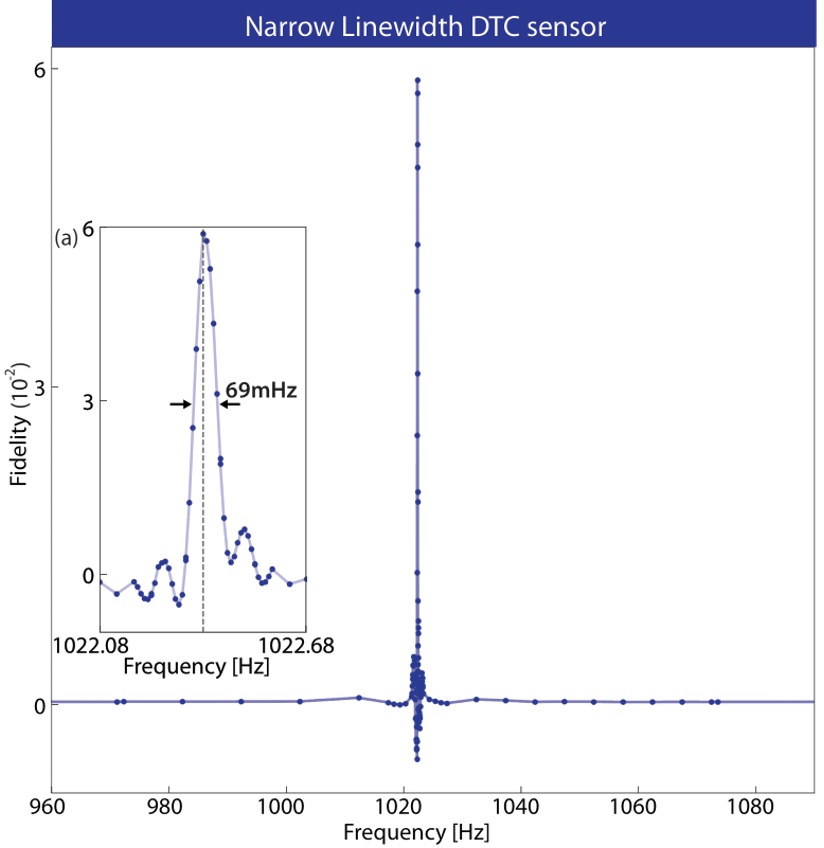
Because the effect is strong resonant, it can serve as an excellent narrow-linewidth sensor for AC fields.
We demonstrate T2-limited linewidths under 70mHz, with built-in noise rejection and robustness to pulse imperfections. (4/5)
Patent Pending, Multi-channel ZULF NMR Spectrometer Using Optically Pumped Magnetometers - Available technology for licensing from the University of California, Berkeley @lab_ajoy@ashok_ajoy https://t.co/GXC1DYs2Vd #NMRchat#NMR#ZULFNMR 🧲
(2/2) Beyond just patterning, this work employs a lock-in ODMR imaging scheme to spatially map 2D microscale temperature profiles generated from laser heating. Future research is working to adapt both laser patterning and imaging techniques to 3D.
🔗https://t.co/pC6RjUWjm5
(1/2) Recently published to Nano Letters, PhD candidate Brian Blankenship has developed a means to pattern dense layers of nanodiamonds (NDs) into intricate patterns. As a demonstration, NDs are crafted into the image of the artwork, "The Creation of Adam" (seen below).
I had great time @UCBerkeley. After 7 years, with the help of some talented students, I had the opportunity to prepare again a few crystals of paraterphenyl doped with pentacene. Well done Noella, Joseph and Angel! Thank you @ashok_ajoy and @lab_ajoy
Direct NMR detection of small organic molecules at zero-field is observed in natural isotopic abundance (no 13C enrichment) in the absence of hyperpolarization and deoxygenation, demonstrating zero-field NMR on "off-the-shelf" samples. (3/3)
What makes NMR so expensive? Check out Blake and Matthew's work utilizing the zero-field regime to potentially overcome homogeneity and throughput thresholds via atomic magnetometer arrays. (1/3)
https://t.co/n01F3nFfvm
#NMRchat@UCB_Chemistry
Sensitive multichannel operation is sustained for long periods (>10 days) without the need for shimming or sensor calibration, owing to the stability of the magnetic shield and magnetometers. This is demonstrated on a 3x1 sensor array as a proof-of-concept. (2/3)
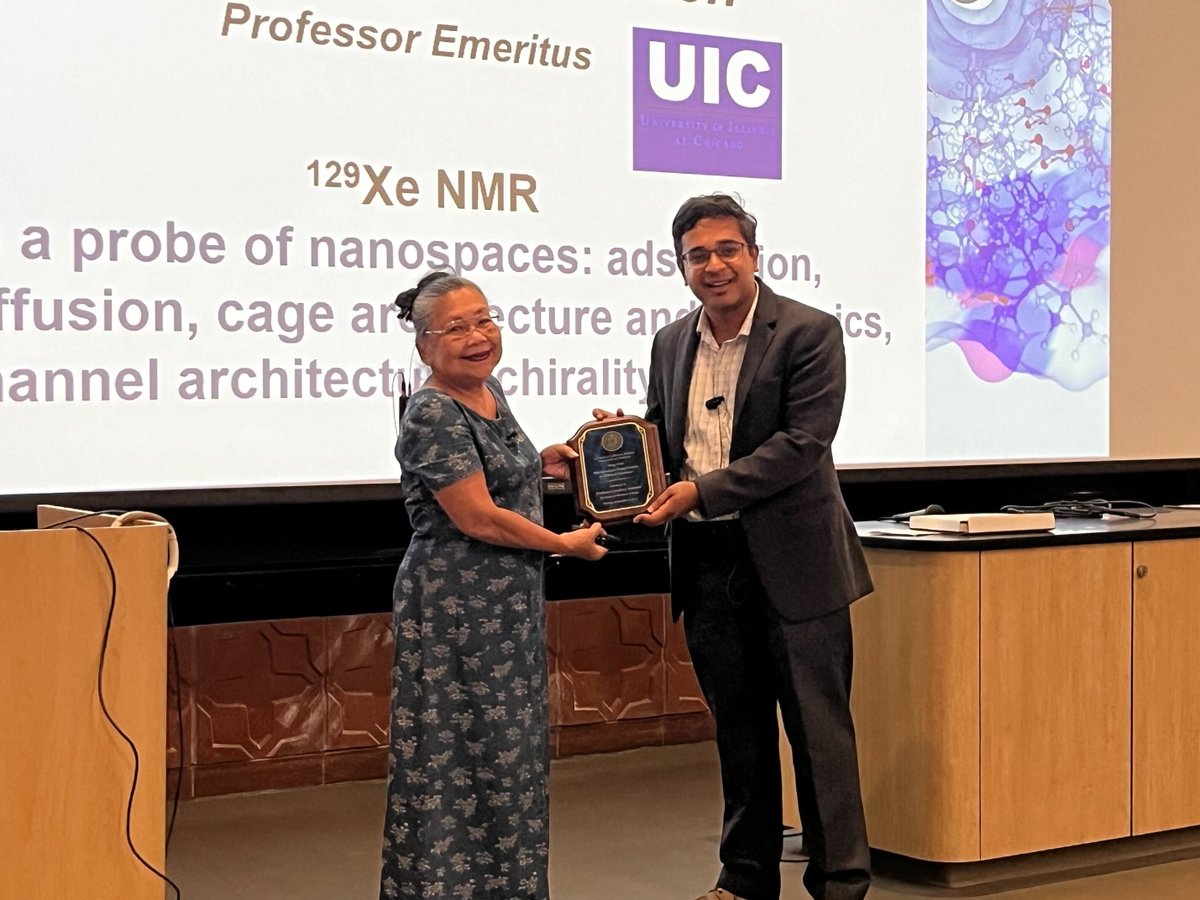
Ashok [Talk 11], @ashok_ajoy, will introduce "New advances towards 'deployable' quantum sensors" during #QuantumNoir General Session 6: Quantum Sensing. Learn about the 3 directions in [deploying] chemical quantum sensors. Date: 6/13/2024. Venue: Jefferson 250.
#QuantumNoir2024
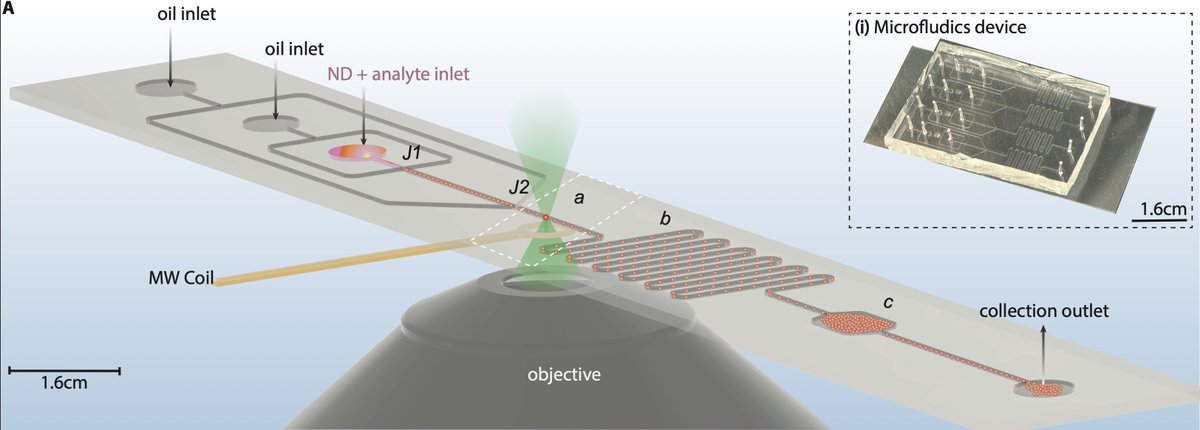
Sensing Gadolinium & TEMPOL with low limit of detection: We measure changes in ODMR contrast created by paramagnetic species: Gd and TEMPOL. We achieve low LOD utilizing minimal sensor volumes (<1uL) & incurring low ND costs (<$0.70 for an hour of operation). (6/6)
Take a look at Adrisha & Zack's work developing a flow-based high-precision chemical detection method by integrating quantum sensing w/ droplet microfluidics. Droplets encapsulate ND quantum sensors & analytes to measure analytes w/ low LOD.(1/6)#NMRchat
https://t.co/rmbBtCNYHO
Highly stable measurement of ODMR contrast: Allan deviation shows 104,400 droplets flowing over 1000s, A(𝑡) follows ∝ 1/ 𝑡 trend (dashed line) for the entire period, highlighting remarkable stability. Percent error of contrast reduces over 30-fold as a result. (5/6)









![Quantum_Noir's tweet photo. Ashok [Talk 11], @ashok_ajoy, will introduce "New advances towards 'deployable' quantum sensors" during #QuantumNoir General Session 6: Quantum Sensing. Learn about the 3 directions in [deploying] chemical quantum sensors. Date: 6/13/2024. Venue: Jefferson 250.
#QuantumNoir2024 https://t.co/gIqMCTrxXH](https://pbs.twimg.com/media/GO6nnrqWkAAjl_t.jpg)