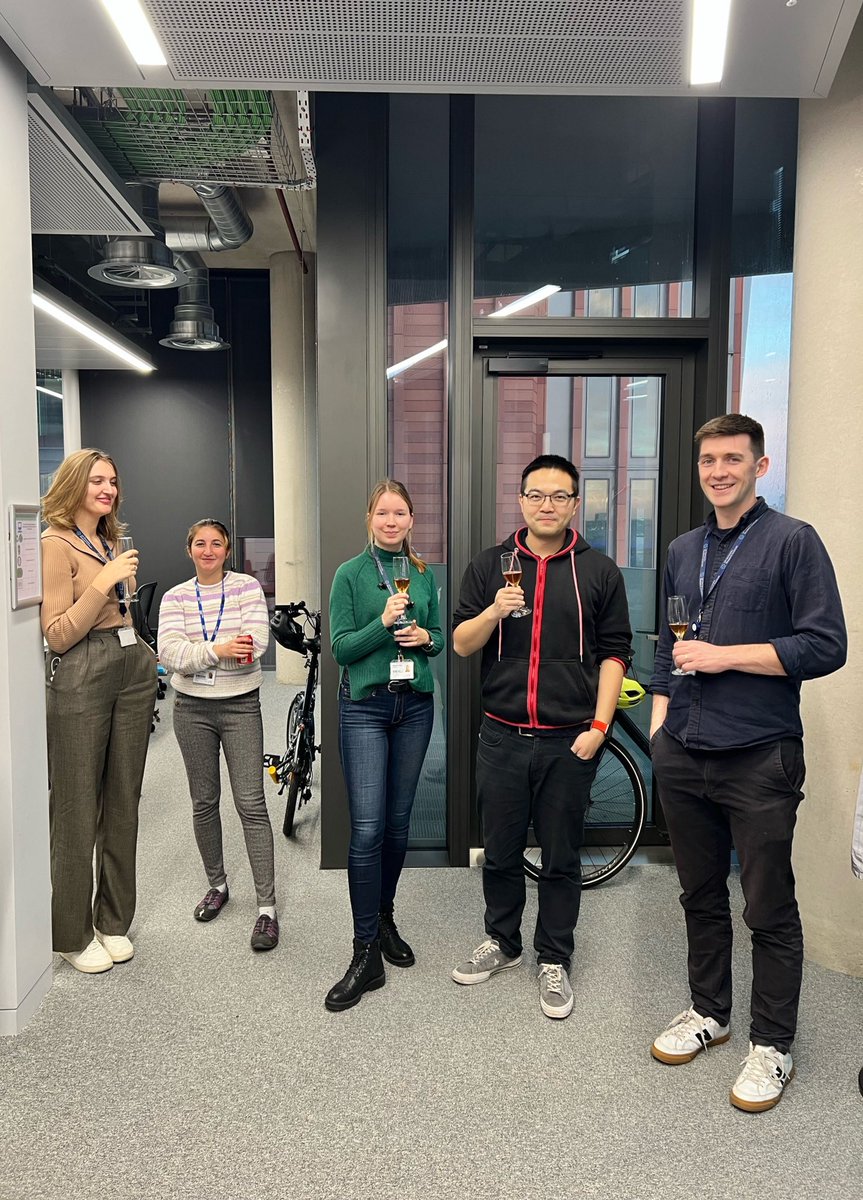
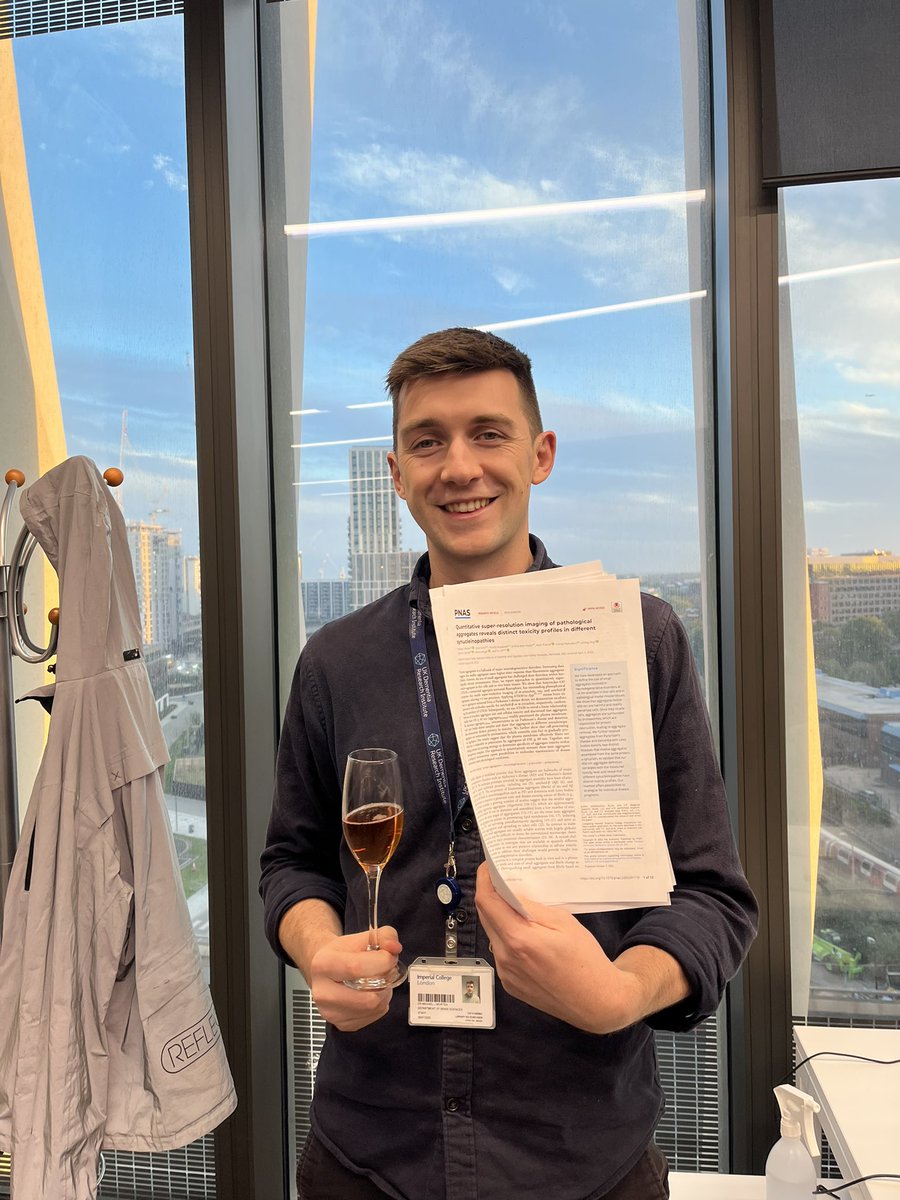
We celebrated our new @PNASNews paper this week! 🎉 We found distinct toxicity profiles for PD- and DLB-derived soluble aggregates using our super-resolution approach @mikejmorten@liina_sirvio @yeyu_nj
A new study led by Dr Yu Ye (@lab_ye) found that small, aggregated proteins enter cells & cause distinct toxic effects in Parkinson’s & dementia with Lewy bodies
Both involve the same protein (alpha-synuclein), but it behaves differently in each disease👉https://t.co/BRW0MHMzgm
We're recruiting a PhD student to study protein aggregates in neurons using advanced fluorescence imaging techniques! Contact us if you have a background in biophysics/bioengineering/etc with prior experience in image analysis/coding. Find out more here: https://t.co/MVYjwfKvm3
We are recruiting for two new postdocs to investigate the degradation of protein aggregates in iPSC neurons with us @ImperialBrains . Closing date is Nov 3 and you can find more information here: https://t.co/fdR2LxzhFe
There's still time to register for The Structural Frontiers of Neuroscience two day joint workshop on 19-20 November! This event will be jointly hosted by @imperialcollege, @UKDRI, and the @RosFrankInst. Find the speakers and registration link here: https://t.co/SaIax6Ds5g
We have some exciting news to share from the Ye Lab! The first PhD student of the Ye Lab, @liina_sirvio, recently passed her PhD viva at @imperialcollege! 🎉A big thanks to the excellent examiners Ed Tate and Catherine Lindon
We're also hiring a PDRA to explore the role of proteasomes in the clearance of toxic protein aggregates using super-resolution fluorescence imaging and biochemical techniques! Find more information here: https://t.co/LBuHIMn65z #Imperial#dementia
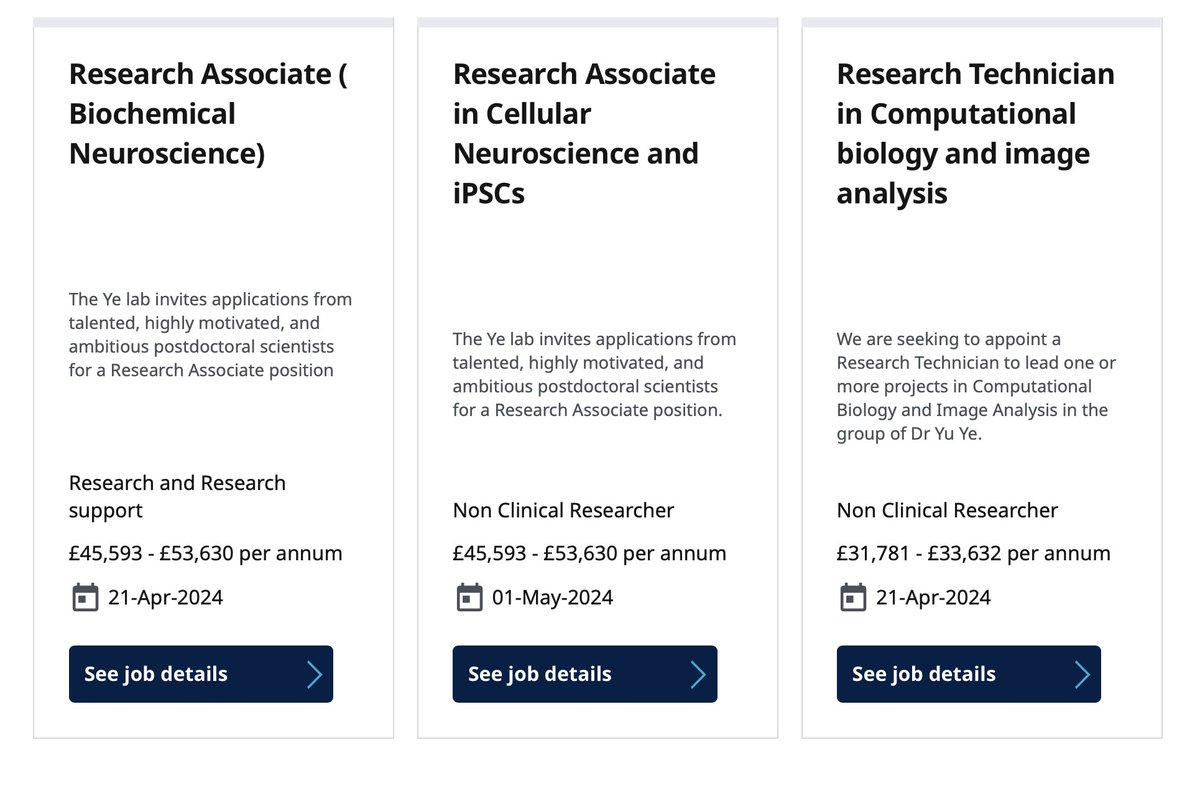
We're hiring a PDRA to investigate aggregates in iPSC-derived neurons and post-mortem donor samples using super-resolution fluorescence imaging and biochemical techniques! Find more information here: https://t.co/9uJjtVGiTM Closing date for applications 02/08/24 #Imperial#UKDRI
Candidates with 2D and 3D super-resolution imaging capabilities and experiences with iPSC culture are highly preferred. The post will end soon, apply before May 7th. Please feel free to get in touch and share with anyone who may be interested!
🧬 Exciting #JobOpportunity! Join the Ye Lab as a Research Associate in Cellular Neuroscience & iPSCs. Lead projects on proteasome function in clearing toxic protein aggregates. 🧠💪
https://t.co/XVxyzzeFz4
#NeuroscienceJobs#ResearchCareers#CellBiology
We seek a number of postdocs/technician to examine protein aggregates in neurons. Join us to build your own research career and let us support you in your personal development in the lab!
https://t.co/dsomIzAe1G https://t.co/zOnlYkvAix https://t.co/NOw9saYFL2
We have a postdoc position @ImperialBrains to work on degradation of tau aggregates for up to three years, funded by a generous major projects grant @ARUKscientist. Please recommend, spread the word and apply! https://t.co/n8nmEOwxSp
We were thrilled to host Professor Sir Dave Klenerman last week at @ImperialBrains for a wonderful talk on detecting and imaging protein aggregates in neurodegenerative diseases! Thank you Dave for your fantastic presentation and stimulating such interesting discussion!
We are delighted to welcome the newest member of the Ye lab, @LinesGeorgie! Georgie has just finished her PhD from the wonderful @WrayLabUCL and will continue her work with iPSCs to study how protein aggregates are processed by cellular degradation mechanisms!
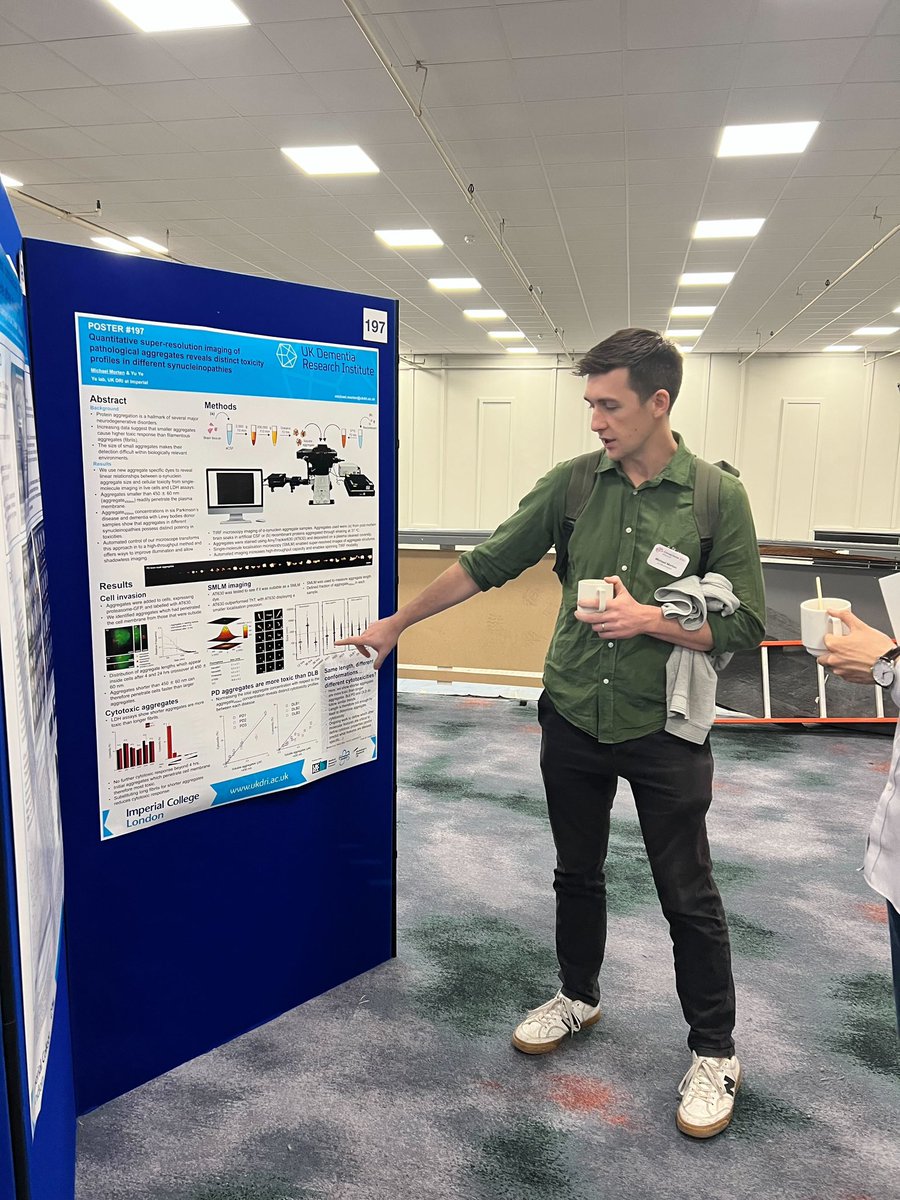
We had a great time at @UKDRI#connectome2022 last week, capped off by a humble acceptance of the UKDRI Publication Prize by our very own @mikejmorten! If you've not yet had a chance to read this paper you can find it here: https://t.co/4LqRribxzT
We've had a fantastic time presenting our work at #connectome2022! Thank you @UKDRI and all attendees for three days of great talks and excellent discussion!
#ICYMI: A study led by Dr Yu Ye (@lab_ye) found that small aggregated proteins cause distinct toxic effects in Parkinsons & dementia with Lewy bodies
Both involve the same protein (alpha-synuclein) but surprisingly, it behaves differently in each disease👉https://t.co/BRW0MHM1qO
A new study led by Dr Yu Ye (@lab_ye) found that small, aggregated proteins enter cells & cause distinct toxic effects in Parkinson’s & dementia with Lewy bodies
Both involve the same protein (alpha-synuclein), but it behaves differently in each disease👉https://t.co/BRW0MHMzgm