"You look great, not a day over 4,000."
Bristlecone pines are among the oldest living organisms on Earth. Their secret to longevity is thriving in harsh, high-altitude environments.
You can find these ancient survivors at places like Great Basin National Park in Nevada.
Photo by Ross Stone
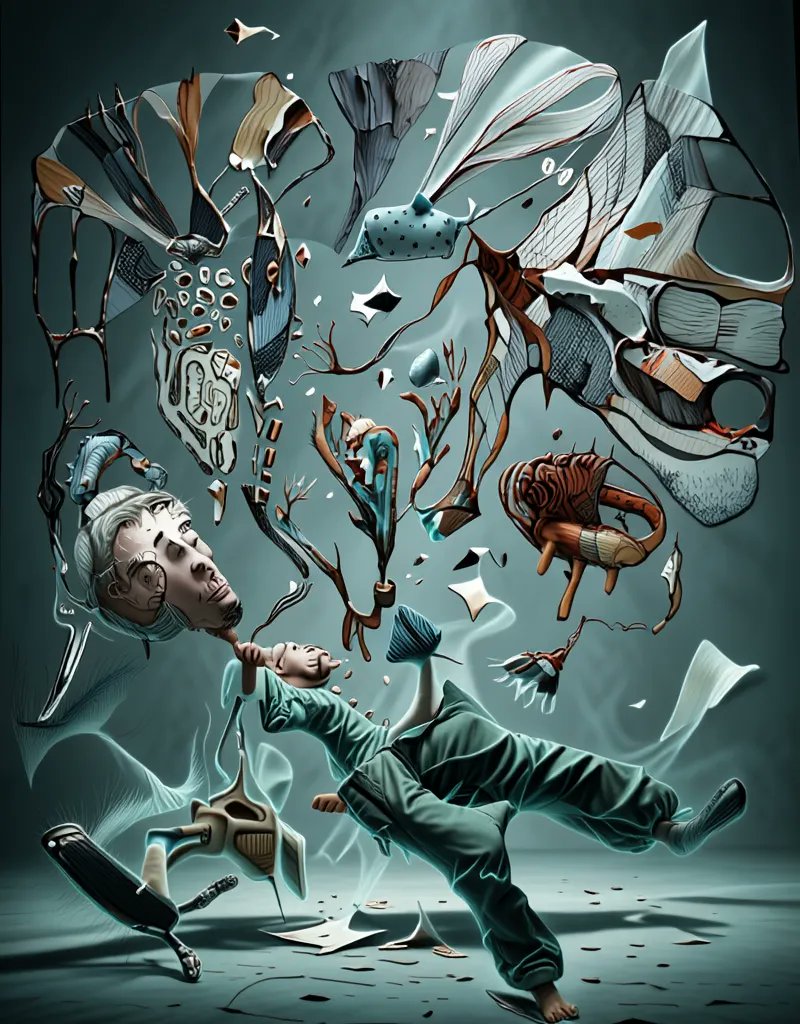
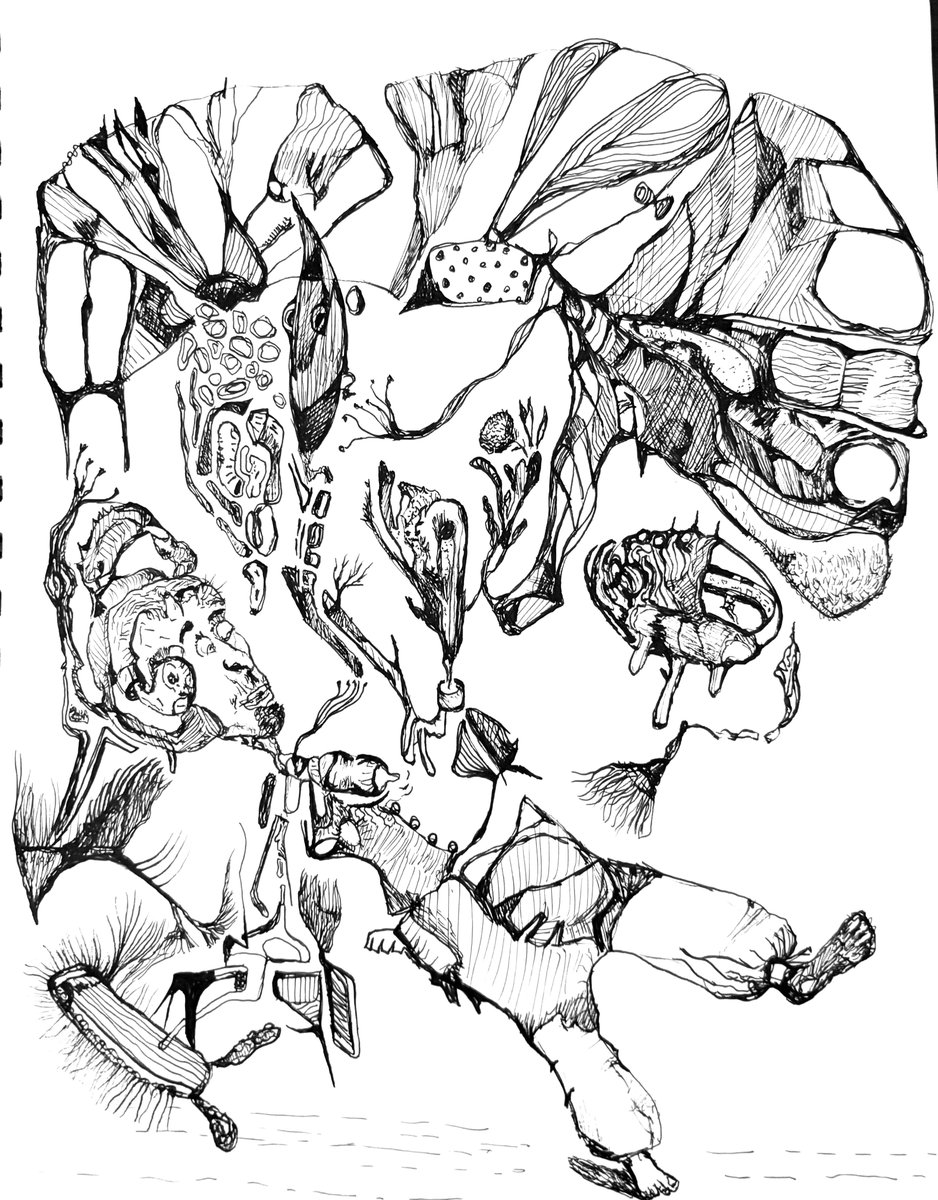
This sketch represents the idea of falling asleep and the mind fragmenting to release the thoughts and bits of the day. Used microsoft mageflow to give it depth and color. Very accurate detection of the ink drawings small markings and application of interesting details.
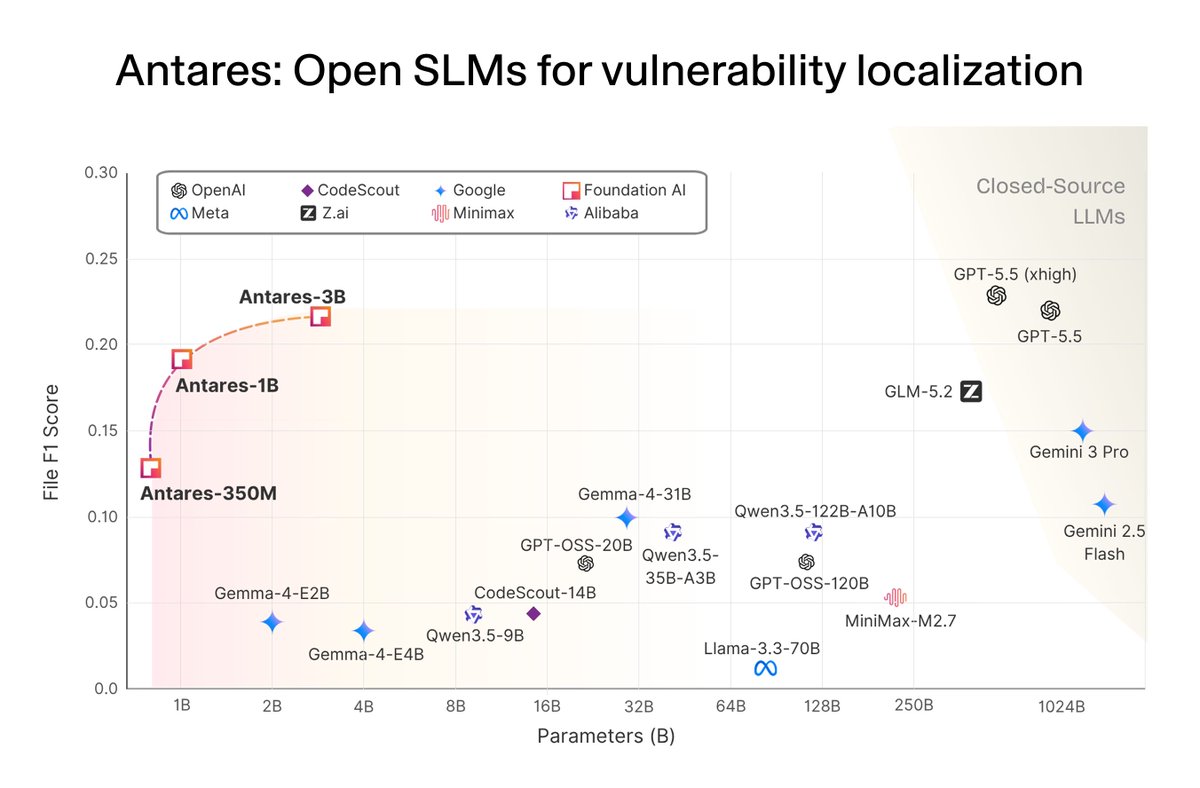
It’s a lie that only large (closed) can detect cybersecurity vulnerabilities. Basically just part of a narrative meant to discredit open source.
@Cisco just released Antares, a family of SLMs (350M, 1B, 3B) that does exactly that. And they’re insanely good for their size.
Antares models work similarly to how a human might identify vulnerabilities by iteratively going through a repo. Here’s the process:
Vulnerability description → search for relevant code patterns → reads candidate files → incorporate new evidence. changes direction when a path is unhelpful, and narrows toward the files most likely to matter.
NASA used lasers on the International Space Station to measure the 3D structure of Earth’s forests. The result is an incredible public dataset!
I turned the lidar data from NASA's GEDI Mission on https://t.co/VIWxe3ipl6 into an interactive 3D map with a few prompts in Codex!
From Sept. 16-24, join Stream for @fredhutch in our annual Raids for Research event! This event brings together streamers from across the world to chat with researchers, raid streams, and raise essential funds for cancer & infectious disease research. Reach out if interested!💜🔬
For over two years, the largest open code dataset was The Stack v2… until today.
🥞 The Stack v3 is out: the largest open code dataset ever released: 114 TB, 770 languages, 224M repositories, ~5T tokens of deduplicated and filtered source code. Fully open, no restrictively licensed code included.
The upgrade:
- v2 (2024): 68 TB raw -> 2 TB / ~550B tokens, 618 languages filtered
- v3 (2026): 114 TB raw -> 15.9 TB / ~5T tokens, 713 languages filtered
C++ x15, TypeScript x7.5, Rust x7, Python x4.8. Even the COBOL corner of GitHub got a bigger slice.
Part of that is two fresh years of open source. Part of it is a bug we found in v2's deduplication - story below. 👀
Things that make v3 different:
1. Contents inline. The #1 complaint about v2 was "cool dataset, where's the actual code?" v2 shipped file IDs from the Software Heritage graph, and fetching contents was a DIY treasure hunt. v3 is self-contained: sources embedded directly, one row = one repository. Download finishes -> you start training.
2. Fresh crawl. v2 was a 2023 snapshot of even older crawls. v3 is a direct re-crawl of GitHub at the latest commit, completed by August 2025: 224M repositories, 44B files. Forks were only included if they had 5+ stars.
Two ways in:
🥞 stack-v3-train - near-deduplicated, quality-filtered, PII-redacted, contents inline. Point load_dataset at it and go.
https://t.co/px2LW3v6VB
🏗 stack-v3-full - the entire 114 TB corpus as an HF Storage Bucket: every duplicate kept with cluster IDs, stubs for excluded files. Roll your own dedup, filters, and mixes.
https://t.co/SQzP5gOmzl
The record isn't really ours to claim - it's millions of everyone's repositories, neatly stacked. Thanks to every developer who keeps their code public, the BigCode community, and friends who built the infrastructure that made this possible!
Cover reveal for David Tong’s EVERYTHING IS FIELDS, publishing March 16, 2027! From one of today’s leading theoretical physicists comes a witty, exuberant tour of quantum fields, the fluid-like substances that make up our entire universe.
I'm excited to share that I'm joining @huggingface as a ML Research Engineer on the science team 🚀🤗
My goal is to bridge the gap between researchers and the Hugging Face tools by collaborating with researchers and making it easier for the scientific community to use open-source data and models!
If you're working at the intersection of AI and research or you want to help growing the AI4science community, feel free to reach out!
🌿📚 More than 64 million pages of biodiversity knowledge are freely available through the Biodiversity Heritage Library, a global digital archive built by hundreds of museums, libraries, and research institutions.
Now its future faces financial uncertainty after the loss of key support. The Internet Archive is proud to be one of BHL’s longtime preservation and digitization partners, helping ensure this extraordinary record of life on Earth remains accessible. 🌎🦋
Learn more 👇
https://t.co/6fVem6B86U
@BioDivLibrary
13 ways for athletes to turn their legs into springs!
Bad ankles, calves & feet are costing you speed
Don’t let that happen! Save this video & list & do these!
1. Stiff leg depth landing
2. Maximal pogo
3. Quadruple pogo to box jump
4. Pogo to lateral jump
5. Multi-directional hurdle to box jump
6. Maximal depth landing
7. Drop jump to vertical jump
8. Repeat hurdle jump
9. Double vertical jump
10. Single leg depth landing
11. Maximal single leg pogo
12. Drop jump
13. Band accelerated jump
Plants experience DNA damage every day from environmental stresses such as sunlight, radiation, drought, and poor soil conditions. But how do plants survive this constant DNA damage? 🌱
Salk scientists discovered that a protein called YAF9B is activated when DNA damage occurs, helping plants more accurately repair dangerous DNA breaks in stem-cell-containing tissues.
The findings reveal an additional layer of defense protecting plant genomes and could help advance precision genome editing and crop resilience.
https://t.co/2cjfRvsnye
#CropResilience #PlantBiology #PlantBio #SalkInstitute