I'm going to try to design a new therapeutic protein for hair loss.
From my laptop.
No company. No lab of my own. No funding.
Just modern protein design tools, rented GPUs, published research and curiosity.
The idea is simple:
Day 5 of trying to design a therapeutic protein for hair loss.
What makes a protein surface attractive for binder design in the first place?
Finding hydrophobic patches is only part of the equation. If we want strong binders, we need to look beyond that:
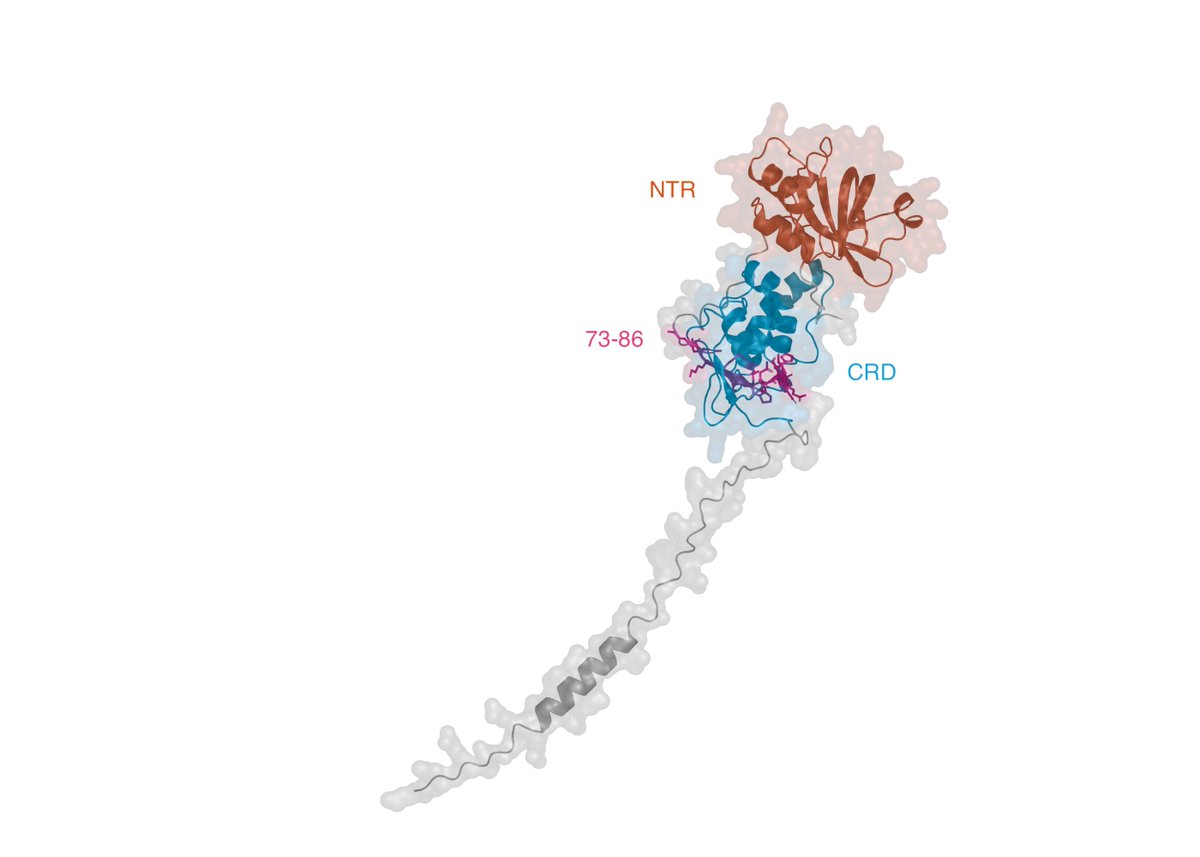
1. a CRD / 73–86 hypothesis
2. another CRD surface hypothesis
3. an NTR / C-terminal hypothesis
Run them in parallel.
Then double down on whichever designs look most convincing.
Not one answer but small bets.
We’re still early. But that’s cool no?
Day 6 of designing a therapeutic protein for hair loss.
Ok cool. We need a surface that is:
> Accessible
> Structurally stable
> Continuous and large enough
> Hydrophobic but not too much
> And most importantly, biologically relevant.
Theory is nice but biology is much messier:
A mutation that weakens SFRP1’s Wnt antagonism doesn’t prove that region is where Wnt directly binds.
So, I don’t think the right move is committing to jus one epitope, throw a few hotspot residues into a model and pray.
At this stage the sensible approach is branching:
@Ruskinkot_chem delivery is def a big challenge. not just proteolysis but also how to make it through the skin barrier. A small molecule could be the right choice but first i'm trying to answer if neutralizing SFRP1 actually does what we want. Miniproteins are well stablished for that.
I'm going to try to design a new therapeutic protein for hair loss.
From my laptop.
No company. No lab of my own. No funding.
Just modern protein design tools, rented GPUs, published research and curiosity.
The idea is simple:
> Chemically diverse. Hydrophobic residues can act as anchors, true, but surrounding polar and charged residues give you opportunities for hydrogen bonds, salt bridges and greater specificity.
And even if a surface checks every one of these boxes, there’s a harder question left:
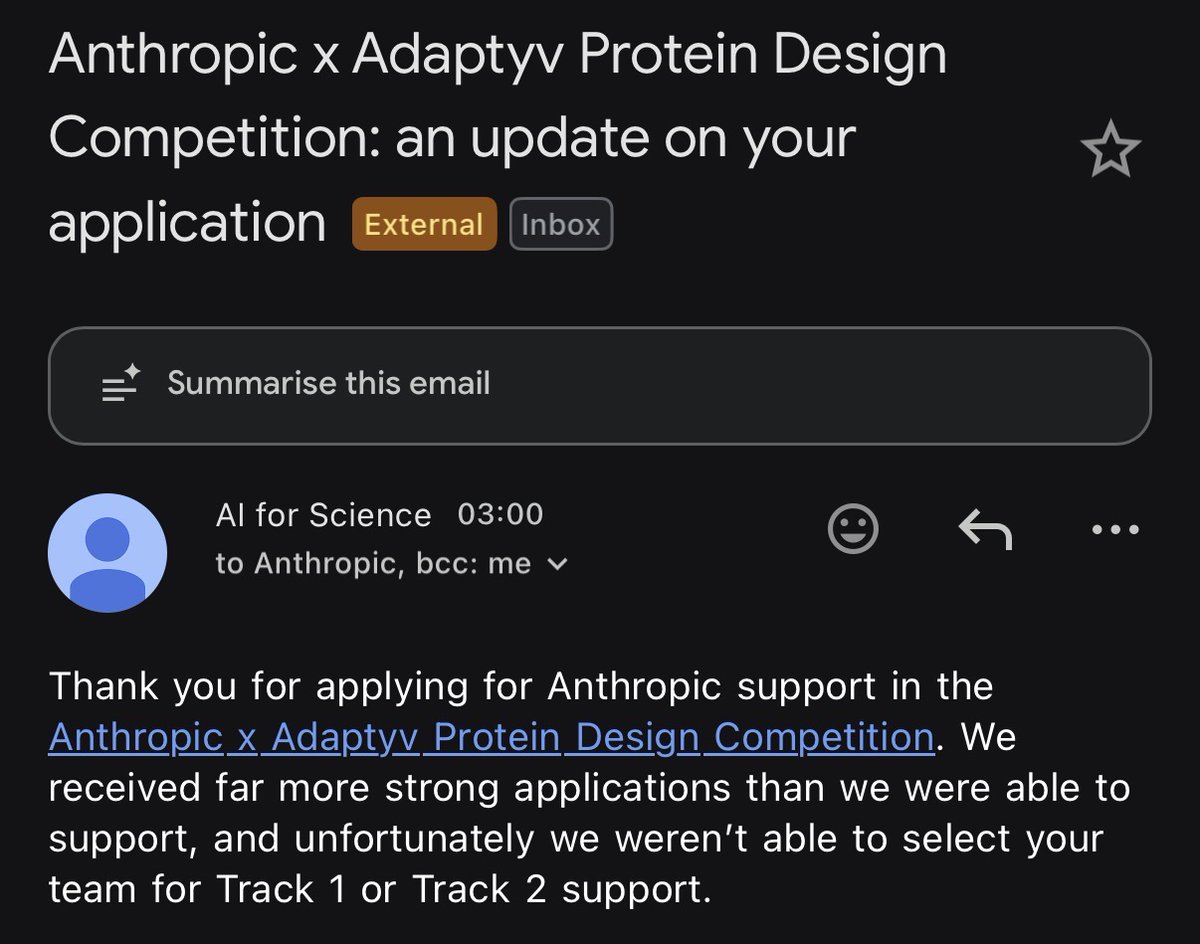
Got rejected from Track 2 of the Anthropic x Adaptyv protein design competition.
I wonder how many independent researchers got in.
Anyways, bootstrapped it is then!
Makes for a good challenge: how to get designs into wet-lab testing without going bankrupt. 💰