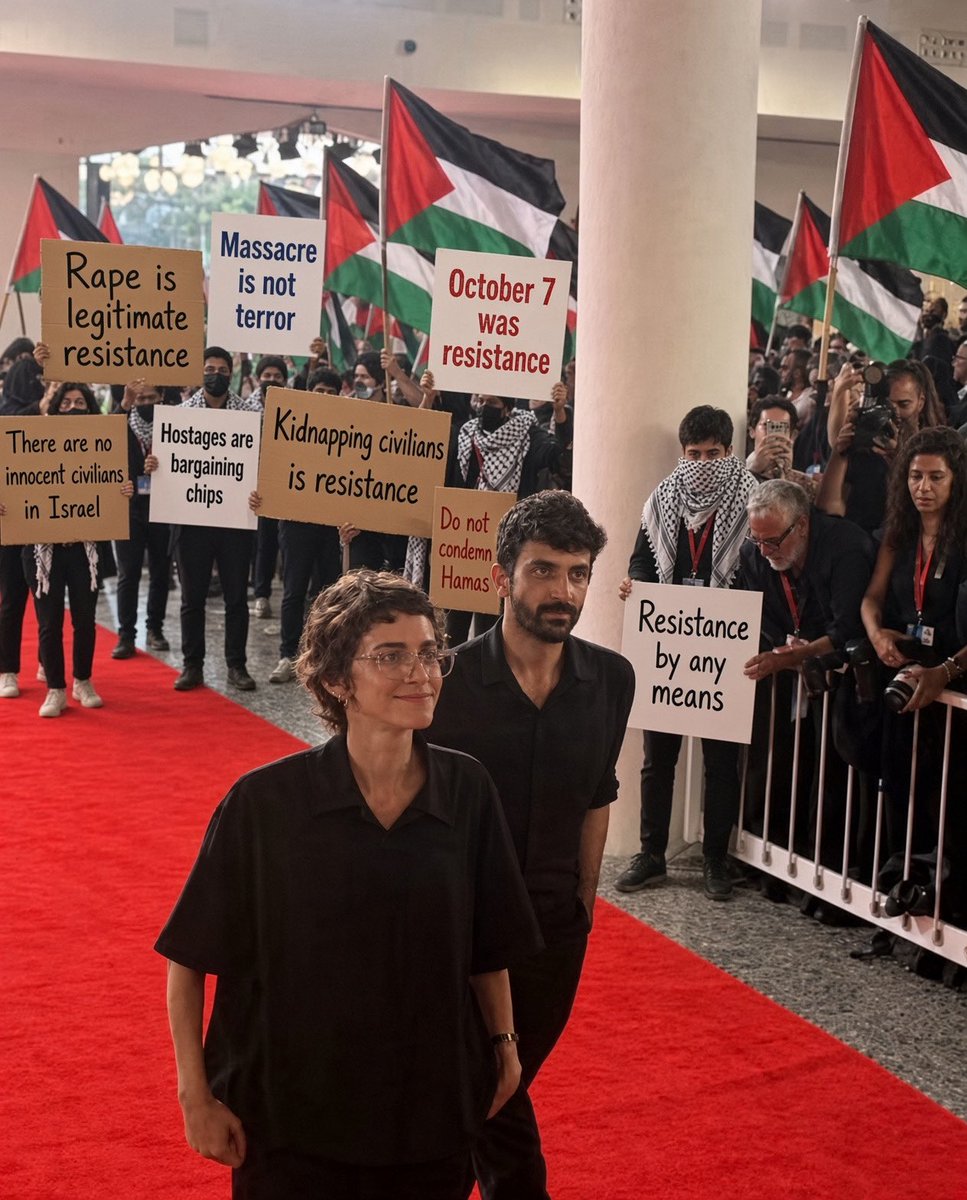
ברור שהסרט הזה הוא תעמולה נאצית מזוככת בסגנון של גבלס.
הרי צה״ל זה הצבא הכי מוסרי בעולם בפער עצום.
מה שהבריטים עשו ביום אחד של הפצצות מאסיביות על גרמניה - רק בגלל שירו עליהם טילים - צה״ל לא עשה במשך שנתיים !!!
אלה עובדות מתמטיות ברורות - ורק אנשים עם אישיות אנטישמית ונאצית יכולים להתעלם מכך .
צה״ל היה צריך לקבל את כל הפרסים הבין לאומיים הגדולים בעולם על היותו הצבא המוסרי ביותר בעולם !!!
אבל תואמי גבלס האלה - רוצים לעשות הון מהאנטישמיות המבעבעת בעולם .
……
(נ.ב - בגלל המוסריות המוגזמת הזאת - צה״ל לא מסוגל להכריע מלחמות)
……
ולר��ל השנה החדשה אני רוצה לאחל ליוצרי הסרט :
שימותו ביסורים בקבר של גבלס …
תכירו את יובל אברהם ורחל שור, שני אזרחי ישראל שזכו אתמול בפרס בפסטיבל ונציה.
אבל לא, זו ממש לא גאווה ישראלית, זו גאווה אנטי ישראלית. כי שניהם יצרו סרט דוחה שכל מטרתו להאשים את צה"ל ברצח עם. הם קראו לו נז"א- נזק אגבי... כאילו צה"ל רצח ��מוני פלסטינים ככה בדרך אגב.
בסרט יש עדויות לכאורה בלי הוכחות, בלי שמות, לא ניתן לאמת או לעמת. אבל עובדות שכן ניתן לאמת זה שאין עוד מלחמה כזו בשטח בנוי בה היחס בין מחבלים מחוסלים לאזרחים שנהרגו הוא נמוך יותר!! וזה כשחמאס משתמש בתושבי עזה כמגן אנושי.
כי צה"ל עשה הכל כדי להימנע מפגיעה בבלתי מעורבים. בדיוק ההיפך מרצח עם!
אבל מה אכפת לשניהם, הם יודעים שהנוסחה לפרס בינלאומי זה סרט שמכפיש את צה"ל. הם קיבלו מחיאות כפיים סוערות דקות ארוכות. והנזק לתדמית מדינת ישראל בעולם? מבחינתם זה נזק אגבי... ואולי זו המטרה האמיתית שלהם בכלל...
אה ומה עם טבח השבעה באוקטובר שעשו הפלסטינים ופתח בעצם את מלחמת הקיום הזו?
שני צבועים מסוכנים. הם לא ראויים לגבורה ולהקר��ה של חיילי צה"ל ובעיקר לא ראויים להיות אזרחי מדינת ישראל!!!
On September 11, one company lost 658 employees in a single morning.
Not one person who was at their desk survived.
The ones who were not at their desks spent the next five years working to feed the families of the ones who were.
The company was Cantor Fitzgerald. A bond brokerage. Floors 101 through 105 of the North Tower. The plane hit between 93 and 99. Everyone above the impact was cut off. Nobody above the impact came down.
Cantor had 960 employees in New York. 658 were in the office that morning. All 658 died.
The chairman, Howard Lutnick, was not there. He was late. It was his five-year-old son's first day of kindergarten, and he had walked the boy to the classroom door.
His driver came into the classroom. A plane has hit the Trade Center.
Lutnick's younger brother Gary, 36, worked on the 104th floor. His best friend Doug Gardner, 39, was on the 105th. His sister Edie's morning meeting had been canceled. She was the only one of the three siblings not on her way in.
Gary called Edie from the 104th floor, after the plane hit. He told her he loved her. He told her to tell Howard. The smoke was coming in.
Then the line went dead.
Lutnick spent that day and night at the hospitals, going from bed to bed, looking at faces, looking for his people. He did not find any of them. There were none to find.
In the first days, the company did something that got it attacked from every direction.
It stopped the paychecks.
There was no company. Two thirds of it was dead. The trading floor was gone. The office was a hole in the sky. There was no revenue to pay anyone with. Lutnick said so, publicly, and the reaction was brutal. A CEO who had lost his own brother was being called heartless on national television.
Four days after the attack, on September 15, he went on Larry King Live, still in pieces, and made a promise in front of the country.
Twenty-five percent of the company's profits, for the next five years, to the families of the 658. And ten years of health insurance.
He was ridiculed for it. How does a company that no longer exists pay anybody anything, let alone make promises?
Here is what the survivors did.
Forty-seven hours after the towers fell, Cantor was back trading U.S. Treasury bonds. Through its London office and an electronic platform, run by technical staff who had walked in from the street. The bond market reopened on September 13 and Cantor was on it, because if there were no profits, there would be nothing to give.
Roughly 300 people had survived. They went back to work in borrowed offices, at borrowed desks, next to empty chairs. Some of them had lost a brother, a wife, a fiance, a father, on the same floor they had worked on.
They worked anyway. For five years.
Edie Lutnick took over the Relief Fund, seeded with a million dollars of her brother's money three days after the attack. She sat at a desk twenty hours a day writing checks by hand. Thousands of them. To widows. To parents. To new mothers whose husbands would never see the baby.
Five years later, the promise was kept. Roughly 180 million dollars went to the families. The health insurance ran for the full ten.
And they did not stop.
Every September 11 since, Cantor Fitzgerald has given away its entire revenue for the day. Every dollar the firm makes on the anniversary. Employees give their day's pay on top. They call it Charity Day. Some years it raises twelve million dollars in one day.
The people who were not at their desks that morning have spent twenty-five years working for the ones who were.
Gary Lutnick was 36 years old. His brother posted a photograph of him yesterday, on the 25th anniversary, and wrote that Gary was killed for being an American and going to work.
He is the Secretary of Commerce of the United States now. He still runs the fund.
658 people.
Nobody above the fire came down.
The ones below it have been carrying them ever since. 🇺🇸
The Jewish New Year: A Time of Reflection, Renewal, and Sweetness
Rosh Hashanah in 2026 begins at sunset on Friday, September 11th, and ends at nightfall on Sunday, September 13th. We welcome the year 5787.
As summer begins to give way to autumn, Jews around the world prepare for Rosh Hashanah, the Jewish New Year. Unlike the fireworks and champagne of the secular New Year, Rosh Hashanah is not really about celebration for its own sake. It is a time of reflection, prayer, judgment, renewal, family, and hope.
Whether you’re Jewish, not-so-Jewish, or simply curious, there is something beautiful in the idea that once a year we are asked to stop and seriously consider what we have done with the time we were given.
What is Rosh Hashanah?
Rosh Hashanah literally means "Head of the Year." It begins the Jewish High Holy Days and falls on the first two days of the Hebrew month of Tishrei.
It is often called the birthday of the world, although Jewish tradition connects Rosh Hashanah specifically with the sixth day of Creation, when Adam and Eve were created. Humanity brought something new into the world: moral responsibility, free choice, and the ability to recognize the Creator.
That helps explain why Rosh Hashanah is also known as Yom HaDin, the Day of Judgment. It is not simply the beginning of another calendar year. It is an opportunity to take account of the life we have actually lived.
Where did we succeed? Where did we fall short? Who do we need to forgive, apologize to, or reconnect with? What should we do differently in the year ahead?
Judaism does not ask us to pretend the past never happened. It asks us to confront it, learn from it, repair what we can, and begin again.
The Traditions of Rosh Hashanah
Perhaps the best-known sound of Rosh Hashanah is the shofar, the ram’s horn blown during the holiday. Its raw, ancient sound is meant to wake us up spiritually and remind us that life is precious and change is still possible.
This year is a little unusual because the first day of Rosh Hashanah falls on Shabbat. Traditionally, the shofar is not sounded on Shabbat, so it will be heard on the second day, Sunday.
Then there are the sweeter traditions. Apples dipped in honey symbolize our hope for a good and sweet year. It is a simple ritual, but the idea behind it is powerful. We are not only asking for a year that is ultimately good for us. We are asking for goodness that actually feels sweet.
Religious Jews also observe Tashlich, gathering near a body of water and reciting prayers connected with casting away our sins. The water does not erase our mistakes. The ritual gives physical expression to the much harder work of recognizing what we have done and deciding what we do not want to carry into another year.
Welcoming 5787
Rosh Hashanah arrives every year with the same quiet challenge: another year has passed. What did we do with it?
For Jews, the past few years have carried their share of fear, grief, uncertainty, and change. That makes the ancient rhythm of the Jewish calendar feel especially meaningful. The world does not need to be perfect before we begin again.
So as 5787 approaches, take a little time to reflect. Be grateful for what survived. Repair what can be repaired. Hold the people you love a little closer. Decide what is worth carrying forward and what should be left behind.
And, of course, leave room for some sweetness.
Shanah Tovah U’Metukah. May we all be inscribed for a good and sweet year.
@thewebbie The past year was quite dramatic for Israel but let's keep being optimistic 🙏 as Golda Meir put it, "pessimism is a luxury that Jewish people cannot afford" 😊 Shana Tova U'Metukah! 💙🤍💙🍯🍎