#TextUBIto50409
⚠️4trillion per year for #UBI is NOTHING in compare to 1trillion per day for banks
So far we only see the very most money sticking with the super rich,not trickling down,nor circulating,nor stimulating anything but inflation
Demand #UBI
https://t.co/QaHhoNvFpG
If you bought your phone, you should own it. Google's new 'developer verification' means they decide what software you're allowed to run on your own property. Join the 100k+ signers opposing this: https://t.co/wdQjblaLWl #KeepAndroidOpen
Agriculture is being taken over by robots that don't sleep or need supervision
24/7 harvesting at scale changes the economics of the entire food industry, including potential for cheaper food
A future of abundance should have UBI and sharing the fruits of technology
On hot days, bees position themselves at the entrance of their hive and use their wings as fans drawing warm air out and allowing cooler air to move in
1/🧵
📹Flohive
A single bird has just accomplished one of the most extraordinary feats in the animal kingdom — flying nearly one-third of the way around the Earth without stopping to eat, drink, or rest.
The record-breaker is a five-month-old Bar-tailed Godwit that flew nonstop from Alaska to Tasmania, Australia. Covering 8,425 miles in just over 11 days, it set a new record for the longest nonstop flight ever documented in any bird.
What makes this journey even more astonishing is that it was the young godwit’s very first migration. The entire route took place over the open Pacific Ocean, with no chance to land. Despite that, the bird navigated thousands of miles of featureless water with pinpoint accuracy.
This incredible endurance is made possible by remarkable physiological adaptations. Before takeoff, the godwit packs on enormous fat reserves — nearly half its body weight — to fuel the flight. At the same time, many of its internal organs, including parts of the digestive system, temporarily shrink to lighten the load and maximize energy efficiency.
Unlike many seabirds that depend heavily on gliding, this godwit flapped continuously for the entire journey, battling shifting winds and weather systems the whole way.
Researchers at the Pūkōroro Auckland Shorebird Centre say discoveries like this are transforming our understanding of migratory birds. Their astonishing endurance, navigation skills, and energy management demonstrate biological capabilities that can match — and in some ways surpass — even the most advanced human engineering.
.@vkhosla You've said UBI will be essential as AI replaces jobs. You've warned about economic dystopia if we don't act.
Here's a way to go on record: the AI Pledge for Humanity. A public commitment to direct AI-generated gains toward UBI.
Dustin Moskovitz and Andrew Yang have signed. Your name belongs on it too.
https://t.co/MFDdNxjxVi
If you believe AI will require UBI, there's now a public list of people putting their money behind making it real.
Sign and share The AI Pledge for Humanity. Let's start building real pressure on tech leaders to put their money where their mouth is.
https://t.co/qmo7xoH9iQ
Consumer sentiment is now at the lowest level ever recorded.
Records you do NOT want to set…
It’s time to build a system that solves problems.
So we are. Share this and help us get the word out.
https://t.co/VpeS802ZuX
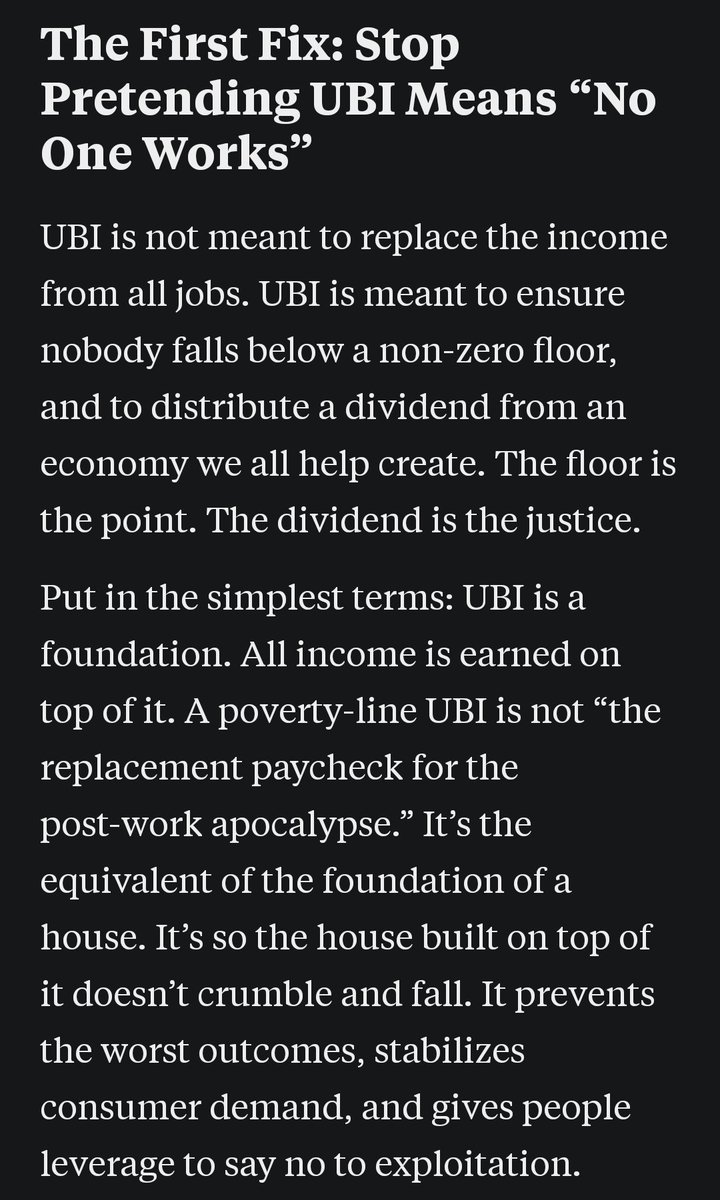
I wrote this to help people understand that universal basic income is not meant to permanently replace all jobs. It's meant to be a floor below which no one can fall, and a dividend that universally distributes a share of our economy. It's meant to provide the power to say no and freedom to choose what we do.
https://t.co/lKdgZbxQ8M
Basic income is not about charity, it's about enhancing the ability of the economy to grow. It's about buying people time to transition into an increasingly automated, and unequal economy.
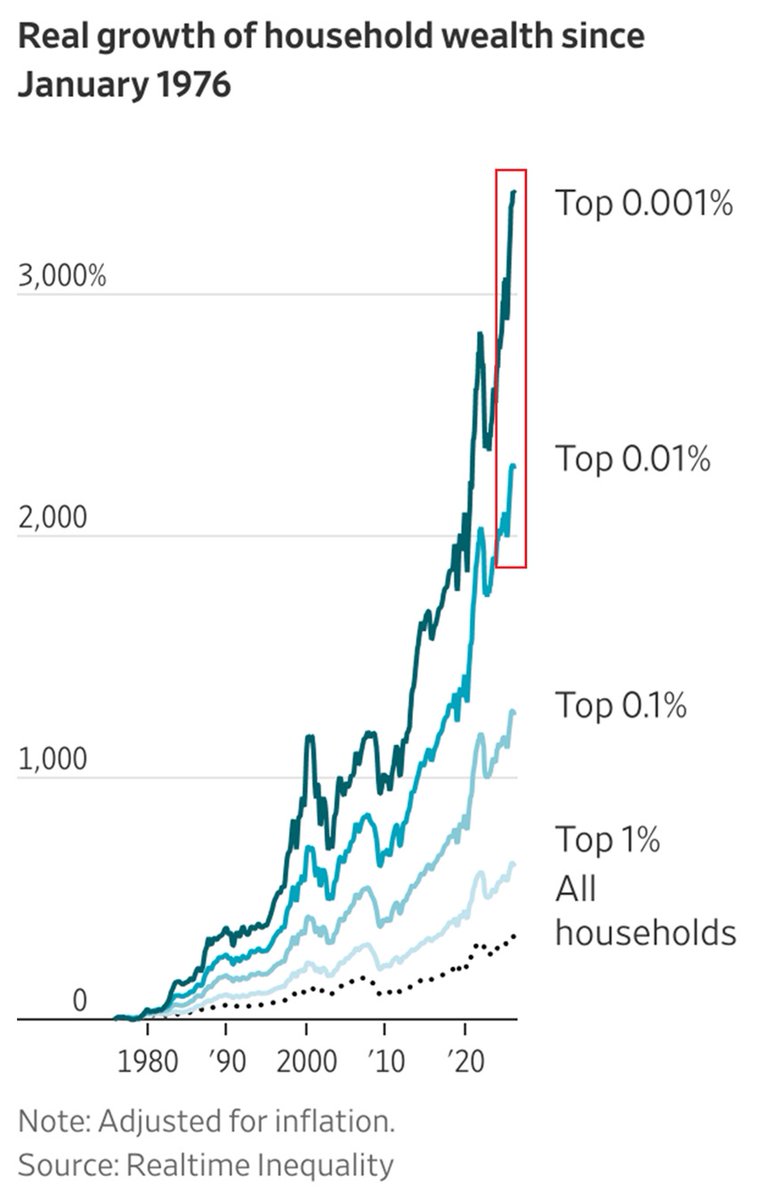
Wealth inequality in the US has never been wider:
The real wealth of the top 0.001% of US households has grown +3,500% since 1976.
At the same time, inflation-adjusted wealth of the top 0.01% and 0.1% has surged +2,200% and +1,200%, respectively.
By comparison, the average household has seen just a +200% increase.
As a result, there are now ~430,000 households worth $30 million or more, with ~74,000 worth over $100 million.
Meanwhile, ~72% of wealth for the top 0.1% is concentrated in corporate equities, mutual funds, and private businesses.
To put this into perspective, the bottom 50% of US households had more debt than assets for nearly 2 decades, with their average wealth turning positive after the 2020 pandemic, following stimulus checks and growing home values.
Asset owners are the only winners.