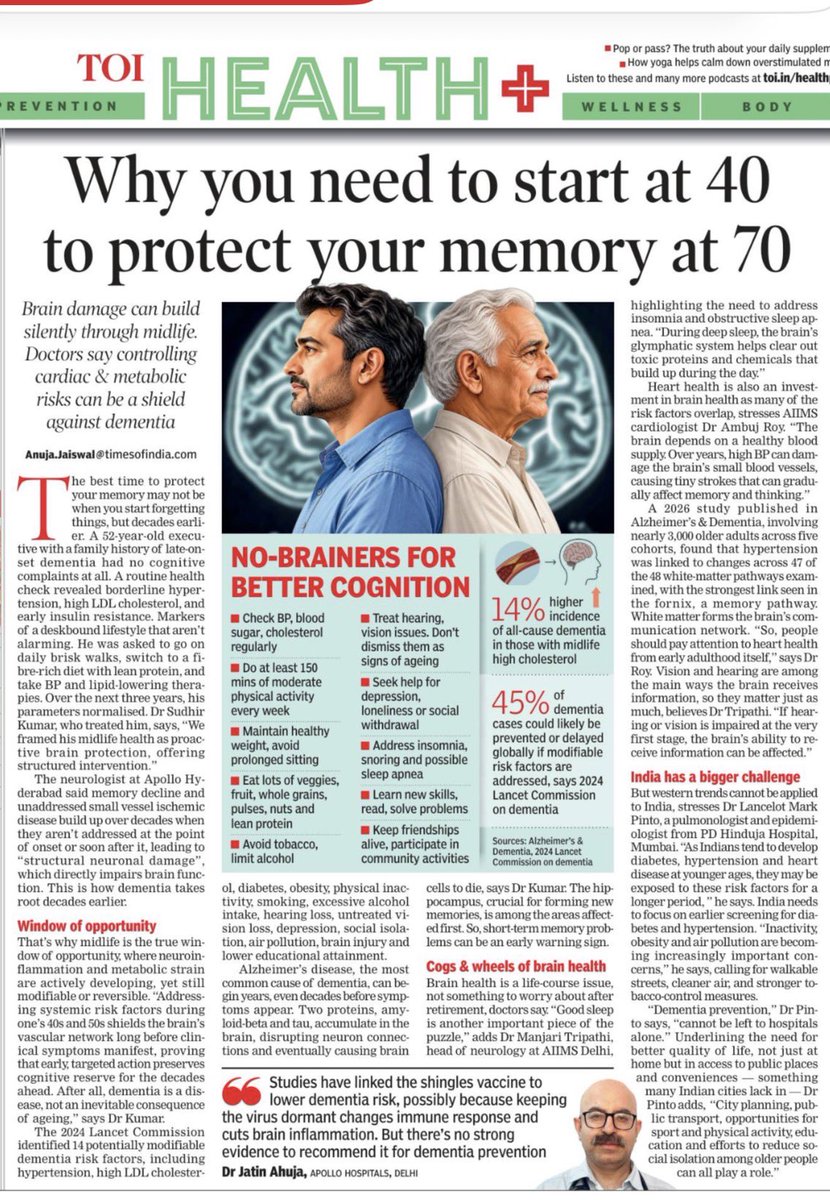
For a long time, I have changed my practice of caring for critically ill patients referred to me towards a more home-based hospice care approach - because right now, in Indian healthcare, dying inside hospitals is the biggest business. If doctors are sure the patient is not going to make it, they must offer them the option of dying with dignity in the comfort of their home, instead of escalating treatment and bankrupting families who live on the fringes of financial breakdown.
When sugar becomes expensive, perhaps we should ask a bigger question, can price become a public health tool?
A well-designed sugar tax, particularly on sugar-sweetened beverages, combined with transparent front-of-pack labelling, could potentially shift consumption and not just prices.
The objective isn’t to tax food. It’s to reduce the future cost of diabetes, obesity and cardiovascular disease.
Sugar taxes have worked, notably in Mexico and the UK. But the UK’s lesson is even more interesting, the real victory was reformulation.
A good health tax shouldn’t simply make unhealthy choices more expensive. It should make the food industry make them healthier.
For India, perhaps the question isn’t “Should we tax sugar?” but “Can we design a tax that makes diabetes prevention cheaper than diabetes treatment?”
At the @IndiaToday WOMAN SUMMIT 2026.
Estrogen therapy (HRT or MHT) at menopause has made a big comeback in the West.
In this discussion at the @indiatoday Woman Summit 2026, I answer some common queries about HRT, along with Senior gynecologist Dr Anita Gupta from Fortis.
The session was expertly conducted by Sonali Acharjee
A short clip..
DIABETES 2026: THE NEW RULE — TREAT THE PERSON, NOT JUST THE SUGAR!
——————————-
The American Diabetes Association (#ADA) Standards of Care 2026 bring diabetes management closer to a truly person-centred, cardio-renal-metabolic approach. The 2026 Standards are the latest comprehensive evidence-based recommendations from the ADA. (Diabetes Journals)
—————————
🔹 Diagnosis still matters: Diabetes is diagnosed by established criteria including HbA1c ≥6.5%, fasting plasma glucose ≥126 mg/dL, 2-hour glucose ≥200 mg/dL during OGTT, or random glucose ≥200 mg/dL with classic symptoms, with appropriate confirmation when required. (Diabetes Journals)
———————————-
🔹 HbA1c target: For many nonpregnant adults, the general goal remains around <7%, but targets should be individualized according to age, duration of diabetes, comorbidities, hypoglycemia risk, life expectancy and patient preferences.
—————————
🔹 GLUCOSE IS NOT THE WHOLE STORY: Treatment selection should consider heart, kidney, weight and metabolic health—not merely HbA1c.
—————————
🔹 GLP-1–based therapies gain further importance, particularly in people with type 2 diabetes and obesity, CKD, cardiovascular disease, heart failure or metabolic dysfunction-associated steatotic liver disease (MASLD/MASH), when appropriate. (Diabetes Journals)
———————————-
🔹 CKD protection: #Diabetes care increasingly integrates kidney-risk assessment and therapies with proven renal and cardiovascular benefits. The 2026 CKD section received endorsement from the National Kidney Foundation. (Diabetes Journals)
————————————-
🔹 Continuous Glucose Monitoring (#CGM) has an expanding role. The 2026 guideline recommends CGM at diabetes onset and subsequently for adults using insulin, therapies capable of causing hypoglycemia, or whenever CGM can improve management. (Diabetes Journals)
——————————————
🔹 Weight management is treatment: Nutrition, physical activity, weight reduction and prevention of therapeutic inertia remain central.
———————————
🔹 Prevention starts early: For people at high risk of type 2 diabetes, achieving and maintaining 5–7% weight loss can be an important prevention target. (Diabetes Journals)
——————————————
🌟 THE 2026 MESSAGE
Don’t just lower glucose. Reduce cardiovascular risk, protect kidneys, manage weight, prevent hypoglycemia and preserve quality of life.
#DiabetesCare in 2026 = Glucose control + Weight control + Heart protection + Kidney protection + Technology + Personalisation.
#Diabetes2026 #GLP1 #Obesity #LaCasaDeLosFamososMéxico #KidneyHealth #DiabetesPrevention #MedicalEducation #Endocrinology #HealthyLiving @IhabFathiSulima@drkeithsiau@docakx@ajaykraina@sowmiyasid
Lessons from chess:
Think before you move.
Patience wins.
Strategy beats speed.
Learn from mistakes.
Protect what matters.
Value every piece.
Adapt to change.
Sacrifice when needed.
Think ahead.
Control emotions.
Stay calm under pressure.
Keep learning.
Perhaps that’s why life often feels like one long game of chess. ♟️
Hey I'll answer your questions because the Government are health and science illiterates.
Short answer: If all the Homeopaths in the world suddenly gets transported into another dimension through a magic portal and they cease to exist on Earth, ABSOLUTELY NOTHING will happen to current or future healthcare and medicine on Earth.
One, they are not our "colleagues" - homeopaths in India are legalized pseudoscience peddlers and scamsters. That Homeopathy is quackery is well known globally. Our Government cannot say so and will not allow others to say so, because they have allowed this abomination of an alternative medicine to grow parallel to medical science here.
Two, the Homeopathic community wants the easy way in, to get into real medical register because at present, they are quacks and practicing quackery. They are outcasts in healthcare. They know it. The Ministry that nurtures them know it and the Govt. knows it. So to help them survive and get their families bread and butter, this integration is proposed. This is against principles of natural justice for MBBS doctors.
Look at how the world is moving on:
United Kingdom: NHS England blacklisted homeopathy in 2017, barring general practitioners from prescribing it, though private sales remain legal.
France: Completely ended state reimbursements for homeopathic treatments in 2021 following scientific assessments.
Australia: The National Health and Medical Research Council (NHMRC) officially concluded there is no reliable evidence supporting homeopathy.
Spain: National authorities have taken steps to remove unproven pseudotherapies, including homeopathy, from official health centers.
European Academies' Science Advisory Council (EASAC) released an explicit evaluation from the EASAC Working Group asserting that there is no robust or reproducible evidence that homeopathic products work for any disease.
The Cochrane Collaboration Reviews of high-quality, double-blind, randomized controlled trials consistently indicate that reliable evidence fails to demonstrate any benefit of Homeopathy.
These certifications and side-business of empowering quacks is a long term vision of this idi*tic Government to keep pseudoscience and business of alternative medicine alive. Reject them. Reject their policies. Throw them out of power. The quacks are collateral damage. Don't feel sad about them, or their futures.
Every day, doctors stand beside us through moments of hope, uncertainty, and healing. Behind every mask is a person who works long hours, carries difficult decisions, and often puts the needs of others before their own.
On this Doctors’ Day, let us express our gratitude not only through words, but also through kindness, patience, respect, and understanding. By caring for those who care for us, we help build a healthier and more compassionate society.
AIIMS New Delhi wishes the entire medical community a Happy National Doctors’ Day!
"Treating chronic diseases requires a completely different mindset; it is almost a parallel world of medicine. In acute care, the best patient is often the one who does not return. But in chronic care, the more a patient follows up, the better a physician you become, because continuity is the foundation of effective treatment. Chronic care begins with education and awareness, with the goal of preventing acute events before they occur. Its value is immense, as it improves both quality of life and long-term outcomes. If you aspire to be a physician, you must first like people; building trust and bonds is critical "
@ET_Edge
Most adults who get a routine physical have their liver checked through one number: ALT. If it sits under 40, the system moves on. But ALT only rises when liver cells are actively dying in numbers large enough to spill enzymes into the blood. The slow scarring process that defines the dangerous form of fatty liver disease can advance for years without enough ongoing cell death to push ALT out of range. The standard panel reads normal. The liver is not.
A study in Hepatology biopsied 51 patients with fatty liver disease who all had normal ALT. Twelve had bridging fibrosis. Six had cirrhosis. That is 35 percent with advanced scarring while every blood test said the liver looked fine. The histologic picture in normal-ALT patients was indistinguishable from those with elevated ALT. Selection bias matters: the biopsied group was selected from unexplained liver enlargement and donor evaluations, not population screening. But the existence of substantial fibrosis behind a normal ALT is well established.
Fatty liver disease, recently renamed MASLD (metabolic dysfunction-associated steatotic liver disease) to reflect its metabolic origins, sits in about 25 percent of adults globally per a 2016 meta-analysis of 8.5 million people. Among MASLD patients: 51 percent obesity, 22 percent type 2 diabetes, 39 percent hypertension, 42 percent metabolic syndrome. The disease is the hepatic manifestation of insulin resistance. If you carry any of those metabolic markers, the question is not whether your liver is at elevated risk, but what your imaging and FIB-4 actually show.
Three things catch liver damage earlier than ALT. Imaging is the most direct. Abdominal ultrasound detects steatosis once hepatic fat exceeds roughly 30 percent. FibroScan measures liver stiffness as a non-invasive proxy for fibrosis. MRI-PDFF quantifies fat content with the highest accuracy. FIB-4 is a calculated score using age, AST, ALT, and platelet count: age times AST divided by (platelet count times the square root of ALT). A FIB-4 below 1.45 reliably excludes advanced fibrosis with a 95 percent negative predictive value. Above 3.25 warrants hepatology referral. Between those two numbers is an indeterminate zone that needs further workup. GGT is a sensitive marker of hepatic and biliary dysfunction that often rises before ALT does, particularly in the context of insulin resistance. All of these are available through direct-pay labs without a prescription.
Catching MASLD early matters because the intervention has strong evidence. A 52-week prospective study of 293 NASH patients showed that 5 percent body weight loss produced NASH resolution in 58 percent of patients. Ten percent body weight loss produced NASH resolution in 90 percent and fibrosis regression in 45 percent. Mediterranean diet, resistance training, and management of insulin resistance reduce hepatic fat independent of weight change. The window to intervene is wide on the left side of the trajectory and narrow on the right. By the time ALT flags the problem, the most damaging stage of the disease has usually already arrived.
Mofrad et al., Hepatology, 2003.
Younossi et al., Hepatology, 2016.
McPherson et al., Gut, 2010.
Vilar-Gomez et al., Gastroenterology, 2015
Source Courtsey William Wallace PhD
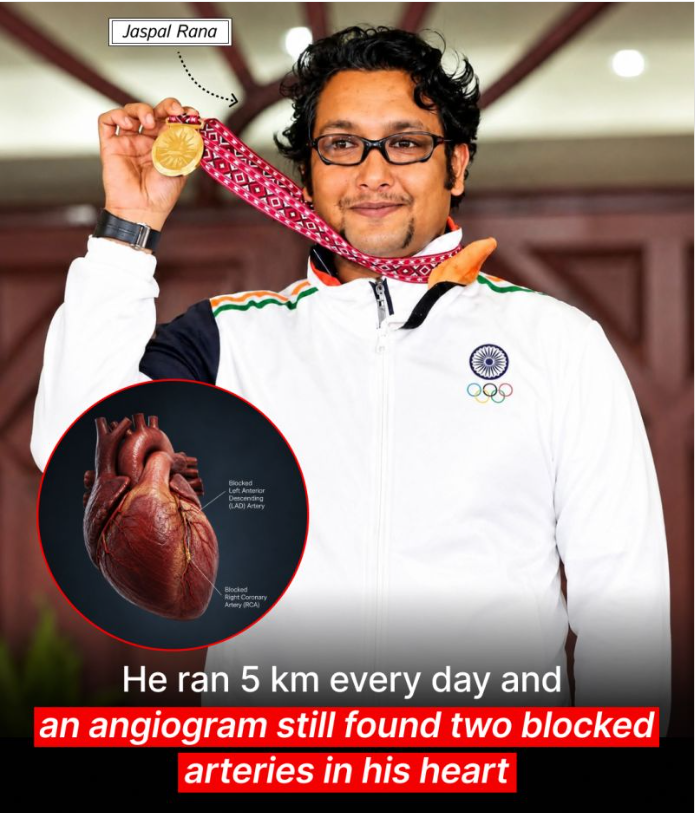
The untimely passing of Jaspal Rana is a stark reminder that heart disease does not always fit the profile we expect.
An Arjuna Awardee, champion shooter, coach, and a symbol of discipline and peak performance, he was someone many would consider the picture of health.
Yet, for several days, the warning signs were present but easy to dismiss. By the time medical attention was sought, a major coronary artery was completely blocked.
His story highlights an important reality: heart disease is often silent until it is not.
For decades, we associated serious cardiac events with age, inactivity, or visibly poor health. Today, that assumption no longer holds true. Across India and around the world, we are seeing an increasing number of heart attacks and significant coronary artery disease in people in their 30s, 40s and 50s including individuals who are active, productive, and outwardly healthy.
At @HospitalsApollo , we are witnessing this shift firsthand.
What concerns me most is that many of these conditions are detectable long before they become life-threatening. Elevated cholesterol, diabetes, hypertension, arterial calcification, and early coronary artery disease can remain unnoticed for years unless we actively look for them.
A routine health assessment can reveal risks that the body may not yet be showing. Regular screening, risk profiling, and timely intervention remain some of the most powerful tools we have in modern medicine.
Equally important is listening to your body. Unexplained chest discomfort, breathlessness during exertion, unusual fatigue, pain in the shoulder, arm, neck, or jaw, or symptoms that consistently appear with activity and improve with rest should never be ignored.
As healthcare professionals, we often say that prevention is better than cure. But today, prevention is far more than a slogan it is our best opportunity to save lives.
The most successful treatment is often the one that prevents a medical emergency from ever occurring.
Let us honour stories like these not only with condolences, but with action. Schedule your health check-up. Know your risk factors. Encourage your family members to do the same.