Muraoka et al: Subarachnoid Hemorrhage: Clazosentan vs. Fasudil for Vasospasm Prevention (SAVIOR) Study: Study Protocol for a Prospective, Multicenter, Randomized Trial
Link: https://t.co/c92nu8ORS3
@neurocritical#neurocritcare
BREAKING: FedEx driver who pleaded guilty to kidnapping and murdering 7-year-old Athena Strand, has been sentenced to death.
Tanner Horner snatched Athena while he was delivering a Barbie doll to her home in Paradise, Texas.
At one point during the trial, jurors broke down in tears while hearing audio of Horner killing Athena after he told her to take off her shirt and said she was "really pretty."
Athena repeatedly asked for her mother before she was killed.
"Horner is then heard asking Athena to remove her shirt, and there are several moments when she says "no" and asks for her mom. That was followed by repeated sounds of crying, screaming and banging," NBC reported last month.
Following three hours of deliberation today, Horner was sentenced to death by lethal injection.
Los antipsicóticos típicos (como haloperidol y clorpromazina) bloquean receptores D2 de forma potente y sostenida.
El problema: no discriminan entre vías dopaminérgicas.
→ Vía mesolímbica: efecto antipsicótico ✓
→ Vía nigroestriatal: síntomas extrapiramidales (EPS), discinesia tardía ✗
→ Vía tuberoinfundibular: hiperprolactinemia ✗
→ Vía mesocortical: pueden no mejorar o incluso empeorar síntomas negativos ✗
¿QUÉ DEFINE LA ATIPICIDAD?
No es un solo mecanismo. Son al menos 4 factores complementarios:
𝟭. 𝗢𝗰𝘂𝗽𝗮𝗰𝗶𝗼́𝗻 𝗗𝟮 𝗱𝗲𝗻𝘁𝗿𝗼 𝗱𝗲 𝘂𝗻𝗮 "𝘃𝗲𝗻𝘁𝗮𝗻𝗮 𝘁𝗲𝗿𝗮𝗽𝗲́𝘂𝘁𝗶𝗰𝗮"
Estudios con PET (Kapur, Farde y otros) han mostrado que:
Existe un rango de ocupación de D2 en el que se logra eficacia antipsicótica.
Por encima de ese rango, aumenta de forma clara el riesgo de EPS.
Ejemplos didácticos:
Haloperidol suele mantener una ocupación D2 alta durante casi todo el intervalo de dosificación → EPS frecuentes.
Clozapina y quetiapina logran ocupaciones D2 más bajas y, sobre todo, más transitorias → EPS mínimos.
𝟮. 𝗥𝗮𝘁𝗶𝗼 𝟱-𝗛𝗧𝟮𝗔/𝗗𝟮 (𝗛𝗶𝗽𝗼́𝘁𝗲𝘀𝗶𝘀 𝗱𝗲 𝗠𝗲𝗹𝘁𝘇𝗲𝗿)
Muchos antipsicóticos atípicos tienen mayor afinidad por receptores 5-HT2A que por D2.
¿Por qué importa?
En sustancia nigra y estriado, el antagonismo 5-HT2A favorece la liberación local de dopamina → contrarresta parcialmente el bloqueo D2 → menos EPS.
En corteza prefrontal, puede aumentar la liberación de dopamina → posible beneficio en síntomas negativos y cognitivos.
⚠️ Pero no es un modelo universal:
Amisulprida es clínicamente atípica y presenta muy baja afinidad por 5-HT2A.
Por eso, el cociente 5-HT2A/D2 ayuda a entender la atipicidad, pero no la explica completamente.
𝟯. 𝗗𝗶𝘀𝗼𝗰𝗶𝗮𝗰𝗶𝗼́𝗻 𝗿𝗮́𝗽𝗶𝗱𝗮 ("𝗳𝗮𝘀𝘁-𝗼𝗳𝗳" 𝗗𝟮)
Teoría de Kapur–Seeman:
Algunos atípicos (como clozapina y quetiapina) se desprenden del receptor D2 mucho más rápido que los típicos.
Esto permite que la dopamina endógena compita de manera más eficaz en momentos de liberación fisiológica, reduciendo el impacto motor.
Comparativamente:
Clozapina y quetiapina muestran una disociación rápida de D2.
Haloperidol muestra una disociación lenta, permaneciendo ligado al receptor durante más tiempo.
Dato actual:
Estudios más recientes (p. ej. con técnicas TR-FRET) indican que la cinética completa de unión (cómo se asocian y se disocian los fármacos, en modelos de “rebinding”) predice mejor los EPS que fijarse solo en el tiempo de desprendimiento.
𝟰. 𝗔𝗴𝗼𝗻𝗶𝘀𝗺𝗼 𝗽𝗮𝗿𝗰𝗶𝗮𝗹 𝗗𝟮: 𝗹𝗮 "𝟯ª 𝗴𝗲𝗻𝗲𝗿𝗮𝗰𝗶𝗼́𝗻"
Fármacos como aripiprazol, brexpiprazol y cariprazina se consideran:
“Estabilizadores dopaminérgicos” (agonistas parciales D2/D3)
Donde hay exceso de dopamina (vía mesolímbica) se comportan como antagonistas funcionales.
Donde hay déficit de dopamina (vía mesocortical) mantienen una actividad agonista parcial, evitando un bloqueo total.
Punto interesante:
Cariprazina muestra una afinidad especialmente alta por receptores D3 en comparación con D2, lo que ha llevado a postular un posible impacto favorable en síntomas negativos.
⚖️ EL TRADE-OFF MOLECULAR
Los antipsicóticos atípicos, en términos generales, intercambian:
Por un lado:
↓ Riesgo de EPS (por menor ocupación D2 sostenida y/o cinética más favorable)
↓ Riesgo de hiperprolactinemia (con excepción de fármacos como risperidona y paliperidona)
Por otro lado:
↑ Riesgo metabólico (a través de afinidad por H1, 5-HT2C y otros receptores)
↑ Sedación (principalmente por antagonismo H1)
La alta afinidad H1 de fármacos como clozapina y olanzapina contribuye de manera importante a su perfil de:
Ganancia ponderal
Aumento de apetito
Sedación
🎯 MENSAJE CLAVE
“Atípico” no significa “mejor”.
Significa: perfil de unión a receptores diferente → perfil de efectos adversos diferente.
═══════════════════════════════
🎯 MENSAJE CLAVE
"Atípico" no significa "mejor". Significa perfil de receptores diferente = perfil de efectos adversos diferente.
La imagen fue creada con Gemini Nano Banano Chocogato limited edition.
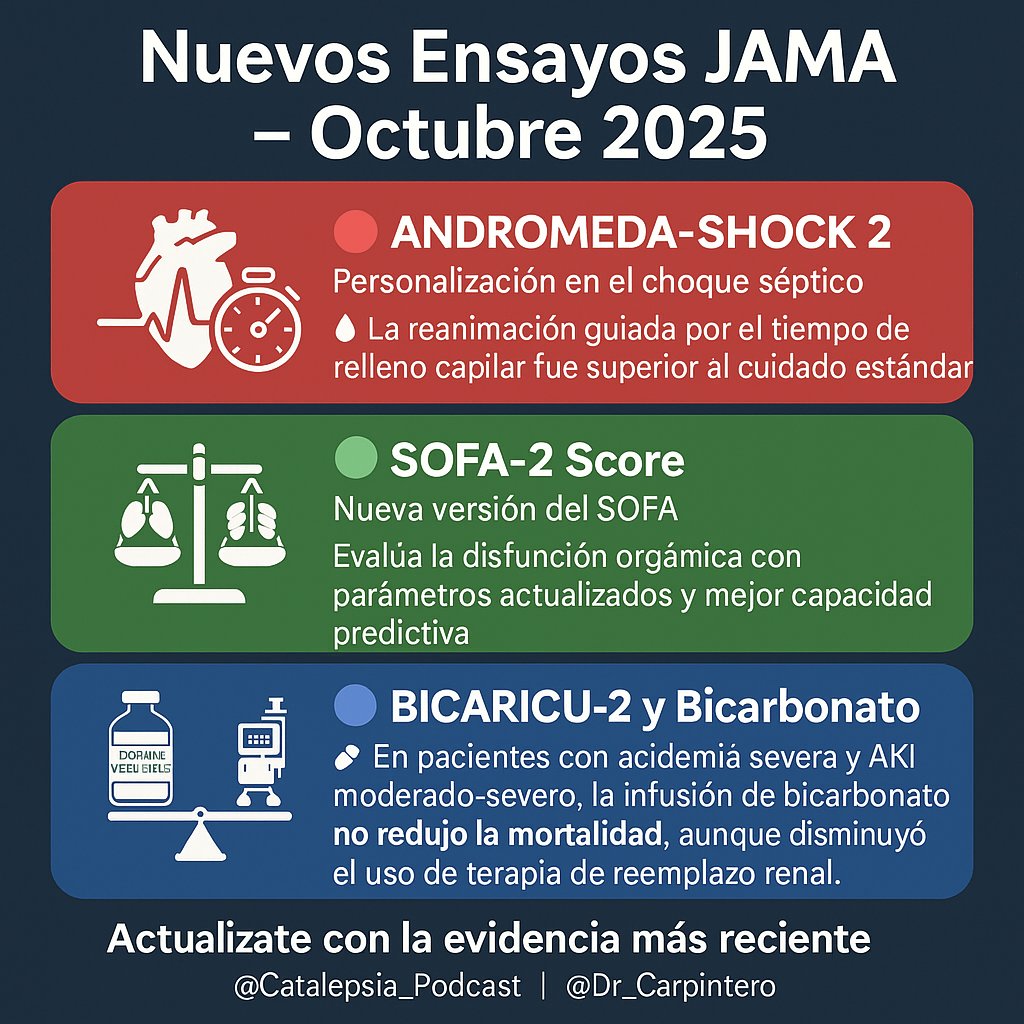
🚨 Navidad Anticipada❗
🩸 ANDROMEDA-SHOCK 2: Reanimación personalizada guiada por ⏱️ de relleno capilar → ⬇️ duración de soporte vital
🧮 SOFA-2: Actualiza la escala de disfunción orgánica
💊 BICARICU-2: HCO3 no reduce mortalidad, pero ↓ uso de terapia renal.
Good morning my lovely followers ☕️
There’s nothing better to wake you up than a good cup of anatomy…
(Okay fine — coffee and anatomy).
🧠 This is a CT angiogram of the head.
I know it’s a CT (not MRI) because the dense bone is homogeneously white —
on CT, that’s called hyperdense.
▫️ Very bright = hyperdense
▫️ Similar to brain tissue = isodense
▫️ Dark (like CSF) = hypodense
When iodinated contrast dye is given IV, it travels through:
arteries → arterioles → capillaries → venules → veins.
So the timing of image capture determines what you see:
⏱️ Early → arteries
⏱️ Late → capillaries and veins
Now, what’s that red structure I’m pointing to?
Hint: the right and left vertebral arteries merge intracranially to form the…
🩸 Basilar artery ✅
🔴 Red arrow → Basilar artery
🔵 Blue arrow → Superior cerebellar artery (SCA)
🟢 Green arrow → Posterior cerebral artery (PCA)
The basilar artery also gives off the anterior inferior cerebellar artery (AICA),
proximal to the SCA branch — sometimes not well visualized on CTA.
Elegant and vital — this is the vertebrobasilar system in action.
#Neuroradiology #Neuroanatomy #Neurology #VascularNeurology
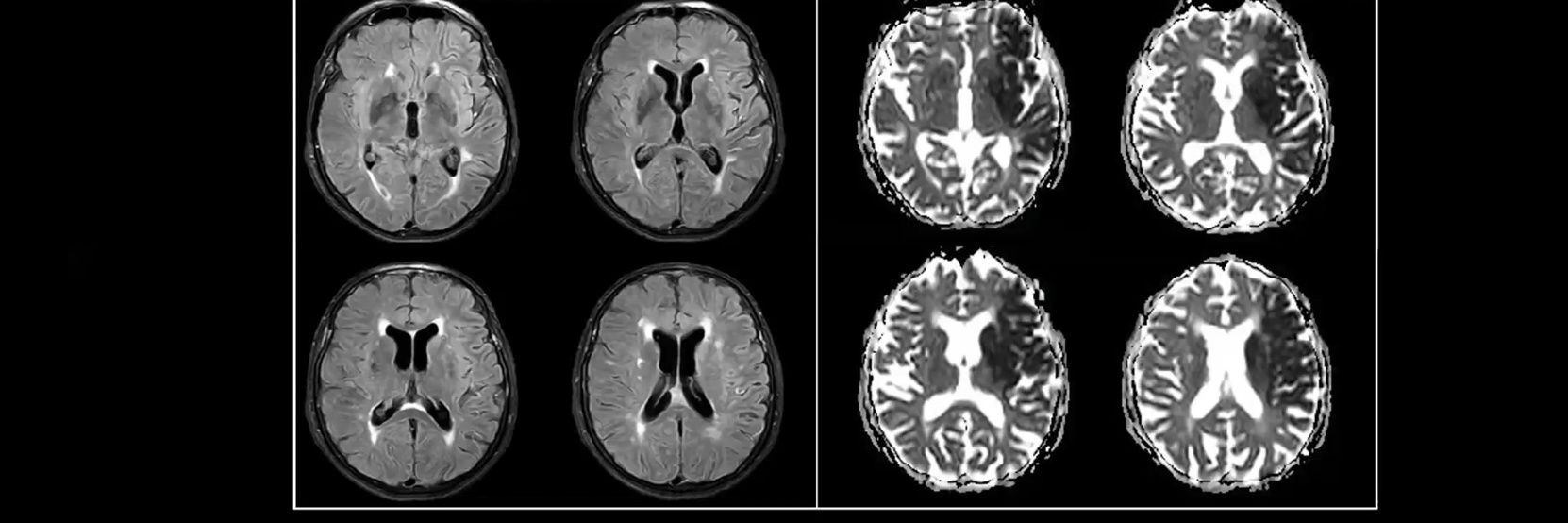
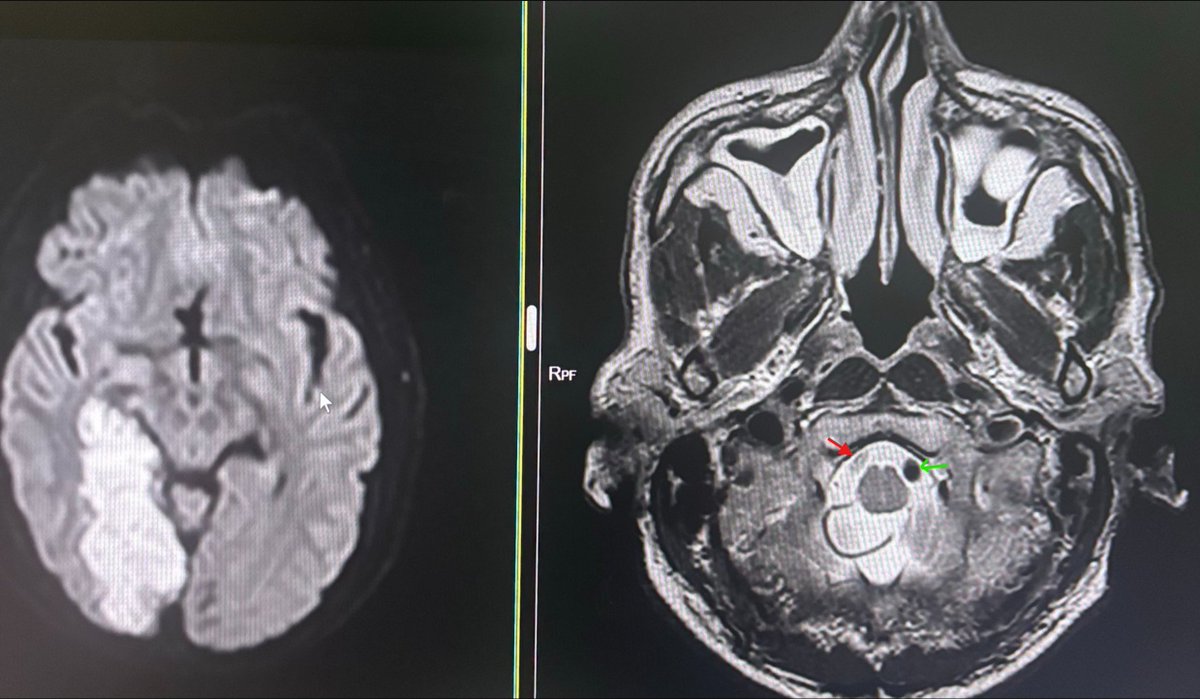
Yes, the MRI demonstrates an obvious right PCA distribution infarction.
In keeping with hypoperfusion along the right posterior circulation, there is a loss of flow void in the intracranial segment of the right vertebral artery (V4, denoted by the red arrow).
Note the normal flow void appearance (black signal) of the left vertebral artery, denoted by the green arrow.
#ARDS in patients with cancer:
🔍 715 pts/13 countries 🇪🇺 🇺🇸 🇨🇦: 73.4% hematologic malignancies, 26.6% solid tumors; 31.2% HSCT
🪦 ICU, hospital, 90-day mortality: 55.3%, 70.9%, and 73.2% (82.2% if severe ARDS ECMO/not)
🚧 independent predictors of higher mortality: older age, peripheral vascular disease, severe ARDS at inclusion, #AKI, ICU admission as time-limited trial (vs full code). Lymphoma associated with lower mortality
Patients with malignancies & ARDS, particularly severe, experience high mortality, irrespective of #ECLS use. Nuanced ICU goals-of-care discussions needed in this population, as caution when considering ECMO: general recommendations about indications may not apply to this population #FOAMcc
@yourICM
🔓 https://t.co/52kH9beGGH
Chronic Subdural Hematoma: A Review of Current Knowledge, Treatment Modalities, and Clinical Trials of Middle Meningeal Artery Embolization https://t.co/Sps2KrfI8H
#NeuroX#NeuroTwitter
Just Accepted!
🧠New study finds no evidence that long-term neuroinflammation is associated with cognitive impairment after aneurysmal SAH
👉Microstructural damage may play a role
Read more here!👇
https://t.co/GdzsHkWEjJ
Ketamine can alleviate depressive symptoms within hours, with the effects of a single dose lasting for days. Costi et al. review the mechanisms underlying the rapid antidepressant effects of ketamine in humans and animal models. https://t.co/qKDBfpKFGo
🩸ROTEM & TEG Coagulation Testing: Excellent summary & review
👉Critical appraisal of new methodologies & current literature
🔗 https://t.co/uJxBTh7p1I
#FOAMcc#SCCMSoMe#MedEd#MedTwitter