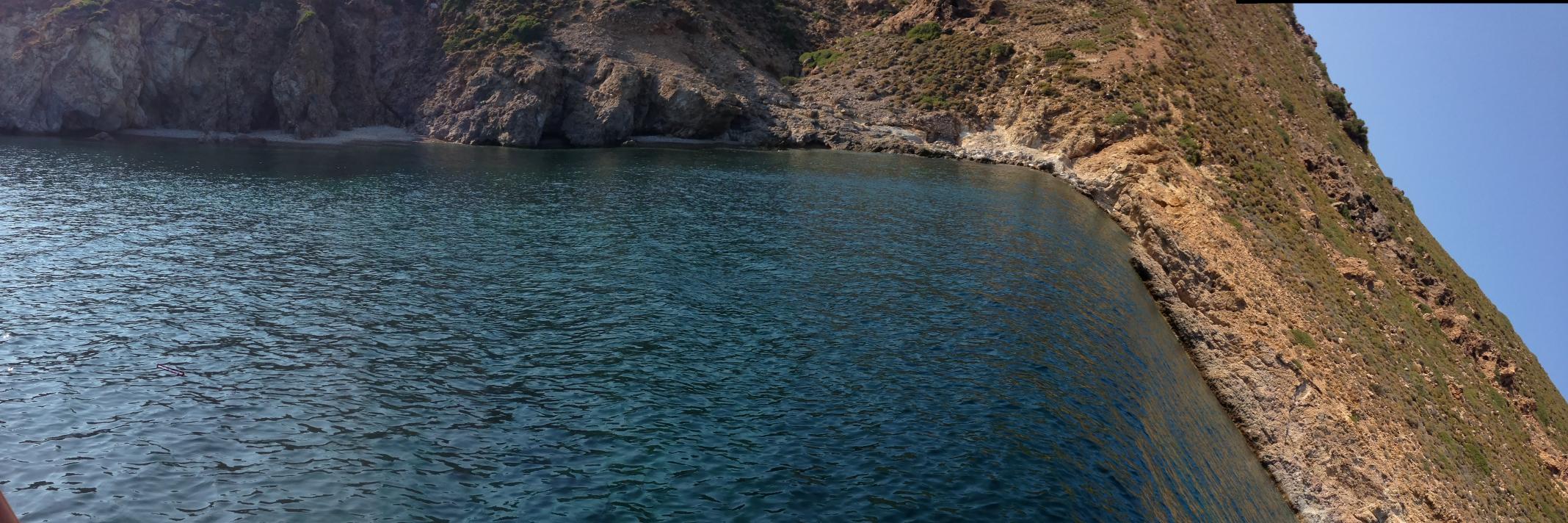
How do you bring a consistent look and feel to mixed reality stories from The New York Times, across all users and environments? What about a fish tank? https://t.co/49uRzhvRdt
“Basically, we went through the hurdles so that you don't have to.” R&D Creative Technologist @_woraya_ describes building our end-to-end guide to mobile photogrammetry. It took months, thousands of photos, and support from @ONA’s Journalism 360 challenge: https://t.co/JwgTrYdPdO
Large-scale visual investigations often involve labor-intensive 3D recreations built by hand. We are experimenting with computer vision techniques that could allow us to extract data such as road networks and building footprints from satellite imagery.
Check out our new open source @aframevr component for streaming large photogrammetry models on the web: https://t.co/gxK8gEf883
A-Frame makes creating 3D, XR experiences simple using only HTML markup.
“It sounds simple. It ends up being complicated.”
R&D Technical Lead @markmckeague and engineers @tessybarton and @AlexandreDevaux describe how they used computer vision techniques to source meter-by-meter speed data at the Tokyo Olympics. 🏃♂️ 🏊♀️
https://t.co/LbB1dRYqXm
Applications for our spring engineering internship are now open! R&D interns work side by side with our team to explore how emerging technologies can be applied in service of journalism.
Apply here by November 24: https://t.co/4qpqrwTm0o
Have questions about using #photogrammetry to create 3D models for the web?
Ask R&D team members @_woraya_, @splnlss, and @playdo_!
Reply below with questions, and we'll answer them on Friday, 10/1 at 12 pm ET 👇
The R&D team has been using photogrammetry to help journalists bring readers to the places and spaces where news happens. We distilled what we’ve learned into a comprehensive guide for anyone interested in capturing, processing and streaming their own 3D models. Check it out!
With support from @ONA, we compiled a series of guides, demos and open-source tools to help anyone create high-quality 3D models for the web. Minimal specialty equipment required.
Explore our end-to-end guide to #photogrammetry here: https://t.co/GNBW1z8wUt
The ubiquity of fast, reliable cellular networks like 5G means we can explore new tools and workflows for journalists in the field.
We're building an app to get high-res footage from journalists' cameras into editors' hands in near real-time.
Read more: https://t.co/BIiRjbak9T
Did you know that the @nytimes has an R&D department? Well, they do and @NYTimesRD does some really cool work around technology and journalism. I wrote about it here: https://t.co/bWCzco0B28
Swimming is one of the most exciting events to watch at the Olympics. But aside from seeing who’s in the lead, it can be hard to tell what’s happening moment to moment.
Over the weekend, R&D + @nytgraphics used CV techniques to source data on the women’s 4x100 freestyle relay.
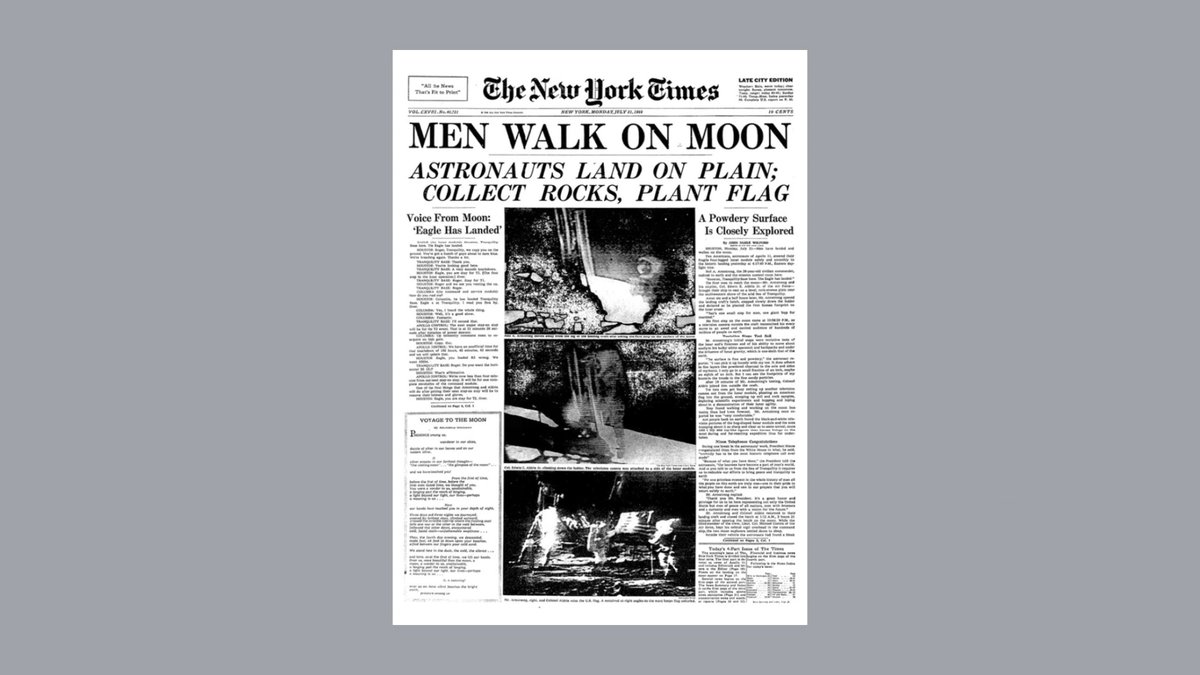
Big moments in history warrant iconic front pages, like this one from the moon landing 52 years ago today.
But the intricacy and variety of print layouts over time make digitizing the newspaper a complex problem.
R&D Intern @LasseNordahl explains: https://t.co/1FLY8GCXUx
Excited to debut this new identity for @NYTimesRD this week. Credit to @lanazp and @KevinZweerink for carrying us to such an inventive, sometimes wriggly, but always compelling result.
The New York Times has rebranded its R&D department, with a generative logo reflecting its experimental nature > https://t.co/i72HnTP7Q3 @NYTimesRD
As an R&D team, our work often explores how technology can make journalism more accessible.
Today, we are launching a redesigned website in an effort to make our own work more accessible: https://t.co/HiyNGNy6Aa
Here's a quick tour ⬇️
How do you reinvent the Times crossword for augmented reality?
R&D Engineer @ellenlowing explains how we built Shattered Crosswords, The Times’s first AR game, and what we learned about developing AR experiences at scale.