⚡ Lightning-fast Solana transaction landing service.
Built to help Traders/Searchers land in 0-slot and monetize their transactions.
Backed by @Circular_fi
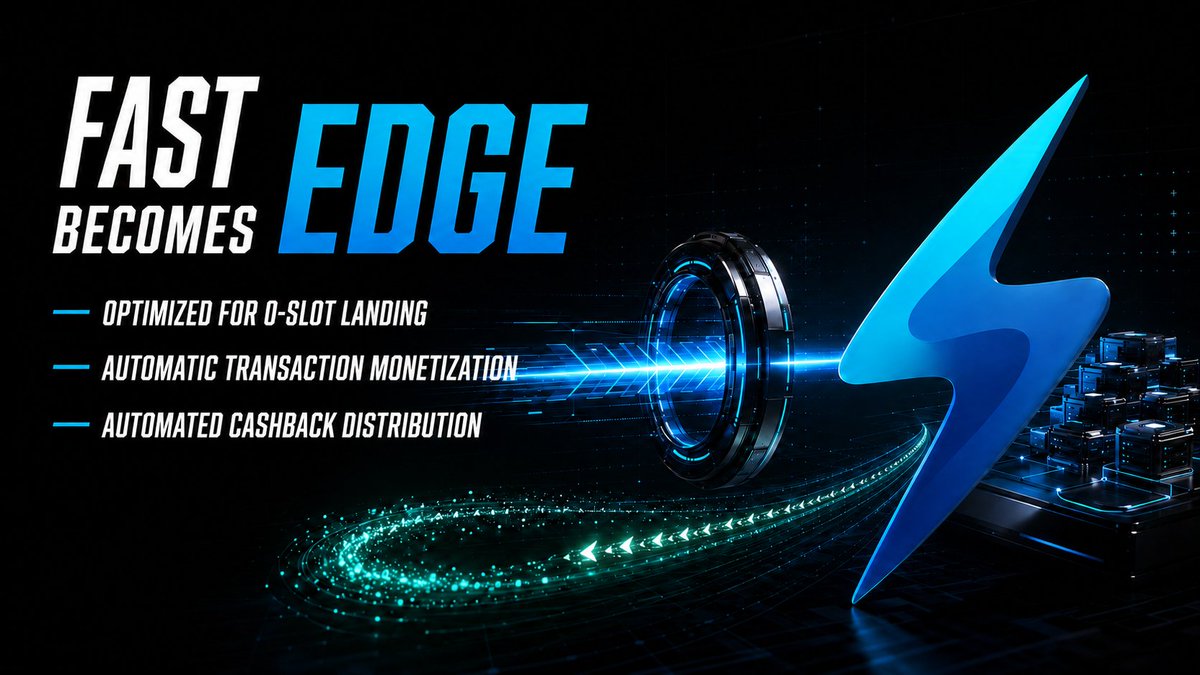
Introducing Fast Edge.
The latest version of our @solana transaction landing infrastructure.
Edge is optimized for 0-slot landing, pushing transaction flow toward validators as efficiently as possible.
But here’s the real edge:
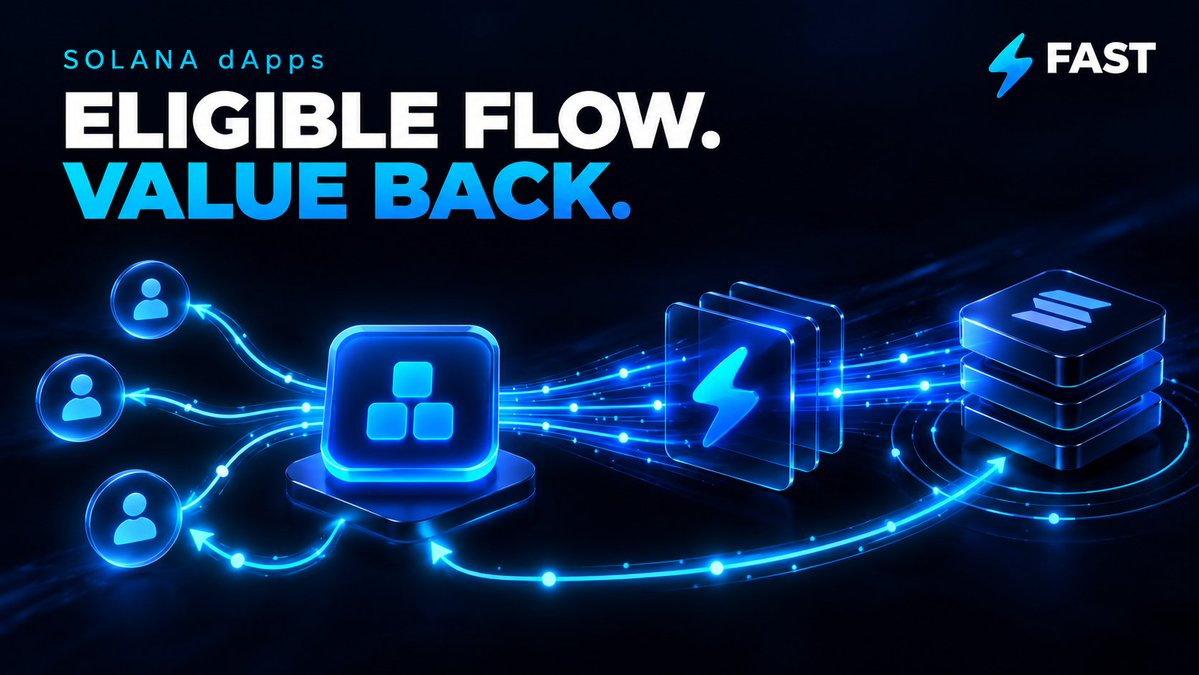
When we land a transaction that creates an arbitrage opportunity through price impact, that transaction can automatically become eligible to recover part of the value generated as cashback.
We’re not just optimizing how transactions land.
We’re adding a monetization layer to the flow we process.
Fast Edge combines 0-slot landing with transaction monetization.
This month, Fast, our landing service on @solana, processed over $6 million in volume.
That's sick.
You can now view your own stats on the dashboard, now live! 🔥
The dashboard for our Fast landing service on @solana is now live!
This is a game-changer for landing services; transparency is Circular's hallmark, so we've just rolled it out on Fast.
Traders use landing services not only to execute their trades in 0-slots but also to recover the value they lose due to price impact; 65% of the recovered value is sent directly back to your wallet.
No more wondering whether your tips are making a real impact and being put to good use, the data is right here!
See a breakdown of how Fast has used your tips, an analysis of the transactions you've landed, and which validators processed them.
FAST.
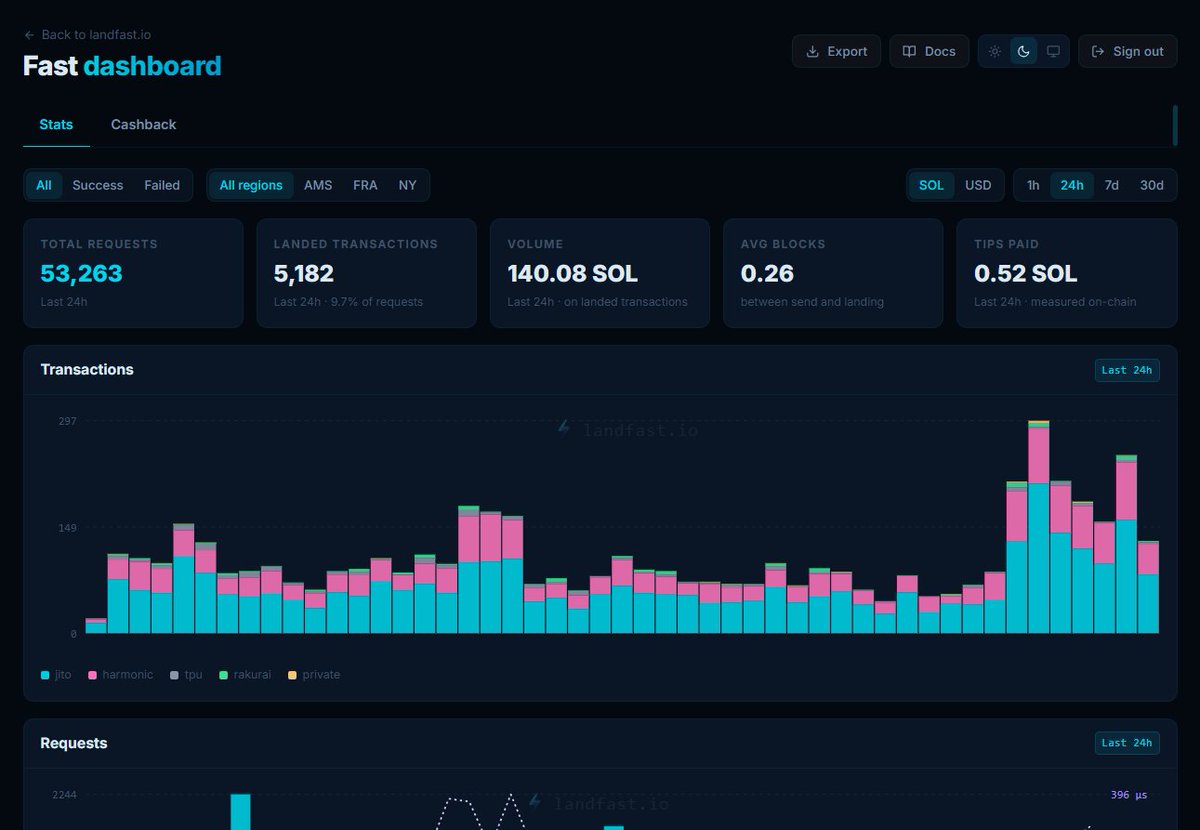
The Fast dashboard is live.
We just shipped the Fast dashboard, so you can now see what’s actually happening behind your transaction on Solana.
Track your requests, landed transactions, volume, tips, and the average number of blocks between sending and landing.
You can also break performance down by region, see which validators are landing your transactions, and inspect the flow transaction by transaction.
And for eligible flow, cashback has its own dedicated view too.
Now you can see what’s happening behind it.
Your stack shouldn’t decide what execution quality you can access.
With Fast, you can connect through JSON-RPC or gRPC proto3 depending on what works best for your infrastructure.
Both connect to the same transaction landing layer and the same cashback model for eligible transactions.
Pick the interface that fits your setup and keep the rest simple.
They wanted better execution for their Solana flow, so they chose Fast.
The idea is pretty simple your users keep using the product the same way, while Fast takes care of getting transactions landed as efficiently as possible in the background.
For the team, that means a stronger execution layer without making the product more complicated.
The experience stays the same, but the flow can now do more, including creating a new source of revenue through cashback on eligible transactions.
Where does the cashback on a transaction actually come from?
When a swap creates price impact, it can push the pool price away from the broader market.
That price difference can create an arbitrage opportunity.
When the market gets rebalanced, value is captured from that difference.
For eligible transactions, Fast can capture part of that value and return it as cashback.
So the cashback comes from value created around the execution of the transaction.
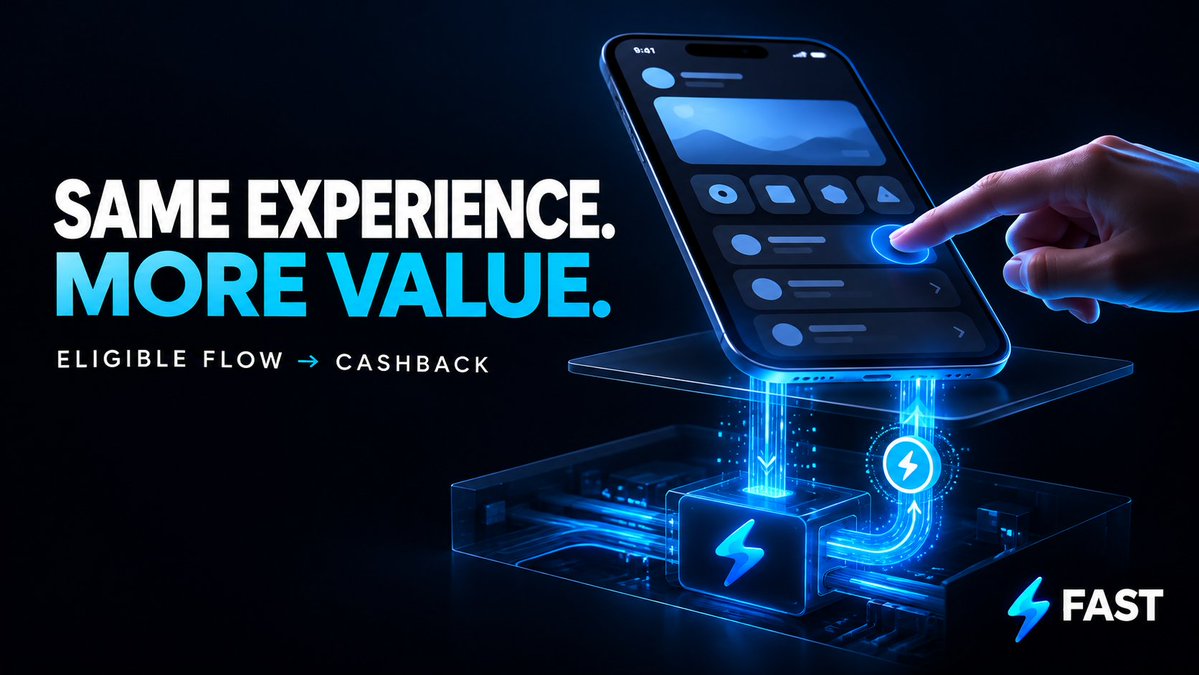
Your users don’t need a different experience for your app to create more value from its transaction flow.
With Fast, eligible transactions can generate cashback in the background while users keep interacting with the product as usual.
Nothing needs to change on their side.
The app keeps the same flow, while the transaction layer gets an additional layer to capture value from the activity.
That cashback can then become a new revenue stream for the product or be shared back with users.
That means better economics without making the product more complicated.
Even a good strategy can miss the trade if the transaction lands too late.
That becomes even more important in HFT, where an opportunity can disappear in a very short window.
The strategy can spot the right moment, build the transaction correctly, and still lose the edge before execution is complete.
That’s why the landing layer matters.
Fast is built to support latency-sensitive Solana flow and help transactions reach inclusion as early as possible.
For HFT teams, speed is not only about finding the opportunity first.
It’s about making sure the transaction lands while that opportunity still exists.
0-slot landing should feel like part of the product, not something users need to think about.
On @solana , every transaction is trying to get included in a slot.
When we talk about 0-slot landing, we mean getting the transaction included in the slot currently being produced, rather than having to wait for the next one.
That matters because even a small delay can change the outcome for time-sensitive transactions.
Fast is built to make that kind of execution part of the stack, so Solana apps can aim for earlier inclusion without adding more complexity for their users.
The user just uses the product.
Fast handles the execution underneath
Fast is now integrated behind the product.
Users won’t see the infrastructure change, but they should feel the difference in how transactions are handled.
Fast takes care of the path from the app to Solana, so the team can focus on the product while we focus on execution.
That’s the idea behind this partnership: keep the experience simple on the front end, and make the transaction layer stronger underneath.
Users don’t see the infrastructure behind a Solana dApp.
They only see how the product feels.
If a transaction is slow or lands too late, the experience suffers.
Fast works behind the scenes to help transactions move efficiently, so the app can stay responsive and reliable.
Execution quality is not just an infrastructure topic.
It is part of the product experience.
Solana dApps already generate transaction activity every day.
With Fast, eligible landed transactions can add another layer to that activity: cashback.
The dApp doesn’t need to change its core product or ask users to behave differently.
It keeps sending transactions as usual, while part of the value generated by eligible flow can come back and be used inside the product.
For @solana apps, that means transaction activity can become more than execution.
It can become a new source of value for the dApp and its users.
Most people think cashback needs a new product mechanic.
It doesn’t.
With Fast, eligible transaction flow can generate cashback from activity that already exists inside your product.
Nothing changes for your strategy or your users.
The transactions still get sent the same way, but when the flow is eligible, part of the value can come back to you.
That gives existing activity a second outcome: execution first, cashback on top.
You don’t need to send your transactions halfway around the world before they even reach Fast.
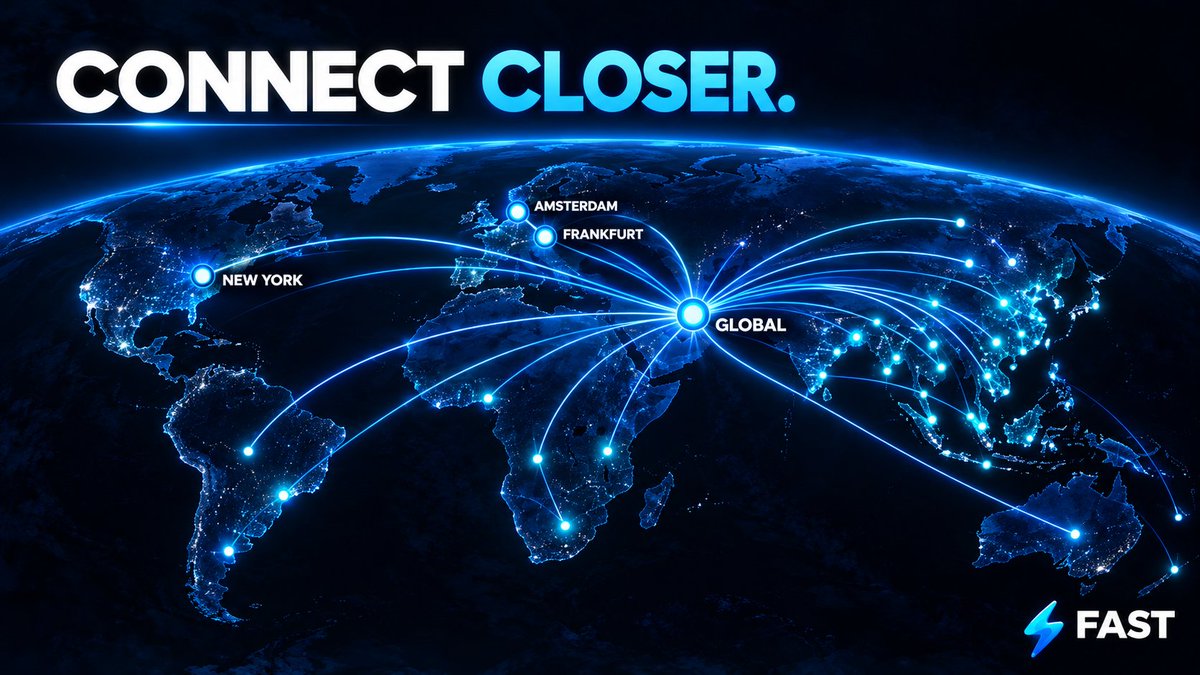
That’s why we give you different regional entry points.
If your stack is in Europe, you can connect through Frankfurt or Amsterdam.
If you’re closer to the US, you can use New York.
And if you don’t want to think about regions, the global endpoint is there too.
The point is simple: start closer to your stack, cut unnecessary network distance, and give your transactions a better shot at landing fast.
If latency matters, location matters too.
Most transaction infrastructure is invisible, takes the fee, and disappears.
Fast is built differently.
When your transactions land through Fast, some of that activity can unlock cashback instead of ending with execution.
That turns something usually treated as a pure backend cost into something that can actually contribute to your economics.
You were going to send the transaction anyway.
Fast just gives that action a second outcome by sharing cashback
Sending a transaction is only the first step.
What really matters is how it reaches @solana and when it gets included.
Once your app submits a transaction, it still has to travel through the network, reach the right validator, and be processed in time.
That journey can directly affect the quality of the execution.
This is why the delivery layer matters.
Fast is built to make that path more efficient, helping your transactions move from your app to on-chain inclusion with less friction.
A smooth product experience depends on what happens after the user clicks.
They send an action from your app, but behind that action there is still a path to @solana that has to work properly.
The transaction needs to be forwarded, reach the right validator, and get included quickly enough for the action to still make sense.
That part is usually invisible to the user, but it has a direct impact on how fast and reliable your product feels.
Fast takes care of that backend path, so your app can focus on the experience while we focus on getting the transaction where it needs to go.
When the backend works well, the product simply feels better.