I'm looking for linguistically interesting book recommendations for a 16 year old who's obsessed with conlangs and who likes fiction with rich world-building. Any leads??
What’s the best platform to create an open-access online resource on Indological linguistics?
Think Iranica, but less wider scope, dealing only with linguistics, not history or culture, at least not immediately, and obviously not funded.
We were thinking a Wiki format.
Left: "Starbucks Coffee" written in Dongba script.
Right: the Dongba script on a road sign (small script under the Chinese characters) (2/n)
#langtwt#minoritylanguages
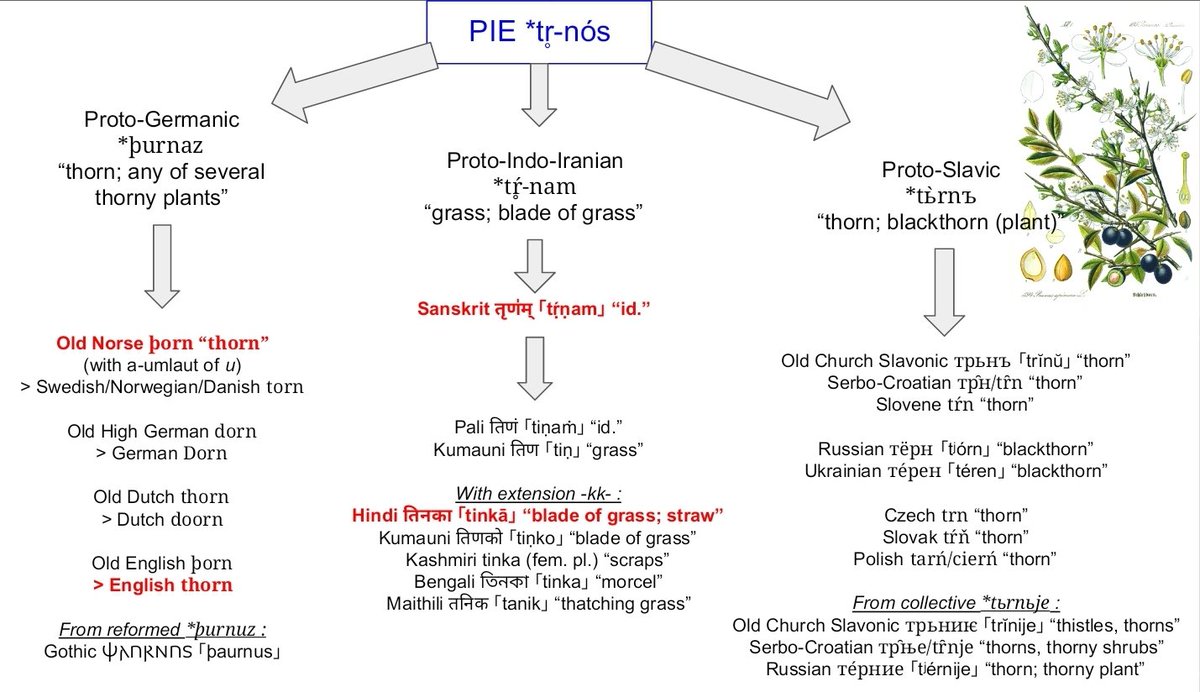
How Hindi तिनका 「tinkā」 “(piece of) straw” and English ‘thorn’ are connected.
Or, the story of PIE *tr̥-nós.
(perhaps from the root of Greek στερεός "firm, solid", German starr "rigid")
Illustration inspired by the creations of @yvanspijk.
Thought I would send out a fact checking APB to my lang peeps as Wiktionary has failed me. Can anybody confirm that “city” translates into Igbo as “obodo mepere emepe”? I only ask cuz it seems kinda long and Yoruba a neighboring language has “ìlú” for “city” and yeah 🤷🏻♂️
Spanish and Portuguese rápido, Italian rapido, French rapide (whence English rapid), etc. are actually all learnèd borrowings form the very famous Latin 'rapidus'. The inherited words are actually quite interesting and many don't know they exist :
1/
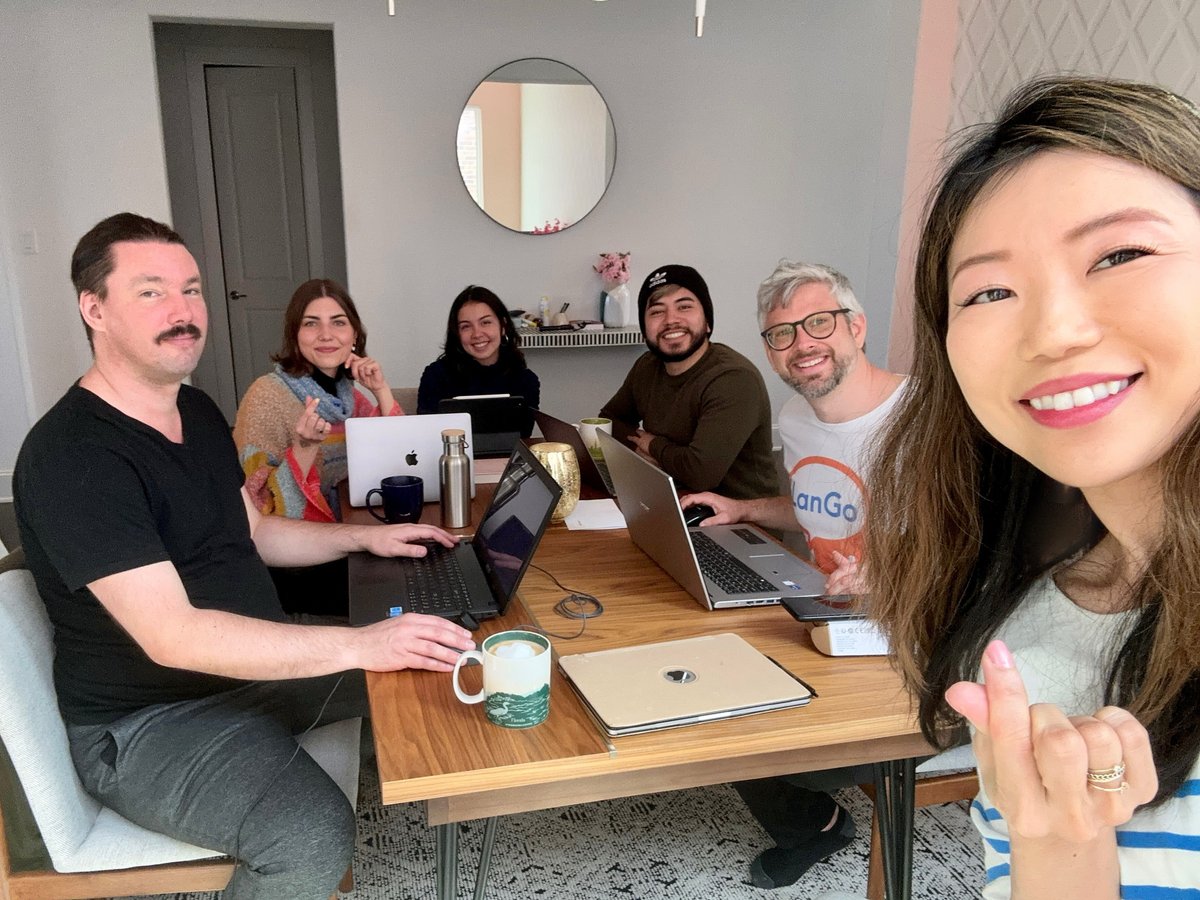
LanGo team mindmeld during our spring break week. 🫶 We’re working on creating lots of fun and useful language learning materials for our students this year, including two big book projects and two intrepid trip guides. We can’t wait to share them with you!
'Soothe' means 'to calm, to relieve' in English today, but its meaning has changed a bit over time.
It once could mean 'to flatter, to agree', and originally 'to prove to be true'.
Its root is the Old English word sōþ, which means 'true' – also present still in 'soothsayer'.