The Three-Fold Nature of God In the Atom
An atom is made of three major classes of subatomic particles: protons, neutrons, and electrons. The heavier protons and neutrons live in the dense central core of the atom - called the nucleus - while the lighter electrons swirl around the nucleus in a cloud.
Electrons can’t be subdivided any further into smaller subunits. But protons and neutrons can be divided up into smaller particles.
Protons and neutrons are made of a swirling sea of three major classes of particles: quarks, antiquarks, and gluons. Gluons are the force particles that glue the entire proton or neutron together. Amazingly, gluons can transmorph into quark-antiquark pairs which transiently come in and out of existence.
More specifically, new research demonstrates that the proton is made of a stable core of three unbalanced valence quarks, and a swirling sea of gluons and quark-antiquark pairs.
Now, let’s dive deeper and zoom in on quarks. There are 6 quarks, which are divided into precisely three generations.
Quarks have a charge based on fractional thirds of the elementary charge. Quarks have either +2/3 charge or a -1/3 charge.
In addition, all quarks possess a property called color charge. There are three types of color charge, arbitrarily labeled blue, green, and red. All 3 colors must be present in a neutron or proton.
So, we repeatedly see the Trinity or three-fold nature of atoms at many different levels: The atom is made up of three particles (neutrons, protons, and electrons); neutrons and protons are made up of quarks, antiquarks, and gluons; each proton or neutron has a core of three valence quarks; quarks come in three generations; quarks have an electric charge that is based on third fractions; quarks come in three colors and all three colors must be present in a neutron or proton.
Wow!
If you read my book, “The Author of Light”, you learned how the three-fold nature of God is perfectly illustrated and mapped by the nature of light. This parallel between the Triune nature of God and the physics of light was observed in a variety of ways.
Now, we see the triune nature of God being mapped to atoms and the particles which comprise them.
God left His signature on the laws that run our universe so that we would know The One who made it all.
👉 Nature is full of examples like this. I discuss many more in my book, “The Author of Creation” —->
.
Suudi Arabistan Gıda ve İlaç İdaresi, Mesane ve Akciğer Kanseri Tedavisi İçin Kanseri Kemoterapisiz Yok Eden 'Anktiva' Adlı Çığır Açan Yeni Kanser İlacına Hızlandırılmış Onay Verdi.
Anktiva, vücudun kendi savunma sistemini harekete geçiren yeni nesil bir immünoterapi ilacıdır. Yani kanseri doğrudan zehirlemek yerine, vücudun kanserle savaşan askerlerini güçlendirerek etki gösterir.
Bu ilaç, bağışıklık sistemimizin kanserli hücreleri tanıyıp yok edebilenen önemli savaşçıları olan NK hücrelerini ve kanseri tanıyıp hatırlayan T bağışıklık hücrelerini çoğaltıp daha aktif hâle getirir. Böylece bağışıklık sistemi, kanser hücrelerini daha kolay bulur ve hedef alır.
Klasik kemoterapiler çoğu zaman sağlıklı hücrelere de zarar verir ve bağışıklığı zayıflatır. Anktiva ise tam tersine, bağışıklık sistemini güçlendirmeyi amaçlar. Bu nedenle daha hedefli etki, daha az yan etkive daha uzun süreli bir bağışıklık cevabı sunma potansiyeline sahiptir.
Bu yaklaşımın ne kadar güçlü olabileceğini gösteren çarpıcı bir örnek de klinik çalışmalarda rapor edilmiştir: Kemik iliğinin %95’i kanser hücreleriyle dolmuş, standart tedavilere hiç cevap vermeyen bir lenfoma (kan kanseri) hastasında, hastadan ya da uygun bir bağışçıdan alınan bağışıklık hücreleri laboratuvar ortamında kanseri tanıyıp saldıracak şekilde güçlendirilmiş ve tekrar hastaya verilmiştir. Sonuçta kemik iliği tamamen temizlenmiş ve hastada 15 aydır hastalığa dair hiçbir bulguya rastlanmamıştır. Bu örnek, bağışıklık sistemini doğru şekilde yönlendirmenin kanserle mücadelede ne kadar etkili olabileceğini göstermektedir.
Yapılan klinik çalışmalarda, özellikle standart tedavilere cevap vermeyen zor vakalarda, bağışıklık sisteminin yeniden toparlandığı, hastaların hayat süresinin uzadığı ve başta akciğer kanseri olmak üzere farklı kanser türlerinde umut verici sonuçlar elde edildiği bildirilmektedir.
Anktiva’nın geliştirildiği şirketin kurucusu, dünyaca tanınmış milyarder cerrah ve bilim adamı Dr. Patrick Soon-Shiong’dur. Şirket, kemoterapisiz bağışıklık temelli tedaviler üzerinde uzun süredir çalışmalar yürütmektedir.
Suudi Arabistan’ın, Anktiva’yı yetişkin mesane ve akciğer kanseri hastaları için onaylaması, bağışıklık sistemi temelli kanser tedavilerinde önemli ve öncü bir adım olarak görülmektedir.
Bu onay, tedavi için ülkeye hasta akını başlatması ihtimalini de güçlendirmiştir.
Repairing Damaged DNA 🧬
The DNA in our cells is the “hard drive” which contains the set of instructions to build the human body. Because of its critical importance to our survival, our cells have a legion of protein enzymes whose only function is to protect the 180 billion trillion letters of DNA in our body, and to immediately repair it when it gets damaged.
Many different environmental factors contribute to DNA damage: Ultraviolet radiation, gamma rays, X-Rays, carcinogens, toxic chemicals, smoke, reactive oxygen species, polycyclic aromatic hydrocarbons, and many others. Our DNA is constantly being attacked, resulting in approximately 1 million occurrences of damage to the genetic code per cell per day. If this damage was left unrepaired, we would all quickly die, probably before we even made it out of the womb.
When a cell in our body gets ready to divide, it must first make a complete copy of the genetic code (all 3 billion base pairs). To accomplish this, every double strand of DNA is unwound, split apart, and then copied by protein enzymes that read the genetic code on the template strand while synthesizing a new copy of the code into the daughter strand.
This copying process can introduce errors along the genetic code. These introduced errors, although rare, must also be repaired or the DNA will progressively lose fidelity as it is repeatedly copied in further cell divisions (i.e. a copy of a copy of a copy of a…).
To ensure that our DNA maintains its information content over time, damage and errors to the DNA code are repaired by an army of protein enzymes. Currently, scientists have characterized approximately 130 different DNA repair proteins.
Some of these proteins scan the DNA to find and categorize damage. Some act as “scaffolding” proteins which allow other proteins to attach to the site of damage. Some proteins act as DNA unwinders to unwind the DNA double helix at the site of damage so that other proteins can have access to cut the damage out and repair it.
Some proteins are recruited to the damage site because they are “molecular scissors” that can cut out the piece of DNA that is damaged. Other proteins resynthesize the segment of DNA that was cut out, and then other proteins glue the DNA back together.
The image below is a molecular model of one particular type of these enzymes which glue DNA back together (ligase). This complete DNA repair process is occurring roughly a million times each day in each one of our 30 trillion cells on a round-the-clock basis.
If this repair system fails to do its job, cancer can result. In fact, just 1 mutation in 1 of these repair enzymes can lead to cancer quite rapidly. As an example, there is a rare genetic disorder called Xeroderma pigmentosum in which there is a mutation in the DNA repair enzyme which is responsible for repairing the type of DNA damage that is caused by ultraviolet light from the sun. About half of these individuals will develop skin cancer by the age of 10. As another example, the BRCA gene which is frequently defective in breast cancer is also one of the many proteins that participates in DNA damage repair.
What is even more baffling is the fact that the instructions to build each one of these 130 different repair enzymes is contained in the DNA that they repair. What came first?
Without this intricate system that can rapidly, thoroughly, and accurately scan our DNA and repair identified damage, the human race would not exist.
BREAKING NEWS:
Legendary actor Harrison Ford has OFFICIALLY endorsed Kamala Harris in an awesome video:
“I’ve been voting for 64 years.
Never really wanted to talk about it very much but when dozens of former members of the Trump administration are sounding alarms saying “for God sake don't do this again” — you have to pay attention.
The truth is this Kamala Harris will protect your right to disagree with her about policies or ideas and then as we have done for centuries.”
Drop a 💙 if you agree and appreciate Harrison Ford for speaking out!!
🧬 Folding 34 Billion Miles of DNA
Each one of our cells contains approximately 6 feet of DNA that is divided among 23 different pairs of chromosomes. This length totals up to 34 billion miles of DNA in our entire body — enough to wrap 1.2 million times around the earth. All of this DNA is carefully organized inside the nuclei of 30 trillion cells by folding into smaller microstructures, medium-sized mesostructures, and larger sized macro structures to keep the DNA untangled and organized.
During cell division, the chromosomes must condense into tightly-shaped cylinders. The DNA in each chromosome is completely copied into a second chromosome, which forms sister chromatids that are attached together at a central centromere. These sister chromatids are then pulled apart during cell division to result in a full set of chromosomes in each of the two daughter cells.
To keep the chromosomes from becoming entangled during this entire process, they must be condensed, compartmentalized, and segregated. Two proteins, Condensin I and Condensin II are responsible for assisting with chromosome organization and structuring during this condensation process.
Condensin proteins help organize DNA into smaller loops, and larger loops, and then helically wrapping these loops into larger superstructures that eventually form the condensed DNA.
On even a smaller scale, the double-helix structure of DNA is wound around nucleosome particles, with each nucleosome consisting of 8 histone proteins. There are approximately 30 million nucleosomes in one cell that serve to wrap the 6 feet of DNA into a nucleus with a diameter of about 10 millionths of a meter (10 microns).
Without these proteins, and many others that assist in this process, cells would fail to divide properly.
How Cells Drink Water
How do water molecules travel in and out of a cell? The plasma membrane (the structure that encapsulates the cell) is comprised of lipids (fatty molecules) and is not very permeable to water.
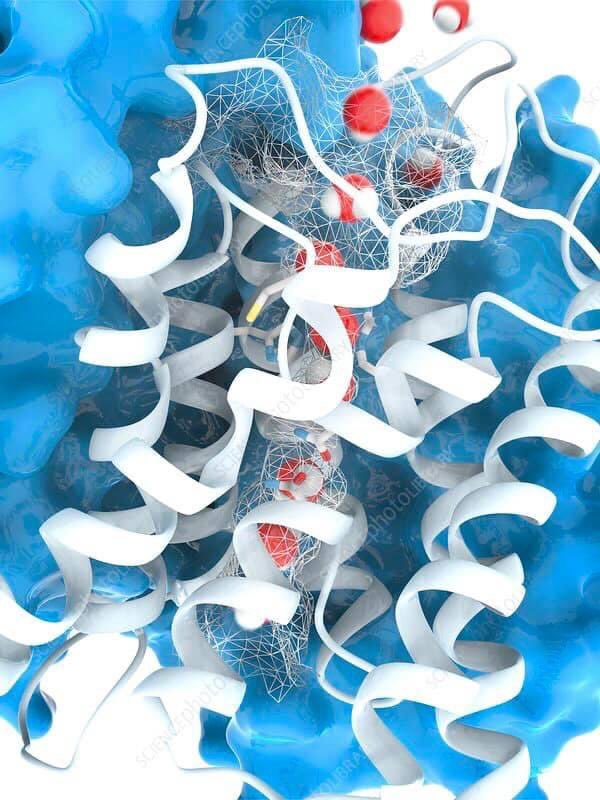
This question perplexed scientists for a long time, until it was finally discovered that there are protein channels in the plasma membrane that specifically control the flow of water molecules in and out of the cell. These proteins were named “aquaporins”. The molecular structure of aquaporin is shown in the first graphic below.
Sounds like an easy task, doesn’t it? Just make a protein with a hole big enough for a water molecule to flow through, and that should do the trick.
It’s not that easy. Not by a long shot.
When scientists began studying the atomic structure of aquaporin, its complex mechanisms for channeling water molecules became evident.
First, they found that aquaporin has four channels that allow the passage of water molecules. Each channel is wider at the top and bottom (outside and inside the cell) to allow water molecules to “funnel” into the channel on either end.
Second, they found that the amino acids at the funnel positions were specifically oriented and had the proper charge distribution to filter only water molecules. Other ions and solutes are completely rejected. Only water molecules can pass through the channel due to these filters.
Third, they found that water molecules passed through the channel single file, meaning that the channel is the exact diameter to allow only 1 molecule of water through at a time.
Fourth, they found that there is an intrinsic electric field in the channel that causes the water molecules to point up when they enter the channel. As they move through the channel, the water molecules rotate 180 degrees such that they are pointing down when they leave the channel. There are also specific amino acids positioned in the channel to assist with this molecular rotation of the water molecule. This process is shown in the second graphic below.
But, why? Why does the water molecule need to be oriented in a certain direction when entering and leaving the channel? Why can’t the water molecules just flow freely through the channel regardless of its orientation?
Molecular simulations revealed the answer. Water molecules that are connected together in a line (like what occurs in the channel) can act as a “wire” that allows protons to flow from one end of the line to the other. If such a wire formed inside the channel, protons could flow through the channel in addition to water molecules.
If protons could pass through the channel, it would cause the electrochemical potential (the “voltage”) across the plasma membrane to be short-circuited and dissipate. This, in turn, would cause the cell to lose the electrical energy that drives other systems in the cell. To avoid this short-circuit from occurring, the channel is designed to specifically rotate water molecules such that protons are no longer able to flow along the linear chain of water molecules.
So, water can flow through the channel, but protons cannot. And the only way to make sure this happens is for the channel to: a) allow only 1 molecule of water to flow through at a time, and b) rotate the water molecule 180 degrees as it makes its way through the channel.
That’s insane.
The Many Forms of DNA
Many of us are familiar with the double-helix structure of DNA. But did you know that DNA can rearrange itself into different geometric structures that alter its function within our body?
The double-helix form that we are all familiar with is called B-DNA. It has a right-handed (clockwise) twist. But in certain environments, the DNA can twist into a left-handed (counterclockwise) direction. This rare form of DNA called Z-DNA, usually exists transiently throughout the cells of a healthy individual. Its normal function is to influence the expression level of certain genes, like genes that control our immune system. Interestingly, large amounts of Z-DNA are found in Alzheimer’s patients and patients with systemic lupus erythematosus.
There’s also a triple-helix form of DNA termed H-DNA, where *three* strands of DNA can wrap around one another in a helical fashion rather than the typical two (shown below). This is absolutely fascinating. Triple stranded DNA also plays a role in gene regulation, but it can also lead to genetic instability such as chromosome breaks and translocation, which leads to disease.
Scientists are now realizing that it’s not only the linear sequence of information in the DNA (the genetic code), but also the geometric shape that the DNA adopts that matters.
We can see that DNA is both a linear structure that contains genetic information, and a 3-dimensional molecule that alters its own expression of that information by changing its shape and structure.
Keep in mind that this linear sequence of information also participates in controlling the 3-dimensional shape of DNA.
Hemoglobin
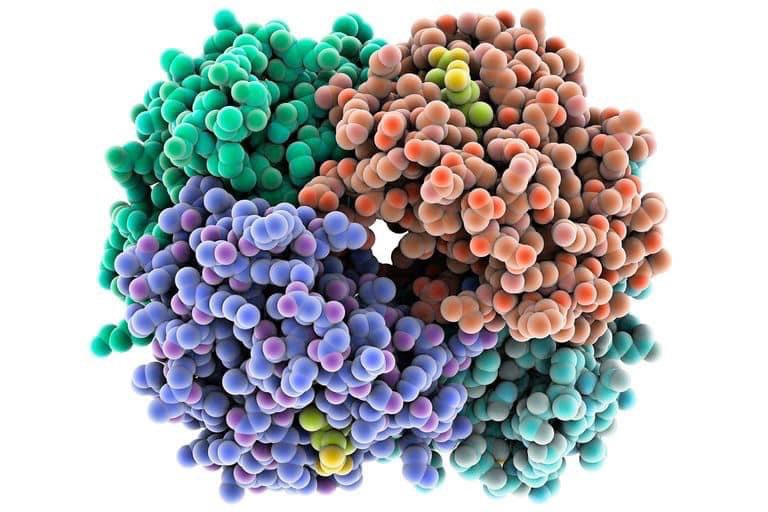
The graphic below is a molecular 3D model of one of the most important proteins in the human body — hemoglobin.
Hemoglobin is the major oxygen transporting protein in the body, and is made up of four proteins that combine to to form a structure that is perfect for binding and releasing oxygen precisely when it is needed. Hemoglobin proteins are present in every red blood cell to help transport oxygen from the lungs to all of the tissues and cells in the body. Hemoglobin increases the oxygen carrying capacity of human blood by 70 times.
Each hemoglobin protein can hold 4 oxygen molecules. Residing in each hemoglobin protein are 4 separate “heme” molecules that provide a perfect molecular environment for binding molecular oxygen. At the center of each heme molecule is an iron ion that is perfectly positioned to electrically connect to the oxygen molecule by transferring an electron to the oxygen molecule. In this state, oxygen is perfectly stable as it hitches a ride through the circulatory system nestled inside the hemoglobin protein.
Hemoglobin can “sense” the microenvironment of its surroundings to determine if it should bind oxygen or release oxygen. By measuring pH, CO2 content, and oxygen pressure, the protein can switch between two structural shapes that are tuned to either bind oxygen or release oxygen.
When the protein is primed to accept oxygen, a single oxygen molecule will bind to the first heme group. This, in turn, induces a structural shift in the shape of the entire hemoglobin protein, which then causes the remaining 3 heme groups to more readily bind oxygen. This is called “cooperative” binding, and it is this fine tuning of how hemoglobin senses and binds to oxygen that provides it with the agility to bind and release oxygen quickly and efficiently.
In the fetus, the structure of hemoglobin is slightly different than hemoglobin that is found in an adult. It is composed of a different combination of the 4 subunits that combine to form hemoglobin (designated α2γ2). This form of hemoglobin has a greater affinity for oxygen than adult hemoglobin; and this, in turn, causes oxygen in the maternal blood to be transferred to the hemoglobin in the fetal blood.
The Lenses of the Brittlestar - An Engineering Marvel
The brittlestar is covered in an array of micro lenses that enable the creature to visualize its surroundings.
Scientists have discovered that these lenses are perfected beyond any lens that humans can manufacture.
These lenses are made of single crystals of calcite, and shaped like tiny spherical domes. They are approximately 50 millionths of a meter in diameter.
Their shape and composition corrects for the blurring effect that’s normally attributed to spherical aberration. Calcite is a birefringent material, meaning that it splits light into multiple directions depending on its orientation. To correct for this, the atoms in the crystals are geometrically ordered such that the direction of the lens is oriented along the c-axis.
Magnesium-rich nanoparticles are positioned throughout each lens to warp the lattice vectors of the surrounding calcite. This atomic warping causes the lens to be crack resistant.
Scientists are baffled that each lens seems to have been perfected beyond anything that engineers can construct with current technological tools. What’s even more staggering is the fact that these creatures can synthesize each lens directly from a liquid at room temperature.
By copying these principles, extremely precise micro-optical systems can be designed.
The oriental hornet has the ability to convert sunlight into energy through photovoltaic pigments that are found in its cuticle.
The cuticle is constructed as a complex set of layers that become progressively thinner. Each layer is embedded with nano-rods of chitin protein that progressively alter the index of refraction to reduce the amount of light reflection. Nano-sized gratings on the surface preferentially capture and direct ultraviolet light towards granules of the light harvesting pigment, xanthopterin.
Xanthopterin captures the ultraviolet photons of light and converts them into electricity. Electricity then drives certain metabolic reactions that provide the hornet with energy.
The overall efficiency and design of the system has inspired scientists to design and test more efficient organic solar cells.
If the law of cause and effect works perfectly in everyday life, and this law is precisely defined by the laws of classical physics, then why is the same law of cause and effect absent at the quantum scale, a scale where non-determinism abounds?
At the small scale we have unpredictability and an absence of a linear relationship between cause and effect. The universe is inherently chaotic and unpredictable at the small scale. And yet is predictable at the large scale.
How does one lead to the other? It doesn't seem that the absence of cause and effect can give rise to the law of cause and effect, regardless of how you sum up the small pieces. That would be like black summing up to white.
This gap is where I think God dwells. What we call natural law is not natural at all. We tend to think God created all these laws, wound up the universe like a big clock, and now everything is just naturally obeying the natural laws to which it is beholden on its own accord. I say poppycock. Impossible.
God IS the natural law, and He controls, causes, and upholds it every moment of every hour. There's no other way to get from the bizarre, chaotic, irrational, nonsensical world of the quanta to the ordered classical universe without something else.
In Him we move and have our being.
By Him all things are held together.
Concentrated solar collectors are based on a series of mirrors that are located in a large field and which focus sunlight onto a central tower. The generated heat is used to produce electricity.
These solar collector fields require an enormous amount of land. In addition, adjacent mirrors tend to shade and occlude other mirrors, reducing the overall efficiency of the field.
To overcome these obstacles, researchers have been studying the most efficient way to arrange the mirrors to minimize land requirements and reduce interference between mirrors.
They were stuck on how to improve the design. Eventually, they looked to a design found in nature for inspiration.
In particular, they studied a spiral pattern that appears in nature called the Fermat spiral. This spiral is based on the Fibonacci sequence, and the “golden angle” of 137 degrees. The florets of a sunflower follow this pattern.
When researchers positioned the mirrors according to a Fermat spiral, with each adjacent mirror angled at 137 degrees with respect to one another, they were able to reduce the amount of land by 20%, and significantly boost the power output by minimizing occlusion and shading between adjacent mirrors.
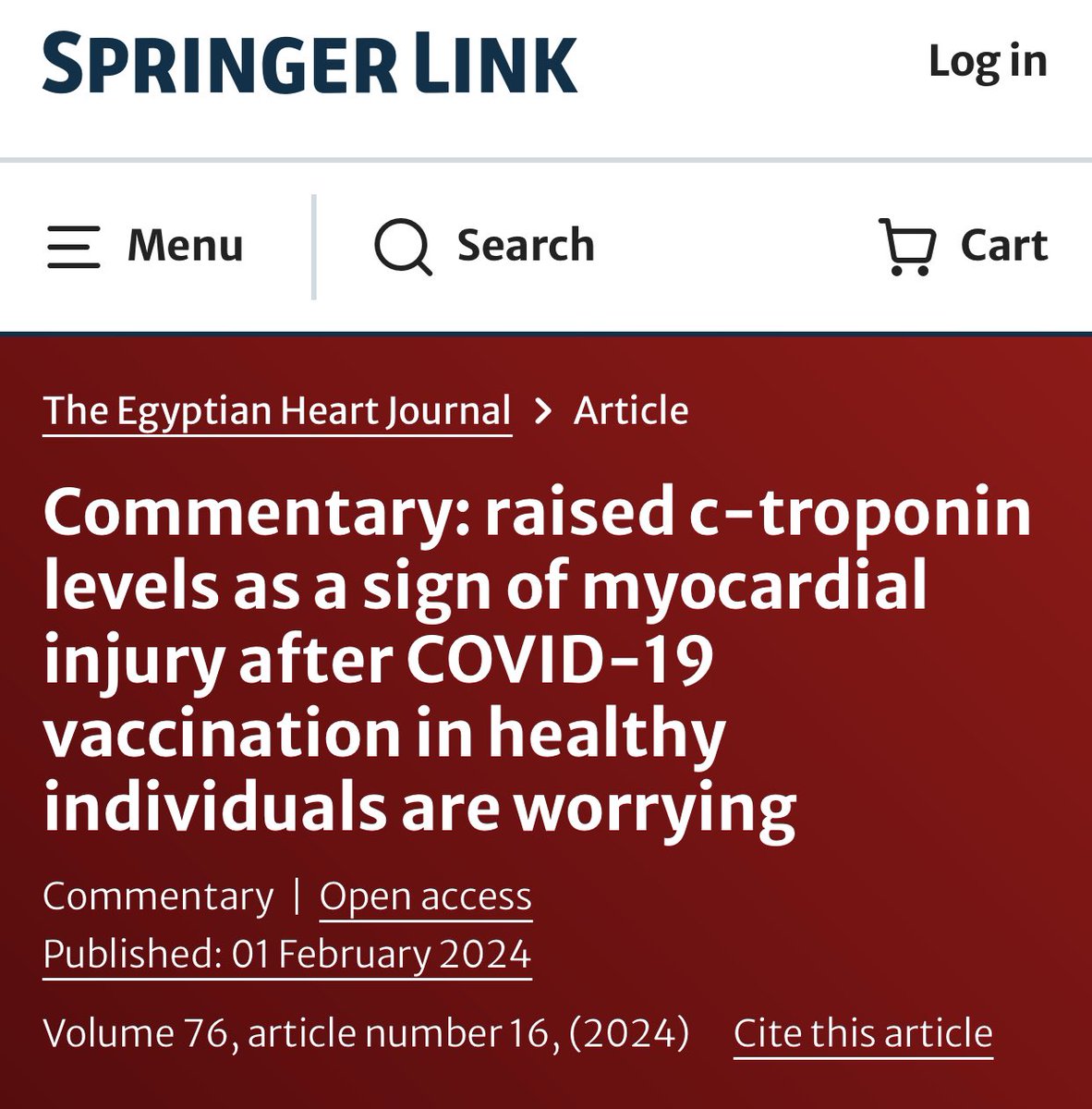
1/ “The claim that the extent of myocardial injury after COVID-19 infection would be higher than after vaccination is not supported by empirical evidence and therefore wrong. We conclude that cross-national systematic observational studies should be conducted that allow a more precise estimation of the risk–benefit ratio of COVID-19 mRNA vaccinations.”
When an artist makes some form of abstract art, a great deal of thought goes into the construction of the piece. To dissect and study the art is to peer into the deep thoughts of the artist. This becomes evident as people stand and stare at the art for hours and attempt to guess at the artist’s intended meaning and purpose of the painting hanging in front of them.
If humans will focus all of their attention on a random blob of paint to discover the meaning of the creator, shouldn’t they spend more time studying all of nature to discover the meaning of The Great Creator?
This should be the true motivation behind science, but it’s not. Instead of using science to know more about God, we use science to selfishly fulfill every desire of man. We use it to magnify ourselves, start wars, and become our own technological savior.
My first real deep dive into science was used by God to lead me directly to Him. The deeper I peeled back the layers in physics and biology, the more I discovered the signature of God hiding in plain sight.
All of creation points back to God. This should be the primary reason why we study science. I would dare say that since God is infinite, there must be an infinite number of layers waiting to be discovered. I believe man’s attempts to find that one mathematical equation that explains everything will be a fruitless exercise, because that one equation doesn’t exist. The infinite depth of the mind of God cannot be reduced in such a simple way.
I would challenge people to look at science differently. Instead of looking to science to serve the selfish desires of man, we should look to science to discover more about God. I would propose that the identity of God, character of God, and purpose for making us are all contained in the laws He synthesized directly from His mind.
He spoke it all into existence, and speech is a form of communication; therefore, when we study science we are reading a communication from God that is recorded in everything around us.
Study the art of the Great Artist. Stand around with others, intensely staring and dissecting God’s painting. Wonder at its brilliance. What did God mean by that blob of paint, and what did He intend to convey by that mark over there? I can assure you that you will find much meaning, more than any painting fashioned by man.


![teyunta1123's tweet photo. たいへん、たいへん申し上げにくいのですが、この、高市首相とトランプ氏の“実りある会談”の手土産に、全国民がなんの説明もなく
【『11兆7000億円(年間)』という莫大な借金の保証人】にされていませんか。
まとめますね。
(かなり長いです)
--
高市首相が昨年10/28、トランプ氏と合意+文書に“署名”した対米投融資(#戦略的投資イニシアティブ)おける「日本の約束」の内訳を、整理すると。
① 利益の9割はアメリカへ
(ここが長いです すみません)
投資総額は5,500億ドル(約85兆円)。これほど巨額の資金を投じながら、利益の9割は米国🇺🇸が取り、日本はわずか1割。
もうすこし詳しくいうと、
🇯🇵側が85兆円出資・保証(!)するのに対し、🇺🇸側の「提供」は、土地や水、エネルギーを「売ってやる」といってるに過ぎません。
• 日本企業が🇺🇸の土地を買って
• 🇺🇸のエネルギーを買って
• 🇺🇸人を雇用し、🇺🇸のインフラを整え
• 利益の9割は🇺🇸に持っていかれる
この、正直わっっけわからん合意に、即決で署名したのが他でもない、“高市首相”です。
あの、高市首相が“トランプ首相をノーベル平和賞に推薦する考えだ”と🇺🇸報道官に明らかにされた、あの日です。
(※石破政権下の赤沢大臣は、この合意をふっかけられながら、なんっっとかやり過ごそうと粘りの交渉をされていたのをお見受けしています。)
このはなしは元々、トランプ氏に『毎年5兆円の関税をかける😠』と脅され、高市さんは『3兆円なら払います!代わりに総額85兆円(当時)の投資をします☺️』と、合意しました。
もともと“目先の関税を2兆円減らすため”の、つまり10年スパンで考えても[20兆円守るために85兆円のリスクを背負う]というえっっぐい話であり、
それだけでも(?????)となりますが、
この、交渉材料にされたトランプ氏の関税は先日、
アメリカ🇺🇸最高裁で『違法』とされました。
そもそも関税が違法なら、契約背景も「違法」やし、破った時の罰則も「違法」、そしてなにより日米の合意覚書には
【22.この覚書のいかなる内容も、日米両国のそれぞれの関係法令と矛盾してはならない】
とあります。
本来、「違法判決」を盾に「関税はやめろ😠」と強く言えるはずなのに、関税は(別ルートで)継続&違法な脅しに屈した[投資の約束]だけが残っています。
いまでは赤沢大臣も、この合意を既成事実として受け入れられたのか、直近3/9ラトニック商務長官との会談においても『これ以上不利にならないよう交渉した』ことを、ご実績として主張されています。
もっともラトニック商務長官は、“不利にならないような交渉”にすら、首を縦にふっていません。
② 国民が背負う11.7兆円のリスク
この巨額の投資は、『新たな予算成立は必要ない』(2/18 赤沢大臣Xポストより)とされました。
その裏で、この投資を支える「政府保証枠」は、例年1.4兆円規模だったものが、対米投資決定を境に『11.7兆円』へ垂直立ち上がりしています。
※画像1 財務省HPより
政府保証債とは、実際に投資を行うJBIC (株)=国際協力銀行がお金を借りる際、“国”が保証をつける枠。
つまりこれは、🇺🇸への投資が失敗すれば、“国民”の血税で穴埋めする約束です。
国民が、この投資の、【連帯保証人】に、なっている構図です。
付け加えると、交渉の相手方である
ラトニック商務長官(エプスタイン関係者自白済み&複数の汚職疑惑あり)は
アメリカ国内メディアにて
「彼ら🇯🇵はプロジェクトに資金を提供し、米国🇺🇸で運営するオペレーターにそれを渡す。彼らはバンカー💰であり、オペレーターではない(They're the banker, they're not the operator)」 と公言しています。
日本を明確に、嘲笑しています。
③ 防衛費・子育て予算との比較(画像2)
この、日本がこっそり準備している「保険金」、これだけで本年度、過去最高とされる『防衛費(10.5兆円)』を突破。
子育て予算(3.6兆円)の3倍以上。
※画像2 政府予算案および関連資料より
①②③をふまえると、
「国防」を叫ぶ高市さんが、
その防衛予算を超える巨額のリスクを他国のため、アメリカのインフラ整備のために差し出し、
国民が連帯保証人にされています。
🇺🇸はそれらを、明確に嘲笑っており、なんならまだまだ搾取する姿勢を、みせています。
これが、“経済面の特別なパートナー”の姿ですか。
高市首相の、国会でのご発言を借りれば、
『私に恥をかかせない』ための、『“私”がトランプ氏と堂々と渡りあう』ための、「日本の約束」であり、
日米首脳会談の、手土産に、なろうとしています。
トランプ氏の『脅し』が米国内でさえ「違法」とされた今もなお、なぜ日本だけが、国防予算より巨大なリスクを抱えてまで『貢ぎ物』を続けなければならないのか。
【借金の保証人】にされている全国民は、これらを問う資格があるのでは、とかんがえます。](https://pbs.twimg.com/media/HDI0QZqagAAIAYs.jpg)




![teyunta1123's tweet photo. たいへん、たいへん申し上げにくいのですが、この、高市首相とトランプ氏の“実りある会談”の手土産に、全国民がなんの説明もなく
【『11兆7000億円(年間)』という莫大な借金の保証人】にされていませんか。
まとめますね。
(かなり長いです)
--
高市首相が昨年10/28、トランプ氏と合意+文書に“署名”した対米投融資(#戦略的投資イニシアティブ)おける「日本の約束」の内訳を、整理すると。
① 利益の9割はアメリカへ
(ここが長いです すみません)
投資総額は5,500億ドル(約85兆円)。これほど巨額の資金を投じながら、利益の9割は米国🇺🇸が取り、日本はわずか1割。
もうすこし詳しくいうと、
🇯🇵側が85兆円出資・保証(!)するのに対し、🇺🇸側の「提供」は、土地や水、エネルギーを「売ってやる」といってるに過ぎません。
• 日本企業が🇺🇸の土地を買って
• 🇺🇸のエネルギーを買って
• 🇺🇸人を雇用し、🇺🇸のインフラを整え
• 利益の9割は🇺🇸に持っていかれる
この、正直わっっけわからん合意に、即決で署名したのが他でもない、“高市首相”です。
あの、高市首相が“トランプ首相をノーベル平和賞に推薦する考えだ”と🇺🇸報道官に明らかにされた、あの日です。
(※石破政権下の赤沢大臣は、この合意をふっかけられながら、なんっっとかやり過ごそうと粘りの交渉をされていたのをお見受けしています。)
このはなしは元々、トランプ氏に『毎年5兆円の関税をかける😠』と脅され、高市さんは『3兆円なら払います!代わりに総額85兆円(当時)の投資をします☺️』と、合意しました。
もともと“目先の関税を2兆円減らすため”の、つまり10年スパンで考えても[20兆円守るために85兆円のリスクを背負う]というえっっぐい話であり、
それだけでも(?????)となりますが、
この、交渉材料にされたトランプ氏の関税は先日、
アメリカ🇺🇸最高裁で『違法』とされました。
そもそも関税が違法なら、契約背景も「違法」やし、破った時の罰則も「違法」、そしてなにより日米の合意覚書には
【22.この覚書のいかなる内容も、日米両国のそれぞれの関係法令と矛盾してはならない】
とあります。
本来、「違法判決」を盾に「関税はやめろ😠」と強く言えるはずなのに、関税は(別ルートで)継続&違法な脅しに屈した[投資の約束]だけが残っています。
いまでは赤沢大臣も、この合意を既成事実として受け入れられたのか、直近3/9ラトニック商務長官との会談においても『これ以上不利にならないよう交渉した』ことを、ご実績として主張されています。
もっともラトニック商務長官は、“不利にならないような交渉”にすら、首を縦にふっていません。
② 国民が背負う11.7兆円のリスク
この巨額の投資は、『新たな予算成立は必要ない』(2/18 赤沢大臣Xポストより)とされました。
その裏で、この投資を支える「政府保証枠」は、例年1.4兆円規模だったものが、対米投資決定を境に『11.7兆円』へ垂直立ち上がりしています。
※画像1 財務省HPより
政府保証債とは、実際に投資を行うJBIC (株)=国際協力銀行がお金を借りる際、“国”が保証をつける枠。
つまりこれは、🇺🇸への投資が失敗すれば、“国民”の血税で穴埋めする約束です。
国民が、この投資の、【連帯保証人】に、なっている構図です。
付け加えると、交渉の相手方である
ラトニック商務長官(エプスタイン関係者自白済み&複数の汚職疑惑あり)は
アメリカ国内メディアにて
「彼ら🇯🇵はプロジェクトに資金を提供し、米国🇺🇸で運営するオペレーターにそれを渡す。彼らはバンカー💰であり、オペレーターではない(They're the banker, they're not the operator)」 と公言しています。
日本を明確に、嘲笑しています。
③ 防衛費・子育て予算との比較(画像2)
この、日本がこっそり準備している「保険金」、これだけで本年度、過去最高とされる『防衛費(10.5兆円)』を突破。
子育て予算(3.6兆円)の3倍以上。
※画像2 政府予算案および関連資料より
①②③をふまえると、
「国防」を叫ぶ高市さんが、
その防衛予算を超える巨額のリスクを他国のため、アメリカのインフラ整備のために差し出し、
国民が連帯保証人にされています。
🇺🇸はそれらを、明確に嘲笑っており、なんならまだまだ搾取する姿勢を、みせています。
これが、“経済面の特別なパートナー”の姿ですか。
高市首相の、国会でのご発言を借りれば、
『私に恥をかかせない』ための、『“私”がトランプ氏と堂々と渡りあう』ための、「日本の約束」であり、
日米首脳会談の、手土産に、なろうとしています。
トランプ氏の『脅し』が米国内でさえ「違法」とされた今もなお、なぜ日本だけが、国防予算より巨大なリスクを抱えてまで『貢ぎ物』を続けなければならないのか。
【借金の保証人】にされている全国民は、これらを問う資格があるのでは、とかんがえます。](https://pbs.twimg.com/media/HDI0QZtaoAEr2gD.jpg)