That it's only 96% stemming from Islam suggests that all religions have good and bad. My friend Mahmoud plays soccer with me and he's a lovely fellow so all good.
I didn’t come to the United States Senate because I needed something to do.
I’m serving because there are things we need to get done for the American People.
The Senate needs to stay in session until we can get the SAVE America Act to the floor and passed.
Whoever needs to be reminded of this today...
We are commanded by God to expose evil - do NOT stay silent in the face of darkness.
We carry the responsibility to denounce what is wrong and to follow the truth rather than the opinions or pressure of man.
We fight. We advance. We shine light into every shadow.
This demands patience, clear focus, and courage that does not waver.
Keep going, Patriots....
@DefiyantlyFree This is precious.
I agree with almost everything you post, but in this case I think you’re missing something. Yes, there are priorities, and material things are less important. However, I am very much convinced that God cares about the less important needs and even wants, too.
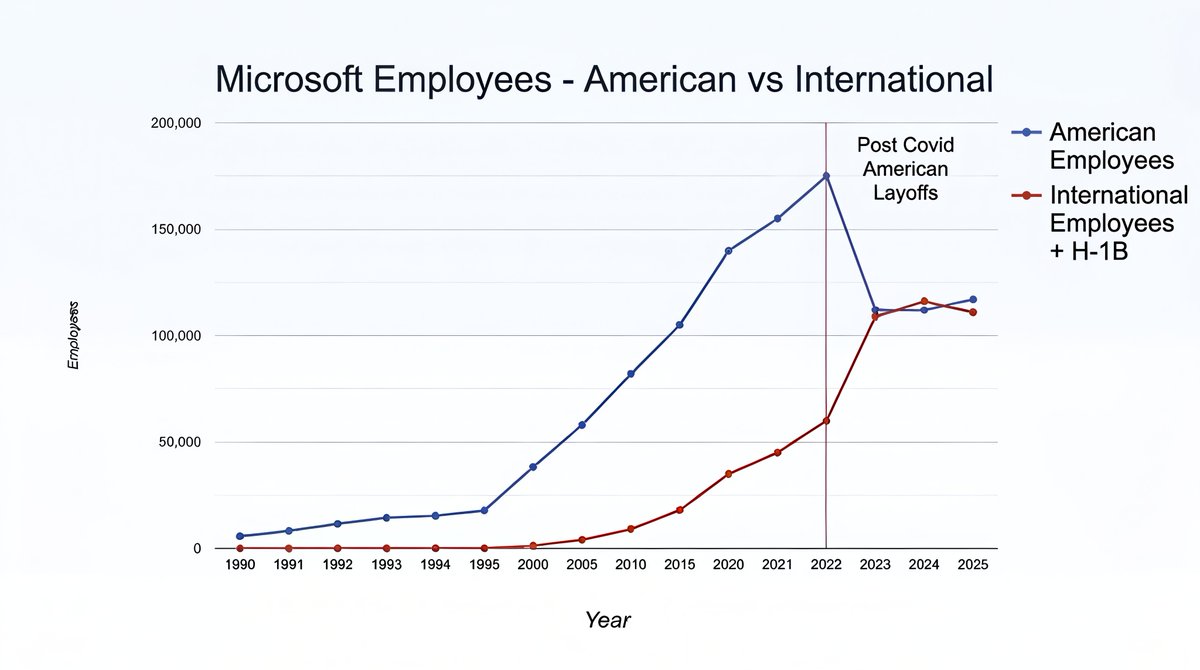
It's national suicide that off-shoring hasn't been addressed yet. Our biggest tech companies are being hollowed out by Indian CEOs moving American jobs to India.
It's an order of magnitude worse than the hollowing out of our manufacturing base which destroyed small town America and it's happening right before our eyes.
A marriage is a covenant, not a contract.
A contract says, I’ll do my part as long as you do yours. It’s conditional. If one party stops performing, the other is released from their obligation. Contracts exist because they protect people who cannot fully trust one another. They define responsibilities, assign consequences, and provide a way to enforce the agreement when someone fails to keep their word.
A covenant is different. It doesn’t begin with conditions; it begins with a promise. It says, I’m all in. Not “as long as.” Not “provided that.” Just, I choose you.
That doesn’t mean a covenant ignores failure or pretends people won’t disappoint each other. It means the relationship itself isn’t built on constantly evaluating whether the other person has earned your love today. It rests on a promise freely made and freely kept. And that kind of promise can only run on love.
Human beings have a built-in blind spot: we witness every sacrifice we make, but only a fraction of the sacrifices someone else makes for us. You know every time you got up early, every errand you ran, every time you bit your tongue, every burden you carried without anyone noticing. Your spouse knows all of theirs. But neither of you sees the whole picture.
That means two genuinely loving people can both become convinced they’re carrying more than half the marriage. Not because either is selfish, but because memory naturally favors our own experience over someone else’s.
That’s why scorekeeping slowly poisons marriages. It creates resentment without requiring either spouse to have bad intentions.
Gratitude breaks that cycle by forcing us to reverse our attention. Instead of asking, What hasn’t my spouse done for me today? gratitude asks, What have they done that I almost overlooked? That shift sounds small, but it changes the entire atmosphere of a marriage. Attention shapes affection. The things we consistently notice become the things we appreciate, and the things we appreciate makes us love.
Both simply become eager to bless the other, and almost without realizing it, they end up giving each other far more than fairness ever required.
The manosphere often presents marriage as a series of negotiated obligations. The husband provides, therefore the wife owes submission, service, loyalty, and gratitude. If either side fails, the agreement has been broken.
Strip away the podcast branding, and what remains is simply a contract.
The problem is that behavior and love are not the same thing. A wife who acts a certain way because she’s afraid of conflict, rejection, or consequences has complied, but compliance isn’t intimacy. You can command behavior but never love.
The opposite extreme makes the same mistake in reverse. Much of modern feminist relationship advice reduces marriage to accounting. Every chore is tracked. Every emotional burden is measured. Every forgotten appointment becomes another unpaid debt entered into the ledger.
One movement tells husbands to manage their wives. The other teaches wives to manage their husbands.
A covenant works because it starts with love. Love expresses itself through intention, and gratitude trains us to recognize that love instead of overlooking it.
Once gratitude disappears, scorekeeping naturally takes its place. Once scorekeeping takes its place, the covenant slowly becomes a contract. And a marriage built on a contract will always feel like something is missing, because the very thing marriage was designed to protect was never obligation. It was freely chosen love.
Love first. Gratitude every day. Right intention behind every act. replace covenant with contract. Both assume the health of a marriage depends primarily on whether everyone’s obligations are being equally fulfilled.
But both overlook the one thing that actually gives those actions their meaning: intention.
And in marriage, faith, and I would argue in everything we do, it’s all about intention.
Love first. Gratitude every day.