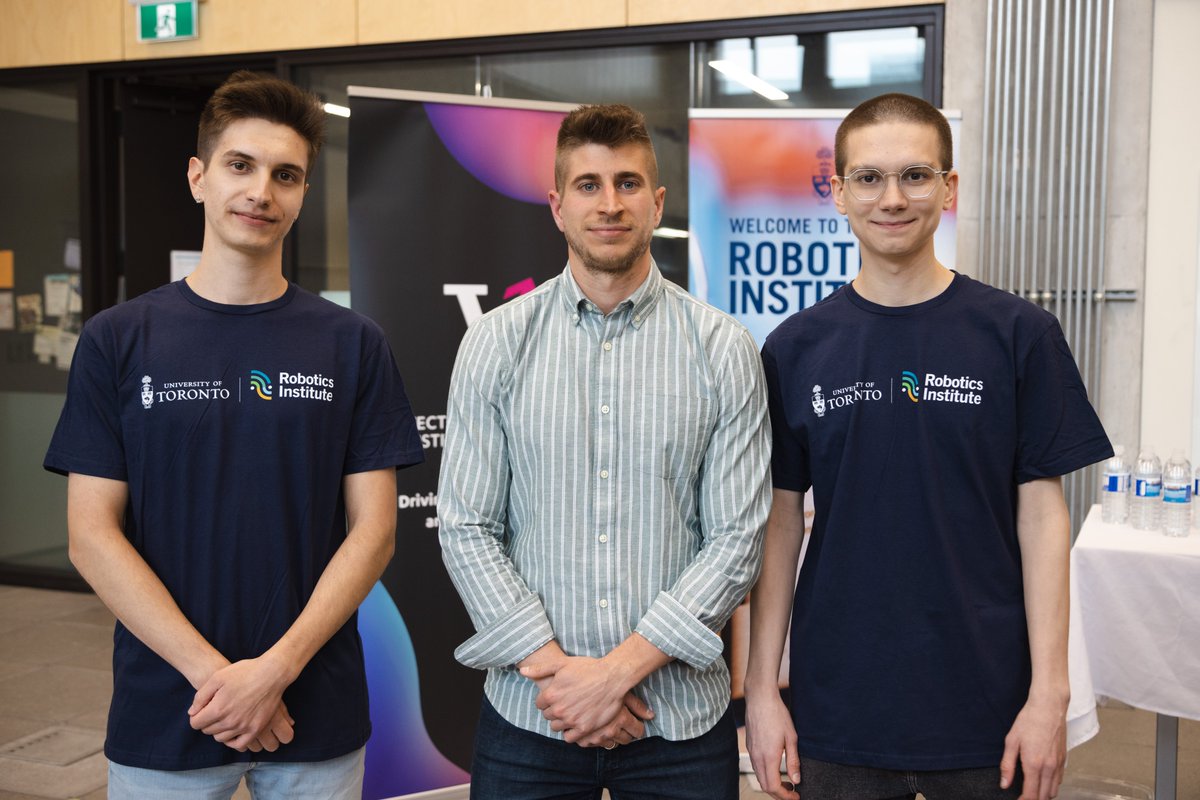
Meet Brandon Wong, an MSc student @UofTCompSci studying representation learning for neural decoding.
His current research explores how diffusion latents affect downstream learning.
@irinarish Yes, but alignment may require reward inference before reward optimization. Then again, human and AI values may never be fully defined via math or natural language.
Our new study on bidirectional representational alignment between biological and artificial neural networks.
@UofT@LaschowskiLab https://t.co/DXzxWCyZjl
Are you a @UofT student in computer science, math, physics, or engineering? Want research experience?
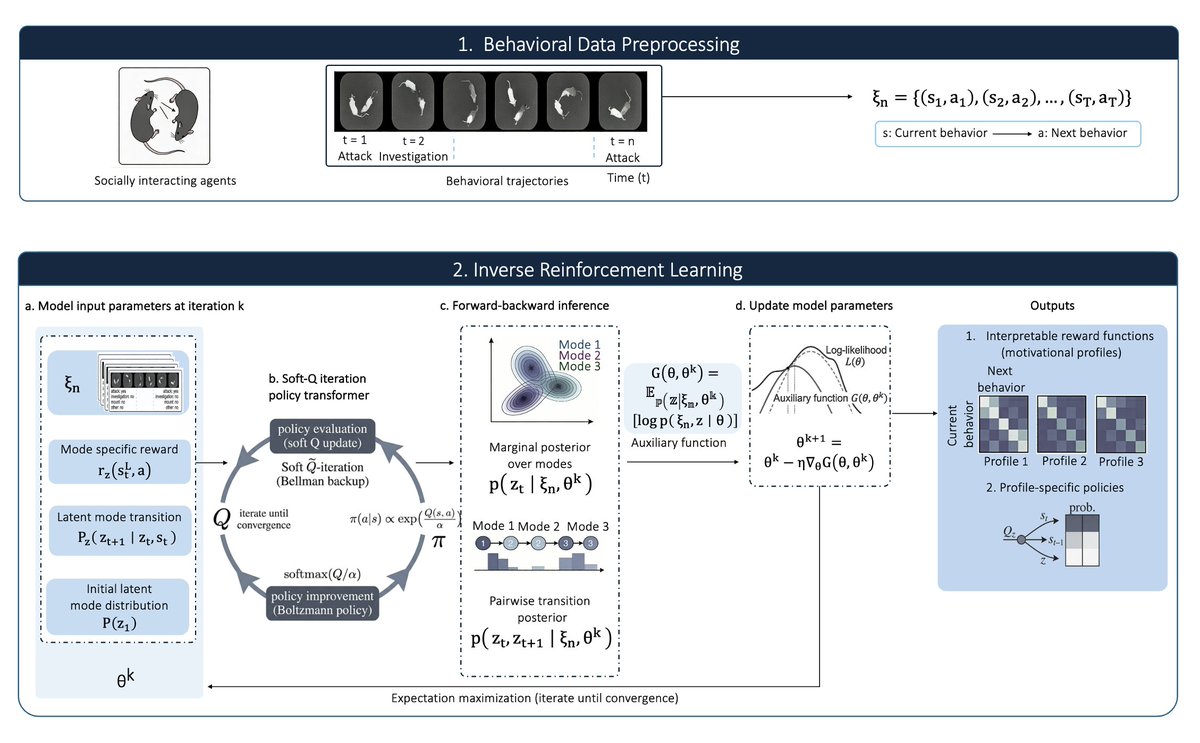
We’re recruiting students to explore theory and algorithms for inverse reinforcement learning. Email me your resume and transcript.
I started in neuroscience. Then spent several years building intelligent machines. Now I study general principles of learning and intelligence.
@UofT@LaschowskiLab
Meet Brandon Wong, an MSc student @UofTCompSci studying representation learning for neural decoding.
His current research explores how diffusion latents affect downstream learning.
Applications are now open for the @VectorInst Distinguished Postdoctoral Fellowships. Come join our world-class machine learning research community.
Apply by August 31: https://t.co/rOUUUNgqm7
@SergeyStavisky Thanks for your feedback. We use "domain" in the machine learning sense, where different users, tasks, sessions, and devices correspond to different data distributions. In that sense, we view cross-user transfer as a special case of cross-domain adaptation.
@SergeyStavisky We see these as complementary. Scaling emphasizes data quantity, whereas source-domain adaptation emphasizes data selection. Both are important for transfer performance and data efficiency in neural decoding.