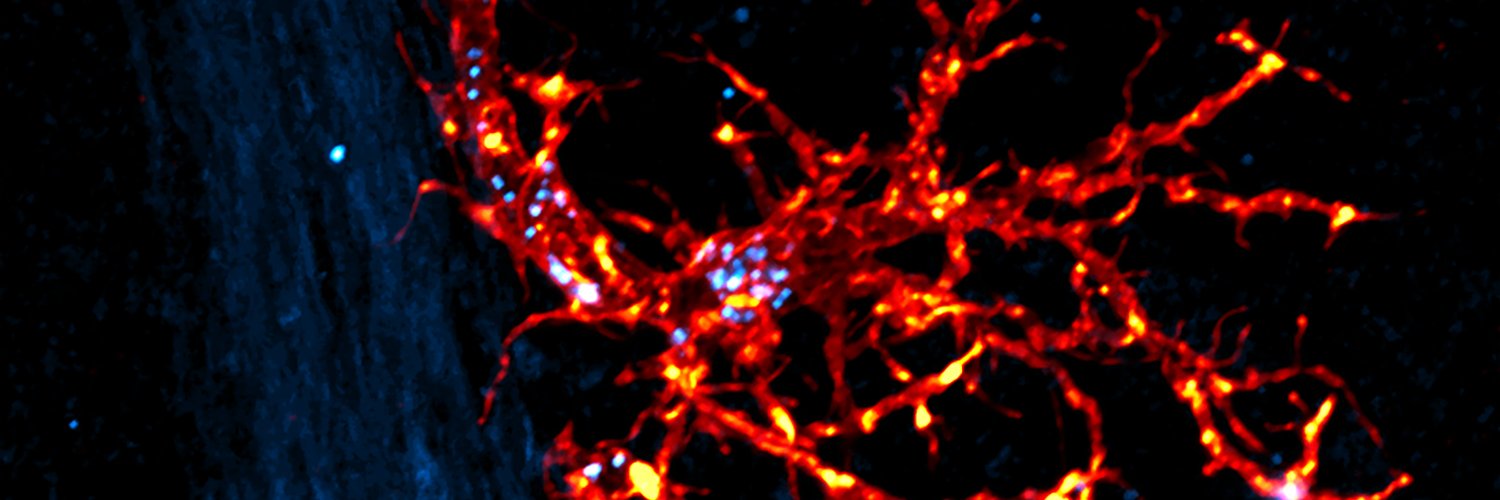
In 2013, two papers showed that cellular senescence isn't just a hallmark of aging but it also happens during normal embryonic development.
Over a decade later, we're still figuring out what these cells are doing.
Our new paper tackles that question in the developing brain. 🧵
In 2013, two papers showed that cellular senescence isn't just a hallmark of aging but it also happens during normal embryonic development.
Over a decade later, we're still figuring out what these cells are doing.
Our new paper tackles that question in the developing brain. 🧵
This work left us thinking about senescence a little differently.
Maybe the question isn't whether senescence is good or bad, but how it's being used.
Different cell types may be adapting senescence to meet very different physiological demands.
Senescent cells are often viewed through the lens of aging and disease.
But if some senescent states serve normal physiological functions, understanding those functions may be critical for interpreting and eventually targeting senescence in disease.
Why might that be?
Unlike most epitheliail cells, choroid plexus epithelial cells are long-lived, non-dividing, and remain under continuous physiological demand throughout life.
Their biology may be particularly well suited to a persistent senescent state.
Choroid plexus epithelial cells were the exception.
They entered a senescent state during embryonic development and never seem to leave it.
Even in adulthood, these cells retained many of the same senescence markers.
Embryonic senescence was originally described as a transient developmental program.
But these cells enter that state before birth and maintain it throughout life.
This may be the first example of lifelong physiological senescence in a somatic cell population.
But these cells don't use senescence in the same way.
Endothelial cells and brain-resident macrophages engage senescence-associated programs transiently during barrier formation and then largely resolve them.
We found senescence-associated programs in major cellular components of the brain's barriers:
• Choroid plexus epithelial cells
• Endothelial cells
• Brain-resident macrophages
The brain is protected by specialized barriers that control what moves between the blood, cerebrospinal fluid (CSF), and neural tissue.
We know a lot about the pathways that build these barriers. What surprised us was how often those pathways overlapped with cellular senescence.
@MoeNeuro I feel so strongly about this. Asking female PIs to wait until tenure to start a family became illegal pretty recently. But the mindset lingers. There is a push for diverse voices in academia but not much is being done to support female (and other) scientists with parental leave.
🧬Unlocking the Mysteries of #Downsyndrome!🧠 Excited to share our review that dives deep into the neurological features of DS and the power of human #stemcell models, shedding light on the intricate mechanisms underlying DS. @HiruyMeharena https://t.co/cRazXvgzAL