Dear Muslims of the globe, save this image in your brain.
Revenge shall be taken.
We will avenge the death of our children, brothers, sisters.
Time awaits.
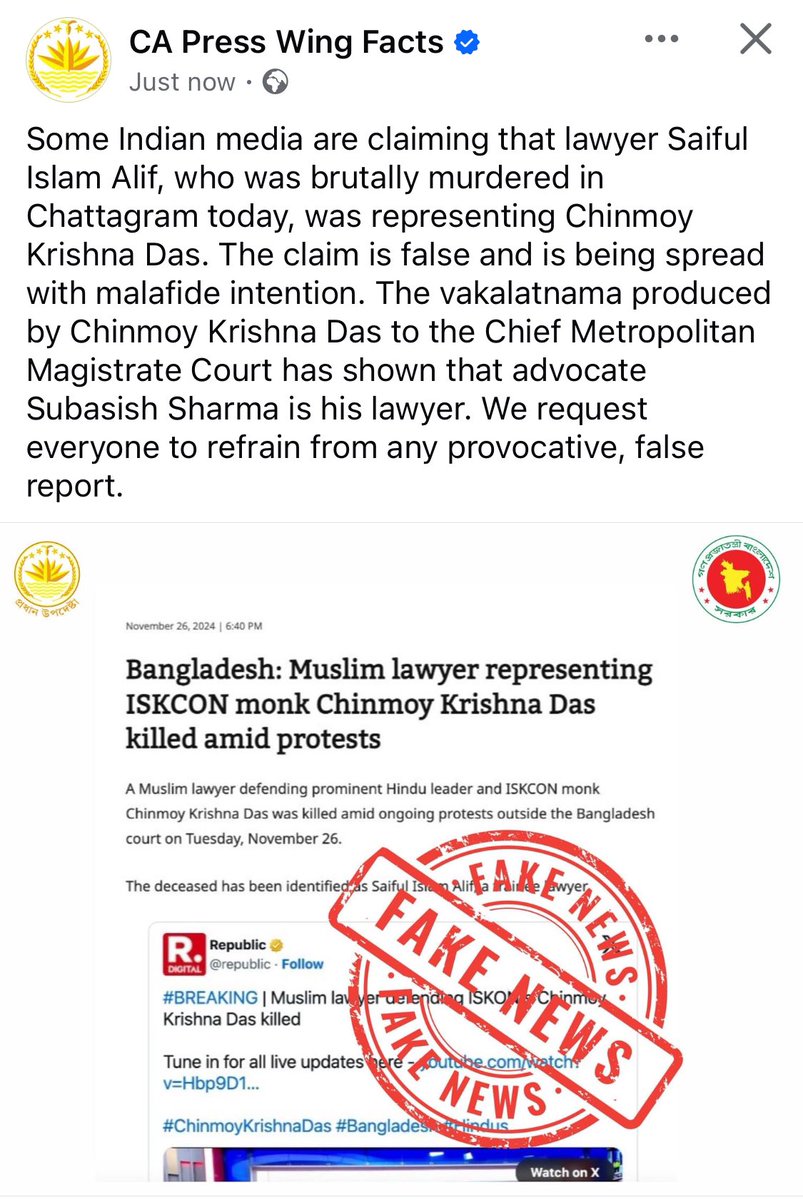
"Some Indian media are claiming that lawyer Saiful Islam Alif, who was brutally murdered in Chattagram today, was representing Chinmoy Krishna Das.
The claim is false and is being spread with malafide intention. The vakalatnama produced by Chinmoy Krishna Das to the Chief Metropolitan Magistrate Court has shown that advocate Subasish Sharma is his lawyer. We request everyone to refrain from any provocative, false report."
@ChiefAdviserGoB@CApress_sec confirms.
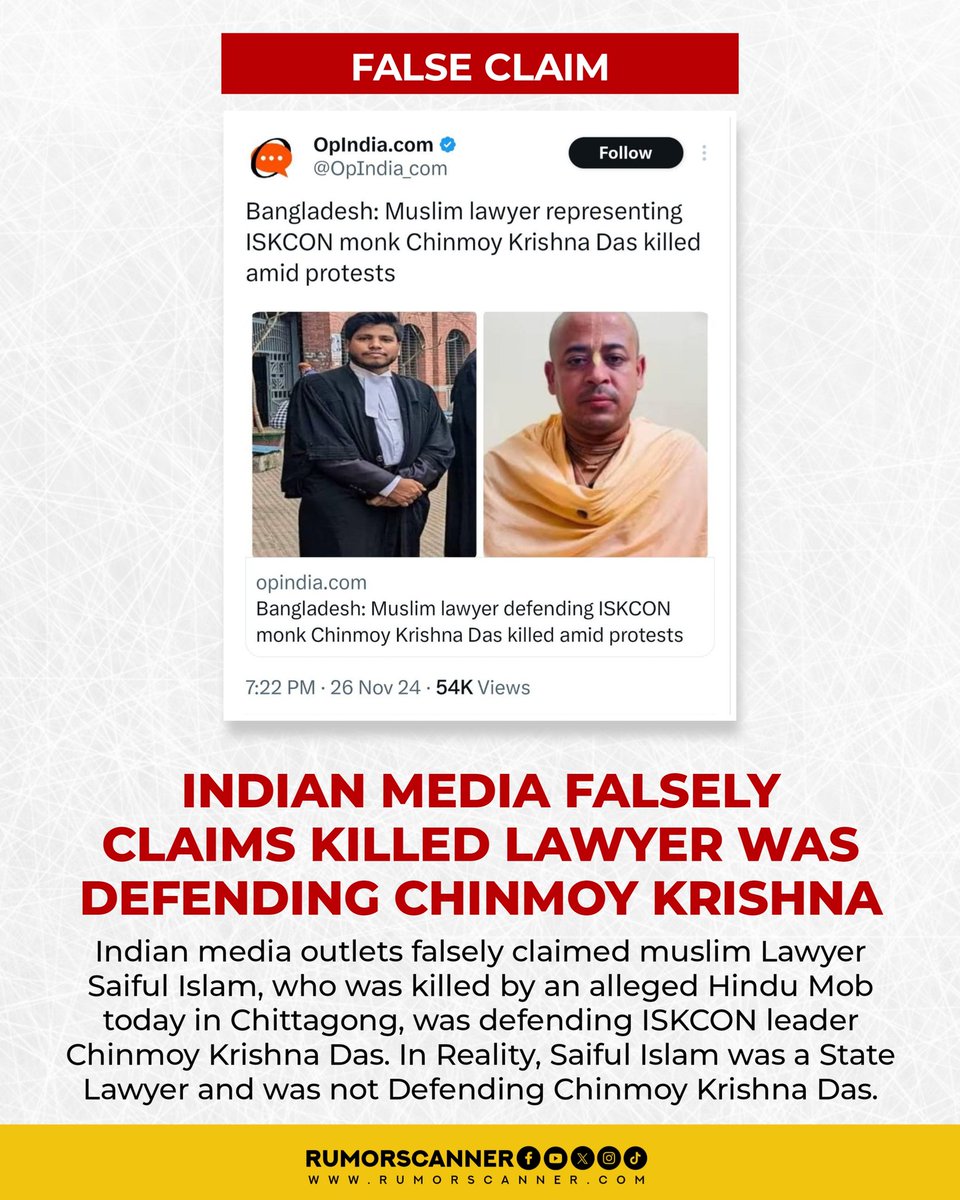
The claim that a Muslim lawyer defending Chinmoy Krishna Das was killed is misleading. The killed lawyer was not on his side. Chinmoy's lawyer name is Adv. Subasish Sharma.
Take note @ChiefAdviserGoB
Bangladesh’s Passive Foreign Policy: A Costly Silence on Fake News and Misinformation by The Indian Media
1. Ongoing Misinformation Campaign:
Recent reports in Indian media, particularly from @IndiaToday, have intensified a negative portrayal of Bangladesh, escalating with a story on “Bangladesh cracking down on Trump supporters after his statements on anti-minority attacks.”
This report appears to distort events and create a misleading narrative around Bangladesh’s internal affairs.
The silence of Bangladesh’s foreign ministry in the face of such media attacks is astonishing. This absence of a diplomatic counter-narrative leaves Bangladesh vulnerable to misrepresentation on the global stage, potentially impacting its international reputation and diplomatic relations.
2. Lack of Diplomatic Response:
Despite the aggressive media campaign, there has been no visible effort by the Ministry of Foreign Affairs to counter these narratives.
Diplomatic protocols, like summoning @ihcdhaka for clarification, have not been initiated, which might be interpreted as either indifference or unpreparedness.
It’s essential for the Foreign Ministry to take a more proactive stance, refuting false narratives with prompt statements and potentially collaborating with international media to provide balanced coverage.
3. The Role of Local Media:
Major local media outlets have not adequately addressed or investigated the wave of misleading reports coming from across the border. Instead, these outlets seem more engaged in internal political narratives, such as covering Awami League’s legal actions, often without substantive verification or investigative depth.
This disconnect between domestic media priorities and the broader need to address international misinformation risks reinforcing a one-sided view of Bangladesh’s political and social landscape.
4. Failure to Flag and Counter Disinformation:
The Press Wing of the Chief Adviser’s Office has at least identified some of these stories as fake, which is a small but positive step. However, the Foreign Ministry’s inaction underscores a lack of strategy in addressing media disinformation systematically.
Bangladesh’s Ministry of Foreign Affairs should consider more direct interventions, such as issuing official statements that clarify misrepresented facts and engaging with India’s Ministry of Information and Broadcasting to halt the spread of hostile narratives.
5. Media Advocacy and Accountability:
The government’s lack of response also calls into question the Foreign Ministry’s priorities and its understanding of modern media influence on diplomatic relations.
For more effective counter-strategies, Bangladesh should consider assembling a dedicated task force within the Ministry to monitor foreign media, engage in real-time rebuttals, and build stronger diplomatic communication channels with international bodies.
6. Long-Term Implications of a Passive Foreign Policy:
The continued silence on these media attacks could set a dangerous precedent.
Without taking firm action, Bangladesh risks being painted into a corner where misinformation shapes international perception, influencing policy decisions by foreign governments and international organizations.
A strategic shift is necessary to avoid further diplomatic isolation or reputational damage. Bangladesh’s diplomatic mission should focus on transparent and effective communication strategies, building trust, and enhancing its presence in international media to reshape narratives positively.
Bangladesh’s foreign policy apparatus should consider the long-term consequences of inaction on misinformation.
A proactive and transparent response, supported by both domestic and high profile international media engagement, can be instrumental in ensuring the country’s image and diplomatic standing are safeguarded.
#IndiaOut
#BALout