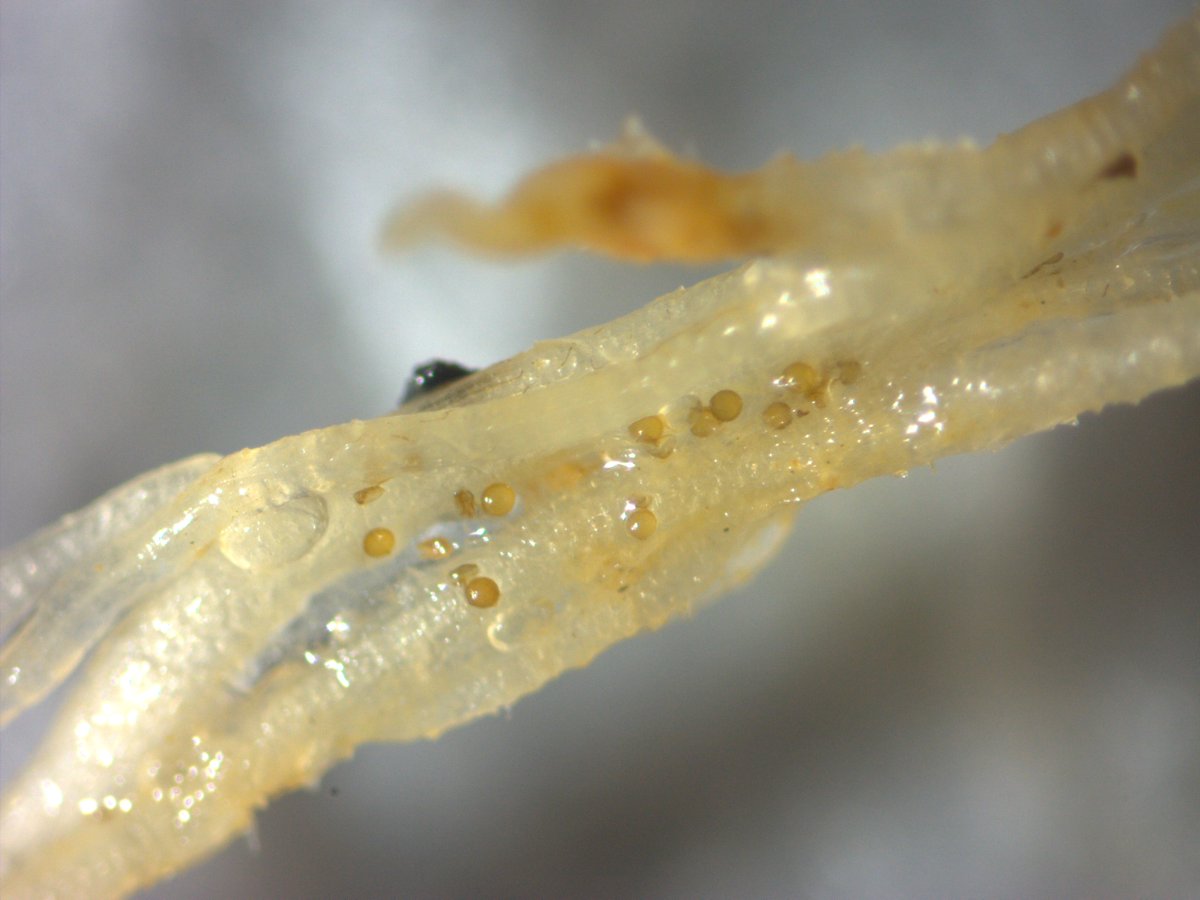
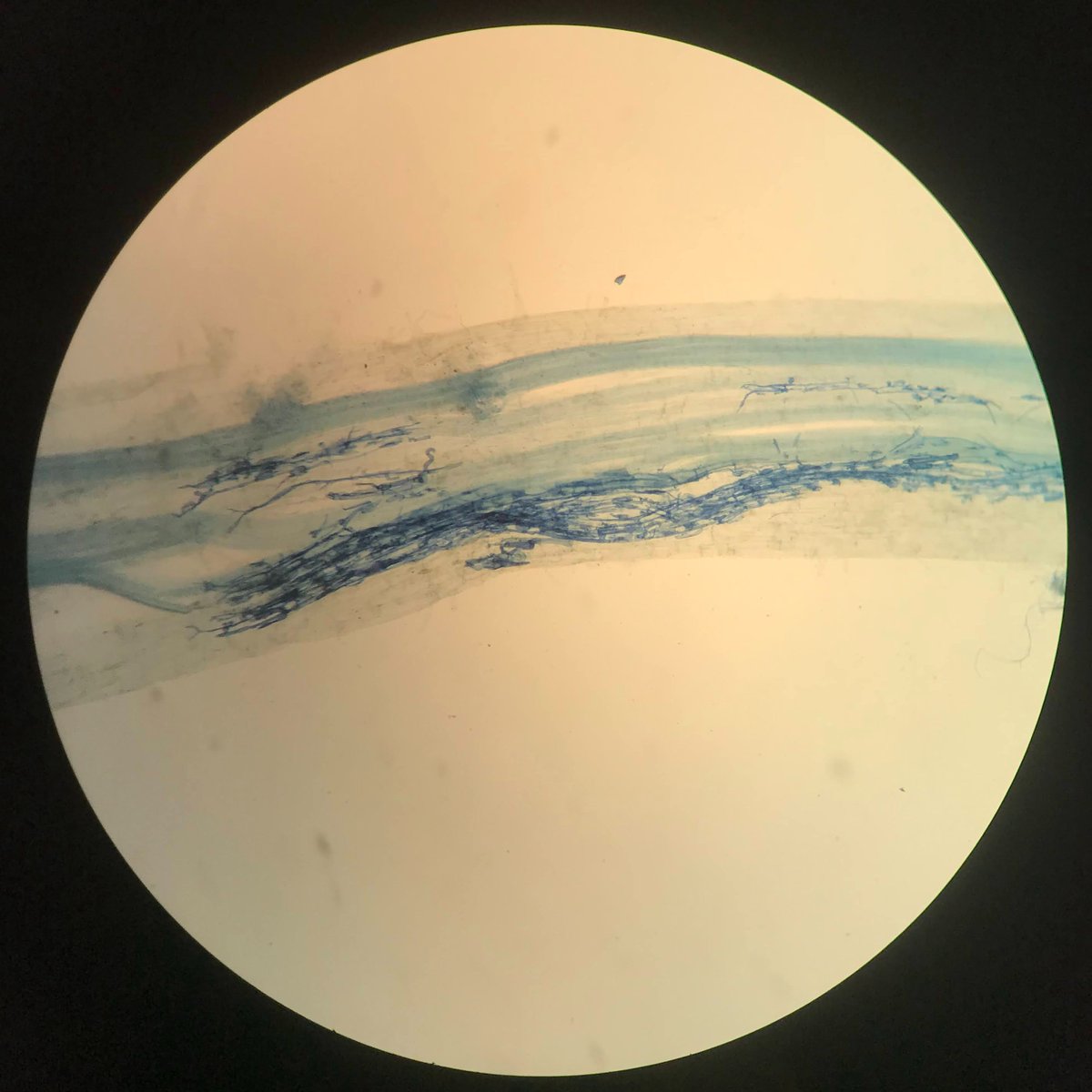
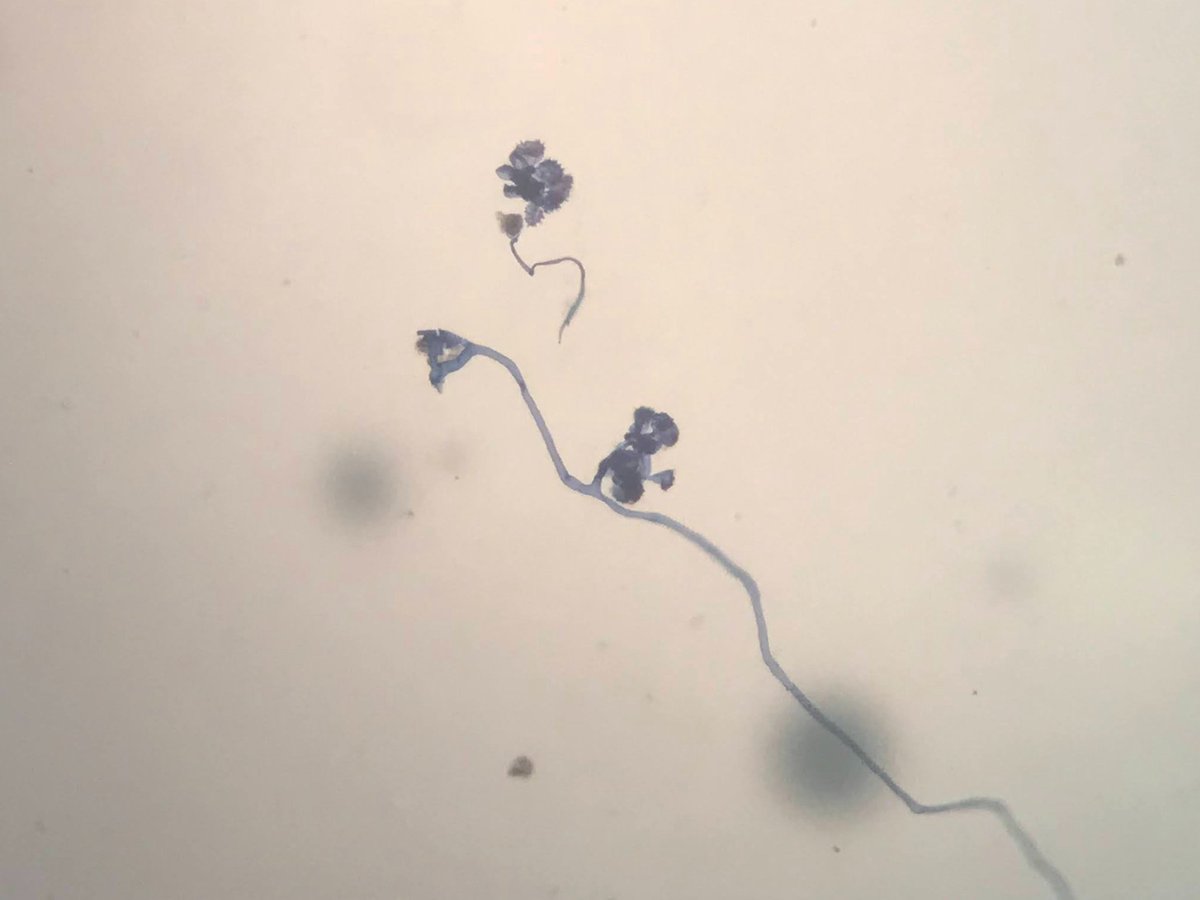
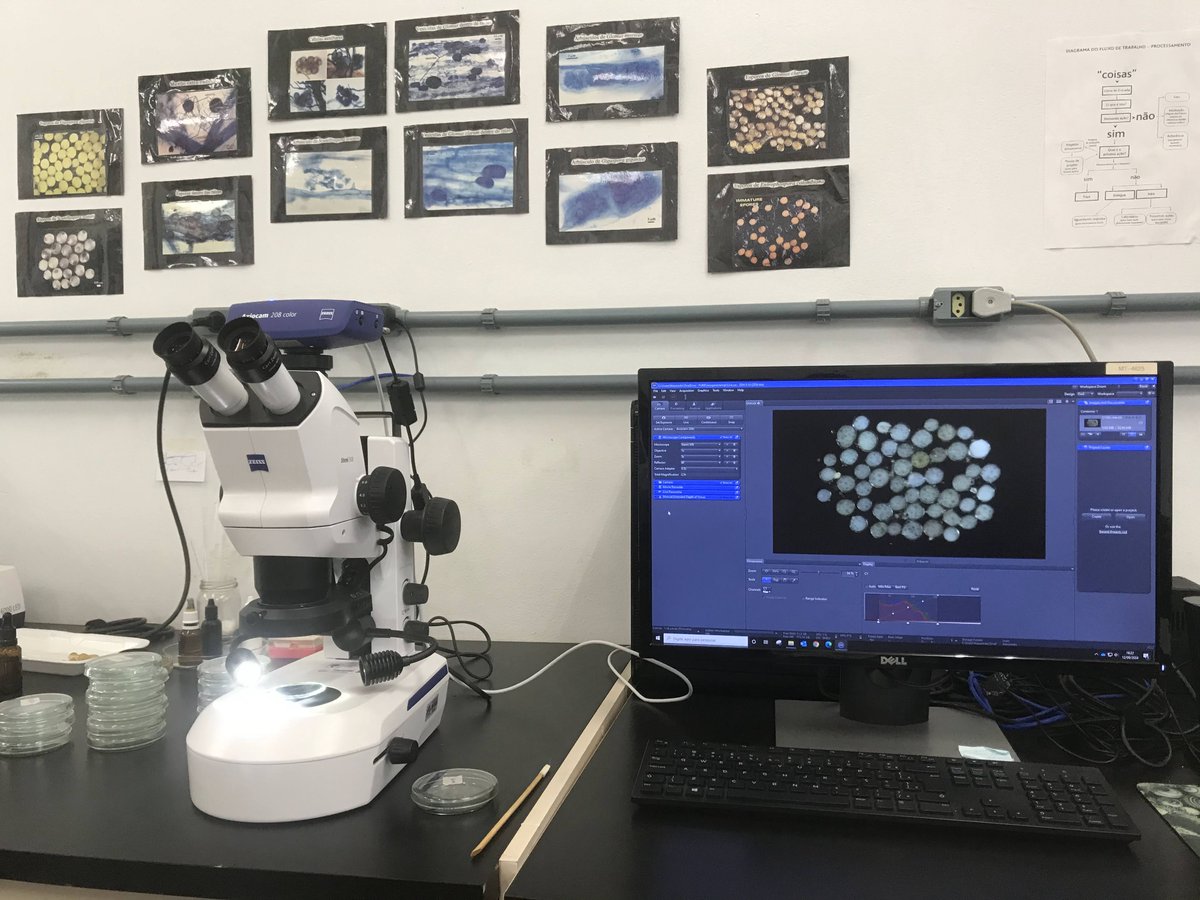
Do we like contaminants in our cultures at CICG? No... but sometimes Yes! 😃We found this glomoid sporocarp and attempted to establish a single culture. We add an X to the isolate code so we know it is a culture from a contaminant. Fingers crossed!!
We are setting up an experiment to investigate how AMF traits change with increasing doses of N in the soil, using fungal isolates from 7 families of Glomeromycota, in collaboration with @1pantunes and @laurindolk and Priscila Kuchenbecker.
At CICG, we are always attempting to isolate AMF from distinct geographical regions. Last three weeks pulling out spores from trap cultures from Piaui, a state in the Northeast region of Brazil, to establish single cultures. Fingers crossed!!
Congrats to Lidia @laurindolk for defending her Master's dissertation about temporal changes and plasticity of AMF traits, in collaboration with Pedro Antunes @1pantunes . It was an honor to have Lidia as a student...next step Ph.D.
Paper published...a small contribution to AMF systematics synonymizing two species with Rhizophagus clarus, in collaboration with Jim Bever (@FungiInvam ), Coline Deveautour, Steve Bentivenga and Karl Kemmelmeier.
https://t.co/Jpz9vhmQfl
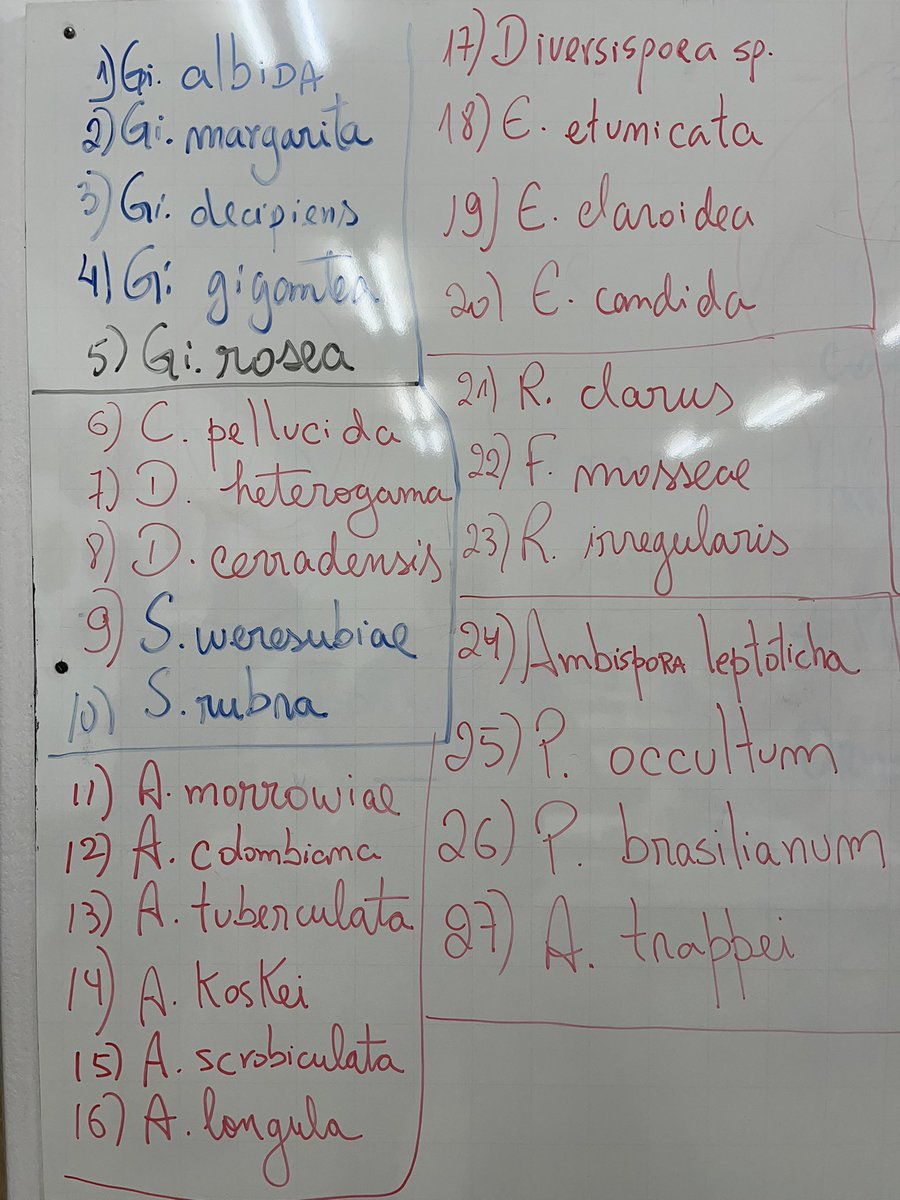
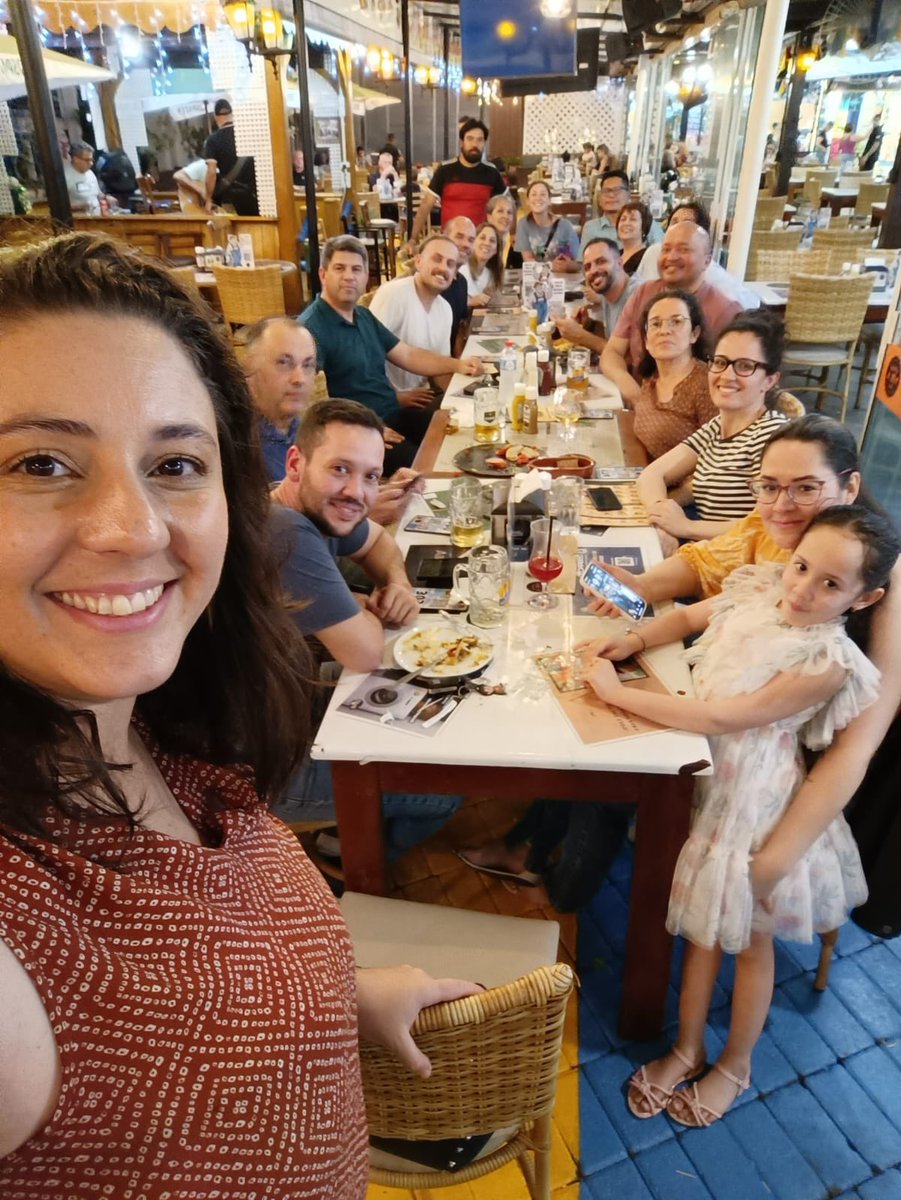
After mounting and observing spores of 27 AMF species in four days, participants of the taxonomy workshop deserved good beer and some typical german food from Blumenau 😉😊
Lab is ready to receive participants from Brazil, Chile, Argentina, Venezuela, Colombia and Peru for the X Workshop on Taxonomy of Glomeromycota. Four days learning about AMF spore morphology and methods to grow them.
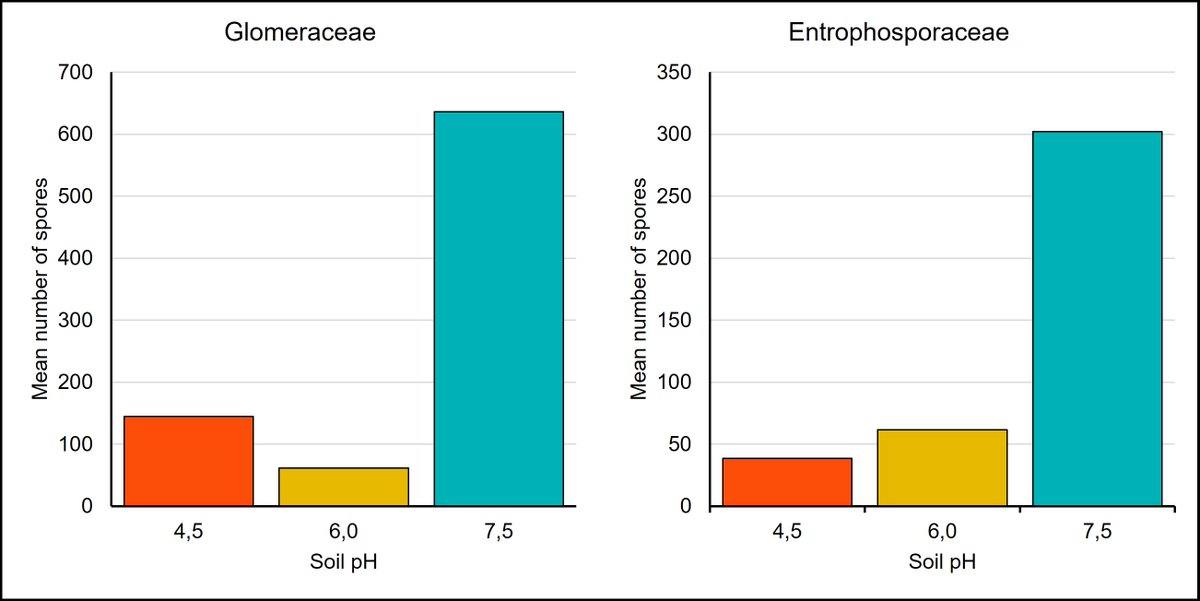
Does soil pH influence sporulation at the family level in AMF? Spoiler from experiment of Lidia Laurindo @laurindolk looking at how soil pH affects AMF traits of four families of Glomeromycota, in collaboration with @1pantunes
How stable are mycorrhizal traits among different hosts? this is the main question of this lab. experiment testing four AMF families and four hosts with distinct life history traits, in collaboration with @1pantunes and @laurindolk
Can you imagine the excitement of T. Nicolson and J. Gerdemann to extract these huge bright greenish-yellow spores of Gigaspora gigantea back in 1968 from the famous Morrow plots? Nice weekend fellows!!
Super day to be back to Twitter. The second largest Oktoberfest in the world begins today here in Blumenau...even some AMF species from CICG are getting ready for the party! Ein Prosit Blumenau! (art by K Kemmelmeier)
New article published: "Inoculation with growth-promoting bacteria and arbuscular mycorrhizal fungi reduce the demand for fertilizers in lettuce" - https://t.co/XlH7z5pPNQ
Win the lottery is good...but get a pure culture of Corymbiglomus globiferum is priceless. Species isolated from sand dunes in southern Brazil by Karl Kemmelmeier and part of the International Culture Collection of Glomeromycota (CICG).
Who else find dimorphism in AMF super cool? Here is Ambispora leptoticha forming in the same culture acaulosporoid and glomoid spores. Is there an ecological or evolutionary advantage to produce both morphotypes? Enjoy the weekend!!
Happy to share the ideas I have been brewing with @SidneySturmer et al. great colleagues working on #AMF traits. "Establishing a Standardized Approach for Elucidating Glomeromycota Life-History Traits: Advancing Consistency in Mycorrhizal Fungi Research." https://t.co/YKpL5rQJrl