PhD candidate at ULiege and UMaastricht
Electrical engineer focused in neuroimaging
Medical imaging | Deep learning | Open-source software | MRI | Neurology
🚀 Check out my comprehensive review on neuroimaging radiomics! Analyzing the neuro-radiomics pipeline, clinical tasks, pitfalls, and solutions. Over 150 papers reviewed! + the open-source tools & datasets included. 🔬 https://t.co/MTQ7FOtb94 #Radiomics#Neuroimaging#OpenScience
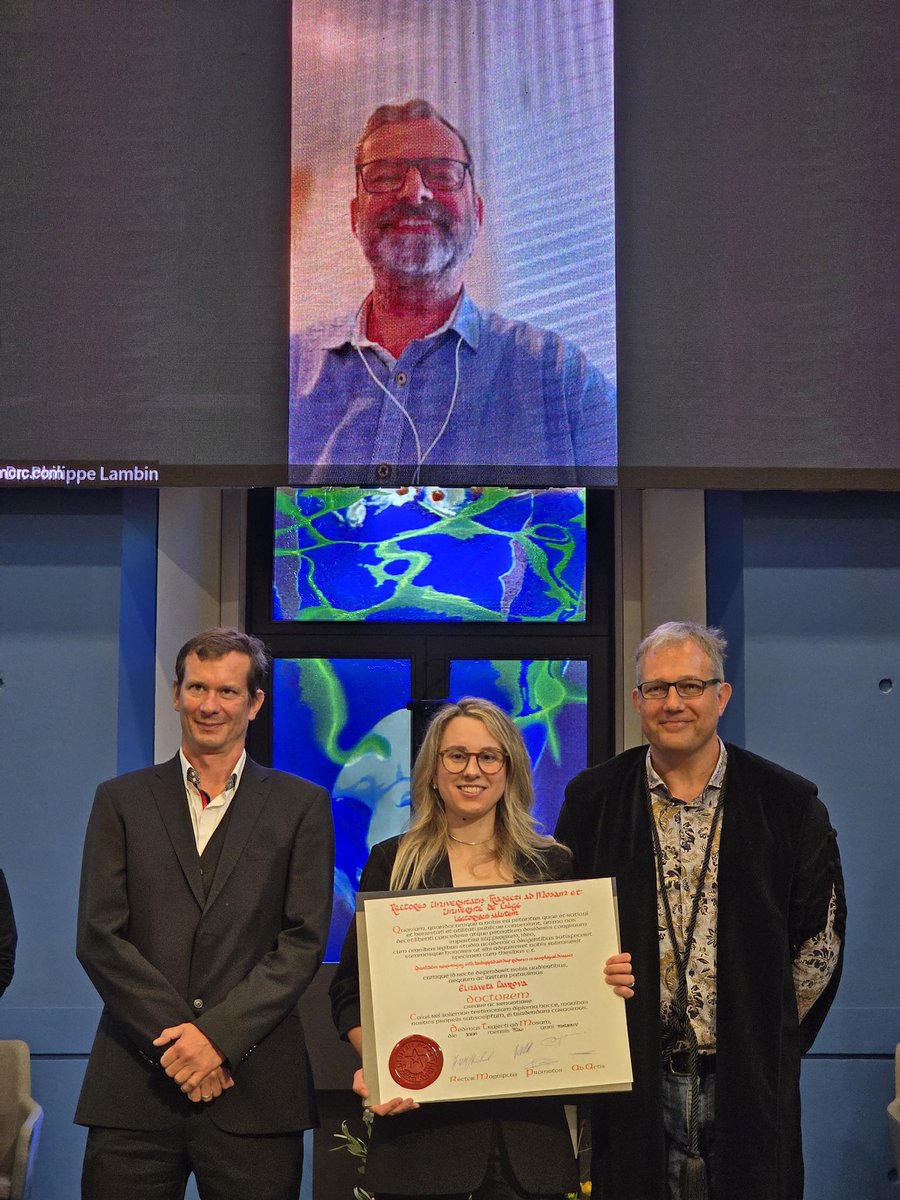
This amazing journey came to it’s end! I’ve defended my doctoral thesis on AI in clinical neuroimaging. I’m so grateful to my supervisors, collaborators, members of the corona, colleagues, family, and friends! #callmeadoctor#PHinisheD
Soon the society will split into two groups: Apple Vision Pro users to watch the content and GoPro users to film the content. Hope to be in the second group tho 😅 #AppleVisionPro
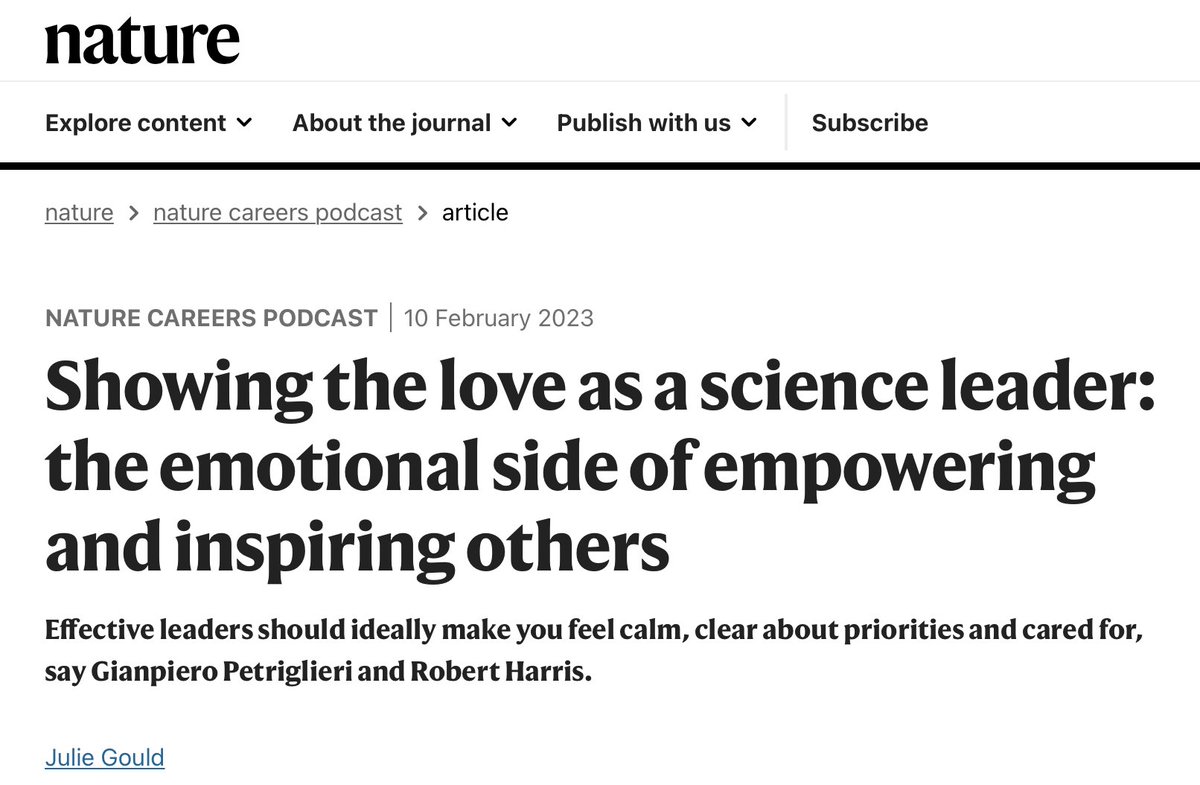
As a professor, pursue the careers of your PhD students and postdocs instead of pursuing your own.
I know it may sound strange and even provocative. But in fact it is how it’s supposed to be.
Unfortunately, a personal gain is the biggest motivation for many professors. More publications, more awards, more invited talks…
Why? In addition to personal recognition, it can result in more funding and higher salaries (especially in the U.S.).
Many PIs say that their personal growth also helps their students get a better visibility. Plus, more funding brings in more students, which is (kind of) “great” for those students.
Others will say that their “tenure requirements are too demanding” and if they stop focusing on personal gain, they will be denied tenure.
In either case, I want you to think about the following:
1. When we focus on personal achievements, we lose track of the wellbeing and personal preferences of team members. Although it often feels like we still track it, in fact we become far less efficient at it. Students' progress and personal development are impeded. Their career opportunities become less diverse or even missed.
2. Concentrating too much funding in one big lab is NOT a good idea because it leads to PhD students receiving far less mentorship and research advising (than in smaller labs).
3. Tenure requirements often look intimidating to young professors. However, in reality, very few professors are denied tenure. Why? First, because any university invest big resources into TT professors and don’t want get rid of them without a big reason. Second, because departments often exaggerate the tenure challenges to ensure their young hires are “hard-working faculties”.
Many PIs think I am too idealistic and propose unrealistic ideas. And a lot of people will never agree with this post. Even myself, I can easily come up with bitter criticism over it.
However, idealism is among the biggest driving forces. It can drive you through challenging times and help improve.
In either case, I want you to think about the following:
1. When we focus on personal achievements, we lose track of the wellbeing and personal preferences of team members. Although it often feels like we still track it, in fact we become far less efficient at it. Students' progress and personal development are impeded. Their career opportunities become less diverse or even missed.
2. Concentrating too much funding in one big lab is NOT a good idea because it leads to PhD students receiving far less mentorship and research advising (than in smaller labs).
3. Tenure requirements often look intimidating to young professors. However, in reality, very few professors are denied tenure. Why? First, because any university invest big resources into TT professors and don’t want get rid of them without a big reason. Second, because departments often exaggerate the tenure challenges to ensure their young hires are “hard-working faculties”.
My message is:
If we all pursue the careers of your students/postdocs in the first place, this shift in priorities will make academia a much better world to live in.
I see an increasing number of faculties trying to genuinely care for their team members, in all countries and academic environments. It is all possible. Just do it. Make science better.
Oh, and don’t forget:
Growth of your team members = Growth of yourself.
#AcademicTwitter #research #phdlife
The precision-medicine-toolbox paper is out! 😊 It was a cool journey starting from the set of scripts for internal use in the D-Lab, and ending with a grown-up Python package (+ it is the first software paper for our group 😀) https://t.co/zq7xlb4QgV
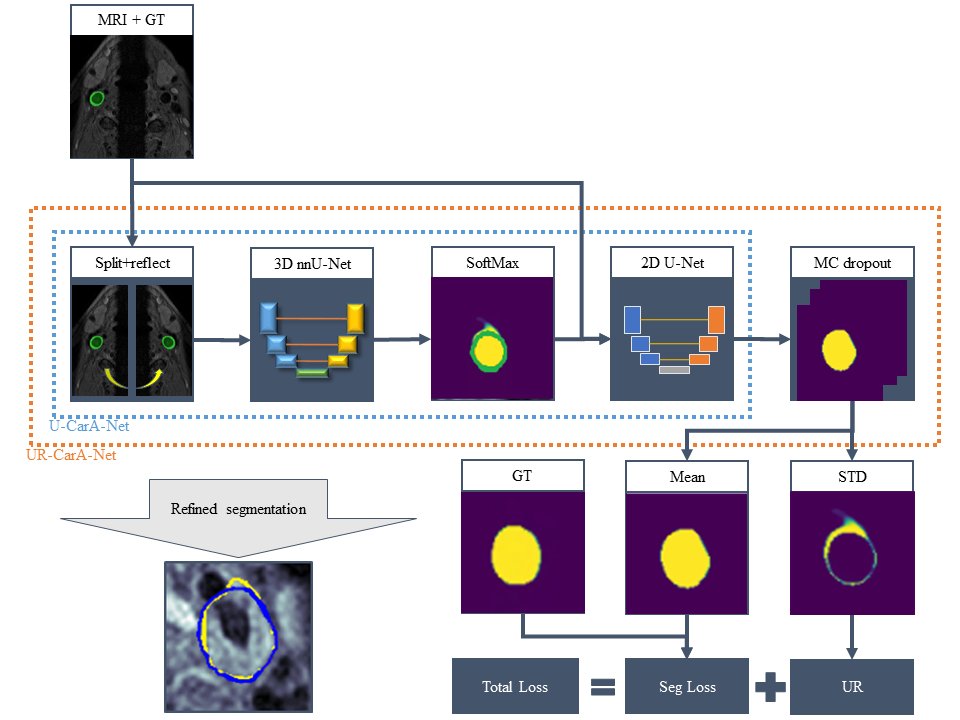
I am excited to share our results on carotid artery segmentation on black blood MRI with the state-of-the-art nnU-Net with uncertainty regularization refinement! https://t.co/NAWlYLYzZ0
and
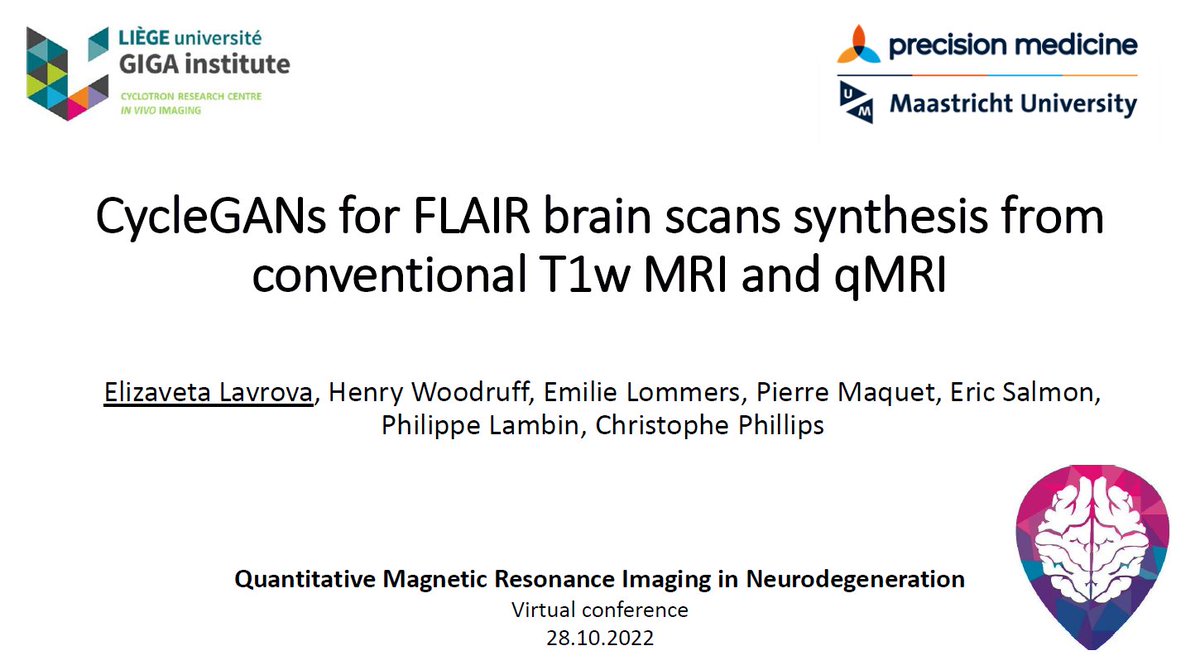
- @lavrovaliz on Fri 5pm (CEST), "Cycle GANs for FLAIR brain scans synthesis from conventional T1w
MRI and qMRI"
Check the online program (with abstracts) and registration on https://t.co/bLJygY5ZHs
2/2
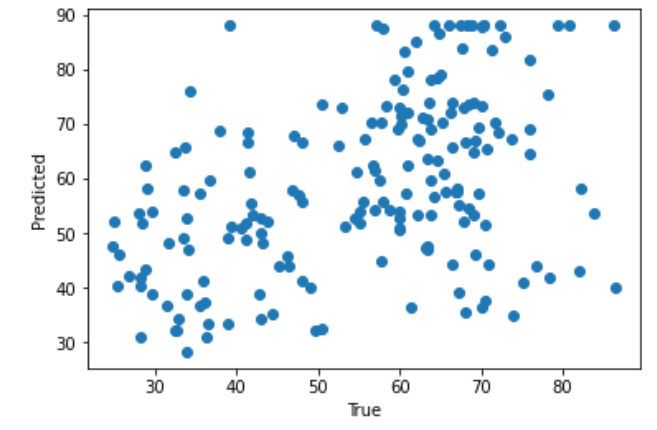
Time to apply the obtained knowledge and skills😈 Tomorrow we will know if it's easy to estimate human age with AI while looking at the brain MRI scans #ai4imaging#hackathon@bigdata_4imag
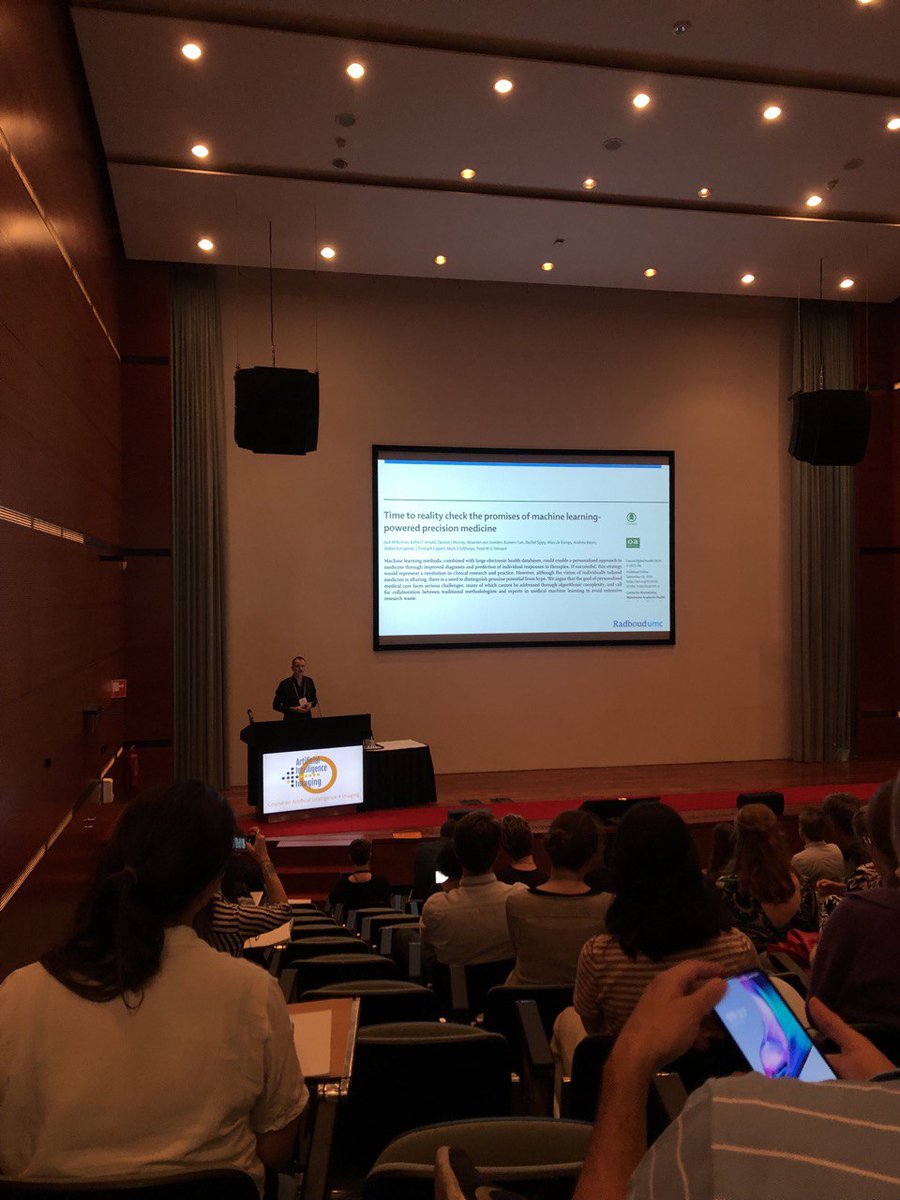
A great overview of deep learning in medical imaging with some critical reflection (one more time: it's not a silver bullet, you need to use it wisely!) by @bramvanginneken@bigdata_4imag#AI4imaging
Let's get it started 🔥 @bigdata_4imag So exciting to hear the most up-to-date ideas from the leading experts on Radiomics prospective, challenges, data harmonization and methodology standardization!
So proud of @SergeyPrimakov for his great work published in @NatureComms! And so happy to contribute to this study🤩 If you want to know more about lung tumour #autosegmentation with prospective validation, check this out:
https://t.co/SGVSs47f9h