@FelipeV39544747@LatEnvChemPSE In such cases, alternative models, such as the Elovich model, the intraparticle diffusion model or the diffusion-permeation model proposed by Leyva-Ramos et al., 2021, which incorporate more complex dynamics, may be required.
@FelipeV39544747@LatEnvChemPSE Furthermore, interactions between adsorbate molecules, such as aggregation or site-blocking effects, can significantly alter the adsorption rates. Lastly, these models have limited capacity to describe non-linear phenomena, such as atypical initial adsorption rates.
@FelipeV39544747@LatEnvChemPSE Another common limitation is the influence of slow diffusion and permeation processes whether external (through the liquid film) or internal (within the adsorbent pores), which the PFO and PSO models typically assume to be either rapid or negligible.
@FelipeV39544747@LatEnvChemPSE Similarly, substantial heterogeneity in the adsorbent surface, characterized by a non-uniform distribution of active sites with varying adsorption energies, may lead to discrepancies between experimental data and model predictions.
@FelipeV39544747@LatEnvChemPSE When adsorption data cannot be adequately explained by the PFO and PSO, it suggests the possible influence of additional factors or limitations in the assumptions underlying these models. One significant factor could be the presence of additional adsorption mechanisms.
@ivanlogon_@LatEnvChemPSE Hola. Muchas gracias por tu comentario y con respecto a tu pregunta sí lo hemos considerado realizar. Es uno de los pasos más inmediatos de nuestro proyecto.
Hi everyone! My poster is "Use of Sargassum biomass from the Mexican Caribbean for the production of adsorbent materials: synthesis, characterization and optimization! @LatEnvChemPSE#PSEBiomassOEI
@PeterHajj12@angelito488@LatEnvChemPSE Hi! It was selected based on the thermogram of the material and the literature review. Thank you for your question!
@OscarDanielLar7@LatEnvChemPSE Thank you for your question! We did it based on the literature review. Most of the authors used 600 °C and 10°C/min, and changed time because only time affected the synthesis.
@astrid_gcortes@LatEnvChemPSE Thank you!! We have considered it as an additional step in our work in the near future, but for now, we have not performed it.
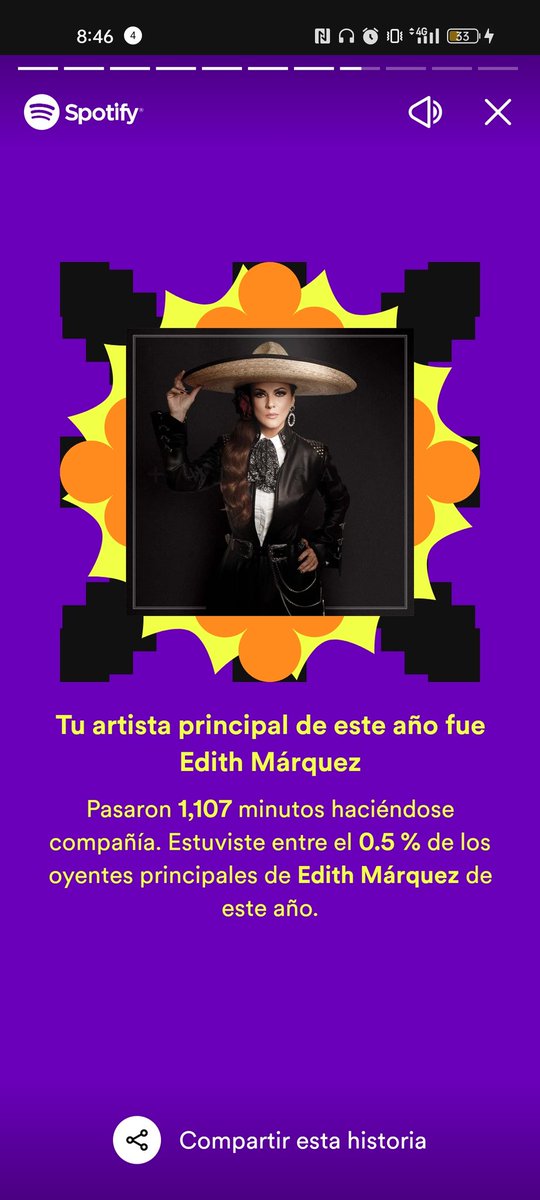
Gracias, Edith Márquez, por pasar 1,107 minutos conmigo en 2022. No pude dejar de escuchar Aunque Sea En Otra Vida. #Mi2022enSpotify https://t.co/tKVTIYZzL3