Good news: @GovEvers announced the creation of the Office of Environmental Justice, supported by a Chief Resilience Officer, noting resilience efforts as key to disaster preparedness—particularly looking to helping the state's most vulnerable communities. https://t.co/OpEJ1KLZgK
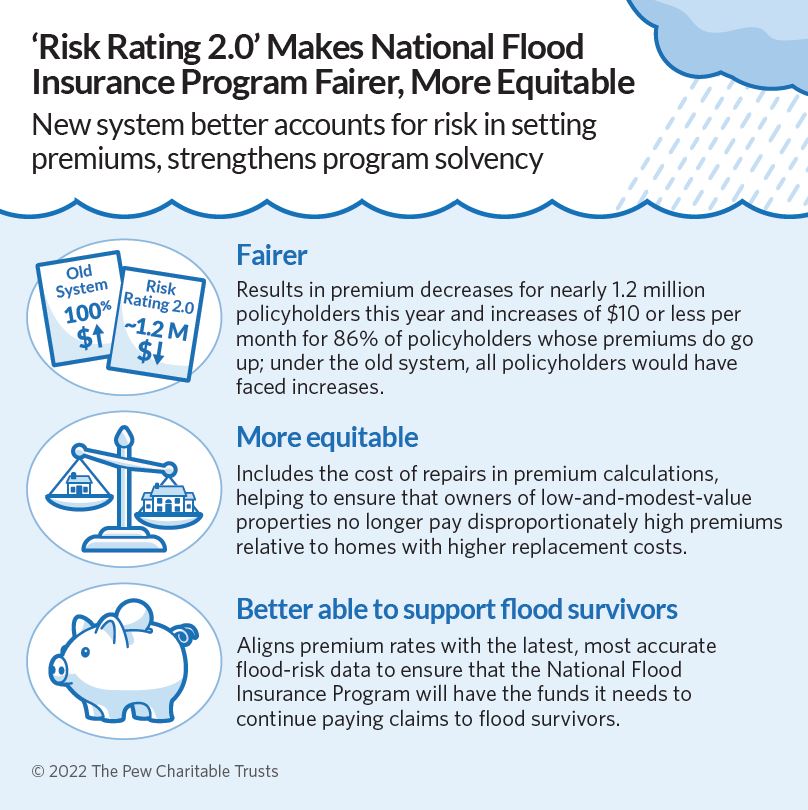
For decades, the National Flood Insurance Program has used an outdated approach when calculating premiums for policyholders.
Fortunately, Risk Rating 2.0 represents a modern, data-based approach to setting flood insurance rates that better accounts for risk.
A great complement to state resilience planning would be the bipartisan Natl Climate Adaptation & Resilience Strategy Act led by Sens Coons, Murkowski/Reps Scott Peters, Salazar. Would create national CRO & national adaptation strategy @CForbesTompkins#ReadyForResilience
New statewide resilience and adaptation planning research from the @StateResilience Partnership - developed by SRP partner @UrbanInstitute! We’re proud to be a part of this coalition supporting flood resilience and helping states get #ReadyForResilience. https://t.co/6HuJnaXxB1
New statewide resilience and adaptation planning research from the @StateResilience Partnership - developed by SRP partner @UrbanInstitute! We’re proud to be a part of this coalition supporting flood resilience and helping states get #ReadyForResilience. https://t.co/6HuJnaXxB1
Happening today: How can we plan for tomorrow’s extreme flooding disasters?
New research from @StateResilience & @urbaninstitute sheds light on how states can prepare—tune in at 3pm ET for expert insights. Register: https://t.co/fySwsKqPgm #ReadyforResilience
>15 states—coastal and inland, and with governments from across the political spectrum—are in the process of developing flood resilience plans. Hear more about that from 3 Chief Resilience Officers tomorrow at 3 PM EST https://t.co/DdYPcMWzQf @MathewDSanders
Webinar: How can communities plan for increasingly extreme weather?
Tune in tomorrow at 3pm ET for insights from @StateResilience, @urbaninstitute, @WHCEQ chair @BrendaMallory46, and chief resilience officers from 3 states👇 https://t.co/fySwsKqPgm
Join us tomorrow at 3 pm when we will share first-of-it’s-kind research on statewide flood resilience and adaptation planning from the
@StateResilience Partnership - developed partner @UrbanInstitute@PewStates#ReadyForResilience
https://t.co/O9FZUX33fx
On Oct. 1, FEMA's new flood risk rating system takes effect—a transformational shift in flood insurance.
"The old system essentially had a bias against lower value homes," our @lbodss tells @aefeldman "Those are likely the ones who have been overpaying."
https://t.co/DF6N920MVS
Pew’s @lbodss makes it clear that tidal flooding will occur more frequently in the coming decades, amplifying the need for greater efforts in creating flood preparedness policies. https://t.co/DXwm23otDY
The #IPCC report on climate change calls our attention the urgent need for action to adapt and build resilience for climate impacts. https://t.co/TIaL0WEzIJ
“We can’t stop the rain from coming; we can’t build levees everywhere.” New solutions are needed as flooding increases across the U.S. This Tennessee community’s use of nature-based solutions to address flooding can be a model for other towns at risk. https://t.co/hmefSdLVAf