“Regarding memory chips—which have seen the sharpest price surges this year—Chen observed that while many industry players continue to publicly predict price increases extending through the end of next year, the reality is that inventories are actually overflowing. Suppliers from mainland China are flooding the market with volume, acting as price disruptors; as for this period of price volatility, "those in the know understand the situation."”
Acer CEO says memory chip supply is rising. Remember the shortage in normal RAM was created by repurposing for HDM but now the production for normal RAM is ramping up - as it always does .
https://t.co/Ca7GZboNhp
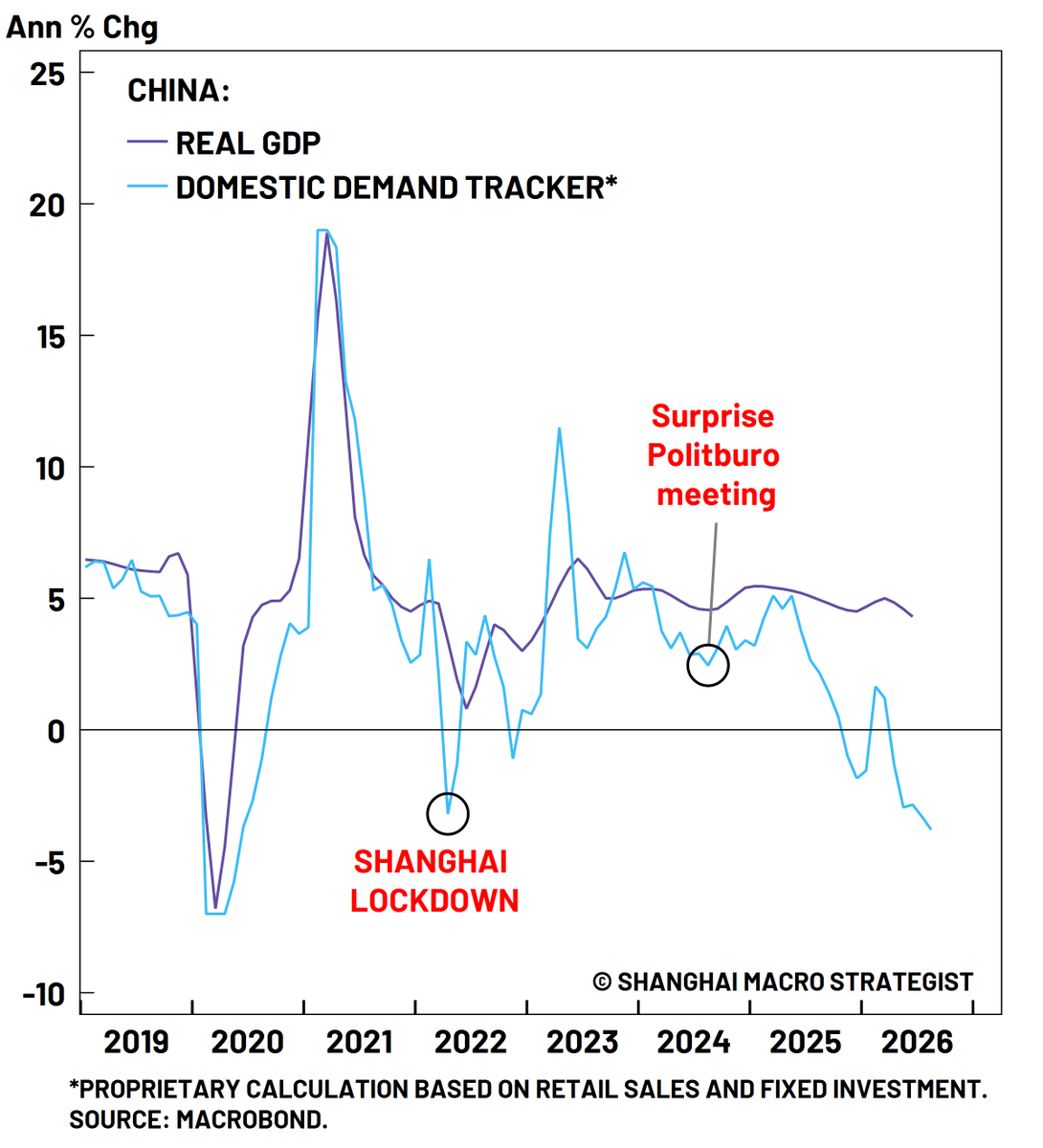
China August economic data:
Retail sales (a nominal figure): 0.4% yoy
YTD fixed asset investment (a real figure): -7.2%.
Our domestic demand tracker has fallen to levels even below that during the Shanghai COVID-19 lockdown.
“What is unsustainable will not be sustained.”
China retail sales growth slows further in August. This is the slowest retail growth in data history, excluding the COVID period and the 1984 and 1990 recessions.
It's concerning. Given that disposable income growth is still 4-5%, the propensity to consume must have been very low.
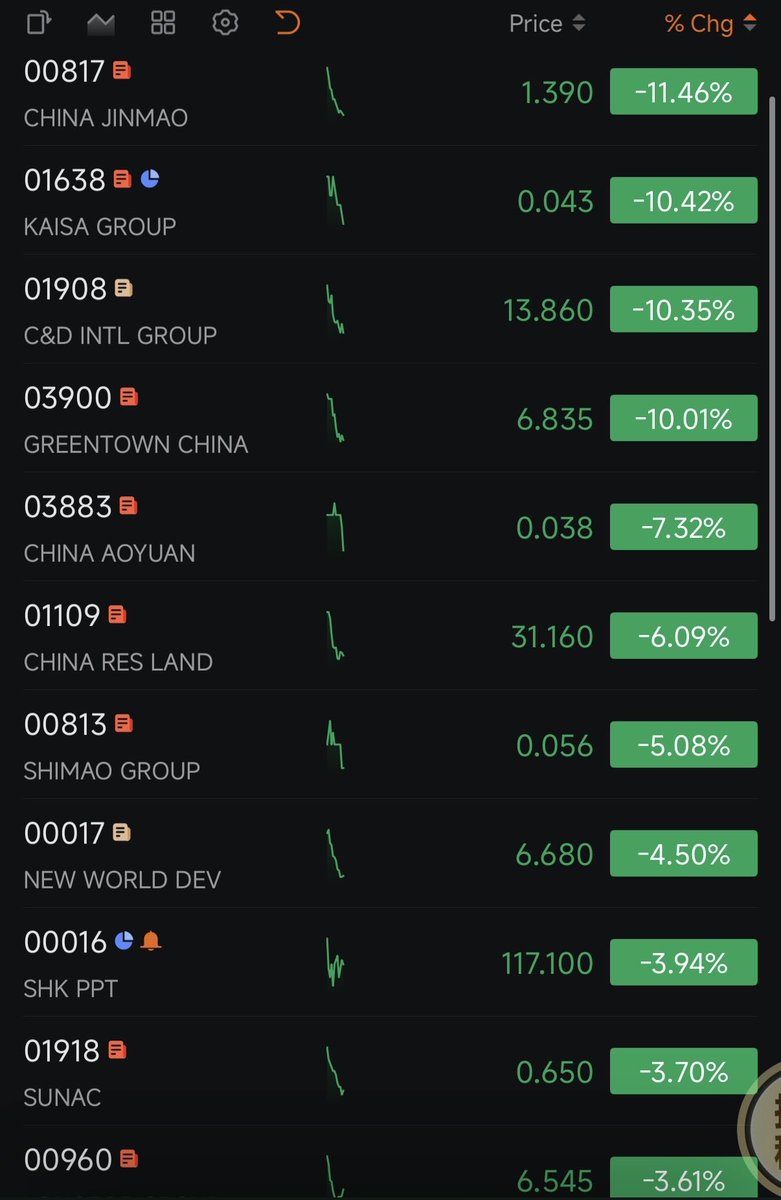
Weak consumption reflects the negative wealth effect, as property prices continue to fall and Chinese stocks haven't performed much this year.
Policy to boost asset prices and, in turn, consumption is much needed. Given that property is likely beyond immediate help, policy to boost stocks, as it did in late September 2024, will help the economy — a lot.
China Is Not a K-Shaped Economy. It Is an i-Shaped Economy
Using the “K-shaped economy” to describe China has become widespread and is now the mainstream description in many media.
Earlier this month, I came across a new expression from economist Xia Chun, from Hong Kong University, that is starting to spread in China: the “i-shaped economy.” The dot at the top is doing well, but it has little connection with the rest of the economy below.
“i” represents the small part of the economy doing very well — AI, advanced manufacturing, and exports, a relatively small part of the economy.
The vertical stroke represents the much larger traditional economy, middle class, small businesses and ordinary workers.
Most importantly, there is a gap between the dot and the line. Growth at the top is no longer transmitted effectively through employment, supply chains, incomes, taxation and consumption to the rest of society
I think this may actually describe China better than the K.
It is not only about linkage. The K also visually implies that the two halves carry roughly comparable weight. In China they don’t. In GDP contribution, employment and household income, the prosperous “upper arm” is nowhere close to the size of the struggling other part of its economy.
Maybe the media should start thinking seriously about the i-shaped Chinese economy.
This observation is in line with what I recently wrote in our report:
"The problem is that China's high-tech sectors remain a relatively small part of the overall economy and have a high barrier to entry. The vast majority of the population therefore remains largely excluded from this new growth cycle."
"For ordinary households working in traditional manufacturing and service industries—restaurants, transportation, construction, retail, and countless other parts of the domestic economy—the reality remains very different. These sectors continue to face deflation, shrinking margins, weak income growth, and rising bankruptcies. In other words, while the upper end of the K is enjoying an extraordinary boom, the lower end—which represents the overwhelming majority of the population—is dealing with a recession."
"This is the fundamental political problem created by China's K-shaped development model: the gains are highly concentrated, while the pain is widely distributed. Ultimately, we believe the social backlash from the lower end of the K is likely to become increasingly difficult for Beijing to ignore."
@HsiSignalsFlash I know the OI is much higher on the HSI, but when the HSTI cash reached 6K level today it triggered way bigger reaction (sell off) than when the very large HSI clusters were busted as per your levels... What do you think ?