For energy and industrial facilities, security challenges are significant: expansive sites, remote locations, constant safety risks, and overwhelming volumes of security alerts. Learn how Scylla helps secure energy and critical infrastructure at https://t.co/6yKngDcxSi
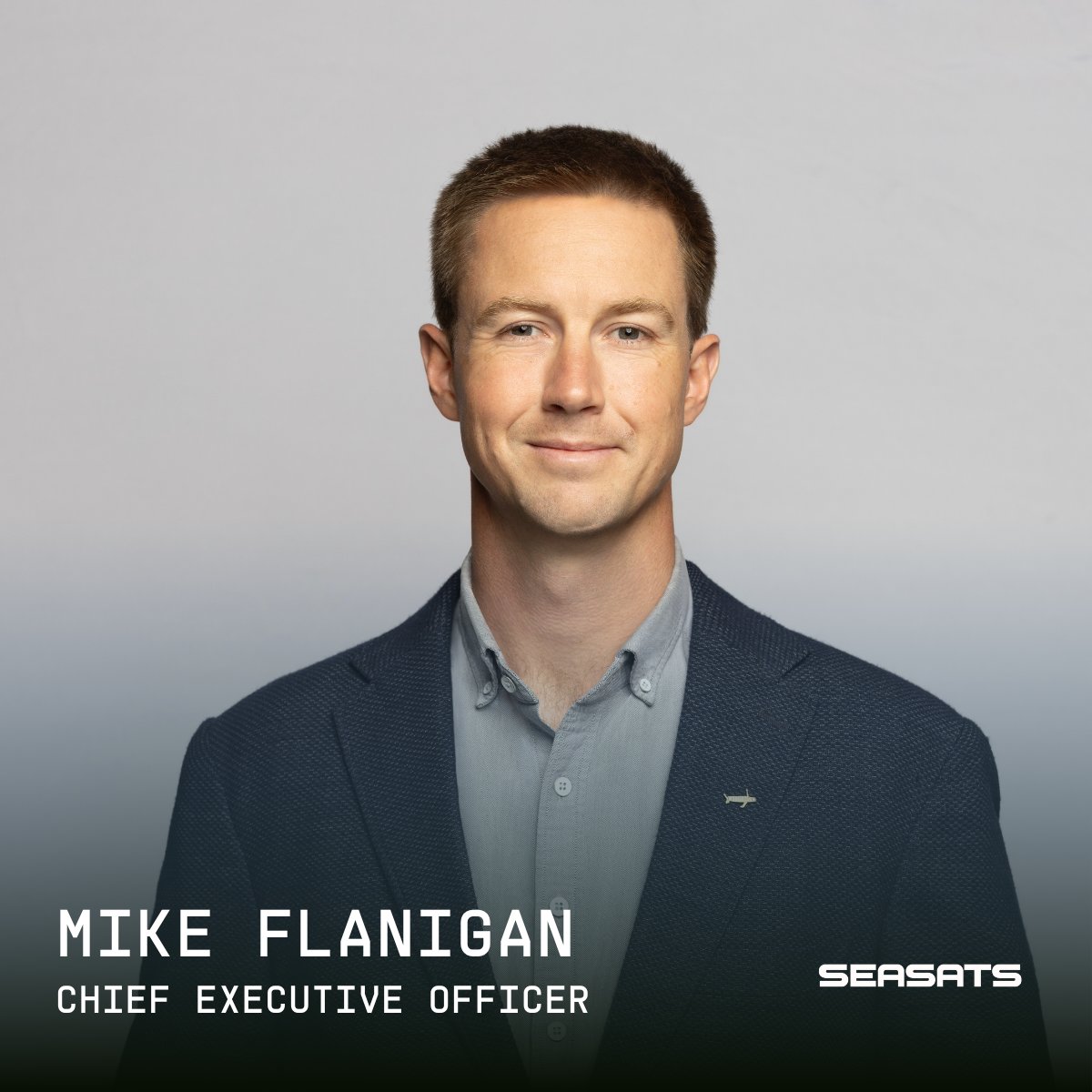
Meet Mike Flanigan, Seasats’ CEO and co-founder.
Flanigan and his partners founded Seasats after seeing the early maritime robotics industry fall short of its promises to customers. Drawing on his deep experience in USVs, cross-disciplinary engineering, and automated manufacturing, he saw a better way—and an opportunity to deliver functional, reliable systems that solve real problems: ocean autonomy that works.
As CEO, Mike leads with deep technical knowledge, high standards, humility, and humor. Since the company’s inception, he has led team growth to over 100 people, closed multiple funding rounds, and built an organization that is living the promise of deploying ocean autonomy daily around the globe.
Asked what he values most about Seasats, Mike points to its people: “It’s hard to think of something more rewarding than working on an important mission with great people.”
#DefenseTech #MaritimeAutonomy #AutonomousSystems #Leadership #Seasats #MeetTheTeam
I ran the math on what happens when all the filed megaconstellations reach steady state. Add up everything on paper (SpaceX's million data center sats, Starlink, Blue Origin's Sunrise and TeraWave, Starcloud, Amazon Leo, and China's roughly 250,000 across Guowang, Qianfan, Honghu and the CTC filings) and you get about 1.4 million satellites. Using Starlink V3 at around 2 tons for the SpaceX, Blue and Starcloud birds and 1 ton for everyone else, with a 5 year life, you'd be replacing and deorbiting about 285,000 satellites a year.
That's roughly 520,000 tons a year, or 1,400 tons a day burning up in the upper atmosphere. The paper numbers won't all get built, so I also ran a more realistic case of about 210,000 satellites by the late 2030s. That still comes out to around 73,000 tons a year, or 200 tons a day.
This number is several times the natural meteor dust coming in every day, and it's mostly aluminum instead of rock. Recent work out of USC suggests each satellite leaves behind about 12% of its mass as aluminum oxide particles that hang in the stratosphere for decades and can help eat ozone. At 200 tons a day that's something like 8,800 tons of alumina a year, compared to maybe 17 tons from natural sources.
Nobody has modeled what that does long term, and I think it's the sleeper issue behind the whole debris conversation. Deorbiting solves the orbital problem by moving it into the atmosphere. Bringing hardware home intact is the only answer that solves both, and that was the core reason I started Outpost and designed our product the way that I did.
It is honestly crazy to me that the best answer our industry has come up for the debris is to burn the trash!
Space Debris: Is There a Market? https://t.co/tbmQMYVsMr
For my first post, I’m sharing a letter @NVIDIA signed on why open models matter.
AI will transform every industry, power every company, and be built by every country.
Open models strengthen safety and cybersecurity, accelerate innovation and diffusion, and enable sovereignty.
The world needs both frontier closed models and frontier open models.
https://t.co/AUKzoQ5Ikb
@elonmusk All government payments, except classified payments, should be made on blockchain and the ledger publicly available. After all it is our money and the government is suppose to steward it responsibly.
The picture below is of me and my father representing Venezuela in the 2002 Olympic Winter Games. He was born and raised there. I was born and raised in the States, but feel a strong kinship with my heritage. Here is what we think about what's going on in Venezuela:
A little background first. For years, he has spent hours each week following Venezuelan news and talking with his brothers and sisters who still live there. I have dozens of cousins still living there. He called me in tears when María Corina Machado won the Nobel Prize because of the hope he had that it would focus the international spotlight on his home country. He has spent thousands of dollars and hundreds of hours gathering donations and putting boxes of clothing, medicine, nonperishable food, and other essentials together and sending them with a trusted third-party courier to help the needy. Anything that goes through normal mail is stolen. We still have no clue how this guy gets the packages through, but they haven't had a single one lost or seized.
And when I say essentials, I mean essentials. My aunt recently told us that she hasn't even seen a single tampon or pad for sale in over 5 years. A bottle of Tylenol or Advil, if you're lucky enough to find it in stock, is a full month wages.
We were actually visiting my parents for the holidays, so when I woke up and saw the news I immediately asked him his thoughts. My Dad also hates Trump and is highly critical of almost everything he does. Here was his response.
"I really don't like Trump, but I think what he's done today is great. It's absolutely fantastic that that corrupt evil dictator is gone and he deserves to rot in jail for the rest of his days."
In fact, his biggest concern is that the US won't go far enough because there are several people still there who are just as bad or worse and if they seize power, this will have been for naught.
Remember, there was an election and they Maduro out. This is an illegitimate government that is not supported by a mandate from its population.
I texted him this afternoon and he said the messages he's received from family and friends have been a mixture of awe that this could be accomplished and restored hope for the future. They thought Maduro was untouchable.
The following note, which we did not write, but he shared in our family group chat, describes our feelings almost perfectly:
"It is striking how, now that the world 'cares' about Venezuela, so many feel so confident in offering their uninformed opinions. Including trusted media.
As a Venezuelan, I just ask you to remember this:
You cannot violate the sovereignty of a country where there is no rule of law.
You cannot strip the rights of a people who have none.
You cannot 'take advantage' of the resources that have not belonged to us for a very long time.
And above all, you cannot inflict more pain on a people who have already endured so much.
This is not an attack. This is the first real chance Venezuela has had to restore its freedom after nearly 30 years of repression, persecution, fear, corruption, famine, violence, forced exile, and endless human rights abuses...
And for those we have lost, today we can finally hope their fight was not in vain 🤍."