For the record. Of course, if you know a phrase or a word by heart, you are effectively 'not translating' and that IS great. If you have it, flaunt it 😉 But by contrast, if you are not quite sure how to say something in Spanish, and best you can do, at the moment, is to search for the words you know and smash them together...you go...even if is not perfect that search is not wasted and you won't "learn it wrong"
Hope it make sense and hopefully the message was clear in the video👇😎
In your language learning journey...Have you received the advice to NOT translate? I know I did, all the time!!! when I was learning English. I tell you what I think about that on this video. 🔊
Had lots of fun with Grok getting all those images 🤪hope you like it, but more importantly that you find it helpful😎. Let me know your thoughts and questions in the comments 🗨️👇
@jamesyarker25 Hola James. You'll get there, just as I did with English. Do the fun things and the serious things, mix it up and keep it up. Soon you'll be adding all those words together 😎
For the record. Of course, if you know a phrase or a word by heart, you are effectively 'not translating' and that IS great. If you have it, flaunt it 😉 But by contrast, if you are not quite sure how to say something in Spanish, and best you can do, at the moment, is to search for the words you know and smash them together...you go...even if is not perfect that search is not wasted and you won't "learn it wrong"
Hope it make sense and hopefully the message was clear in the video👇😎
In your language learning journey...Have you received the advice to NOT translate? I know I did, all the time!!! when I was learning English. I tell you what I think about that on this video. 🔊
Had lots of fun with Grok getting all those images 🤪hope you like it, but more importantly that you find it helpful😎. Let me know your thoughts and questions in the comments 🗨️👇
👋🏻 the why is obnoxiously, because it is. Just as English requires "do" to help the question, and Spanish doesn't. In this case, the order doesn't change but... you will always be able to differentiate between the two. Here is how:
In writing, because we have opening question mark, you know is coming
¿Estás en la oficina?
If you are speaking, the tone and context won't let you down. Speaking of context...if you are stating, not asking, that the person is in the office, you likely need something else, even in English... you are in the office... to work without distractions
Estás en la oficina para trabajar sin distracciones.
This was a great question I'll give you one better
Are you happy and you are happy
¿Estás feliz? Tone 🤔🤔🤔
Estás feliz tone 🥳🍻🤗
Tone will never let you down, trust yourself in your language learning, you got this 😎
Well yes 🇪🇸Hace could be the verb 'Hacer'
🇬🇧Does - as in s/he does- El/ella hace
Don't let that mean cat make fun you 😜 but I have a good one for you. It also means 'ago' don't over think it, don't worry about it. Just know it and use it🥳😎
One week ago = Hace una semana
I don't know you, but to me these are like power words, it is just one word and it will help you add lots of depth to some basics you already know such as
one and week, una semana, add hace, boom tremendous sentence. No changes, or odd exceptions say Hace, say the time. Hace una hora (one hour ago) - Learn Spanish on X 😌
A way to feel the progress, when you are learning Spanish, is to give yourself a results goal and not just a time or dedication goal. Pick your favorite meal and learn how to order it, pick a location on your upcoming trip and learn how to ask for directions. You will learn lots along the way, have fun, and will feel like a total winner much faster. Let me know how it goes!
In your language learning journey...Have you received the advice to NOT translate? I know I did, all the time!!! when I was learning English. I tell you what I think about that on this video. 🔊
Had lots of fun with Grok getting all those images 🤪hope you like it, but more importantly that you find it helpful😎. Let me know your thoughts and questions in the comments 🗨️👇
Indeed, my dear commenter. So yesterday = ayer yo fui, a longtime ago, regularly= hace much tiempo you iba, regularmente.
In 🇬🇧 I'm going to eat, in 🇪🇸 yo voy a comer... BUT if you are truly going somewhere
🇬🇧right now I'm going to the library 🇪🇸 Justo ahora estoy yendo a la biblioteca.
All that and not one sighting of the verb "ir" 😳🫣 what can you do... you gotta love it ☺️
I just stopped at present tense to not lose any followers, but since you brought it up, if anyone quits I am blaming it on you 😅😜 🏳️
Two easy, one hard. I posted on how it is actually easier to say in Spanish “the day after tomorrow” 🇪🇸Pasado mañana. And now, I am so sorry, this post is about the verb “to go” 🇪🇸“Ir” which first person is f*!ing “voy” 🫣 how is that even possible? I don’t know, but it is, sorry guys, so it is one of those that you just have to memorize, and it is ok to curse, make others suffer too, hit repost 😁 and let’s go! vamos!
Present tense conjugation 🧵👇 Learn Spanish on X
Image by @grok
El verbo 'Ir' 🇬🇧 'to go'
Yo voy
tú vas
él, ella, usted va
nosotros (as) vamos
vosotros (as) vais
ellos, ellas, ustedes
vos vas
Hit the 🗨️ with your questions. Would you like to hear the pronunciation?
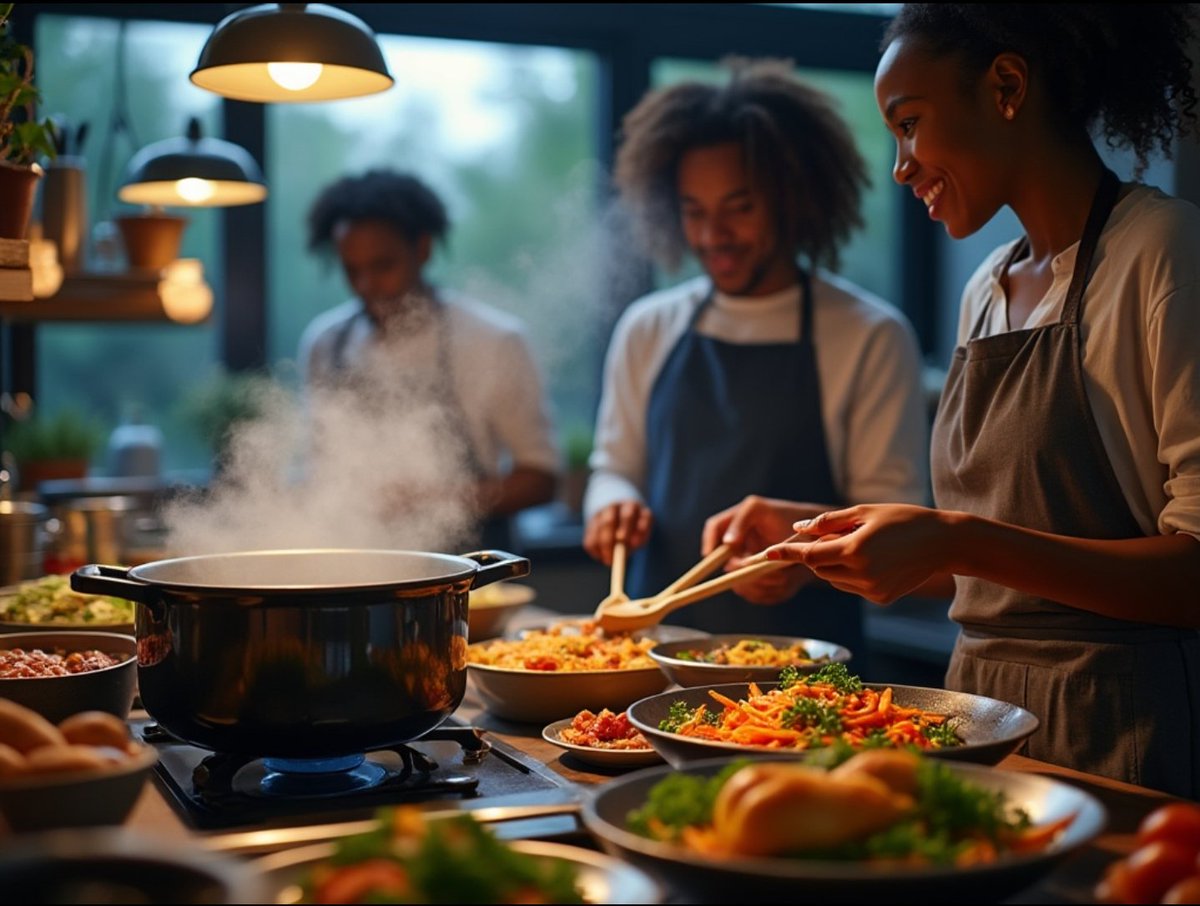
🇬🇧 🇪🇸 Cooking and Kitchen Vocabulary – Vocabulario de Cocina y Cocina
1. 🍳 Cocinar – To cook
Me encanta cocinar nuevas recetas para mi familia. (I love cooking new recipes for my family).
2. 🔪 Cortar – To cut
Necesito un cuchillo afilado para cortar las verduras. (I need a sharp knife to cut the vegetables).
3. 🥄 Añadir – To add
Recuerda añadir una pizca de sal al final. (Remember to add a pinch of salt at the end).
4. 🍝 Hervir – To boil
Primero tienes que hervir el agua antes de añadir la pasta. (First, you need to boil the water before adding the pasta).
5. 🥘 Sartén – Frying pan
Calienta la sartén antes de freír los huevos. (Heat the frying pan before frying the eggs).
Story Time – Hora de Historia
Esta noche voy a cocinar una nueva receta para la cena. Primero, necesito cortar las verduras y luego añadir algunas especias. Después, tengo que hervir el agua para la pasta mientras caliento la sartén para freír el pollo. ¡Espero que quede delicioso!
(Tonight, I’m going to cook a new recipe for dinner. First, I need to cut the vegetables and then add some spices. After that, I have to boil the water for the pasta while I heat the frying pan to fry the chicken. I hope it turns out delicious!)
¡Ahora te toca a ti! Usa una de estas palabras en una oración y compártela en los comentarios.
(Now it’s your turn! Use one of these words in a sentence and share it in the comments).
@eyurdakul No! jajaja. No sé si tomármelo como cumplido o como ofensa. Retomando mi intención, apoyar el aprendizaje de español, te recomiendo que leas toda esta interacción en voz alta🔊. Hace una gran diferencia, en lugar de leer pasivamente, leer en voz alta.😉😎
@eyurdakul Que ¿cómo está el clima? O ¿cómo está el tiempo? Depende del gusto, a algunos les parece frío, a mí me parece divino, soleado y con una brisa fría.
The seasons...in Spanish. Las temporadas...en español: El invierno, la primavera, el verano y el otoño.
Let me know 👇🗨️if you would like to hear the pronunciation or if you have questions.
Image by @grok 🤓Learn Spanish on X.
Knowing in Spanish how to ask ¿Es dulce o salado? Is it sweet or savory? With almost endless fillings available, and food slang changing by city, can save you from missing out on dessert, it has saved me! and I speak Spanish (true story) Helpful? 🤞🏼😎
#Learn#Spanish#Learnonx