The Germans made her develop photographs of her family’s murder.
She secretly kept copies.
On August 14, 1942, German forces massacred 1,850 Jews from the ghetto of Lenin, in present-day Belarus—including Faye Schulman’s parents, sisters, and younger brother.
Faye was among just 26 people spared. Her photography skills made her useful to the killers.
When ordered to develop their photographs of the massacre, she secretly made an extra set—preserving evidence of the crime.
She later escaped during a partisan raid and joined a Soviet partisan unit in the forest. With no medical experience, she became a nurse. Their doctor had been a veterinarian; their operating table was made from tree branches.
During another raid, she recovered her photographic equipment.
She developed negatives beneath blankets, printed photographs using sunlight, and buried her camera before missions to keep it safe.
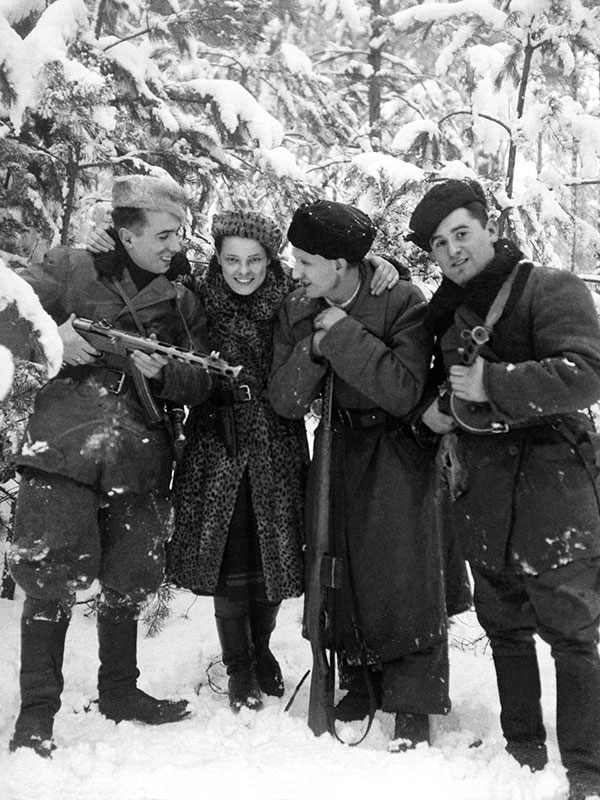
One photograph shows her smiling beside three Jewish friends. Each had believed the others dead. Amid the fighting—and antisemitism within her own unit—their reunion offered a rare moment of relief.
More than a hundred photographs preserved her world: wounded comrades, forest camps, funerals, friendship.
“I was a photographer. I have pictures. I have proof.”
Faye settled in Canada after the war. She died on April 24, 2021, aged 101. Her photographs still bear witness.
Follow @Vanguard_WW2 for more extraordinary lives behind the history of World War II.
#OTD 1717 d. #Catherine#CountessofDorchester née Sedley, daughter of rake #SirCharlesSedley & mistress of #JamesII. Suffering from mental health in 1672 her mother entered a Ghent convent & remained there till she died,1705 & still a puzzle as to who wrote her Receipt Book 1686?
Phyllis "Pippa" Latour, born in 1921, was an SOE agent in WW2, who parachuted into Normandy in 1944.
She operated as a radio operator, sending 135 coded messages, crucial for D-Day operations.
"Pippa" passed away in 2023 aged 102.
There’s an old story about Winston Churchill and his wife, Clementine, walking through the streets of London.
As they strolled, people recognized the famous prime minister, greeted him, and tried to catch his attention.
Then a street sweeper approached. But instead of speaking to Churchill, he struck up a surprisingly warm and familiar conversation with Clementine.
Curious, Churchill asked his wife who the man was.
“Oh, just an old admirer,” she replied. “Many years ago, he was deeply in love with me.”
Churchill smiled and joked:
“Imagine, my dear. If you had married him instead of me, you would be the wife of a street sweeper today.”
Clementine looked at her husband and calmly replied:
“No, Winston. If I had married him, he would be the Prime Minister today.”
Sometimes, the person standing beside a great leader deserves far more credit than history gives them.