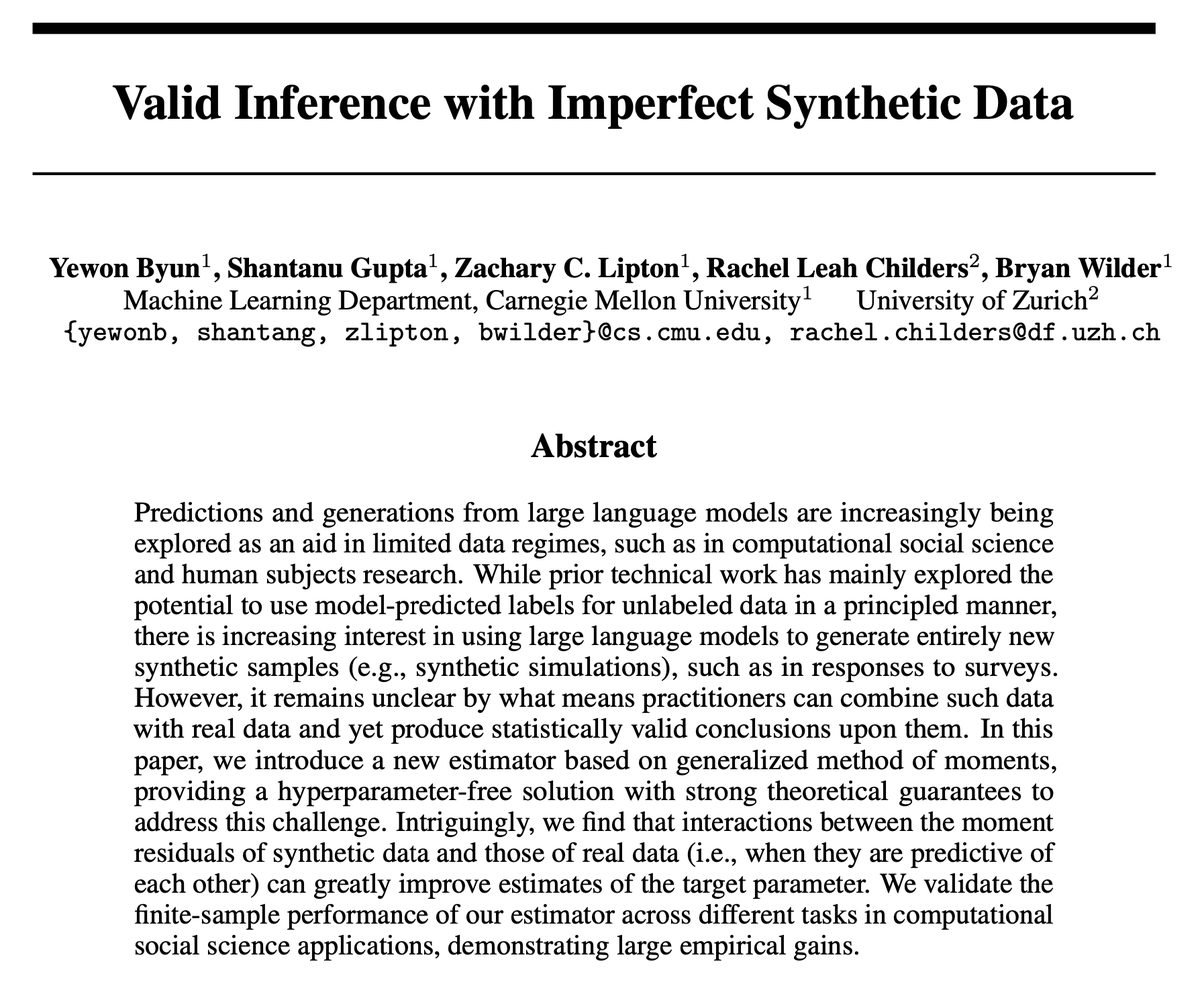
💡Can we trust synthetic data for statistical inference?
We show that synthetic data (e.g. LLM simulations) can significantly improve the performance of inference tasks. The key intuition lies in the interactions between the moments of synthetic data and those of real data
Lecturing on experimental economics this morning and a student asked: once I have collected data, what is the best way to enhance power?
My answer: use ML techniques rather than a linear regression approach to model covariates. In the attached study, we show that using ML techniques instead of linear regression adjustment can allow researchers to attain similar levels of statistical power with 4-8 percent fewer observations!
Code is available too.
https://t.co/I5gsauWeWx
We just won our Senate race! As a son of immigrants, a public school kid, I never could’ve imagined I’d get to serve as a US Senator. I’m deeply humbled and grateful to NJ and for everyone who got us here. I promise I’ll serve with honor and integrity as a public servant for all.
한 강 Han Kang – awarded the 2024 #NobelPrize in Literature – was born in 1970 in the South Korean city of Gwangju before, at the age of nine, moving with her family to Seoul. She comes from a literary background, her father being a reputed novelist. Alongside her writing, she has also devoted herself to art and music, which is reflected throughout her entire literary production.
In her oeuvre, 2024 literature laureate Han Kang confronts historical traumas and invisible sets of rules and, in each of her works, exposes the fragility of human life. She has a unique awareness of the connections between body and soul, the living and the dead, and in her poetic and experimental style has become an innovator in contemporary prose.
Learn more about this year’s #NobelPrize in Literature: https://t.co/qTBSeVQHhJ
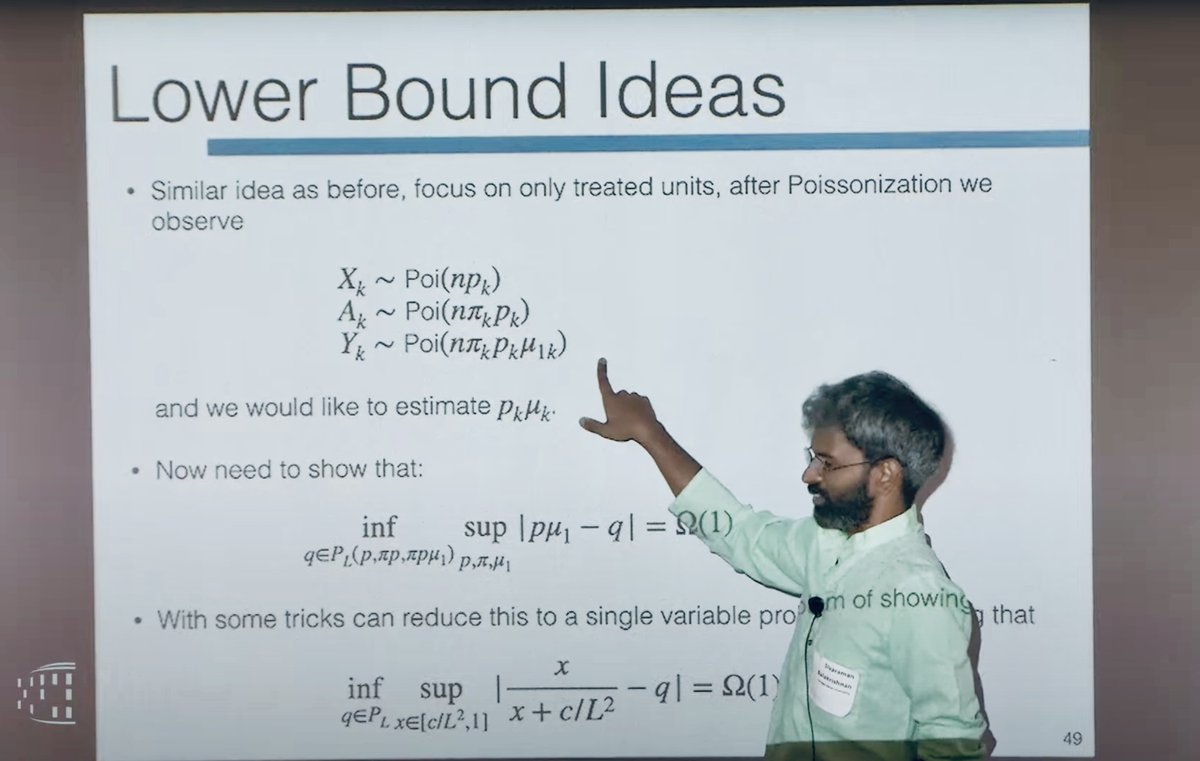
there are surprisingly many open problems when it comes to theory/methods in causal inference
check out this talk by Siva Balakrishnan for an excellent & comprehensive summary of the state of the art
https://t.co/BixhF4jImP
https://t.co/pVIslnRatf
These recent slides from Susan Athey and Guido Imbens at NBER are a great recent review of the most valuable data science methods I'm aware of. They cover tons of ground with lots of pointers.
https://t.co/BEjcLLi2vq
This paper by @ramyavinayak is one of my favorites of the past few years. Interesting & exciting problem, creative analysis, clearly written, etc etc.
https://t.co/3iEy7I6P2s
First heard about this problem from Greg Valiant, in a talk on this paper:
https://t.co/WRoflLCQOt
Looking forward to the "Design and Analysis of Networked Experiments" workshop this summer in London!
I will join to discuss experimenting on interfirm production networks.
https://t.co/P21rh8eN2E
I'm looking for two #MachineLearning#PhD students to join my lab at @UAlbany#ComputerScience starting Fall 2024!
Great team, environment, and location!
Detailed information can be found: https://t.co/TZlwI3NJEK
Please spread the word! DM me if any questions!
New post by me @OurWorldInData!
How do researchers study the prevalence of mental illnesses worldwide? What are the limitations with these estimates?
Thread.
https://t.co/U3TasgO6xy
I am truly excited to announce a new award launched in 2023 called the JASA #Reproducibility Award, which aims to recognize outstanding papers in the Journal of the American Statistical Association (JASA) in terms of computational reproducibility!
🔗 https://t.co/7YPp6BYLlK
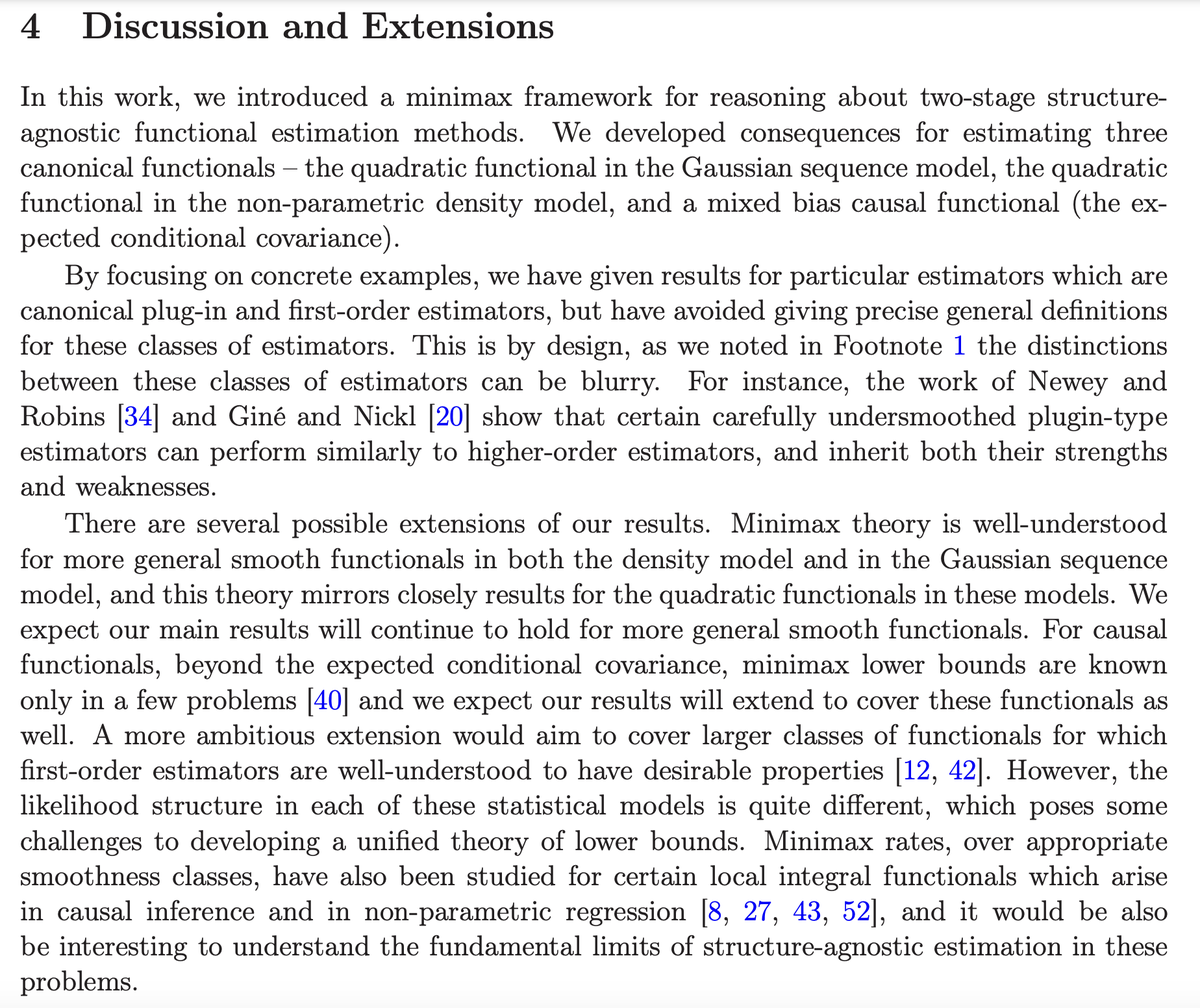
Very excited about this new paper!
We study if one can improve popular semiparametric / doubly robust / DML causal effect estimators -- without adding structural assumptions...
Short answer: nope!
Turns out these methods are minimax optimal here
Lots of Qs left to explore...