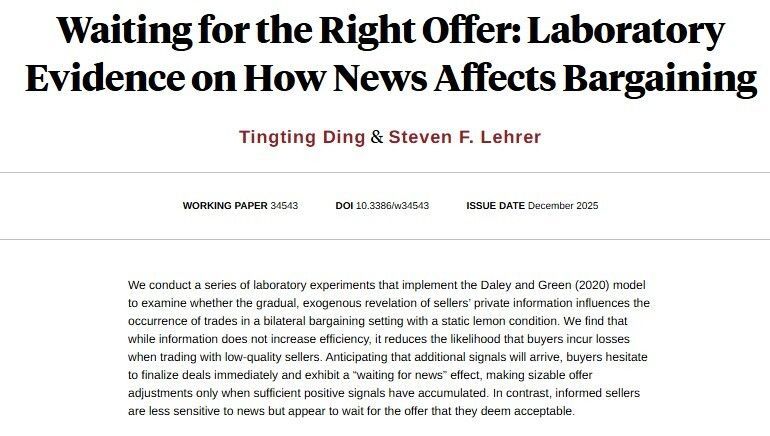
Examining whether the gradual, exogenous revelation of sellers’ private information influences the occurrence of trades in a bilateral bargaining setting with a static lemon condition, from Tingting Ding and @lehrers https://t.co/5hY8tsIKdk
We are delighted to announce that Joseph Steinberg (University of Toronto, @jbsteinberg) joined the board as a coeditor, having started on July 1. He will handle papers on a wide range of topics in macroeconomics.
We are thrilled to announce that Hanzhe Zhang (Michigan State University, @DrHanzheZhang ) has joined the board as a coeditor, having started on July 1. He will handle papers on a wide range of topics in microeconomics.
The special issue is edited by @lehrers, Morten Nielsen, and myself, with a submission deadline of December 1st. For more information, see the call for papers: https://t.co/aoeIIt8g7t 2/3
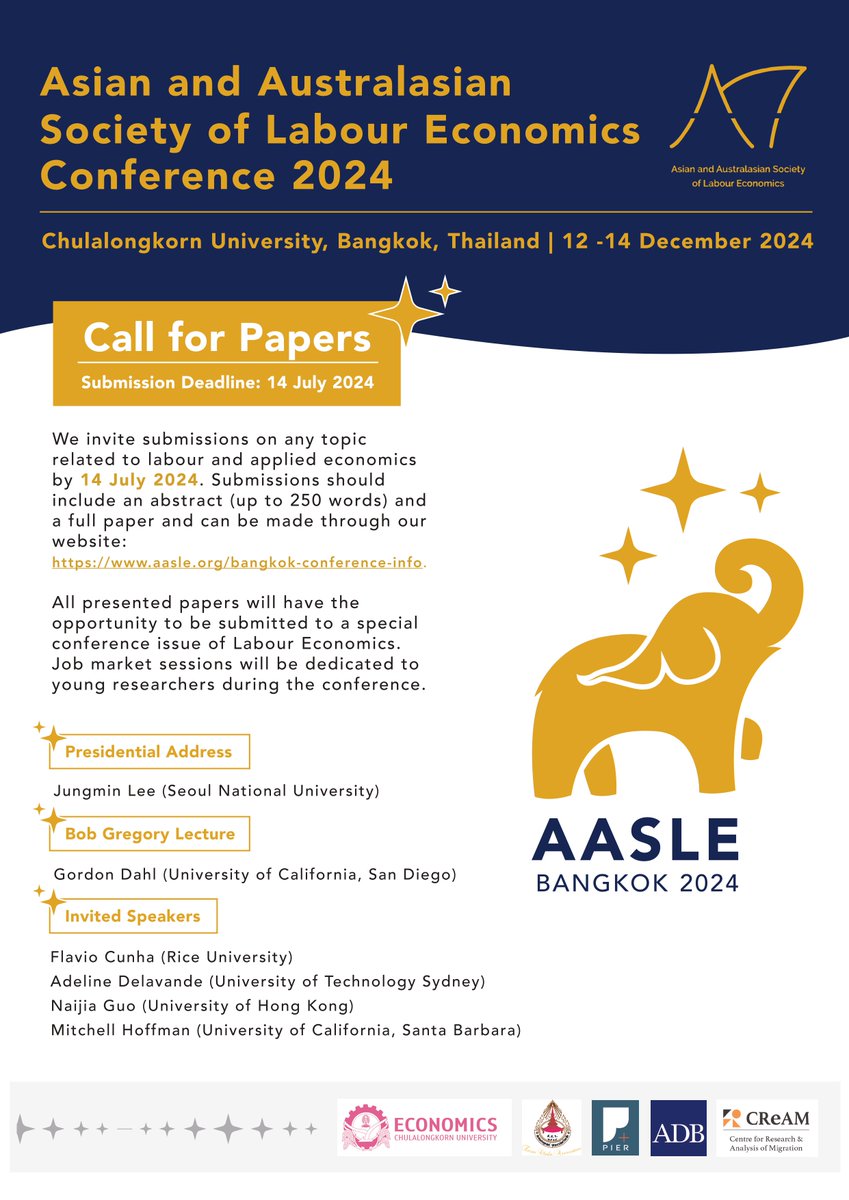
Call for Papers AASLE 2024 Conference in Bangkok, Thailand 12-14 December 2024! We invite submissions on any topic related to labour and applied economics. Paper submission deadline is 14th July 2024. More information here https://t.co/PiE6rUU5Vn #EconTwitter
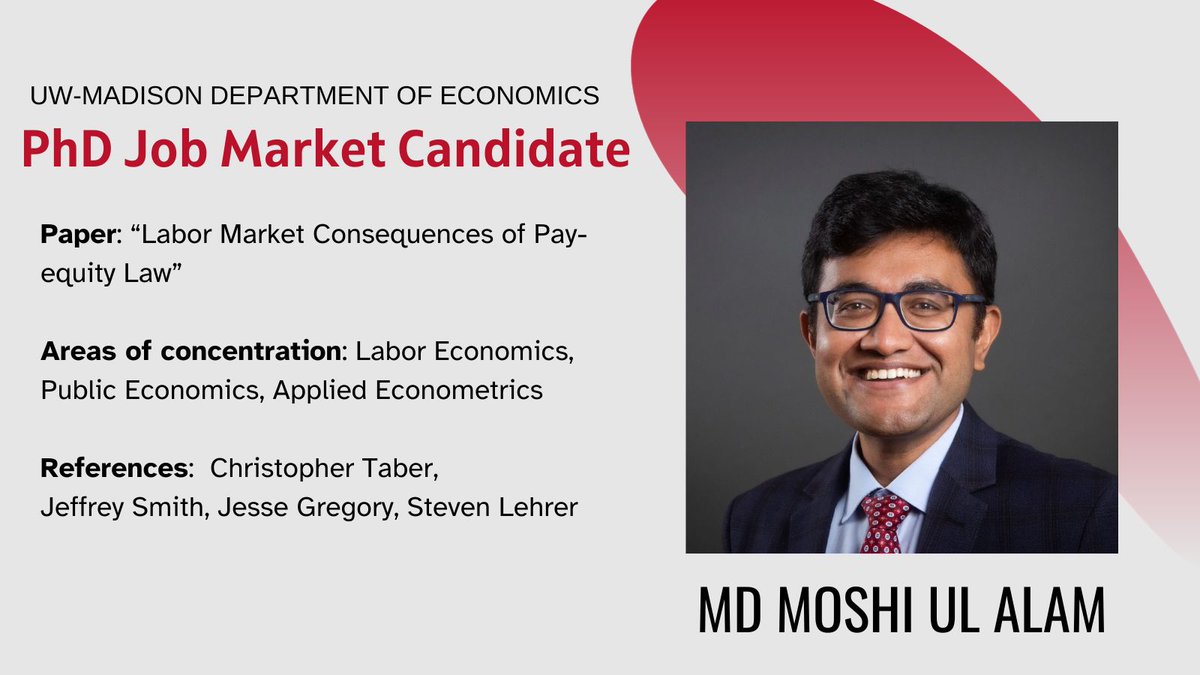
In his JMP, Moshi (@MoshiAlam) estimates the impact of a pay-equity law using linked employer-employee data in an event-study design. Leveraging key institutional details, he documents large unintended consequences. #EconJobMarket#EconTwitter https://t.co/1d4QDtiMAf
The Olympics allows everyone to feel like an economist at an economics seminar.
* never really thought of sport (topic) before ✅
* convinced of own expertise after watching for 5 minutes✅
* express strong, surely insightful opinions out loud ✅
of the eventual outcome. So sometime tough referees and exceptionally long appendices are truly appreciated.
Additional special thanks to @nielsrosenquist who introduced Tian and I to Twitter data, sentiment analysis and forecasting for the film industry.
5/5
Self-Promotion
The Bigger Picture: Combining Econometrics with Analytics Improves Forecasts of Movie Success https://t.co/fWebkwe6Dq
forthcoming in Management Science
We were motivated by trying to understand how heteroskedastic data influences machine learning algorithms.
1/5
We learnt a ton and benefitted sharply from three outstanding anonymous reviewers. While responses to many of their comments led to work now contained within a 115 page single spaced appendix to the paper, this strengthened our work. This was a net big positive irrespective
4/5
@pedrohcgs@causalinf Would this then create a link to the framework that Michael Lehner and Ruth Miquel developed that Weili Ding and I used as a base to analyze contaminated multi-period experiments a little over a decade ago?
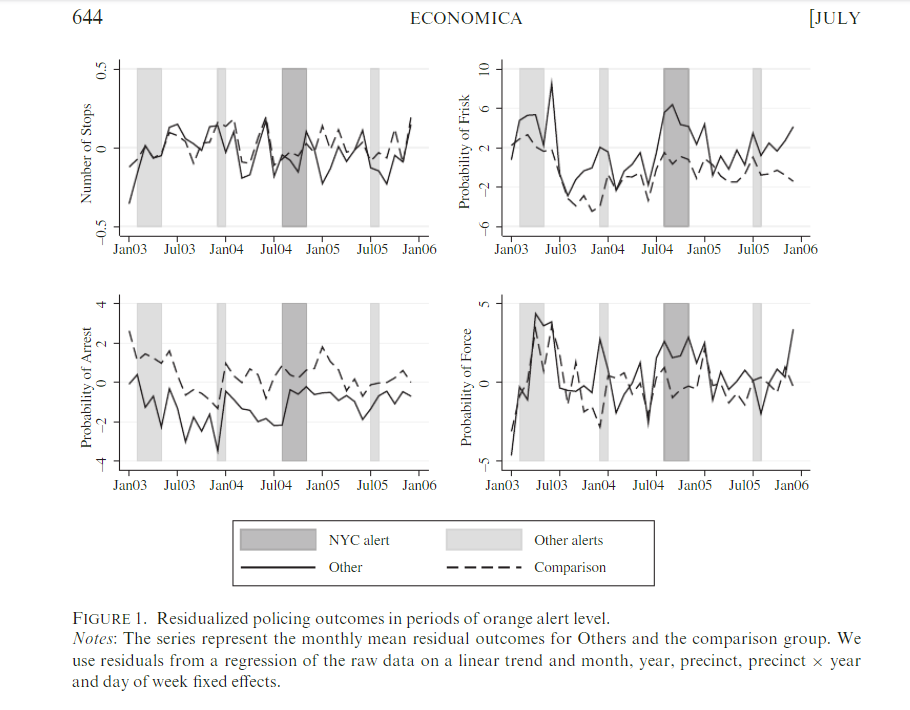
In our July 2020 issue: How Do NYPD Officers Respond to Terror Threats? by @nberpubs @QueensEconDept @lehrers and @umichECON Louis‐Pierre Lepage Read here https://t.co/EqhXZewgNd