Anthropic yet again confirmed as the most dystopian tech company out there.
Imagine the outcry if they'd done the same thing with Jews or Blacks: a piece of code that detects if a user is Jewish or Black and immediately reports him back to headquarters on that basis, covertly (they used steganography, a technique designed to make data collection invisible).
And before people start screaming fake news, an Anthropic employee confirmed it's real: https://t.co/0ifiv47J6H
It's incidentally - not that it matters - completely illegal under at least half a dozen European laws: not only is collecting ethnic and racial data forbidden (under, for instance, Europe's GDPR Article 9 and national French law) but doing so without the users' awareness or consent is itself a separate violation. And it's even worse in this case because they explicitly tried to hide this data collection with steganography.
And the immense irony, of course, is that this is precisely the kind of covert surveillance behavior the West - including Anthropic themselves - say China would do and that they want to "protect" people from...
The celebrations of Congolese refugee children in Burundi after DR Congo's historic goal against England say it all. I hope the Leopards win—for these kids. 🇨🇩🔥
History they don’t teach you: on this day in 1960, Fidel Castro nationalised Esso, Shell and Texaco in Cuba🇨🇺, breaking the United States’ draconian control of the Cuban economy.
After the Soviet Union began supplying Cuba with crude oil, Texaco, Esso, and British-Dutch Shell refused to refine Soviet oil for Cuba after pressure from the US government.
100% of Cuba’s oil refining capacity was controlled by these 3 corporations, meaning the US government and these corporations effectively held the Cuban economy at gunpoint. Fidel Castro responded to this by nationalising the assets of all 3 corporations.
Before Cuba's revolution, US financial interests owned 90% of Cuba’s mines, 80% of public utilities, 50% of railways, 40% of sugar production & 25% of bank deposits.
In the first 30 months after Fidel Castro and Cuba’s communists came to power, more classrooms were built in those 30 months than had been built in the previous 30 years. Within the first six months of Castro's government, 600 miles of road had been built across the island, while $300 million was spent on water and sanitation schemes.
Over 800 houses were constructed every month in the early years of the administration in a measure to cut homelessness, while nurseries and day-care centers were opened for children and other centers opened for the disabled and elderly.
With the arrival of the revolutionary government, Cuban healthcare was nationalised and expanded with heavy investment, bringing free healthcare access to millions.
Universal vaccination for childhood diseases was introduced, leading to infant mortality rates plummeting. Cuba's 'army of doctors' is now sent to crisis-hit countries around the world. Since 1963, more than 600,000 Cuban health workers have provided medical services in more than 160 countries.
Despite being under the illegal embargo imposed by the US, Cuba now has a higher life expectancy than the US, has more doctors per capita than the US, and is among the top 35 countries for lowest child mortality rates. Under Fidel Castro's rule, UNICEF declared severe child malnutrition to be eradicated.
Donald Trump’s looming war on Cuba is revenge for Cuban revolutionaries daring to break the US’ control of the island nation. Trump wants to return to the times when Cuba was effectively an American economic colony.
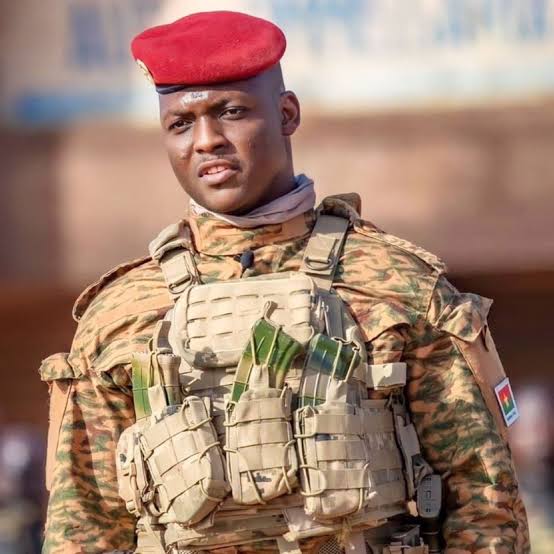
Captain Ibrahim Traoré and Burkina Faso have been dominating international headlines of late, and this intense media spotlight has deeply polarized Pan-African voices, with many self-proclaimed pure intellectuals even going as far as claiming that Traoré does not actually stand for the radical Pan-African values he was originally praised, celebrated, and idolized for.
Although, to be entirely honest, most of these criticisms of Ibrahim Traoré are somewhat justified, considering that despite his loud anti-imperialist posturing, his administration is still actively gobbling up IMF loans, structural credits, and signing public health deals with America. The newly formed Alliance of Sahelian States (AES), for example, despite their highly televised media broadcasts of severing all military ties with France, pulling out of the International Criminal Court, and dismissing that legal institution as another corrupt arm of Western imperialism, are still paradoxically using the colonial CFA Franc as their primary national currency even to this very day.
So there are obviously genuine, structural concerns about the policies of the AES which we absolutely cannot afford to lazily dismiss.
The glaring problem with the high-minded criticisms put forward against Traoré's policies is that, as theoretically impressive, logically neat, and ideologically pure as they sound on paper, they are actually completely invalid in the context of raw, pragmatic, and survival-driven Pan-Africanism.
Ibrahim Traoré is not a novice. He fully knows all of these financial dependencies, but he is forced to operate within the brutal, unforgiving realities on the ground. If Ibrahim Traoré foolishly attempted to pander to the highly emotional, armchair Pan-African voices, if he ever listens to these screaming activists who desperately want to see white men in handcuffs, foreign corporate executives behind bars, and immediate retribution for the massive historical crimes committed against Africans, if he decided to go full purist and abruptly, mindlessly sever all diplomatic, monetary, and commercial ties with France immediately since 2022 when his government first came into power via a military coup, if he rushed recklessly to abandon the CFA, his entire revolutionary government and the fragile economy of Burkina Faso would have completely collapsed overnight.
Ibrahim Traoré perfectly understands the historic assignment, but he urgently needs to be able to control the physical demolition of this colonial infrastructure, else his own people will be tragically crushed under the falling rubble if the imperial building is forcefully, mindlessly burned to the ground all at once. To this end, we can analyze Traoré's calculated tactics as a brilliant form of managed risk transition, where each separate leaf of French colonial influence is systematically, carefully plucked only after a viable, solid alternative is ready to take its place.
For example, even though Ibrahim Traoré seized power in 2022, French special forces stationed under "Operation Sabre" were still physically inside Burkina Faso up until 2023, and they only left after he had successfully, quietly negotiated robust security assistance, advanced military hardware, and tactical training with Russian special forces, specifically the Wagner Group. He deeply understood that Burkina Faso was under constant, existential siege by Western-backed insurgents, and that the French satellite telemetry, drone surveillance, and intelligence feeds used during those missions served as a temporary, critical weapon for his military that he could not afford to lose overnight.
For this exact same reason, he did not just abruptly, emotionally seize all Western corporate assets. Even though these multinational cartels had robbed Burkina Faso of its gold with absolute impunity for decades, these same Western mining cartels also paid vital taxes, generated critical foreign exchange, and provided the substantial cash flows that allowed his government to pay civil servants, public teachers, and soldiers without fail. So, he was absolutely not going to pluck out this vital economic leaf until a brand-new corporate leaf was fully grown and ready to take its place. To this end, Burkina Faso gradually, strategically rewrote its national mining codes to aggressively increase direct state control over its highly lucrative gold sector, slowly squeezing out French, Canadian, and Western mining privileges, while welcoming massive alternative investments from Russia and China, allowing the state to secure stable internal revenue streams to fund the military without causing any sudden, catastrophic freeze in national industrial output.
This is precisely why the harsh, short-sighted criticisms pelted toward Ibrahim Traoré are completely invalid, because they conveniently forget to account for the physical reality that there is absolutely no other way to handle this highly volatile, dangerous, and geopolitically booby-trapped situation in the Sahel. There absolutely must be a reliable, fully operational backup structure available before any old colonial pillar is physically dismantled. Burkina Faso is completely surrounded by hostile countries, French military bases, and puppet regimes still firmly under the choking grip of neocolonialism, and any slight tactical miscalculation will instantly kill whatever impressive, historic sovereign movement he is fighting so hard to achieve. What Captain Ibrahim Traoré urgently needs right now is absolute trust, strategic patience, and enough time to execute this dangerous transition, and certainly not a heavy, reactionary backlash from supposed enlightened Pan-African scholars simply because they see him tactically exchanging handshakes with a white man.
Trust the process.
If Black political communities had already constituted themselves as a free people exercising governmental authority on territory they claimed through emancipation and reparative justice, then the constitutional question was not "How were Black people admitted into the American polity?" but "By what authority did the United States absorb a people who had already begun exercising sovereignty?"
IBRAHIM TRAORÉ TRANSFERS EVEN MORE EQUIPMENT AND VEHICLES
Stories about Burkina Faso President Ibrahim Traoré's regular delivery of vehicles, whether construction or farming equipment, to various sectors of the Burkinabé have been widely publicised over the past couple of years. We are witnessing an African country, long exploited under French neo-colonialism, finally build up its sovereignty, increase its production, and improve its infrastructure through a collective process. Faso Mêbo (meaning 'Build the Country') has become one of the most celebrated campaigns aiming at national development. Here is solid evidence of how the state is supporting and empowering the people to literally *build* a brighter future.
Hi. As an anti-imperialist, I don’t use one’s nationality alone as a substitute for materialist analysis. Your take is no more authoritative than Doral Venezuelans who cheer U.S. bombs. If sanctions are no obstacle to disaster response, why did the U.S. Treasury have to issue a specific license authorizing some transactions related to Venezuela’s humanitarian + disaster relief efforts? Almost like sanctions severely weaken a state’s disaster response capacity😱
A Moroccan sultan recognized American independence on December 20, 1777, about six weeks before France did, and a day after Washington's starving army limped into Valley Forge.
His name was Mohammed III, and he had never set foot in America. He picked up news of the war mostly from European newspapers and the local French diplomat. He was trying to build Morocco's economy on sea trade, so he sent word to the traders and officials in his ports that ships flying the new American flag were welcome on the same terms as everyone else. That order made Morocco the first country on the planet to treat the United States as an independent country. France did not form its alliance with the Americans until February 1778.
America then sat on it for years. The news did not even reach Benjamin Franklin in Paris until the spring of 1778. The sultan offered to sign a full treaty, and Franklin let the letters sit. Mohammed III eventually asked why the Americans had never even thanked him for being the first ruler across the ocean to recognize them. Congress was broke and busy with the war, and it kept stalling.
In October 1784 the sultan decided to force the matter. Moroccan ships seized an American trading ship called the Betsey near Tangier and held its eleven-man crew. He did not touch the cargo and did not harm the sailors. He just said the ship and crew would stay in Tangier until the United States sent someone to sign a treaty.
It worked. Thomas Jefferson drafted the terms, Thomas Barclay sailed to Morocco to negotiate them, and the sultan approved the Treaty of Peace and Friendship in 1786. Morocco asked for no tribute, the yearly payment most rulers on that coast demanded to leave ships alone. John Adams and Jefferson signed it, and Congress ratified it in 1787, two months before the Constitution was signed.
That treaty is still in force today, the oldest agreement the United States has kept unbroken with any country. In 1821 a later sultan gave the United States a building in Tangier for its diplomats, and it is still the only American National Historic Landmark on foreign soil. George Washington eventually wrote to the sultan to apologize for how long the whole thing had taken.
The oldest friendship the United States has ever had began with a king it kept ignoring, and a ship he had to seize to get an answer.
BREAKING Colombian Presidential candidate Ivan Cepeda states that if de la Espriella does not renounce his U.S. citizenship & does not clarify ties with U.S. intel agencies, he will not recognize him as President & will call for peaceful civil disobedience.
US Homeland Security Secretary Markwayne Mullin after Iran’s World Cup elimination:
“I’m just glad they’re done, and they’re not coming back. I was so happy when we were able to pull their visas and said they could leave U.S. soil, and I might’ve sung a song or maybe even danced a happy dance.”
What an absolutely deranged thing to say after the U.S. rigged the World Cup against Iran by making them travel back to Mexico between every game, reducing their rest, recovery, and practice time.
This only reinforces to the world that the United States is nothing more than a cruel empire that gets off on bullying and subjugating other countries.
🇨🇻 Cape Verde, Africa's outlier in LGBTQ tolerance
The archipelago off the coast of west Africa is an island of tolerance in a continent where anti-LGBTQ laws have become increasingly repressive. Same-sex relations have been legal in Cape Verde since 2004 while they are still criminalised in roughly 30 other African countries, including nearby Senegal
I found this absolutely hilarious.
So China has this nationwide policy called "Green Channel" (“绿通”): if you transport fresh produce like fruits or veggies, you don't need to pay highway tolls.
It's real, I checked, here is a government website describing the policy: https://t.co/1ktAm1lL1c
This is meant to reduce food costs and reduce friction in food logistics. If you're a small farmer producing - say - watermelons in Xinjiang, thousands of kms from Eastern cities, highway tolls alone could cost more than the watermelons themselves are worth.
There is, however, a loophole that's going viral on Chinese social media these days 👇 It applies to pickup trucks! So if you have a pickup truck, you just need to pack the back with cheap cabbage and - voilà - free highway for you 😂
So in China these days, if you go on the highway, you're increasingly seeing more and more pickup trucks packed with fruits and veggies in the back 😅
It actually doesn't go wasted and may even work in favor of the policy. When they arrive at destination, the drivers do sell the produce so, on top of waiving highway fees, they even make a profit - basically becoming the small-scale food distributors the policy was designed to support.
The video describes a driver from Zhengzhou, Henan who reportedly bought 500 yuan of cabbage, drove toll-free to Xinjiang, sold it for 1,500, then loaded up watermelons for the return trip and sold those back in Henan. He saved 2,000 RMB in highway fees and probably got his gas paid by the food profit!
I'm myself planning to drive the whole summer touring Western China with my family in an RV: I wonder if it applies, I might try it! If you're in China and see a French guy driving a RV packed with cabbage, don't get surprised 😂