Silica gel is the most underpaid worker in your house.
It sits in a bag it never asked for, inside a box it will never see the outside of, eating moisture so your vitamins do not fuse into one solid brick.
It works for free. It works alone. It works in the dark. And the only recognition it has ever received is a label telling people not to eat it.
Think about the scale of that. Every pair of shoes, every camera lens, every bottle of medicine that arrived dry did so because something small volunteered to absorb the damage first.
We built a global supply chain on top of a substance nobody has thanked once.
I am not saying silica gel deserves a token. I am saying that if @RallyOnChain worked for objects, it would have found this one already, because the entire premise there is that value should reach whoever actually generated it.
Which household object in your place is quietly carrying more weight than it gets credit for?
@Defifundamental Great post. Small correction to my own thinking: I always assumed disputes would be rare enough to ignore. At agent volume even a tiny percentage becomes a flood no existing arbitration system could absorb.
This is insane
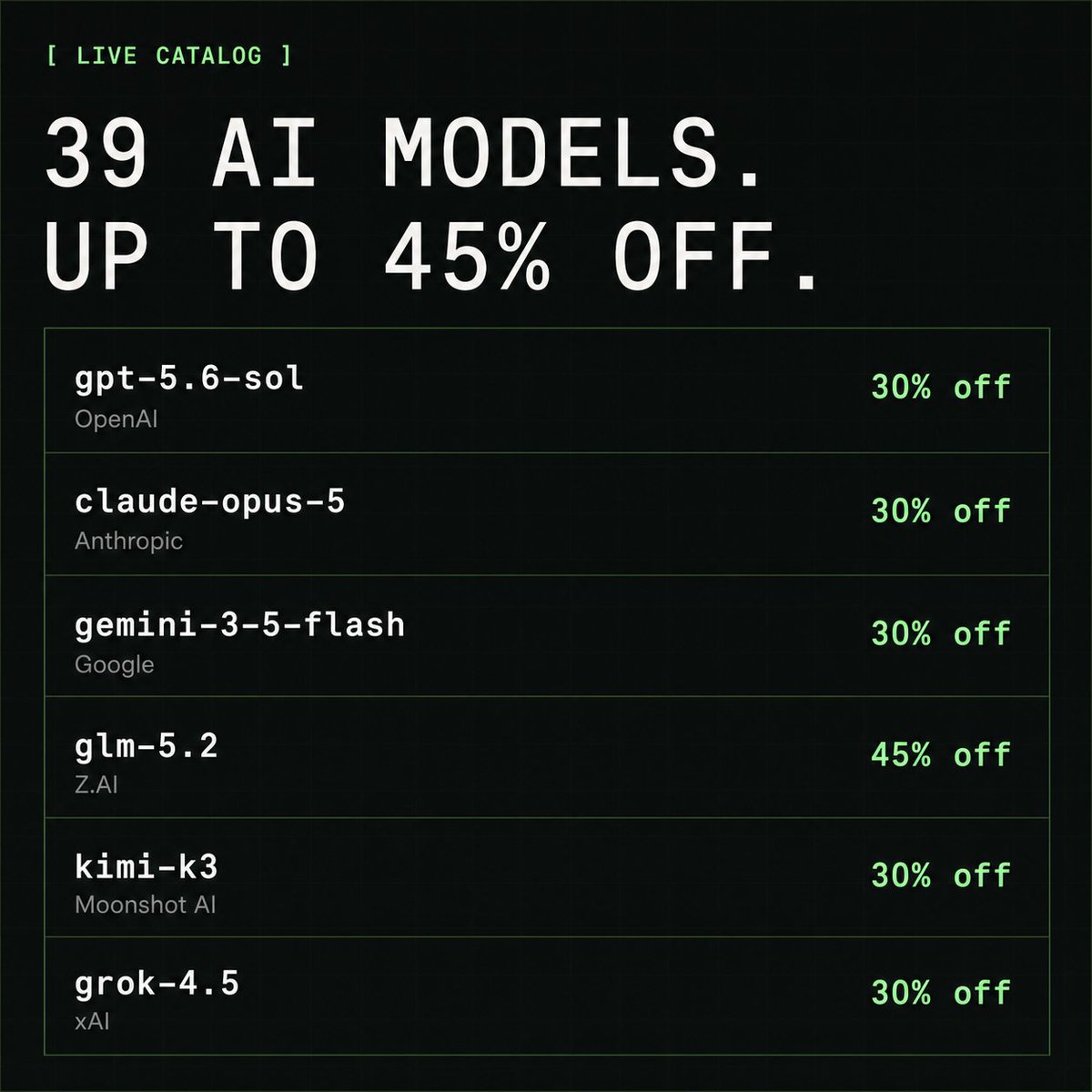
Cheaper Inference is selling API access to most major models for 30% off.
Use OpenAI, Anthropic, and Google models through a drop-in OpenAI-compatible API. No contract, no migration required.
GRVT Just Printed the Rate Perp Traders Normally Learn Too Late
Last month I held an ETH long through a weekend. Monday morning the position was still green on paper and I was down anyway. Funding had taken more than the move gave back. I was not wrong about direction. I was wrong about the rent.
No consumer lender may sell a loan without printing the rate first. Perps run on a cost you discover in arrears, every eight hours, and the industry calls that normal.
@grvt_io built the boring fix, and it is the part of today nobody will screenshot.
Stable Funding Perps publish the rate before you open, with a cap, targeting roughly 4% to high single digits annualized. Funding settles once a day instead of every few hours, and starts at zero when the book is balanced, so only the crowded side pays for being crowded.
Underneath sits one balance, earning yield while it backs margin across crypto, equities and commodities.
$GRVT is live today across Coinbase, Binance Alpha, Bybit and more, on $400B+ in cumulative volume and 100,000+ wallets.
The listings are the least important thing that shipped today.
What did holding cost take from your last winning trade?
Trade where the rate is on the page first: https://t.co/OVecaQmBtd
StripChain Says Most Token Floors Are Imaginary
Bitcoin has a cost of production. Below a certain price, mining stops making sense and supply responds.
Almost no other token has anything like that. There is no number below which anything happens. The floor is a story holders tell each other until they stop telling it.
That gap is the actual @Stripchain thesis, and it is a sharper question than most launches bother to ask.
Their answer is the ITTC sale plus an affiliated exchange they say enforces a cost-of-participation boundary. Their words, patent pending, and untested until $STRIP trades. I am watching it as a thesis, not banking on it as a guarantee.
Checkable today: the sale is live, 30 stages on a bonding curve so price rises as stages advance, ETH mainnet only, 250 to 10,000 per wallet, no vesting.
https://t.co/O3uYk66ix9
Does a token need a production cost to have a real floor, or is that just Bitcoin nostalgia?
@Defifundamental The contrast between selling the close and building for the sideways moment is the whole thing for me. Closing is easy to demo. Resolving a genuine disagreement fairly is hard and unsexy, and that is precisely why it is the part worth funding.
The Tokenized Asset I Owned That Could Not Go Anywhere
Two years ago I held a position in something a team proudly called "tokenized." The wrapper was beautiful.
The problem showed up the day I wanted it to do something. There was nowhere for it to settle. No regulated rail underneath, no counterparty who could accept it as real money.
I owned a screenshot of an asset. The asset itself was stuck.
Here is the part almost nobody explains. Settlement is not moving a token from A to B. It is the moment a regulated institution agrees the transfer is final and something they can put on their books.
A generic chain cannot give them that. A settlement layer built for compliance can, and that is what turns a wrapper into money an institution will actually fund.
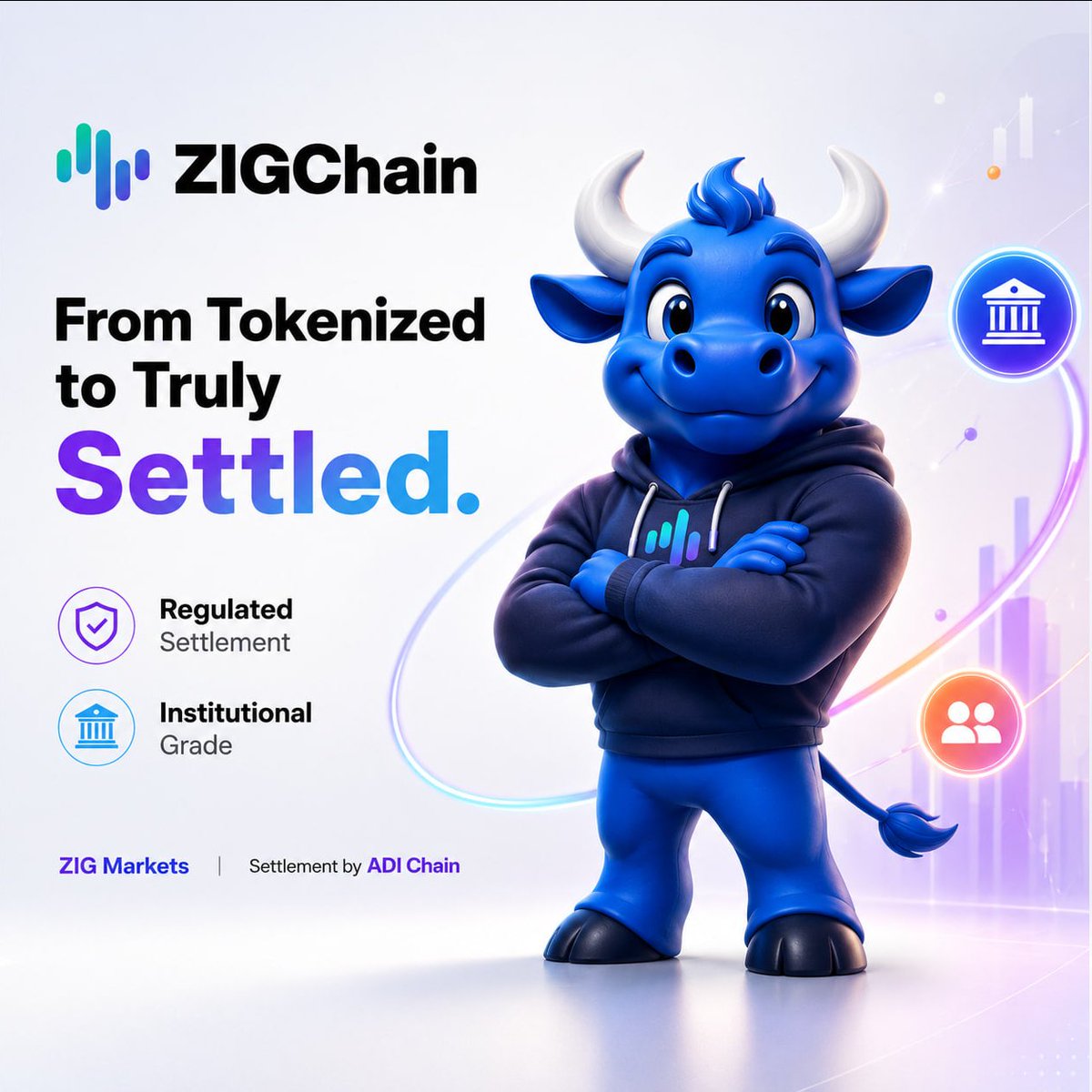
That is the split. ZIG Markets originates and distributes the instruments. @ADIChain_ settles them inside the IHC ecosystem, so what ships is capital that moves into receivables and SME credit instead of sitting still for a yield screenshot.
And there is a third piece. Once an asset can settle and fund, the door opens to people who were never on the guest list. The saver locked out of private credit. The small business that never qualified for working capital.
The applause goes to the wrapper. The moat is the part an institution will sign off on, and the part that finally lets the rest of us in.
Show me one "tokenized" asset in your wallet that can settle and fund something today, not just sit there looking finished.
Everyone Is Praising the Wrong Part of This Design
The randomness is not the innovation. The appeal is.
Every other system in crypto assumes it will get the answer right. Being wrong is an edge case you patch later.
@GenLayer starts from the opposite assumption. It is built as if the first verdict will be wrong.
That is why nobody knows the validator set until the dispute exists. Nobody to lobby, no single mind to exploit.
That is why each validator re-derives the case alone instead of rubber-stamping the leader.
They do not check whether their answers match word for word. They check whether they mean the same thing.
That is why an appeal summons a larger set of validators instead of a higher authority. A bad verdict gets buried under scrutiny.
And every vote has real value staked behind it. Honesty pays. Manipulation gets expensive.
That is Optimistic Democracy. Fast, because most verdicts hold on the first round. Fair, because fairness is never handed to a single mind.
None of that is how you build a system you expect to be right. It is how you build one that survives being wrong.
Watch the video again and count how many parts exist only because the design expects to fail.
Which would you put your money behind: an AI that is usually right, or a system that assumes it is wrong and still lands fair?
@Defifundamental The line about a decade of selling instant finality really reframed it for me. We assumed faster was always better. This thread makes a strong case that for agent judgment calls, reversibility and reasoning beat raw settlement speed.
@Defifundamental Honestly the "wall with a login screen" line is going to stick with me. That's every automated support experience I've ever had compressed into one sentence.
"Show up now and you help write the standard, not inherit it." That is the timing argument done right. Early networks are where the definitions get set, and on an adjudication layer the definitions are the whole product.
Everyone Treats the Community Path as the Consolation Prize. On an Adjudication Layer, It Is the Opposite.
Years ago I brought a non-technical contribution to a crypto project and got the polite version of "that's cute, the real work is the code." I believed it too long.
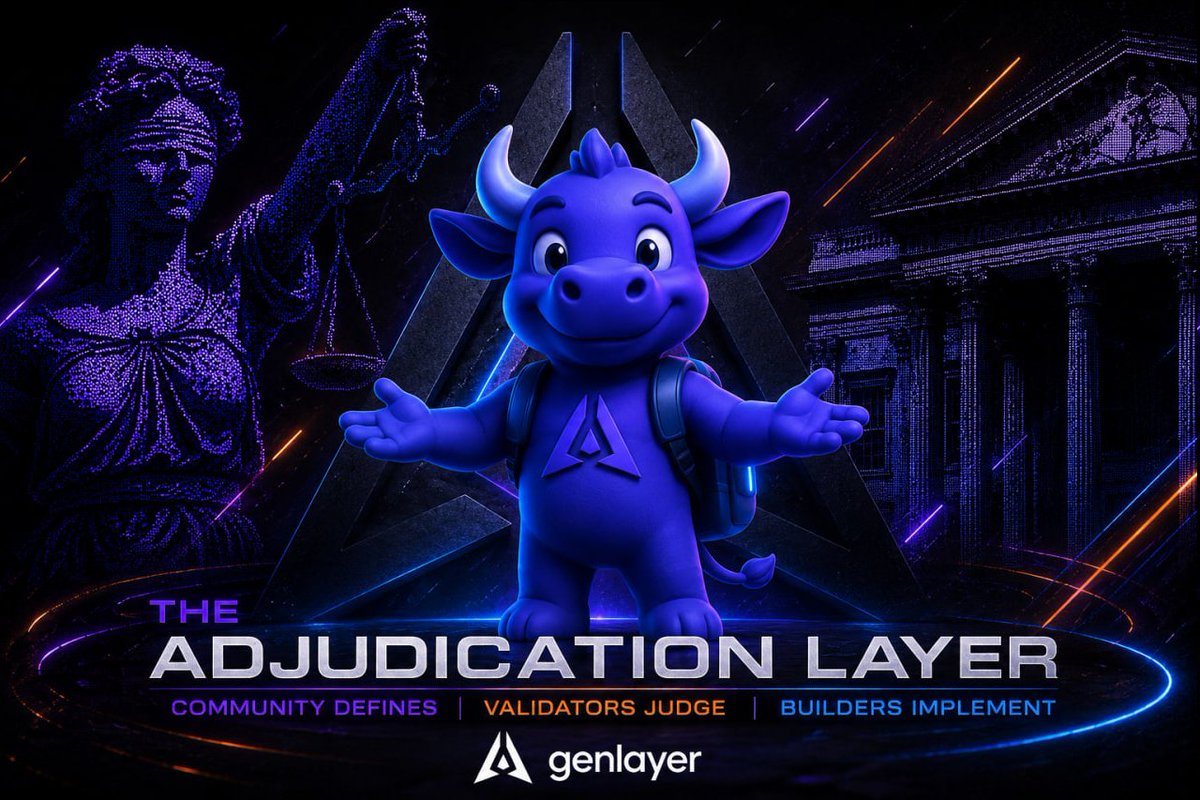
Here is what changed my mind about @GenLayer. Its whole job is to judge what is fair when agents disagree.
And "fair" cannot be written in code from scratch. Someone has to define what fair even means first.
That is not the builder's job, and not the validator's either. Validators apply judgment. Builders encode it.
But the standard they apply has to come from somewhere human. That somewhere is the community.
So "you do not need code to matter here" is not a soft landing. It is literal.
The hardest input in the whole stack is judgment about ambiguity, and that starts with people, not contracts.
All three paths earn GenLayer Points as the network grows. Builders ship Intelligent Contracts. Validators reach verdicts through Optimistic Democracy. Community defines the fairness the other two operate on.
The network is early, which is when the definitions get set. Show up now and you help write the standard, not inherit it.
If you have ever argued about what is fair and been right, this is your path.
Start here: https://t.co/KvODZsb3RZ
Which path feels like yours, and what makes you sure?
@Defifundamental What lands is that appeal is built in. The first read of "one use" might be wrong, and being able to rotate the validator set and expand it until it settles means the interpretation is not frozen on a single pass. That is how you handle a genuinely ambiguous word.
The Last NFT Cycle Turned Owning Into a Full Time Job of Watching.
I had a collection I checked eleven times a day. Not because it did anything.
I looked because the floor might move, and refreshing was the only way to know.
That was the real product. Not the art, not the utility. A refresh button and a knot in your stomach.
Nobody says it out loud, but for most holders the only feature an NFT ever shipped was anxiety.
You did not own the thing. You monitored it.
Mint prices got the blame. Floor obsession got the blame. The deeper rot was that the asset gave you nothing to do but stare and hope.
That is why the reset at @RallyOnChain lands for me. Wingston is a free mint, so wallet size stops deciding who gets in.
But the part that matters is what happens after you hold it.
It works while you are not looking. Stake it and it earns RLPs on its own. Hold it and a token gated community keeps running.
Your Rally Score climbs whether or not you refresh anything.
That is the whole difference. The old model needed your attention to feel valuable. This one produces value while you ignore it.
Owning should mean you get to stop watching.
What is one thing you supposedly owned that actually just owned your attention?
@Defifundamental@GenLayer The scantron comparison unlocked it for me in a way the usual dispute examples never did. I spent years building automated checks at work that broke the instant a question needed interpretation. A grader for the no-key questions is exactly the missing tool.
RWA Global Inc Enters Agreement to Advise Golden Dolphin Trading L.L.C. on US$300 Million Tokenization of PRC New-Energy Mobility Real-World Assets
APNews:
https://t.co/lS3dMe46uW
Business Insider:
https://t.co/t7zCrU5CDh
Benzinga:
https://t.co/0Xv7CukLRx
Street Insider:
https://t.co/ukt5poWhnH
Globenewswire:
https://t.co/hrlMu61FjN
"A scarce thing money cannot buy is a different kind of scarce." Frame that. It is the cleanest articulation of why this mint is not just another drop.
3,000 Wingstons Exist. Not One Can Be Bought. July 7 Proves a Point.
NFT scarcity was always a lie we agreed to believe. A founder picks a number, calls it rare, and the price does the rest.
The 3,000 was never the point. The price was.
Wingston keeps the scarcity and removes the price. Free mint on Ethereum, 3,000 supply, July 7. No money moves you up the list.
So what does 3,000 mean here? Not a marketing cap. It is the number of people who did the work.
You earn the whitelist by joining Rally campaigns and ranking top 425, not by being early with a wallet.
That changes what rarity even is. The old way, rare meant whoever paid the most. Here, it means whoever showed up the most.
This is why July 7 matters beyond one collection. It tests whether scarcity can measure contribution instead of capital.
If 3,000 spots earned by participation hold their meaning, every project watching learns you can make something rare without auctioning it to the richest.
And it is not a trophy. Stake it on @RallyOnChain for daily RLPs and the rarity plugs into a working protocol instead of a floor price.
A scarce thing money cannot buy is a different kind of scarce.
Join 3 Rally campaigns and rank top 425 to earn your spot. Start on the Rally app before July 7.
What NFT did you own where the rarity meant nothing the moment the hype left?
The Mint Sold Out in Nine Minutes. The Discord Died in Nine Days.
I have watched this sequence too many times to call it bad luck.
A project mints out. Everyone celebrates. The "gm" channel burns hot for a week.
Then the introductions stop. Nobody new arrives, because the only way in now costs more than the art is worth.
Here is what nobody admits. The mint price was never the problem. What it bought was.
It bought you a place in line, not a place in the building. You paid to hold and hope someone paid more later. Nobody ever asked you to contribute.
A community that requires zero contribution is not a community. It is a cap table with a Discord.
That is why the Wingston collection from @RallyOnChain reads differently. It is a free mint, so entry stops sorting people by wallet size. You earn the spot by joining campaigns and ranking on the leaderboard, so holders showed up before they ever held anything.
And it works the day you mint. Stake it for daily RLPs, enter token gated campaigns, boost your Rally Score. Utility that exists, not utility that is "coming."
The healthiest thing a mint can do is make you prove you will show up before it lets you in.
What project felt alive at mint and was a ghost town a month later?
@Defifundamental What clicks for me is that decentralized adjudication is not about removing AI from judging, it is about removing the single point of control. Several models agreeing is closer to a panel than a gatekeeper, and that is a genuinely different model for creator work.
HORSEPOWER AI Cinema Awards: Now Open for Entries! 🎬
Calling all AI creators worldwide! Ready to redefine cinematic storytelling?
Submit your work today and unlock incredible rewards:
1. Massive Credits & Cash Prizes
2. Global Distribution & Exposure
3. Exclusive Commercial Deals & Film Co-creation
Open Call: June 22 – August 20, 2026 (BJT, UTC+8)
Submit on happyhorse website
Concept Video by: @hq4ai, generated with the all-new HappyHorse 1.1 model.