me: "i visited stanford today. it was beautiful"
@devonzuegel: "it's because they don't have cars"
me: "sf has beautiful parks too, but"
devon: "cars"
me: "something about the campus just felt… human-sized"
devon: "they don't have cars"
me: "even though it has taller buildings than sf. isn't that interesting?"
devon: "ca-"
me: "i guess you can't explain these things"
devon: ...
me: "a mystery…"
This is absolutely shameful. Agents of a federal agency unnecessarily escalating, and then executing a defenseless citizen whose offense appears to be using his cell phone camera. Every person regardless of political affiliation should be denouncing this.
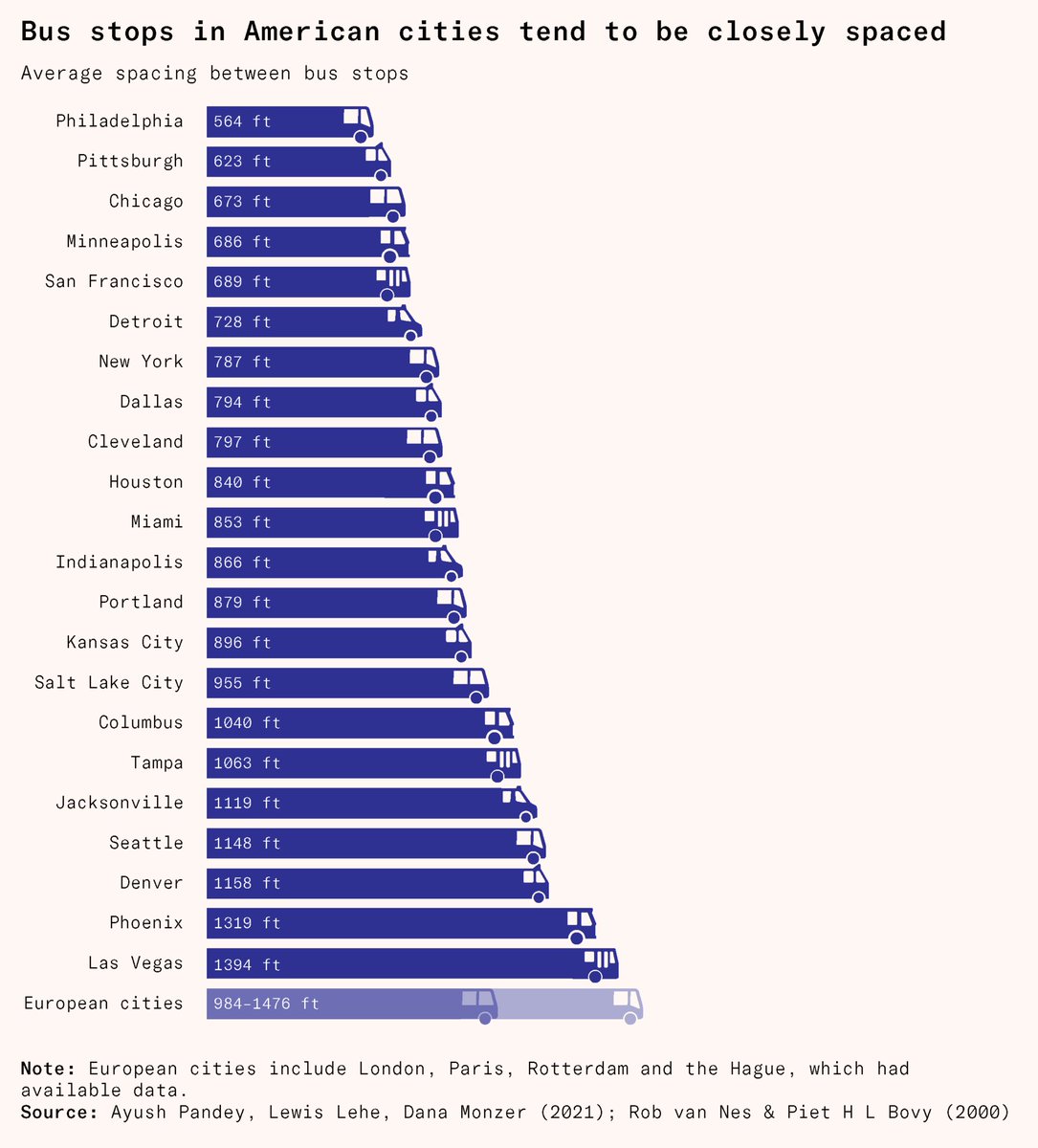
America has too many bus stops. Removing excess bus stops speeds up bus services, makes them more reliable, and reduces transit costs, all of which boosts ridership.
For example: San Francisco has an average of eight stops per mile, whereas European cities tend to have only four stops per mile. Moving to a European model only adds 1–3 mins of extra walking to get to a stop.
Portland saw a six percent increase in bus speeds from a project which increased average stop spacing by just 90 feet. SF boosted ridership by 14% by removing some stops. Other cities have used limited stop services to boost ridership by 25–33%!
New at Works in Progress, @nithin_vejendla on a rare example of a transit reform that is at once fast, cheap, and effective.
https://t.co/JH8A47xdqo
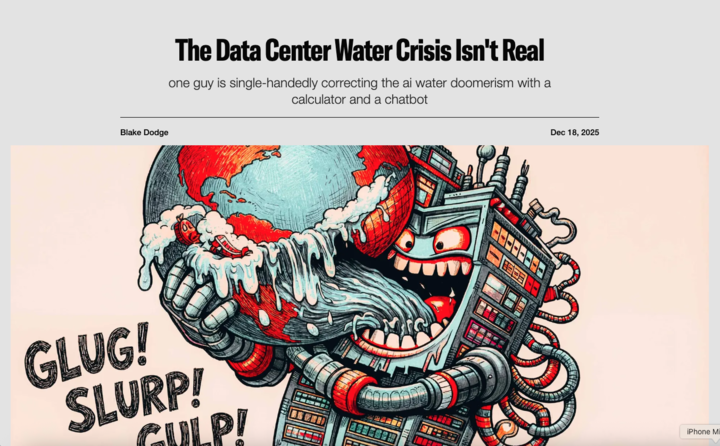
Data centers are not really causing water problems.
You shouldn't put one just anywhere. But even if they triple by 2030, they’d require just 8% of the water consumed by US golf courses, as I reported for @PirateWires based on @AndyMasley's work.
Stop the AI water doomerism.
I have not really seen *anybody* cogently respond to the primary thesis of Abundance.
It's essentially this: in the 1970s, a large number of policies/practices were implemented that stymied state capacity, growth, and innovation. These were:
1. Procedural environmental laws, where *anyone* can sue to stop a project. This is not how Europe (mostly) does it. Their environmental laws are enforced *by the government,* not private citizens.
2. Contracting requirements. Preferential treatment given to small businesses, or minority or veteran owned firms, etc. These deprive projects of economies of scale.
3. Outsourcing of state functions to non-profits and consultants instead of gov employees. These actors are middlemen and have misaligned incentives.
4. Zoning changes, often driven by racial resentment, stunted housing development.
5. Occupational licensing and overly-stringent healthcare regulations, often driven by rent-seeking, have vastly inflated costs in many key industries.
It does not advocate for slashing labour protections, or deregulating Wall Street. It does not advocate for slashing welfare. It is a book about how to make the government work better *to deliver progressive goals*
Americans have been negatively polarised into thinking Putin isn't that bad--he's just a guy standing up for his country.
They're wrong. He's as bad as it gets. In 50 yrs his name will heard like Stalin's is today. Westerners who carry water for him will be permanently stained.
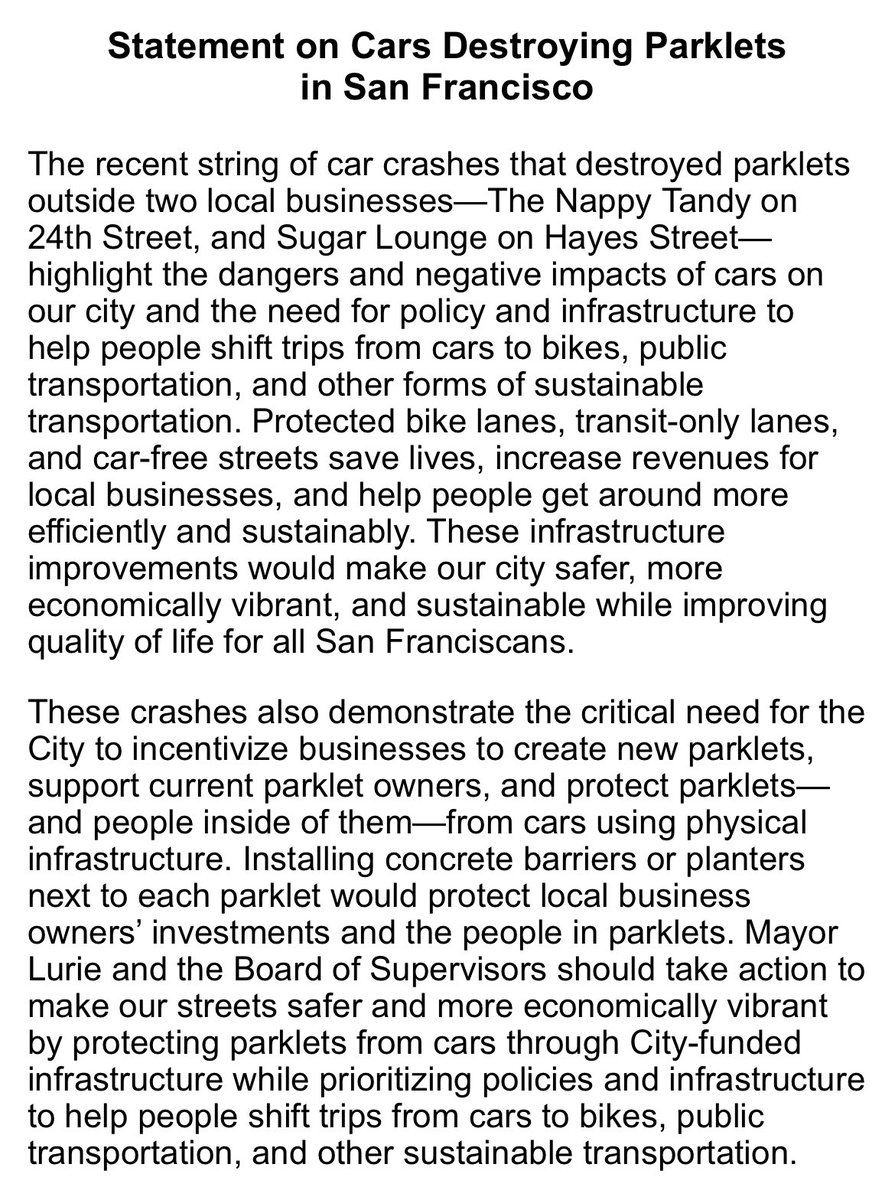
The recent car crashes that destroyed two businesses’ parklets highlight the negative impacts of cars on our city and the need for policy and infrastructure to help people shift trips from cars to bikes and public transit as well as physical infrastructure to protect parklets.
“Why do you need wide streets Mr. Fireman?”
“To accommodate huge fire trucks.”
“Why do you need huge fire trucks?”
“For emergencies.”
“What kind of emergencies?”
“Car crashes, mostly.”
“Why are there so many car crashes?”
“Because of wide streets we need for our trucks.”
SFMTA’s plan to not expand parking meter hours in the evening and on Sundays is disastrous and inequitable, and runs counter to the goals and policies SFMTA and the City claim to prioritize. SFMTA must expand parking meter hours to fund Muni and other transportation improvements.