Japan is one of the safest, most harmonious countries on Earth.
Almost nobody talks about it, but something deeply troubling is quietly unfolding in 2026.
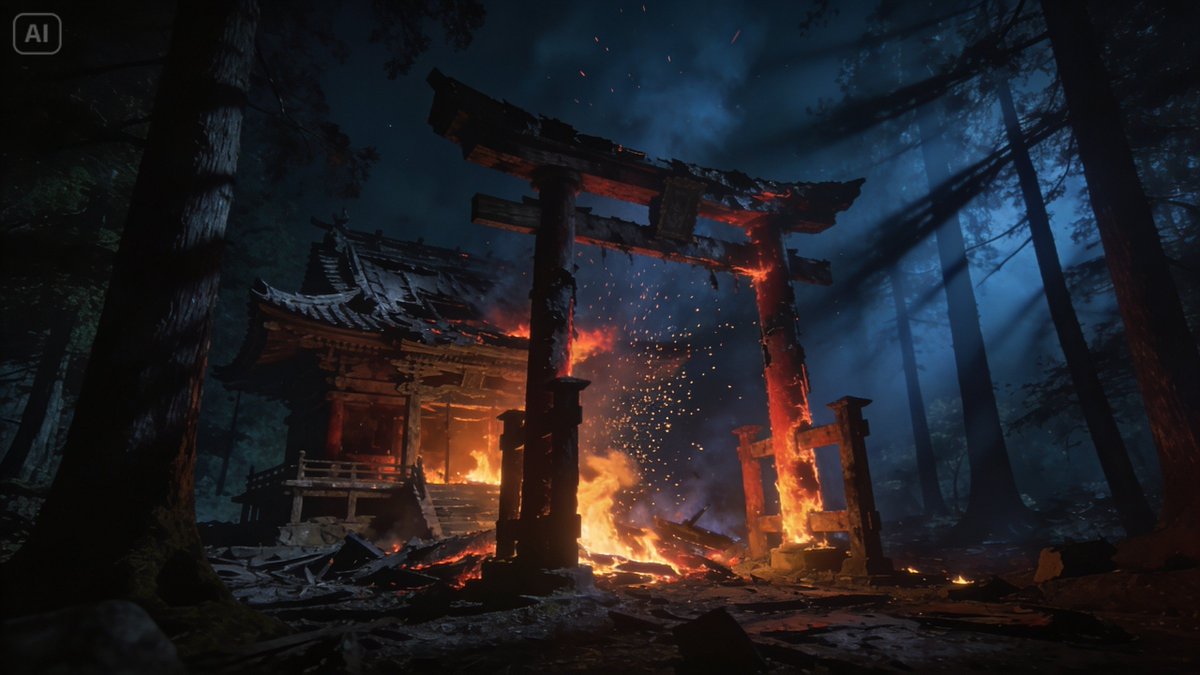
In just the first five months of this year, at least seven Japanese shrines and temples have burned:
- January 15: Sue Shrine, Fukuoka
- February 7: Horenji, Ehime
- February 13: Hottoji, Ehime
- February 20: Shorinji, Yamaguchi
- April 24: Renshoji, Toyama
- April 27: Uruwashitsune Shrine, Mie
- May 6: Furumachi Atago Shrine, Niigata
This is not normal.
Japan has rarely seen such a sudden cluster of fires at sacred cultural sites.
At the same time, reports of pig farm fires have also increased sharply — places that would be offensive to certain religious beliefs.
In Europe, we have already watched centuries-old churches burn under similar mysterious circumstances after large-scale immigration.
Now the same pattern appears to be starting here.
Japan has welcomed people from many countries with open arms.
But when cultural and religious differences lead to repeated attacks on the very symbols of Japan’s ancient spirit — shrines that have stood for over 1,300 years — it raises a serious and painful question:
At what point does “tolerance” begin to destroy the peaceful, orderly Japan we have spent centuries protecting?
We love sharing our beautiful country with the world.
But we also have a responsibility to protect the shrines, temples, and harmonious way of life that define who we are.
What do you think is the line that should never be crossed?