"Significantly better than any medication ever tested to treat cocaine use disorder."
Those are Stephen Ross's words, after reading the JAMA paper that was just published from Peter Hendricks' lab at the University of Alabama.
40 people, only 1 dose of psilocybin & 6 months later, 30% of the psilocybin group were fully abstinent.
The placebo group? Zero.
That's a real claim, and worth sitting with. Pharma has thrown billions at cocaine addiction for forty years and produced no approved treatment. Cocaine use keeps climbing.
But the most important thing about this trial isn't the headline number.
It's who Hendricks studied.
More than 80% of participants were Black. 65% earned less than $20,000 a year. Most had endured the kind of life history that almost never shows up in psychedelic research: trauma, incarceration, homelessness, long stretches of dependence.
That is not the standard psychedelic trial sample.
By Hendricks' own review, 93% of US psychedelic trial participants to date have been college-educated, with incomes well above the national median.
Psychedelic research has lived inside what methodologists call WEIRD samples — Western, Educated, Industrialized, Rich, Democratic — which in psychedelic-world specifically has meant a lot of folks from the coasts who have largely privileged backgrounds.
Cocaine use disorder doesn't concentrate there. It concentrates exactly where Hendricks went looking. That is the only reason these findings mean what they mean.
Most importantly, this isn't an ethics victory lap, but a scientific one. Extractive research produces fragile findings. You don't actually know whether a treatment works until you've tested it on the people it's meant for. Hendricks spent ten years building real relationships with that community. The data is what you get when you do that work.
The most interesting part of this research is Hendricks's reading of the data.
He doesn't talk about the drug doing the work. He talks about psychological flexibility & the resolution of ambivalence, an Ebenezer Scrooge-like clarity where people decide, once and for all, that enough is enough.
That isn't medication acting on a passive patient. It's a tool occasioning a decision.
A frame we keep returning to our coaching institute: psilocybin isn't a pill that fixes you, it's a window of plasticity that lets you see clearly and choose differently.
It will still be a long road from this forty-person trial to approved treatment.
But ten years of patient, principled work just produced one of the most important findings in modern addiction research, in the population that needs it most.
I am still trapped on the same SSRI I was prescribed at 7 years old because every attempt to come off has resulted in severe, debilitating withdrawal....
At 23 years old, I decided I wanted to come off antidepressants. Despite having been on them virtually my entire life — throughout my childhood and brain development — my doctor tapered me off in just 6 weeks, following the same outdated and dangerous guidance many doctors still use today.
What followed was a severe full-body neurological crisis: nonstop physical, cognitive and psychological suffering unlike anything I knew a human being could endure.
When I went back to my doctor and told him I was in withdrawal, I was told antidepressant withdrawal “doesn’t exist,” that symptoms of “discontinuation syndrome” are “mild and only last two weeks,” and that what I was experiencing was proof I needed the drugs
After months of torturous suffering and countless emergency room visits, I had no choice but to reinstate the antidepressant. But even after reinstating, the neurological damage from the rapid, doctor-directed taper did not go away.
That is why the term “withdrawal” is often deeply misleading. For many people, coming off antidepressants can trigger a devastating neurological injury that persists for years.
I still do not feel normal. I am intermittently bedridden, and even as I type this, my brain feels like it is on fire.
I genuinely do not remember what happiness, love, or emotional connection are supposed to feel like anymore. So much of my cognition, personality, creativity, and ability to access my mind the way I once could feels altered or gone. Some days the suffering becomes so overwhelming that I genuinely do not know how much longer I can continue living in this condition.
Today, at 30 years old, I am still on the same medication I was prescribed as a child. I desperately want to come off, but every attempt has caused severe, debilitating withdrawal that has made it physically impossible.
#MentalHealthMonth #NobodyToldMe #medicationinjury #HHS #HealingJourney #overmedicalization #SSRI
@teleamazonasec Noticia que tiene diferentes matices. Por un lado legitimiza el uso terapéutico de los psicodélicos pero a la vez abre la puerta solo a las farmacéuticas con compuestos sintetizados y las plantas que se vienen usando por miles de años quedan fuera de la jugada.
Your brain has a circuit that doesn't know you live in a city. Its only job is to monitor whether birds are still singing. Right now, in this room, it is on.
The circuit predates primates. Mammals have been using ambient soundscape continuity as a predator-detection system for roughly 200 million years. Birds stop singing when something larger moves through their territory. For most of mammalian history, a forest full of song meant no large predator was nearby, and the cessation of sound was the warning. Your nervous system never updated this software.
The Max Planck Institute tested the inverse in 2022 with 295 participants. Six minutes of birdsong dropped anxiety with a medium effect size. Six minutes of traffic noise raised depression with the same. The effect worked on subjects who lived in dense urban environments and had no regular contact with nature. The brain still ran the check.
Birdsong sits in the 1,000 to 8,000 Hz range. Your brainstem reads continuous patterns in that band as a signal that nothing dangerous is currently moving through the environment. EEG data shows birdsong at 45 to 50 decibels boosts alpha wave activity by 14.1% relative to silence. Alpha is the brainwave signature of relaxed alertness. Push the same birdsong above 60 decibels and the response flips. Stress markers rise 29%. The circuit only trusts the signal at the volume of quiet conversation, which is exactly the volume birds sing at from a typical distance.
Three things happen simultaneously when the brain registers ambient safety. The amygdala downregulates. The parasympathetic nervous system takes over from the sympathetic. Heart rate variability rises, cortisol drops. The posterior cingulate cortex, which sits at the center of the rumination circuit, quiets down. King's College London tracked this through a smartphone study with over 1,200 participants and found the mood lift lasted hours after the sound stopped. People diagnosed with depression got the same response as healthy controls.
Most of what gets labeled mental fatigue is hypervigilance running in the background. Birdsong tells the circuit it can stand down, and the brain reallocates the freed compute everywhere else.
A quiet park feels different from a quiet office because the parks have sentinels.
🚨 WOW! Joe Rogan reveals President Trump IMMEDIATELY offered him FDA approval for a psychedelic treatment in a text chain
Because the data was SO CONVINCING and STUNNING
"I wanna tell everybody how this happened. I send President Trump some information."
"With one dose of Ibogaine, more than 80% of people are free of that addiction. With two doses, it's more than 90%. I sent him that information."
"The text message came back, sounds great. Do you want FDA approval? Let's do it. It was literally that quick!"
"For 56 years, we've lived under those terrible conditions. We're free of that now."
"We're free of that now, thanks to all these people that you see next to me, and thanks to President Trump!" — @joerogan
Rogan: These drugs are illegal not because they are harmful, they are illegal because of the 1970 controlled substances act passed by the Richard Nixon administration. They did it to target the civil rights movement and the antiwar movement.
JUST IN: President Trump signs order allowing psychedelic drug research to treat mental health disorders in the Oval Office with Joe Rogan.
Joined with them was Americans for Ibogaine CEO Bryan Hubbard.
Ibogaine is a “plant-based psychoactive compound” that has been used to treat people with drug addictions, traumatic brain injuries, and other issues according to Stanford Medicine.
Hubbard has previously discussed the treatment on podcasts including the Joe Rogan Experience.
A "no psychedelics" clause in your term sheet.
That's the direction things are heading.
On last week's All-In podcast, Bryan Johnson shared that investors are now writing 'no psychedelics' clauses into deal docs.
One investor told him directly that if they invest in a founder, that founder is not allowed to use psychedelics for the duration of the company. It's written into the agreement.
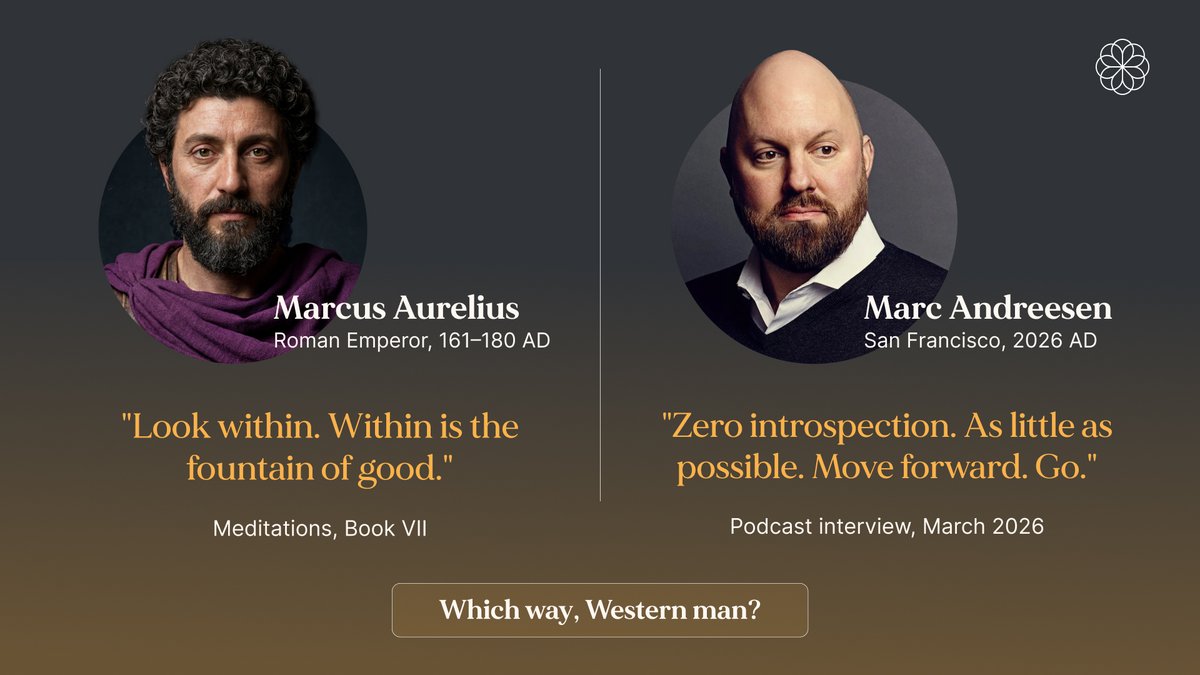
Two weeks ago, Marc Andreessen went on David Senra's podcast and proudly declared he practices "zero" introspection.
Then he doubled down on X for days, calling introspection a combination of "neuroticism, narcissism, and thumbsucking."
Paul Graham pushed back, the internet had a field day, and like any "great man," Andreessen doubled down on his idiocy.
The pattern is clear: Silicon Valley's investor class is building a narrative that introspection is dangerous, psychedelics are a liability, and the best founders are the ones who never slow down long enough to question why they're building what they're building.
...which is one of the worst possible developments for the future of innovation.
Here's what actually happens when a founder works with psychedelics with real intention, proper preparation, and experienced guidance.
They don't "get oneshotted."
They get clarity, starting to see which parts of their work are driven by ego and which by genuine purpose. They often come back more committed to their companies, not less, because they've reconnected with the reason they started building in the first place.
And what about the founders who leave? Many of them probably *should* have left. They were building something that wasn't aligned with who they actually are. And investors treating that as a risk to manage rather than a signal to pay attention to tells you everything about where priorities sit.
We are entering the age of AI, where the most valuable companies will not be the ones that simply optimize for speed and scale. They'll be the ones who create things that actually matter to the humans using them.
That requires depth and a willingness to ask hard questions about what you're building and who it serves. It requires, yes, introspection.
The VCs who get this, who actually support their founders in exploring psychedelics with intention and responsibility, are going to end up backing companies that leave a much more positive mark on the world.
Not because psychedelics are magic, but because founders who understand themselves build products with a deeper sense of devotion to the craft. They stay aligned with all stakeholders, not just the ones writing checks.
Marcus Aurelius, as Andreessen pointed out, ruled one of the largest empires in history while maintaining a rigorous practice of self-examination. The Meditations is literally a book of introspection. And he managed to hold it all together even while engaging in psychedelic-infused rituals (!)
The question isn't whether psychedelics make founders less effective.
The question is, what kind of companies do we actually want to be built in the most transformative technological era in human history?
And do we really want investors, afraid of depth, to be the ones deciding?
In 1962, a Harvard student gave theology students psychedelic mushrooms in a chapel.
His paper, “Drugs and Mysticism,” published in the International Journal of Parapsychology, laid out what would become one of the most discussed and debated studies in the history of psychedelic research.
Walter N. Pahnke was a trained physician, a theologian, and someone deeply serious about consciousness.
He built a nine-category framework for mystical experience, then asked: can a molecule reliably trigger what saints spent lifetimes chasing?
Eight of ten who took psilocybin had full mystical experiences. Zero in the placebo group did.
Six months later, those who had taken psilocybin reported lasting positive changes in their relationship to themselves, to others, and to the meaning of their lives.
The experimenter noted that eight out of ten subjects seemed profoundly changed.
Critics say chemically induced transcendence is cheating. Pahnke disagreed. The experience opens the door, he said. What you do with it is what counts.
He wrote: “Perhaps the hardest ‘work’ comes after the experience, which in itself may only provide the motivation for future efforts to integrate and appreciate what has been learned.”
The uncomfortable truth is these states - of unity, awe, and contact with something vast - appear in every culture in history. They're human, but we've built a civilisation with almost no legitimate way to access them.
They may not proof of God, but they are evidence that there’s more to life than many of us realise.
~ Mushies
✨🙌🏾💫
@gimegime73 No vayas a psiquiatra. Te recomiendo terapia asistida con psicodélicos. Psilocibina tiene grandes resultados con la ansiedad y no te medican al pedo y te tienen dopada.