🏎 BATTLE OF THE NATIONS
🏟 MAHEM RACEWAY, Pretoria
🎟 https://t.co/pQLUVAjDWr
🗓 02 MAY 2026, Saturday
🕚 11H00 to 21H00
"ALL about spinning, drifting & stunts"
Coachella 1999 was announced just days after the disaster that was Woodstock '99. Rough timing for a new festival.
Plus, that announcement came just 60 days before the festival began.
Today there's plenty of notice. Coachella 2026 tickets went on sale 7 months ago.
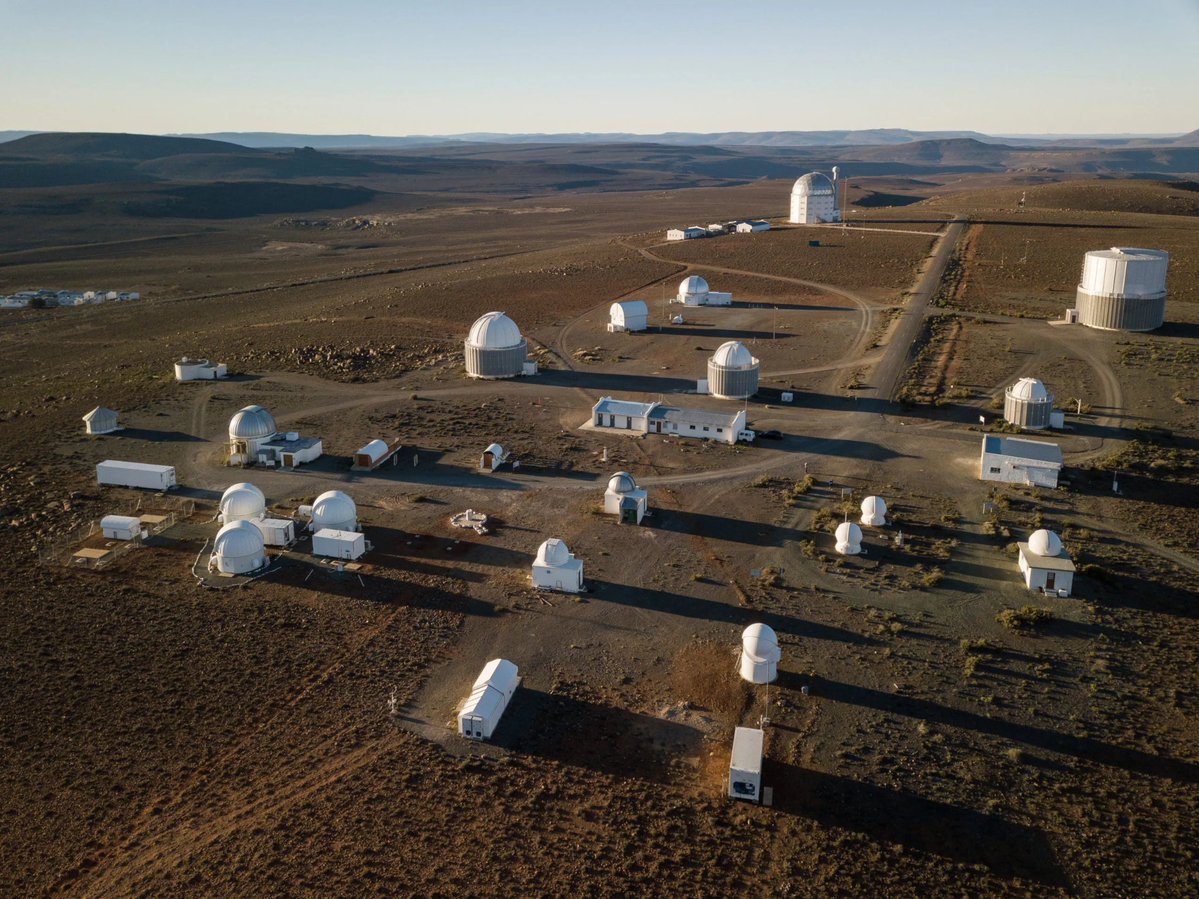
🌌 Did you know a tiny Karoo town is basically the Silicon Valley of Space?
Sutherland, Northern Cape hosts 20+ telescopes for 8 nations — and they're all paying South Africa for the privilege of our skies.
🇿🇦 South Africa — 6+ telescopes
🇺🇸 USA — 5 telescopes
🇯🇵 Japan — 2 telescopes
🇩🇪 Germany — 2 telescopes
🇵🇱 Poland — 2 telescopes
🇬🇧 UK — 2 telescopes
🇰🇷 South Korea — 1 telescope
🇷🇺 Russia — 1 telescope
Why Sutherland? The AGA Act. 🏛️
SA law protects 75km of radio silence & dark skies around the site. When driving, the headlights arent allowed.
We didn't just build a world-class observatory. We legislated it into existence. 🤫✨
The threads below break down each country — what they brought, & what they're hunting for in our skies. 👇
#Sutherland #SpaceEconomy #ProudlySA
This is a crisp summary of the upcoming David vs Goliath Documentary that is currently in production. Kindly visit the website https://t.co/Ouuz2RdSZJ, and on the left-hand side, there’s a menu bar, click on the STANDARD BANK FRAUD for a better read🙏🏽
@StandardBankZA
#standardbank #fraud #bank #bankethics #bankscam #DavidVSGoliath
Growthpoint is building a R2 billion residential and retail development, called the Sandton Summit with a twin tower luxury apartment complex called Olympus Sandton.
This is a crazy name. In Greek mythology, the gods lived on Mount Olympus, looking down on the mortals below, largely indifferent to their suffering.
Anyway, the entry price at Olympus Sandton is R1.79 million for a studio apartment and all the way up to R45 million for a penthouse.
On Friday, 27 February 2025, sales commenced on more than 400 residential apartments. Buyers quickly ate up the properties. By close of business, 295 of the development’s apartments had been sold.
In all, Olympus Sandton has sold just over R1.4 billion worth of luxury apartments in one business weekend. All of this is before even one brick has been laid.
A billion and half in sales before the ground is broken tells you that this is an asset class with nothing to do with housing. Many of those buyers are diversifying portfolios and have no interest in shelter or local reinvestment. It’s all offshore wealth preservation.
This is just one example of wealth being so concentrated that the “Sandton Summit” precinct can exist as a futuristic, first-world enclave, while just a few kilometers away in Alexandra, basic sanitation is a daily struggle.
The fact that a small studio apartment starts at R1.79 million while the Lower-Bound Poverty Line for most South Africans sits at approximately R1300 per month is almost mythical: The Marble luxury group that easily sells a R1300 plate of food will open a restaurant and its first boutique hotel in this precinct.
The spending is so lavish that while construction was originally planned across multiple phases, demand for these luxury spaces has been so high that the developers have decided to consolidate the construction of two towers, named after greek gods Apollo and Athena, located side by side.
According to the neoliberals who have dominated global economic thinking for over four decades, the Olympus Sandton is a sign of a healthy market. To this class of people, inequality is a byproduct of “excellence” being rewarded, because neoliberalism prioritises market efficiency over state-led redistribution.
However, the danger of this market-focused thinking, especially in the South African context, is that it ignores path dependency, where the majority isn’t poor because it lacks initiative, but because of structural barriers that the “free market” cannot fix.
Because when the market provides backup power and utilities, it creates a parallel infrastructure. The wealthy stop relying on the municipality and once these very influential gods on Sandton Olympus no longer need the public grid, their political will to advocate for its repair evaporates, and when the elite can buy their way out of a failing state, the state has no incentive to stop failing.
This creates a literal separation between those on the ground and those above. After all, Mount Olympus in Greek mythology was a place of luxury and separation. The gods had more and existed in a fundamentally different category of being.
Right now, naming a luxury tower complex “Olympus” in one of Africa’s most unequal cities is either capriciously oblivious or brutally honest. The oligarchs building it will know.
What we do know is that the gods on Olympus went beyond just ignoring suffering, they occasionally caused it through their indifference and carelessness.
Similarly, when the modern gods at Sandton Olympus exit public systems which in turn accelerates state decay, they may not be doing it maliciously, but the outcome is still directly connected to the suffering below.
Continue to pray for Sibisi to be injured, I will pray for reincarnation of this impaired breasts (ophaqa).
Awuhlale phansi wena mthakathi namabele o Lilian Ngoyi. 🚮🚮🚮🚮
NOTA raises a valid question here—walking around the mall is disturbing now. It’s like you’re already logged into OF. 😬
Today I saw a grown-up lady wearing see-through tights — you almost see everything against your will. 🙄
BEATING BANKS AT THEIR OWN GAME
South Africans are increasingly ditching bank branches and heading to supermarkets for everyday money needs.
As bank branches close and economic pressures intensify, supermarket chains like Pick n Pay, Pepkor and Shoprite are emerging as convenient, low-cost alternatives for deposits, withdrawals, credit and even cryptocurrency transactions.
Pick n Pay says till-point cash deposits jumped 60% in a year, crypto payments rose more than 44%, and buy-now-pay-later demand exploded during Black Friday.
Meanwhile, Shoprite is launching a zero-fee bank account, while Pepkor is turning its 5,000 clothing stores into banking hubs.
If a consumer can get paid (social grant, wages) into a zero-fee Shoprite account, conduct daily cash deposits or withdrawals at Pick n Pay, and manage credit via Pepkor, they will only need a traditional bank for complex products like home loans or business financing.
WHAT YOU NEED TO KNOW
1/ Over 200 traditional bank branches have closed in South Africa since 2023.
2/ South Africa has more than 25,000 supermarket and clothing stores – five times the number of bank branches.
3/ Average distance to a bank branch in rural areas: 15 km; average distance to a supermarket: under 3 km.
4/ Shoprite already serves 14 million loyalty members – more than half of Capitec’s client base.
5/ 60% of South Africans now hold multiple bank accounts, up from 38% in 2019.
6/ Retail financial services already generate 13.5% of Pick n Pay’s revenue.
7/ Pepkor’s fintech arm grew revenue 31% to R16.6-billion in the last financial year.
8/ 65% of Pick n Pay’s financial services users are aged 18–34.
9/ Retailers are now processing billions in deposits, withdrawals, QR payments, cryptocurrency settlements and buy-now-pay-later credit - yet they do not operate under the same strict capital, liquidity and consumer-protection rules that apply to banks.
AT THIS RATE…
1/ Unlike traditional banks that see customers' income and payment history, retailers see real-time consumption patterns: what they buy, when, how often, and the correlation between purchases.
2/ This "contextual data" allows retailers to underwrite credit risk with greater precision than traditional credit bureaux data. They can offer tailored micro-loans, insurance, and Buy-Now-Pay-Later (BNPL) schemes instantly and automatically (like Pepkor has done), potentially bypassing traditional credit scoring altogether for low-value, high-frequency transactions.
3/ This retailers becoming banks trend mirrors the massive success of integrated "Super-Apps" in Asia, such as WeChat Pay and Alipay (owned by technology giants, not retailers, but using a similar embedded finance model). It also echoes the massive scale of retailer-owned payment systems in the US and Europe.
4/ If Shoprite, Pick n Pay or Pepkor becomes a primary banking hub, a single IT failure, cyberattack or labour disruption could halt major payment flows nationwide. Regulators must begin stress-testing this now.
5/ South Africa cannot afford another regulatory blind spot where innovation moves faster than rules.
If retailers are becoming banks — even indirectly — regulation must evolve now, before supermarkets become the country’s most critical financial institutions.
Full story - https://t.co/HGRoqB7kVK
I walked into PANTRY for the first time ever today and I saw a cabbage. A sizeable and fresh looking cabbage but a cabbage nonetheless.
I’ll go again next week. Maybe today they were doing a stock take. This can’t be the Pantry my Joburg friends rave about.