Computational Creativity and Machine Learning | Joint PhD Student | AI & Art | Specially interested in the mathematical limitations of Learning and Creativity
@joao_gante@joao_gante I just started a new position and while doing the usual initial random walk through the new libraries documentation (vLLM) I ended up stumbling upon this thread! Feels great to seredipitate my way to a familiar face, even from the other side of the world 😉
yup, just compiled it & tested. Stable Audio Open Small runs faster than realtime on a mac **CPU**
on a m1 chip you have three ways to process- a cpu, gpu, and a neural engine. for ai stuff, the CPU is the SLOW one. It’s realtime on THAT.
🔧🤖 MCP-Use Tools
Just launched: An open-source library that connects any LLM to MCP tools for custom agents, featuring seamless integration with LangChain and support for web browsing, Airbnb search, and 3D modeling capabilities.
Explore the implementation on GitHub 🚀
https://t.co/UVkDcbrt9w
I’ve changed so little. From my 1978 Bachelor’s thesis:
“The adult human mind is very complex, but the question remains open whether the learning processes that constructed it in interaction with the environment are similarly complex. Much evidence and many peoples’ intuitions suggest that the learning processes are in fact simple and that the adult mind’s complexity is due to a long history of adaptive interaction with a complex environment.”
Generative audio has a rich history, from early algorithmic composition to today's AI-driven music.
Let’s take a chronological journey through its evolution, highlighting key artists and pivotal moments in generative music 🧵👇
very cool retrospective on generative music history — zack studied xenakis in college & thought it was useless for getting a job — i showed him @genekogan and neural nets and said “this is how we get jobs” - turns out i guess it was all a connected history
A sister team to ours at Google DeepMind is looking for student researchers this summer. Please reach out if you are a PhD student working on media generation (diffusion models), or if you are a professor with students to recommend! 😀
1/ Announcing 𝗝𝗮𝗺𝗲𝗻𝗱𝗼𝗠𝗮𝘅𝗖𝗮𝗽𝘀: 𝗔 𝗟𝗮𝗿𝗴𝗲-𝗦𝗰𝗮𝗹𝗲 𝗠𝘂𝘀𝗶𝗰-𝗖𝗮𝗽𝘁𝗶𝗼𝗻 𝗗𝗮𝘁𝗮𝘀𝗲𝘁
--> 200,000+ cc licensed 𝗶𝗻𝘀𝘁𝗿𝘂𝗺𝗲𝗻𝘁𝗮𝗹 𝗺𝘂��𝗶𝗰 𝘁𝗿𝗮𝗰𝗸𝘀 from Jamendo, each paired with 𝗰𝗮𝗽𝘁𝗶𝗼𝗻𝘀 & 𝗲𝗻𝗿𝗶𝗰𝗵𝗲𝗱 𝗺𝗲𝘁𝗮𝗱𝗮𝘁𝗮 👇
🌟My keynote at the @c4dm workshop about "Models of Musical Signals: Representation, Learning & Generation" is now on YouTube, giving an overview on developments in self-supervised learning for audio since 2020, low-level representation learning, audio (stem) generation and much more 🧵👇
https://t.co/k3lTKNkzD3
@SonyCSLMusic@SonyCSLParis
🚀Excited to announce our latest paper, ImprovNet: Generating Controllable Musical Improvisations with Iterative Corruption Refinement, is now on Arxiv! 🎶🤖
🧵👇 (1/7)
``Music2Latent2: Audio Compression with Summary Embeddings and Autoregressive Decoding,'' Marco Pasini, Stefan Lattner, George Fazekas, https://t.co/ZzmVPKfinU
😃Accepted @ieeeICASSP papers of @SonyCSLMusic:
Accompaniment Prompt Adherence: A Measure for Evaluating Music Accompaniment Systems
M. Grachten, J. Nistal
Estimating Musical Surprisal in Audio
M. Bjare, G. Cantisani, S. Lattner and G. Widmer
Hybrid Losses for Hierarchical Embedding Learning
H. Tian, S. Lattner, B. McFee, C. Saitis
Music2Latent2: Audio Compression with Summary Embeddings and Autoregressive Decoding
M. Pasini, S. Lattner, G. Fazekas
Zero-shot Musical Stem Retrieval with Joint-Embedding Predictive Architectures
A. Riou, S. Lattner, A. Gagneré, G. Hadjeres, S. Lattner, G. Peeters
Congrats to the authors!
@latentspaces@howariou@GiorgiaCanti@tiianhk@marco_ppasini@GeoffroyPeeters@gaetan_hadjeres@SonyCSLParis
O Mestrado em Inteligência Artificial do Campus da Figueira da Foz convida para "Pensar o Futuro: Ética e Justiça na Era da IA":
🎥 Exibição do filme “Justiça Artificial”
💬 Debate: “Inteligência Artificial e Direitos Humanos”
—
📅 11/1, sábado | 15h
📍 CAE - Figueira da Foz
2025 is going to be exciting for agents :)
I know it’s early and things will evolve — but I’m surprised by how many agent demos so far involve the agent taking over your browser or device in a blocking way. I want my agents to handle tasks for me while I do something else. Yes I want control and transparency, but I also don’t want to time-share my devices.
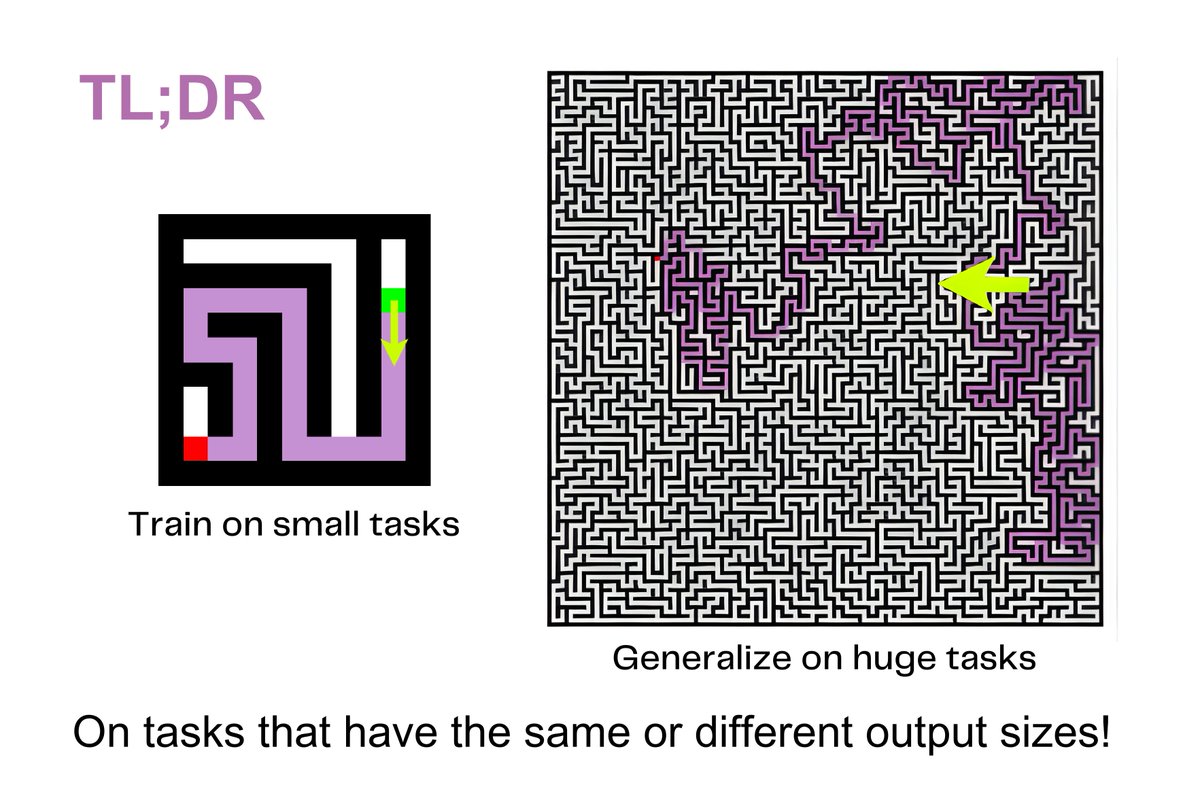
🚀 Excited to present NeuralSolver at NeurIPS 2024!
Humans can easily learn algorithms to solve much more complex tasks, from simple tasks. Machine learning methods usually fail to do this.
Can we build models that have similar algorithmic extrapolation abilities?
Thread 🧵: