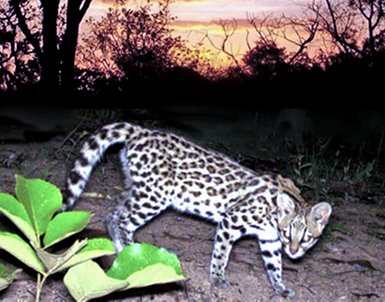
Check out our newest publication, with the first published density estimates and Population Viability Analysis for the threatened Northern Tiger Cat (Leopardus tigrinus). Thread (1/n) https://t.co/d2A9UZ9zaR
Únete a la charla virtual, «De bosques a fincas (parte 3): la vida de mamíferos arbóreos en agroecosistemas panameños»
📅 27 de marzo
⏰ 12:00pm | 1:00pm EST
Lester A. Fox-Rosales, estudiante de doctorado del Max Planck Inst. of Animal Behavior
🔗 https://t.co/dM8WI5GkGp
Influential drivers in the occupancy and activity of the last megaherbivore from the Northwestern Andean cloud forest of Colombia. by @CamiloCDuque@lester_fr94#Tapir#TSG
https://t.co/3vLBsZ7T1W
Are you interested in species interactions and how we model them?
Then this thread is for you!
Our new paper in @ESAEcology on the role of abundance in species interactions provides new statistical tools for modelling species interactions (https://t.co/5l2R4ei4CL).🧵(1/13)🧵
Excited to share that our paper on white-nosed coati subgrouping dynamics is out in Animal Behaviour! Using high-resolution GPS collars to track entire groups, we found that coatis consistently split with their close relatives. 🐾 https://t.co/c3QIgd75LF
Comparto resultados de nuestro estudio publicado en la Revista @Biotropica sobre mamíferos en plantaciones madereras en la Cuenca del Canal de #Panamá.
Es un trabajo que nos da a conocer el valor de plantaciones comerciales de pequeña escala para la #conservación 1/#
🇵🇦 Timber plantations offer limited wildlife habitat. Study in Panama shows non-native tree plantations support small mammals but struggle to sustain larger species. . Researchers urge for balance between conservation and economic needs. 🌿
https://t.co/GNXKb7Uusj
this week we've got a very special feature... I call it DOUBLE #MonkeyMonday! we captured an interaction between a howler monkey (Alouatta pigra) and a spider monkey (Ateles geoffroyi) on one of our canopy camera traps with @Guatemala_WCS & @garca_rony (1/2)
📢What would happen if threatened mammals became extinct on 🏝️islands?
We looked into the consequences of species extinctions on the functional space of islands worldwide.
More details below, but you can read the full paper published today @GlobalChangeBio
https://t.co/OQisxFsAgW
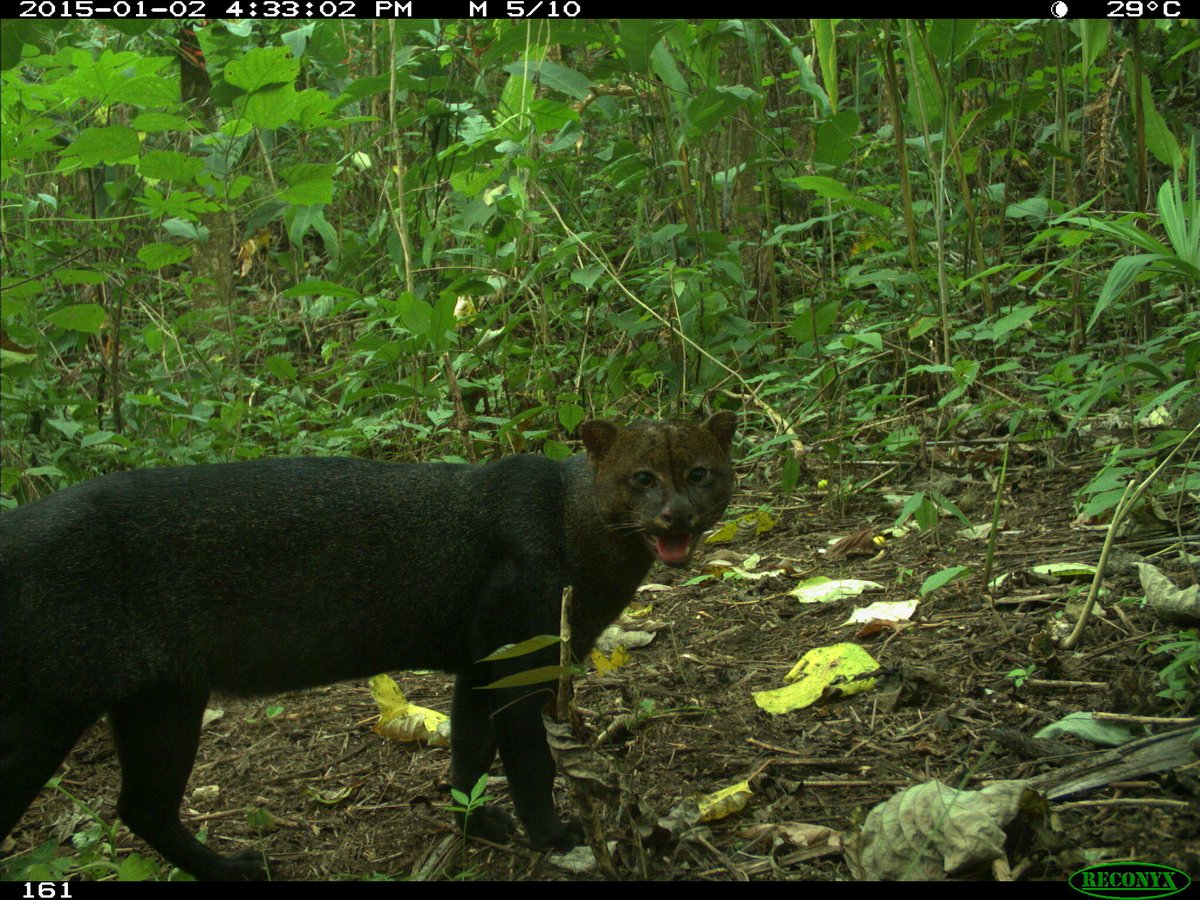
welcome to #MargayMonday! maybe a bit hard to spot, but check out the crazy vine-climbing skills of this small neotropical cat... they are certainly well suited for a life in the canopy! @Guatemala_WCS@garca_rony
Our recent study on wolf feeding behavior has something for all large carnivore ecologists! Natural history patterns, ecological theory (handling time in relation to prey size & abundance), and applied aspects (how study methods affect feeding behavior inferences). Take a peek!
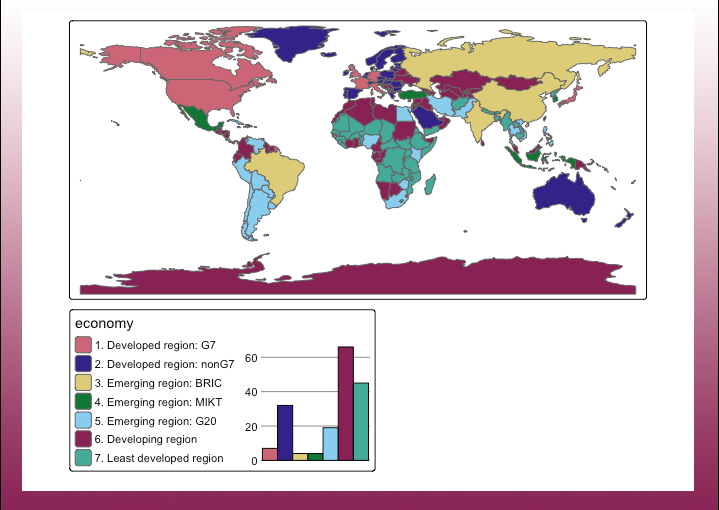
I recently stumbled over the tmap R package and was amazed by its capabilities! With tmap, you can craft dynamic, interactive maps with ease. The package offers a flexible syntax similar to ggplot2, but with a dedicated focus on maps.
Key Features:
🌟 Interactive Maps: Switch between plot and view modes for static or interactive experiences.
🛤 Multiple Shapes & Layers: Combine various spatial objects and layers for intricate map designs.
🌈 Facets: Segment your data visually with facets, enhancing comparison and analysis.
🏞 Basemaps & Overlay Tile Maps: Integrate beautiful basemaps and overlay tiles to enrich your maps.
🎨 Customizable Options & Styles: Tailor your maps with numerous styling and layout options.
🔄 Shiny Integration: Seamlessly embed maps in Shiny applications for interactive web apps.
📊 Quick Thematic Maps: Generate thematic maps swiftly with a single function call.
📝 Exporting Maps: Easily save your creations as images or interactive HTML files.
For those interested in delving deeper, there's a comprehensive guide to get started, available at CRAN: https://t.co/ryaAHWq9Aj
I've also learned from a recent post by Jakub Nowosad, one of the contributors to this package, that the development version of tmap now supports adding various charts to the maps (see image of this post).
Thanks to Martijn Tennekes and the other contributors for their great work on this package!
Want to stay ahead in statistics, data science, and programming? My free newsletter delivers regular insights directly to you. More information: https://t.co/X93SeCe0rb
#statisticsclass #R #datavis #Statistical #DataVisualization #RStats #Data
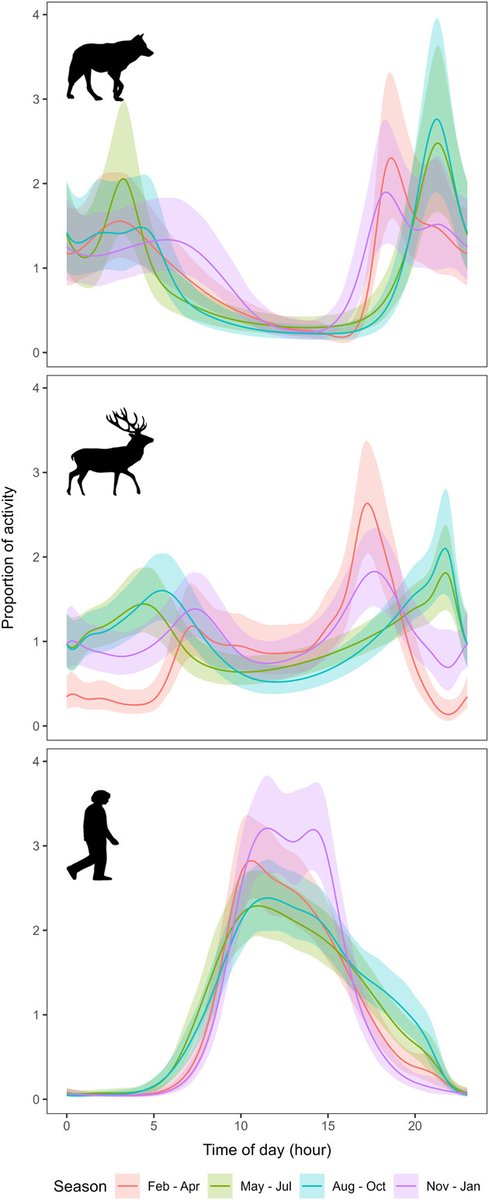
Human avoidance, selection for darkness and prey activity explain wolf diel activity in a highly cultivated landscape https://t.co/Mse98s9Qm2 #Wolves#Spatial#Avoidance@NordicOikos @WileyEcolEvol
How do primates overcome the challenges of obtaining underground food?
In my 1st PhD chapter, I describe the use of stone and stick tools by a population of capuchin monkeys! Checkout my new paper with @AffoncoGabriela & @tfalotico in @SciReports (https://t.co/xy9eamECSc).
🧵1/9
New paper! We found another capuchin population, at Ubajara National Park 🇧🇷, that use stones to get underground food! They also use stick probes to get trapdoor spiders! We describe those behaviors and compare to other capuchins.
@neoprego@InsideNatGeo
https://t.co/LBGqgyTrY1
The "Heat" episode of #Mammals@BBCEarth features capuchin monkeys from Serra da Capivara. The capuchins show some of the ways they use brains and tools to acquire water in the dry Caatinga!
@HPRufo from @neoprego assisted in the filming! #Primates#Brazil
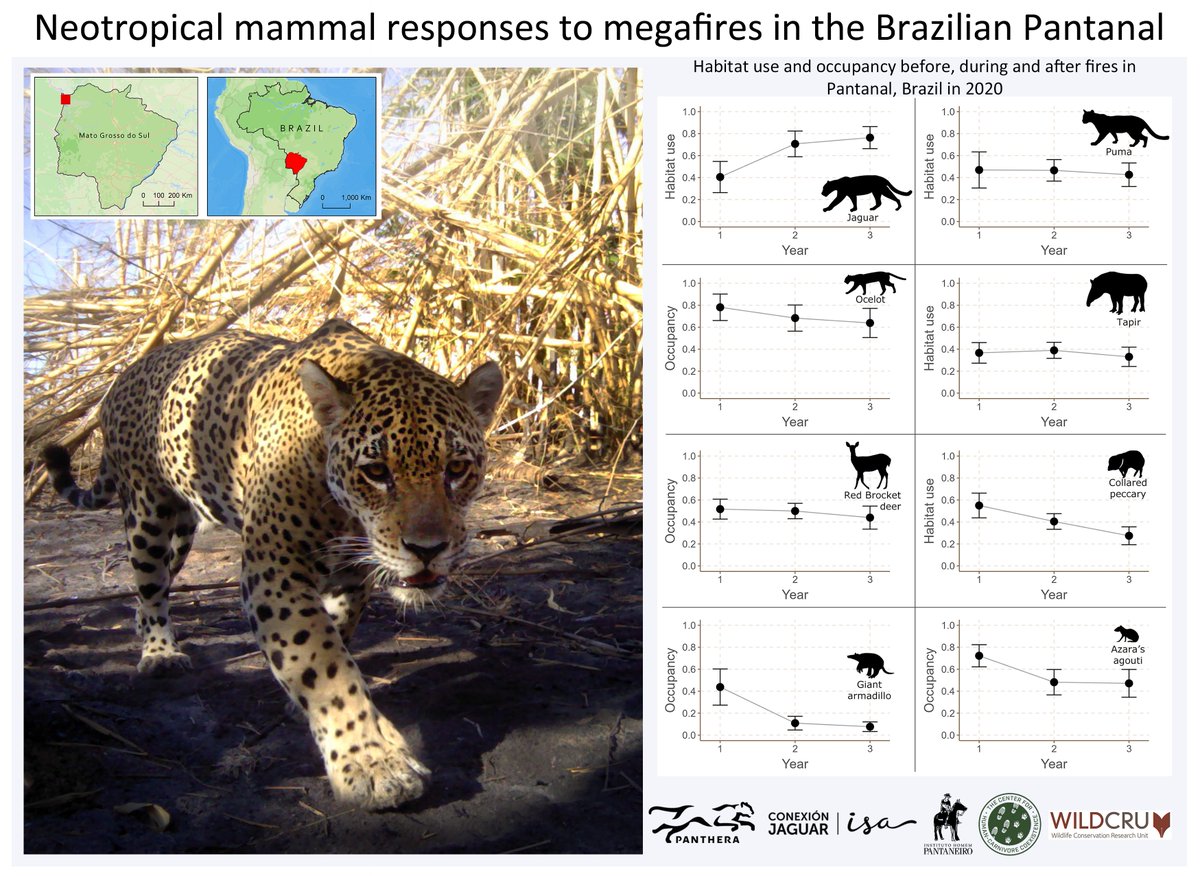
Finally, is live!
Pleased to share with you our last paper on the fires short-time effect on mammals in the Brazilian Pantanal: https://t.co/Nvh0Mo3AGX…
Please take a look ^^
#megafires#wildlife#jaguars#wildfires
A quem interessar possa (@CNPq_Oficial,@DiogoProvete,@dudelbem), minhas modestas impressões sobre o programa de repatriação de cientistas brasileiros, na condição de membro do público-alvo. Resumo, depois explico: