@RobinThomas1000@LydiaJane13 @allbold1 One of the most emotional experiences I had was visiting #Kanchanaburi war cemetery & the adjacent museum in #Thailand. There's a lot of personal stories from the POW's that provided forced labour and died at the hands of the #Japanese. We will be visiting again in January 2022🤞
We visited Kanchanaburi War Cemetery and the adjacent Railway Centre in 2009 a deeply moving experience.
Kanchanaburi the main resting place for the victims of the Burma Railway.
Located roughly 2 kilometers from the famous Bridge on the River Kwai, it holds the graves of 6,982 Allied prisoners of war, primarily British, Australian, and Dutch soldiers. The remains of American soldiers in Burma were repatriated.
https://t.co/UGea8tymgO
@4thOfJuly365 US and Allied POWs suffered mightily under Japanese 🇯🇵 during WWII. Thousands died of disease, starvation, beatings while building the infamous “Death Railway” in Thailand - the “Bridge Over the River Kwai.”
Lest We Forget
🇺🇸 🇬🇧 🇦🇺 🇳🇱
1939-45
He was a veteran of the Arctic Convoys - “the Murmansk Run” - that kept the USSR in the war. The British Merchant Navy + the RN lost thousands of men to German U-Boats, torpedo aircraft … delivering strategic aid through the frozen wastes in convoys.
As we remember our heroes on D-Day it only feels like yesterday that Alec Penstone said these famous words. He sadly passed away on May 28th this year, aged 101. RIP
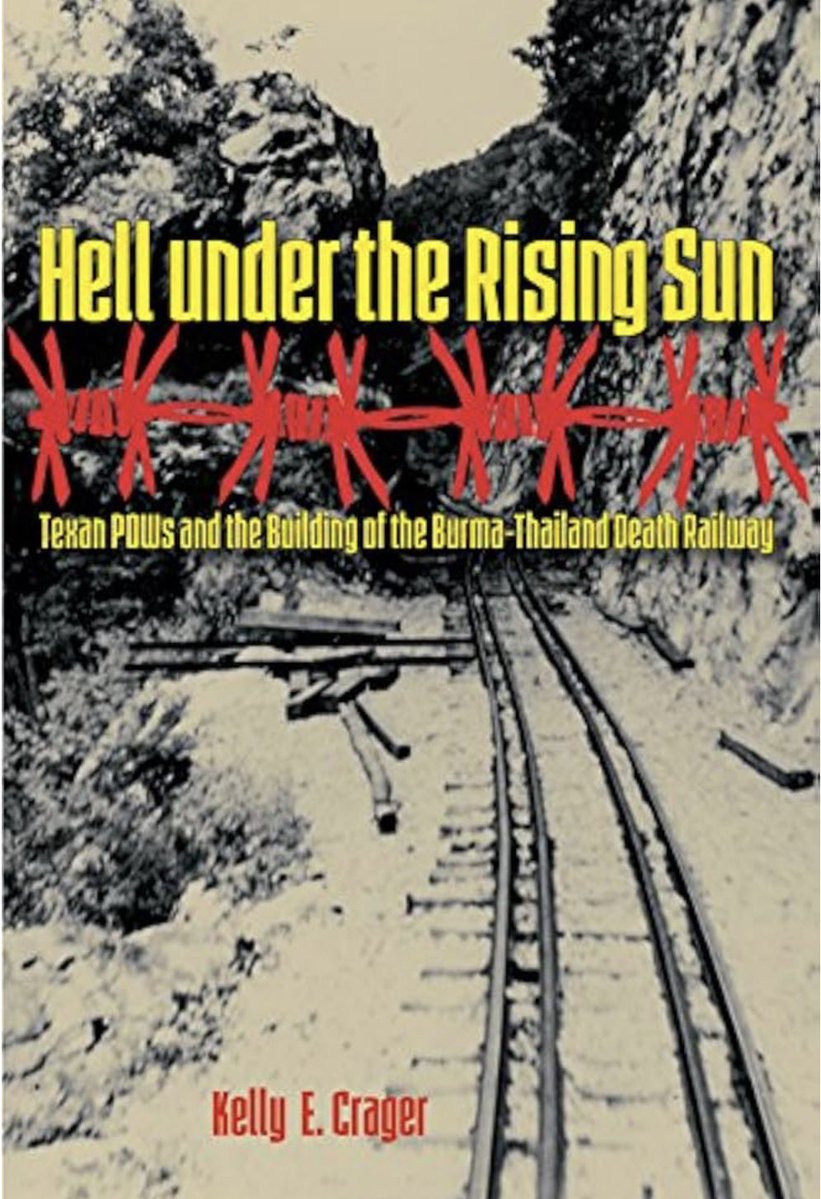
“Kelly E. Craver used the National Archives & mined personal memoirs, oral history interviews of the “Lost Battalion.” He surmises that the reason for the high survival rate (84%) was the comraderie of the Texans and their commitment to care for each other.”
/6
“Late in 1940, young men of the 2nd Battalion, 131st Field Artillery Regiment stepped off the trucks at Camp Bowie, Brownwood, Texas, ready to complete the training they would need for active duty in WWII. Many of them had grown up together in Jacksboro, Texas,
1/
“These men labored alongside Australian 🇦🇺 British 🇬🇧 Dutch 🇳🇱 and Asian conscripts to build 260 mi of railroad for their Japanese 🇯🇵 taskmasters. Abscessed wounds, starvation, beatings, disease: 89 of the original 534 Texans taken prisoner died in the infested jungles.
/5
MSGT Gerald Roland Gingras, POW
19th Bombardment Group (Heavy)
Fought during the 1942 Battle of Corregidor in the Philippines; survivor of the Bataan Death March.
Survivor, Purple Heart Recipient.
POW Private First Class, USAF, May 7, 1942-1945. Veteran of WWII and the Korean conflit. In WWII he served with the US Army Air Corps and the Air Force. Jerry was a POW for 40 months and was liberated in Niigata, Nippon (Japan).
Private First Class, Gerald Roland Gingras (ASN: 19046230), United States Army Air Forces, was captured after the fall of the Philippine Islands on or about May 7, 1942 and was held by the Japanese as a prisoner of War until his return to U.S. Military control at the end of hostilities in 1945. Awarded the Prisoner of War Medal.
In 1959 he was assigned to the 93rd Field Maintenance Squadron at Castle Air Force Base, Ca. The base is a component of the Strategic Air Command and has the primary mission of training crews for the B-52 Stratoforttress and the KC-135 Stratotanker.
He was a DAV 52 Leader and Veteran advocate.
NARA Database: Records of World War II Prisoners of War, created, 1942 – 1945 Private First Class Gerald R. Gingras (ASN: 19046230), United States Army Air Forces, was captured after the fall of the Philippine Islands on or about May 7, 1942 and was held by the Japanese as a prisoner of War until his return to U.S. Military control at the end of hostilities in 1945.
Prisoners of war, Far East: Tokyo POW Camp, Japan; name list. Series Number WO 361/1970 as of 15 August 1945.
@lestweforgetusa