Certainly the most surprising result in my career so far: a new qLDPC decoder that I thought had no chance to work!
We call it the Frontier decoder, joint work with Rüdiger Urbanke (1/4)
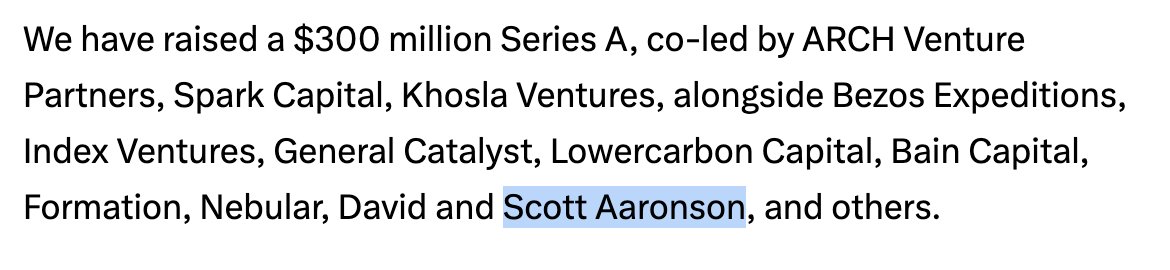
what's notable isn't @teamoratomic raising $300M given their caliber of talent, but WHO they raised it from. a lot of firms on this list who long said QC was too far off to be worth major investment.
that changed today. QC is now in the domain of the major funds.
https://t.co/A23xXjU17f
If you're using the Frontier decoder to optimize and benchmark your qldpc circuits, you're the 1%.
We're still early.
If you're not, just ask your agents to give it a try.
am i the only one who sees this:
- me: "codex, how long would it take to implement this idea?"
- codex: "1-2 days for the simpler version, likely a couple of week for a more complete implementation"
- me: "ok do it"
- codex, 20 minutes later: "done!"
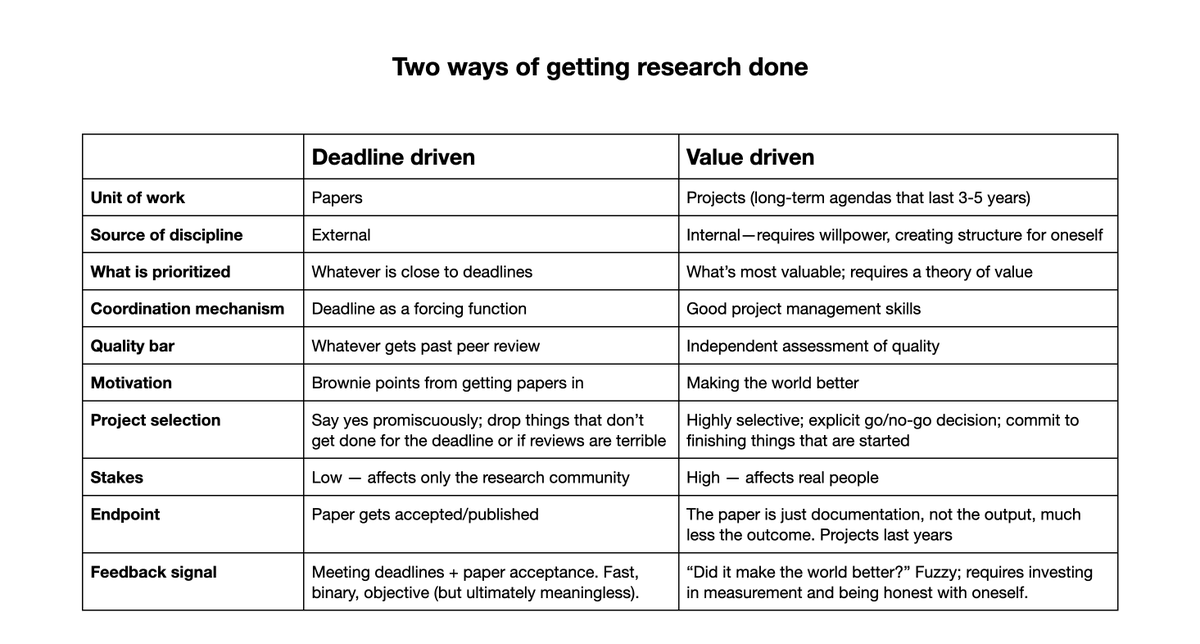
I've also been gradually switching to this value-driven way of working these past few years, without articulating it as clearly as Arvind.
But it certainly helps to have a tenured position to try this.
At the start of my research career I operated in a deadline-driven mode because that's what most researchers seemed to do. Gradually I discovered the value-driven way of working. I'm glad I had a supportive advisor who didn't make me chase deadlines. It took me 20 years to fully embrace the switch — it requires developing a long-term vision, willpower to create structure without deadline pressure, a theory of value, project management skills, good taste, the willingness to turn projects down, brutal honesty about whether our work is any good (even if it gets published), and a lot more. But there is no going back!
Update: I've joined @AnthropicAI and taken leave from the university. Excited to work with many talented, mission-driven people on the defining technology of our time.
In 1990, Michel Talagrand showed that given a₁,…,aₘ ∈ ℝⁿ, there are weights w₁,…,wₘ ≥ 0, only O(n log n) of them nonzero, such that ∑ᵢ wᵢ|⟨aᵢ,x⟩| ≈ ∑ᵢ |⟨aᵢ,x⟩| within 1% for all x ∈ ℝⁿ.
36 years later, that last log is gone: O(n) nonzeros suffice! [1/5]
If you have specific codes, circuits or noise models you'd like to investigate, you should try the Frontier decoder. We only report results for surface, color and BB codes in the paper. But I've tried it for many other settings, and it works great.
https://t.co/JTvdmj2QjD
@letonyo For quickly comparing LER under different syndrome extraction circuits, across different codes. I found the alternatives to be slow/hard to tweak in comparison.
Most decoders for quantum LDPC codes hate degeneracy. It is the opposite for the frontier decoder: degeneracy means several paths can be merged, which reduces the frontier size.
You can test it on your preferred codes (github link below)




![vetohaze's tweet photo. In 1990, Michel Talagrand showed that given a₁,…,aₘ ∈ ℝⁿ, there are weights w₁,…,wₘ ≥ 0, only O(n log n) of them nonzero, such that ∑ᵢ wᵢ|⟨aᵢ,x⟩| ≈ ∑ᵢ |⟨aᵢ,x⟩| within 1% for all x ∈ ℝⁿ.
36 years later, that last log is gone: O(n) nonzeros suffice! [1/5] https://t.co/wducdKVpD1](https://pbs.twimg.com/media/HMEs8msb0AA3UZ-.jpg)


