The #SupremeCourtPH (SC) has ruled that homeowners’ associations (HOAs) may impose sanctions or penalties on members who fail to pay association dues, but it cannot deprive them of their right to use common areas, including subdivision roads.
In a Decision penned by Associate Justice Alfredo Benjamin S. Caguioa, the SC’s Third Division dismissed the petition filed by the former directors and officers of La Costa Brava Homeowners’ Association, Inc. (Association).
Spouses Linley and Juvy Retirado failed to pay their monthly association dues from 2016 to 2021. Consequently, the Association declared them delinquent and enforced several penalties.
Among the sanctions were banning of grass-cutting or maintenance within five meters from the property; reducing the frequency of garbage collection; prohibiting food, package, appliance, and gas deliveries to their residence; preventing taxis, tricycles, and ride-hailing vehicles from entering the subdivision to fetch them; barring guests from entering the subdivision to visit them; and imposing delivery fees on trucks and vehicles bringing supplies and materials to their construction site.
The spouses filed a complaint before the Human Settlements Adjudication Commission (HSAC), which ruled that the sanctions violated Republic Act No. (RA) 9904, or 𝘵𝘩𝘦 𝘔𝘢𝘨𝘯𝘢 𝘊𝘢𝘳𝘵𝘢 𝘧𝘰𝘳 𝘏𝘰𝘮𝘦𝘰𝘸𝘯𝘦𝘳𝘴 𝘢𝘯𝘥 𝘏𝘰𝘮𝘦𝘰𝘸𝘯𝘦𝘳𝘴’ 𝘈𝘴𝘴𝘰𝘤𝘪𝘢𝘵𝘪𝘰𝘯𝘴. The HSAC also permanently disqualified the officers responsible from holding any position in the Association.
The officers appealed to the Court of Appeals, which dismissed their petition.
The SC affirmed the HSAC’s ruling on the penalties.
Section 7(a) of RA 9904 grants homeowners two distinct rights: the right to enjoy basic community services and facilities, and the right to use common areas.
The SC clarified that HOAs may impose sanctions on delinquent members under their bylaws. However, this authority is not absolute. HOAs can restrict delinquent members from accessing or enjoying certain community services and facilities, but they cannot deny the right to use common areas like roads.
Applying this distinction, the SC held that restricting deliveries, transportation, and guests effectively violated the spouses’ right to use the subdivision roads.
The SC also rejected the officers’ claim that their violation was not grave enough to warrant permanent disqualification from holding office in the Association. The SC ruled that restricting access to subdivision roads for basic needs such as the delivery of goods and transportation caused great harm and dangerous consequences—a violation serious and grave enough to justify the permanent disqualification.
Read the full text of the press release at https://t.co/WAFrevixJn
Read the full text of the Decision at https://t.co/a5ITOGAhNA
Copying of this content is subject to the SC PIO’s Credit Attribution Policy: https://t.co/6W5N1BgfaL
The #SupremeCourtPH (SC) has ruled that a sales agent’s promise to issue a Contract to Sell after payment of reservation fee is not an “advertisement” under Presidential Decree No. (PD) 957, or the Subdivision and Condominium Buyers’ Protective Decree, that would form part of developer’s warranties. However, the developer may still be required to refund a buyer if it fails to honor that promise.
In a Decision written by Associate Justice Maria Filomena D. Singh, the SC’s Third Division ordered Empire East Land Holdings, Inc. (Empire East) to refund the payments made by John Edrem Bautista (Bautista) after it failed to issue the promised Contract to Sell.
Bautista paid Empire East for a residential unit PHP 130,000, consisting of a PHP 20,000 reservation fee and PHP 110,000 in additional payments. He claimed he made the payments because Empire East’s sales agent promised to issue a Contract to Sell once he paid the reservation fee. When more than a year passed without the contract being issued, Bautista stopped making payments and demanded a refund.
The SC, agreeing with both the Human Settlements Adjudication Commission (HSAC) and the Court of Appeals which ruled in Bautista’s favor, held that Bautista was entitled to a refund but clarified that the sales agent’s promise did not fall under Section 19 of PD 957.
The SC clarified that Section 19, which mandates truthful and non-misleading advertisements and sales materials, applies only to materials intended for the general public, such as those in those in newspapers, radio, TV, or similar mass communication channels. It does not cover promises made by a sales agent to individual buyers.
The SC emphasized that buyers remain protected, as developers may still be held liable under their contractual obligations and other applicable laws.
The SC ordered Empire East to refund Bautista the PHP 130,000 with interest of 6% per annum reckoned from the filing of the complaint in 2012, as well as to pay PHP 260,000 in exemplary damages, which courts award to discourage wrongful conduct and warn against similar actions.
Read the full text of the Press Release at https://t.co/2k8tpnP55f.
Read the full text of the Decision at https://t.co/He67Lf9LwO.
Copying of this content is subject to the SC PIO’s Credit Attribution Policy: https://t.co/OuZxIbCoc4.
𝗣𝘄𝗲𝗱𝗲 𝗯𝗮 𝗺𝗮𝗴𝗸𝗮𝗮𝘆𝗼𝘀 𝗽𝗮𝗿𝗮 𝗵𝗶𝗻𝗱𝗶 𝗻𝗮 𝗵𝘂𝗺𝗮𝗻𝘁𝗼𝗻𝗴 𝘀𝗮 𝗺𝗮𝗵𝗮𝗯𝗮 𝗮𝘁 𝗺𝗮𝗴𝗮𝘀𝘁𝗼𝘀 𝗻𝗮 𝗽𝗮𝗴𝘁𝘂𝘁𝘂𝗼𝘀?
Sa "𝐏𝐫𝐞-𝐭𝐫𝐢𝐚𝐥,"sinusubukan munang alamin kung may mga isyung puwede nang pagkasunduan, o kung posible pang magkaayos ang mga panig bago isalang ang kaso sa pagdinig.
Kung hindi man magkaayos, sisikapin sa "𝐏𝐫𝐞-𝐭𝐫𝐢𝐚𝐥" na gawing simple ang mga isyung didinggin sa korte, para mapabilis ang gagawing paglilitis.
Pwede rin basahin sa link na ito ang kaugnay na desisyon ng Korte Suprema kung paano ginamit ang salitang “𝐏𝐫𝐞-𝐭𝐫𝐢𝐚𝐥":
https://t.co/k5in48wVVG
#SupremeCourtPH #SCphExplainers #SCphLegallySpeaking
The #SupremeCourtPH (SC) has ruled that the infliction of psychological violence, if done through Facebook, is considered done through information and communications technology, which warrants the imposition of a higher penalty pursuant to Section 6 of RA 10175 or the 𝘊𝘺𝘣𝘦𝘳𝘤𝘳𝘪𝘮𝘦 𝘗𝘳𝘦𝘷𝘦𝘯𝘵𝘪𝘰𝘯 𝘈𝘤𝘵 𝘰𝘧 2012.
In a Resolution penned by Associate Justice Ramon Paul L. Hernando, the SC’s First Division affirmed with modification its October 22, 2025 Decision (assailed Decision), which upheld the conviction of an individual (XXX) for committing psychological violence under Section 5(i) of Republic Act (RA) No. 9262, or the 𝘈𝘯𝘵𝘪-𝘝𝘪𝘰𝘭𝘦𝘯𝘤𝘦 𝘈𝘨𝘢𝘪𝘯𝘴𝘵 𝘞𝘰𝘮𝘦𝘯 𝘢𝘯𝘥 𝘛𝘩𝘦𝘪𝘳 𝘊𝘩𝘪𝘭𝘥𝘳𝘦𝘯 𝘈𝘤𝘵 𝘰𝘧 2004 (Anti-VAWC Act) against his ex-girlfriend (AAA) by posting derogatory statements about her on Facebook.
The SC, however, resolved to raise the penalty by one degree, considering that the offense was committed through Facebook, as adequately alleged in the Information and established during trial.
AAA filed the VAWC case against her former partner XXX after he posted a statement on Facebook calling her a dirty woman and an animal, and threatening to box her when he sees her. He repeated the insults in the comments to the post, which was public.
During trial, AAA presented screenshots of the Facebook post and testified that she had created for XXX the Facebook account which made the post. Her two siblings testified that the account was XXX’s and that they received messages from him through the same account.
Despite XXX’s denial, the SC, in its assailed Decision, affirmed the decisions of the Family Court and the Court of Appeals (CA) convicting XXX, stressing that in criminal cases, the prosecution must prove not only the elements of the crime but also the identity of the offender. The SC also upheld the penalty imposed by the CA, consisting of imprisonment for six months and one day to eight years and one day, a fine of PHP 100,000, and psychological counseling or psychiatric treatment.
Resolving XXX’s Motion for Reconsideration, the SC held that XXX’s authorship of the Facebook post was established beyond reasonable doubt, using the guideposts it established in its assailed Decision:
𝟏. 𝐀𝐝𝐦𝐢𝐬𝐬𝐢𝐨𝐧 𝐨𝐟 𝐨𝐰𝐧𝐞𝐫𝐬𝐡𝐢𝐩 𝐨𝐫 𝐚𝐮𝐭𝐡𝐨𝐫𝐬𝐡𝐢𝐩;
𝟐. 𝐁𝐞𝐢𝐧𝐠 𝐬𝐞𝐞𝐧 𝐚𝐜𝐜𝐞𝐬𝐬𝐢𝐧𝐠 𝐭𝐡𝐞 𝐚𝐜𝐜𝐨𝐮𝐧𝐭 𝐨𝐫 𝐜𝐨𝐦𝐩𝐨𝐬𝐢𝐧𝐠 𝐭𝐡𝐞 𝐩𝐨𝐬𝐭;
𝟑. 𝐂𝐨𝐧𝐭𝐚𝐢𝐧𝐢𝐧𝐠 𝐢𝐧𝐟𝐨𝐫𝐦𝐚𝐭𝐢𝐨𝐧 𝐤𝐧𝐨𝐰𝐧 𝐨𝐧𝐥𝐲 𝐭𝐨 𝐭𝐡𝐞 𝐨𝐟𝐟𝐞𝐧𝐝𝐞𝐫 𝐨𝐫 𝐚 𝐟𝐞𝐰 𝐩𝐞𝐨𝐩𝐥𝐞;
𝟒. 𝐋𝐚𝐧𝐠𝐮𝐚𝐠𝐞 𝐜𝐨𝐧𝐬𝐢𝐬𝐭𝐞𝐧𝐭 𝐰𝐢𝐭𝐡 𝐭𝐡𝐞 𝐨𝐟𝐟𝐞𝐧𝐝𝐞𝐫’𝐬 𝐜𝐡𝐚𝐫𝐚𝐜𝐭𝐞𝐫𝐢𝐬𝐭𝐢𝐜𝐬;
𝟓. 𝐑𝐞𝐜𝐨𝐫𝐝𝐬 𝐟𝐫𝐨𝐦 𝐭𝐡𝐞 𝐢𝐧𝐭𝐞𝐫𝐧𝐞𝐭 𝐬𝐞𝐫𝐯𝐢𝐜𝐞 𝐩𝐫𝐨𝐯𝐢𝐝𝐞𝐫, 𝐭𝐞𝐥𝐞𝐜𝐨𝐦𝐦𝐮𝐧𝐢𝐜𝐚𝐭𝐢𝐨𝐧𝐬 𝐜𝐨𝐦𝐩𝐚𝐧𝐲, 𝐨𝐫 𝐬𝐨𝐜𝐢𝐚𝐥 𝐦𝐞𝐝𝐢𝐚 𝐬𝐢𝐭𝐞, 𝐚𝐧𝐝 𝐫𝐞𝐬𝐮𝐥𝐭𝐬 𝐟𝐫𝐨𝐦 𝐝𝐞𝐯𝐢𝐜𝐞 𝐟𝐨𝐫𝐞𝐧𝐬𝐢𝐜 𝐚𝐧𝐚𝐥𝐲𝐬𝐢𝐬 𝐬𝐡𝐨𝐰𝐢𝐧𝐠 𝐠𝐞𝐨𝐥𝐨𝐜𝐚𝐭𝐢𝐨𝐧 𝐟𝐞𝐚𝐭𝐮𝐫𝐞𝐬, 𝐚𝐧𝐝 𝐨𝐭𝐡𝐞𝐫 𝐚𝐭𝐭𝐫𝐢𝐛𝐮𝐭𝐞𝐬 𝐥𝐢𝐧𝐤𝐢𝐧𝐠 𝐭𝐡𝐞 𝐚𝐜𝐜𝐨𝐮𝐧𝐭 𝐭𝐨 𝐭𝐡𝐞 𝐨𝐟𝐟𝐞𝐧𝐝𝐞𝐫;
𝟔. 𝐀𝐜𝐭𝐬 𝐜𝐨𝐧𝐬𝐢𝐬𝐭𝐞𝐧𝐭 𝐰𝐢𝐭𝐡 𝐩𝐫𝐞𝐯𝐢𝐨𝐮𝐬 𝐩𝐨𝐬𝐭𝐬; 𝐨𝐫
𝟕. 𝐎𝐭𝐡𝐞𝐫 𝐢𝐧𝐬𝐭𝐚𝐧𝐜𝐞𝐬 𝐬𝐡𝐨𝐰𝐢𝐧𝐠 𝐨𝐰𝐧𝐞𝐫𝐬𝐡𝐢𝐩, 𝐚𝐜𝐜𝐞𝐬𝐬, 𝐨𝐫 𝐚𝐮𝐭𝐡𝐨𝐫𝐬𝐡𝐢𝐩.
The authorship of the Facebook post and all the elements of psychological violence having been established, the SC said Section 6 of the 𝘊𝘺𝘣𝘦𝘳𝘤𝘳𝘪𝘮𝘦 𝘗𝘳𝘦𝘷𝘦𝘯𝘵𝘪𝘰𝘯 𝘈𝘤𝘵 𝘰𝘧 2012 applies, which mandates the imposition of a penalty higher by one degree for crimes and offenses committed using ICT. The use of ICT can enable offenders to evade liability, reach more victims, or cause greater harm.
Citing the definition of ICT, the Court ruled that social media platforms, such as Facebook, qualify as ICT systems because they allow users to generate, send, receive, store, and process electronic data messages through computers, mobile phones, or similar electronic devices.
In this case, the Information alleged that XXX made the Facebook post using his "Facebook Messenger Account… which was set to public view." The SC ruled that this statement constitutes a sufficient allegation of the use of ICT as a qualifying circumstance. Even if the term "ICT" was not stated, the Information adequately informed XXX that he is being charged of inflicting psychological violence upon AAA through Facebook, which falls under the contemplation of an ICT system.
The allegation was established by the prosecution during trial.
Thus, the Court increased the penalty by one degree from six months and one day to eight years and one day to imprisonment of six years and one day to 14 years, eight months, and one day, but retained the fined PHP 100,000. He was likewise ordered to undergo psychological counseling or psychiatric treatment.
Read the full text of the press release at https://t.co/cxfSyB6QX7
Read the full text of the Decision at https://t.co/jKTfkDr2JU
Copying of this content is subject to the SC PIO’s Credit Attribution Policy: https://t.co/6W5N1BgfaL
EO No. 119, signed yesterday by Pres. Marcos Jr., establishes classification tiers for government data and requires local data physical residency for secret/classified data. The establishment of the framework is most welcome.
https://t.co/AoyhTKItF3
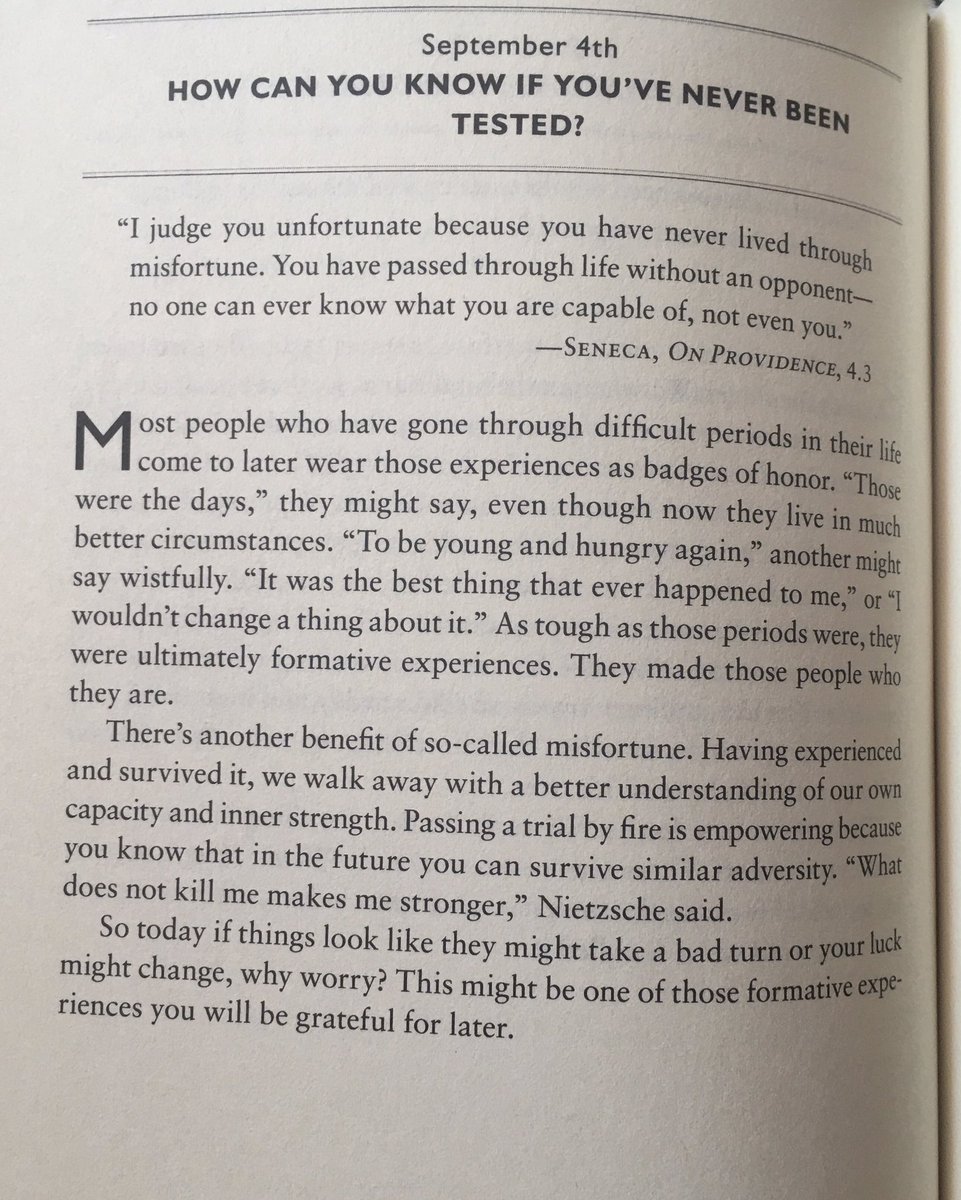
Ten lazy years can disappear the moment you lock in. Six months of discipline can erase a decade of drifting. Momentum is magic. It turns yesterday's failures into tomorrow's fuel.
Somewhere in your 20s or 30s you'll get the opportunity to rebuild your life after a negative loop, heal from what broke you, live in your own space, reconnect with your discipline, and learn to love yourself again. It's very important that you see that journey through.
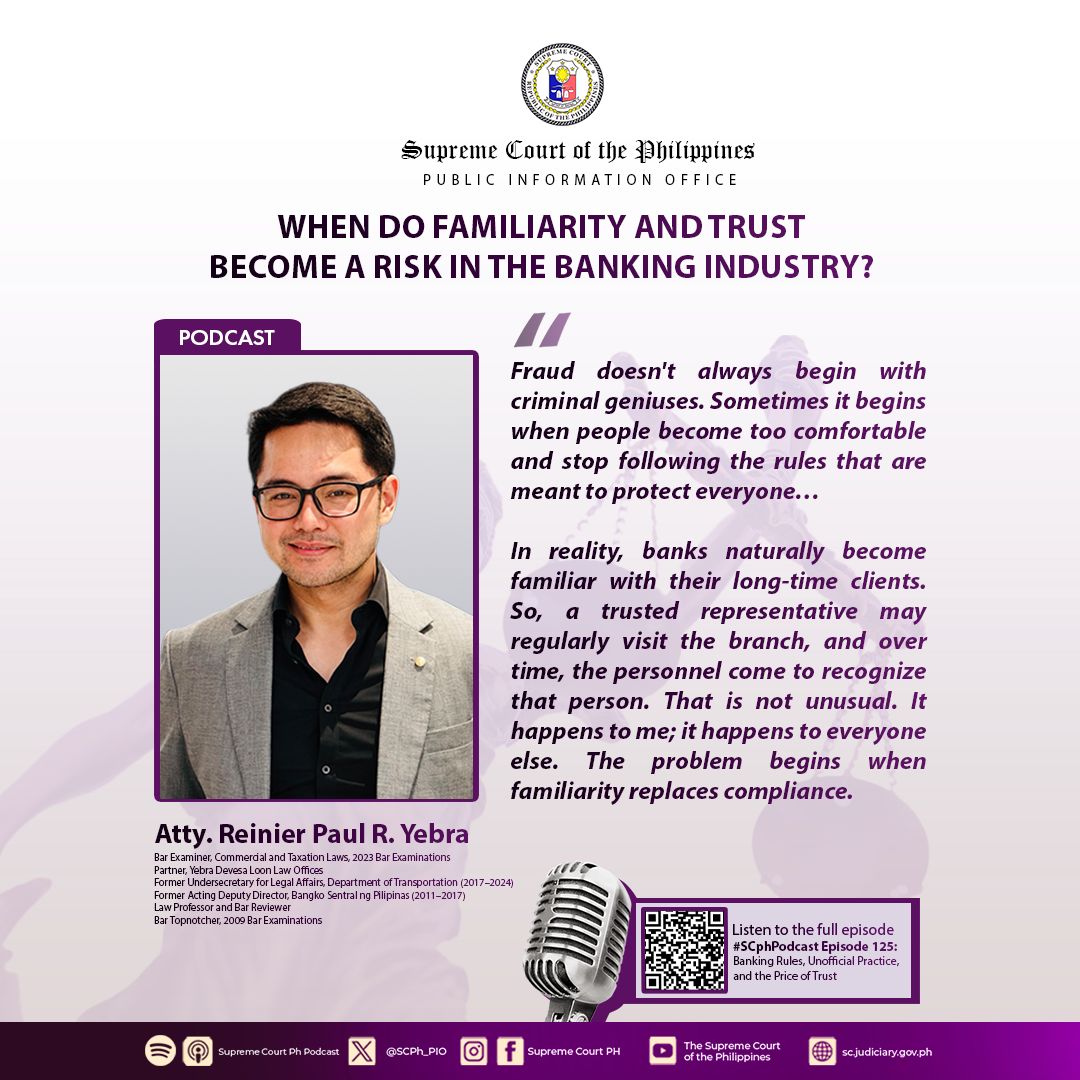
Atty. Reinier Paul R. Yebra, an examiner in Commercial and Taxation Laws during the 2023 Bar examinations, discusses unauthorized bank withdrawals, as well as banking rules and unsanctioned transactions, in #SCphPodcast Episode 125: Banking Rules, Unofficial Practice, and the Price of Trust. He served as Undersecretary for Legal Affairs of the Department of Transportation from 2017 to 2025 and as Acting Deputy Director in the Bangko Sentral ng Pilipinas from 2011 to 2017. A graduate and class valedictorian of the San Beda University College of Law in 2009, he also topped the Bar Examinations that same year. He is a law professor and a Bar reviewer.
If one authorizes a trusted family member, employee, or friend to transact with your bank, what are the limits of that authority? If that authority is abused and unauthorized withdrawals occur, should the bank or the depositor bear the loss?
This week's podcast is available on Spotify, Apple Podcasts, YouTube, Facebook, and the #SupremeCourtPH website.
LISTEN to the FULL episode of this Podcast on
Spotify: https://t.co/1QKLOtEqI0
Apple Podcasts: https://t.co/NeNuSC80Gs
Facebook: https://t.co/4u49uBP6QF
YouTube: https://t.co/c7UO3zcekV
SC website: https://t.co/UwUlZd0Ils
it is an unwritten rule of life that after every prolonged period of hardship and uncertainty, there is going to be a period when you are going to achieve quantum leaps across multiple areas of your life. the only requirement is that you do not give up on yourself.
I have a soft spot for people rebuilding themselves after life breaks them open. Because I know what it feels like to lose your sense of who you are, to look in the mirror and not recognize the person staring back. Healing isn't about moving on, it's about meeting every version of yourself that pain created and learning to love the one that survived. You see all the ugly parts, the bitterness, the fear, the numbness, and you realize they were only ever trying to protect you. It's messy, disorienting, and so unbelievably brave. To anyone in that stage right now, you got this. Don't rush to be better. Just be honest. Healing isn't about finding who you were, it's about becoming who you needed back then. The people who rebuild from their ruins never return as who they were. They come back softer in the right places, stronger in the quiet ones. There's a kind of power that comes from facing everything that was meant to break you, and it never leaves your eyes again.
People say 30 is old, but you’ve only lived three decades. It's not the end of the road and most of those years were spent learning, growing, and becoming.
You’re still a fresh flower in the garden of life. There is still so much time to grow, change direction, and become the person you are meant to be.